Peach Bowl, College Football Foundation give Atlanta schools $1M
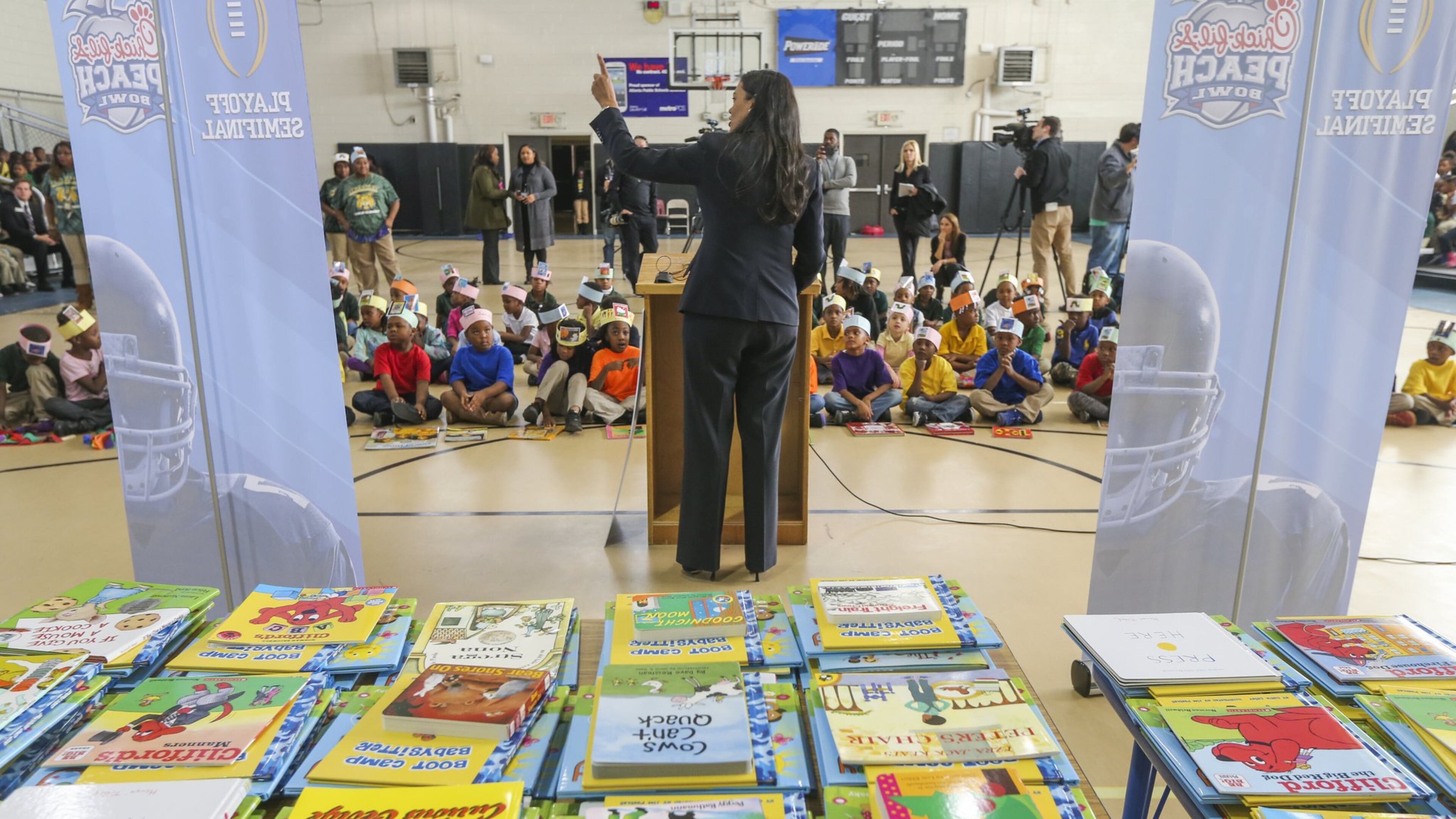
Over the next couple years, 1,500 Atlanta elementary school teachers will get special training to help them help their students learn to read.
Private donors associated with the Peach Bowl will pay the $1 million cost.
“It’ll touch 20,000 students,” Superintendent Meria Carstarphen said Thursday, in announcing the donation at William Boyd Elementary west of downtown.
Teachers in seven of nine Atlanta Public Schools clusters will get specialized training in what is known as the Orton-Gillingham approach, a system developed in the 1930s by a neurologist and a psychologist to teach students with dyslexia.
The system breaks words into their component sound parts and harnesses sound, sight, touch and body movement. It can also help children without dyslexia.
And Atlanta students need help. More than 80 percent are not proficient readers by the end of third grade, a crucial year. Children who fall behind in reading at this point are likely to lag in other subjects in later grades as the curriculum becomes increasingly book-based.
Half the money will come from the College Football Foundation and the other half from Peach Bowl, Inc., which has been supporting APS for nearly a decade. President and CEO Gary Stokan said Peach Bowl has given around $6 million to APS to support a variety of programs, including school counseling. Last year, the organization contributed money to buy classroom supplies.
The aide is targeted at Atlanta’s poorest neighborhoods, like the one around Boyd. Latoshia Williams, 42, was in the bleachers of the school auditorium, with a toddler on one knee, a baby in a carrier at her other knee and a little boy climbing on the stair railing. She said the school has taught four of her eight children and three of her eight grandchildren to “accomplish the things they need in life, like reading and socializing.”
About the Author

Ty Tagami is a staff writer for The Atlanta Journal-Constitution. Since joining the newspaper in 2002, he has written about everything from hurricanes to homelessness. He has deep experience covering local government and education, and can often be found under the Gold Dome when lawmakers meet or in a school somewhere in the state.