Urban arborists check health of hard-living trees
Atlanta has decided that no downtown tree will go untended, launching a $55,000 pilot program to count and assess the health of more than 9,000 that line the city’s streets and parks.
The city’s monthlong effort is bent on strengthening tree ordinances and regulating tree care — especially in a year in which there have been several storm- and tree-related deaths and accidents.
While firm numbers won’t be tabulated for a few months, officials estimate that 5 to 10 percent of the downtown trees will be cut down.
“The trees are thriving in a harsh, urban environment, doing what they need to do,” said Ainsley Caldwell, an Atlanta arborist. “But like any inventory, we have to know what we have. We need to know what needs to be pruned, what needs to be cut down, and what is dying, diseased and hazardous so we can make informed policy decisions.”
The storm season, coupled with drought, invasive species, pests and aging, has taken a toll on metro Atlanta’s magnolias, pines and willow oaks planted for the Olympics — with deadly results.
In May, three people were killed by fallen trees in two incidents during storms in Buckhead and Mableton. In April, another man was crushed to death by a tree in northwest Atlanta.
“This storm season has been particularly severe with four significant high-wind events, each causing over 100 street obstructions from downed trees and limbs,” said Jasen Johns, an arborist with Atlanta’s parks department.
On Monday, Kisha Solomon, a 34-year-old writer, saw what can happen firsthand when severe weather knocked down a tree in her Westview neighborhood at the intersection of Rogers and Willard avenues.
“The tree was huge; it had to be at least 50-60 feet high,” Solomon said. “When it fell from where it was rooted, it stretched across the entire street and into a neighbor’s yard. Fortunately, it just missed the house itself.”
Over the past year, three city forestry division crews cleared 620 trees removed on public property and more than 400 trees obstructing streets, mostly due to high winds.
Atlanta is one of several communities working to regulate and manage its trees. Alpharetta, Peachtree City and Roswell each have regulations in place requiring homeowners to obtain permission in order to cut down a tree, even on private property.
The downtown tree program is partially funded by a $20,000 grant from the Georgia Forestry Commission. More money will be needed to expand the program citywide, which is the next step, Caldwell said.
Each downtown inspection took one to five minutes to assess a tree. Reid Gibson, a contracted urban forester, did a quick visual inspection before checking the width, height, spread and canopy clearance. He entered his data into a laptop, indicating whether the tree was healthy, maintenance was required or removal was necessary.
In one instance, Gibson inspected a crooked red maple tree at the corner of Broad and Walton streets, one barely noticeable to passers-by. He pulled out a Biltmore Stick to check the diameter. He fingered the soil. The tree’s condition was apparent right away.
“See the exposed roots? And the fungus is always a good sign of decay,” Gibson said. “This tree is stressed.”
The tree at Broad and Walton, which was taller than several buildings on the block, was in bad shape. The base was knotted at the bottom, indicating an interior problem. Green leaves sprouted sporadically from the trunk, but there were no branches and the tree essentially was barren.
Before Gibson could enter his recommendation, Caldwell, who had accompanied him, beat him to it.
“That is a dying tree,” Caldwell said. “It is not coming back.”
Gibson recommended cutting it down.
About the Author
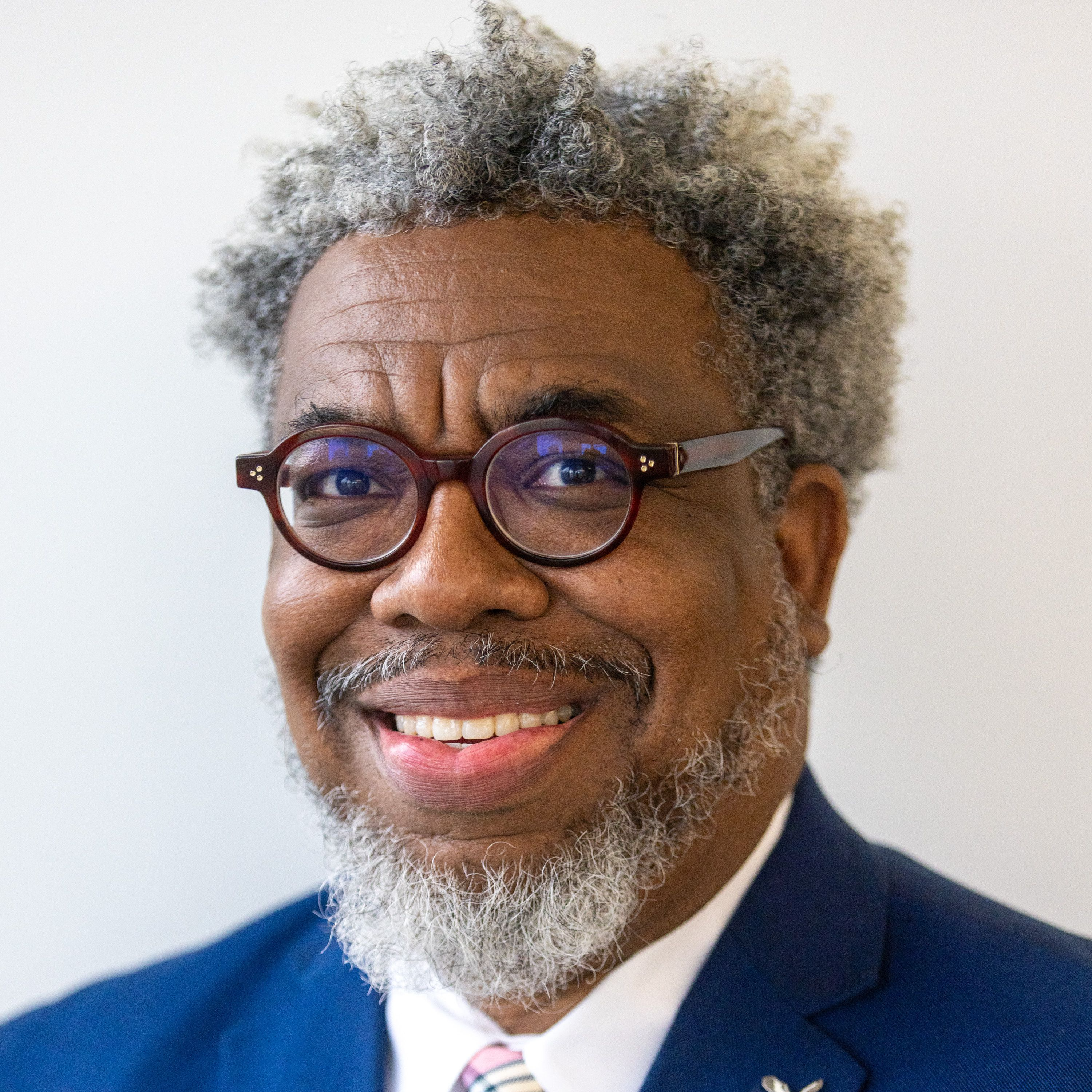
Ernie Suggs is an enterprise reporter covering race and culture for the AJC since 1997. A 1990 graduate of N.C. Central University and a 2009 Harvard University Nieman Fellow, he is also the former vice president of the National Association of Black Journalists. His obsession with Prince, Spike Lee movies, Hamilton and the New York Yankees is odd.

