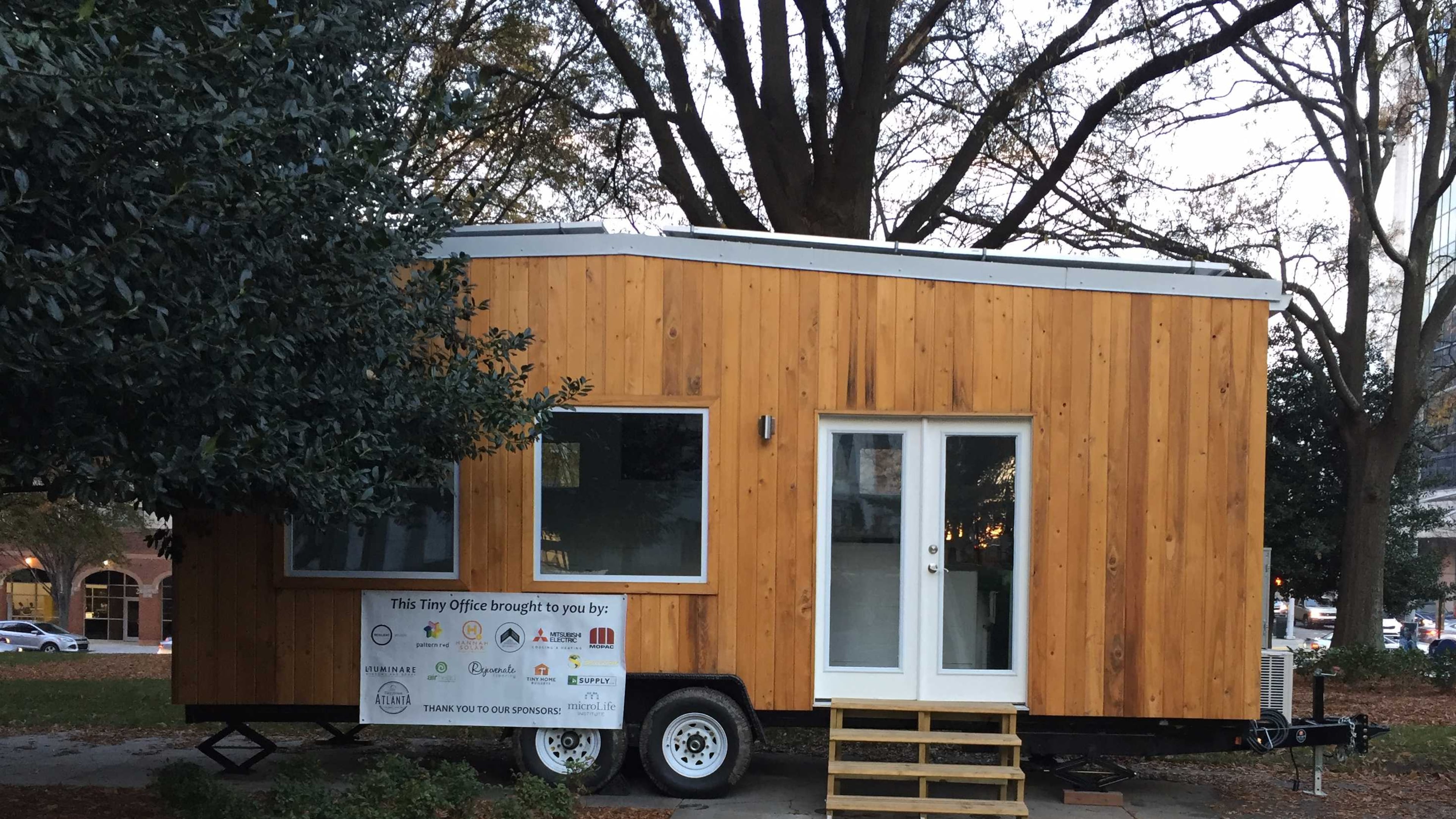
The city of Atlanta is hosting public tours of a new “tiny house office” to showcase the environmental and economic benefits of “living small.”
The initiative is a partnership with nonprofit Tiny House Atlanta and the city's Office of Resilience, formerly the Office of Sustainability. The office launched Resilient Atlanta in May 2016 when Atlanta became the 100th "Resilient City" in a Rockefeller Foundation program that focuses on strategies to fight physical, social and economic challenges.
The "Resilient House" has features including: solar panels; a mini-split HVAC system; cypress siding and plywood interior; standing seam metal roofing with a 90-year life; compostable toilet; low-e windows; and LED lighting. It also features a Tesla Powerwall, the battery system that Tesla reportedly sent hundreds of to Puerto Rico to help restore electric power to the island.

Atlanta needs to promote housing options that are "sustainable both environmentally and economically," Chief Resilience Officer Stephanie Stuckey said in a statement. "The Resilient House is a great way to help get this message out to the public."
After this week’s tours, the mobile office will be hosted by Atlanta businesses and organizations and used for Office of Resilience events, according to Will Johnston, Tiny House Atlanta executive director.
READ: Mercedes-Benz Stadium says it is world’s greenest sports venue
READ: Atlanta makes ambitious commitment to 100 percent clean energy by 2035
READ: Metro Atlanta makes top 25 list for solar jobs in 2016
The tiny house movement has run into problems in the Atlanta area because the homes often fail to meet local zoning and building code requirements.
The city's planning department earlier this year released a tiny house feasibility study, which offered recommendations to aide in amending zoning ordinances to allow for the building of tiny houses. Legislation based on the study was passed in May allowing "accessory dwelling units" in areas zoned for duplexes to be used as a residence or rental property, but did not allow for standalone tiny homes on their own lots.
The state Department of Community Affairs recently enacted a change in city code to allow for residential dwellings of 400 square feet or less and reduce the minimum habitable room size from 120 square feet to 70 square feet, a press release said.
Department of City Planning Commissioner Tim Keane said the growing trend "will make housing more affordable in urban settings."
“Small spaces are the next big thing,” Keane said in a statement.
The public can view the house this week from Monday through Friday between 10 a.m. and 4 p.m. in front of City Hall, 68 Mitchell St.
Like Intown Atlanta News Now on Facebook | Follow us on Twitter