Morehouse College receives funds for prison education program

Morehouse College received $1.6 million in federal funds to expand its program that educates incarcerated and formerly incarcerated Georgians, the college announced Thursday.
The Andrew Young Center for Global Leadership’s Higher Education in Prisons Program at Morehouse has operated for about four years, serving 180 incarcerated students at Metro Reentry in DeKalb County, Burruss Correctional Training Center in Forsyth County and the Downtown Reentry Program in Fulton County. Morehouse faculty teach classes in the program, and Morehouse students can assist the professors or teach humanities courses, conduct research, lead college-preparatory seminars and provide peer mentorship.
The expansion will allow about 200 incarcerated students to participate each year, increase class offerings from two to eight and strengthen the Prison Education Ambassador Program for Morehouse students.

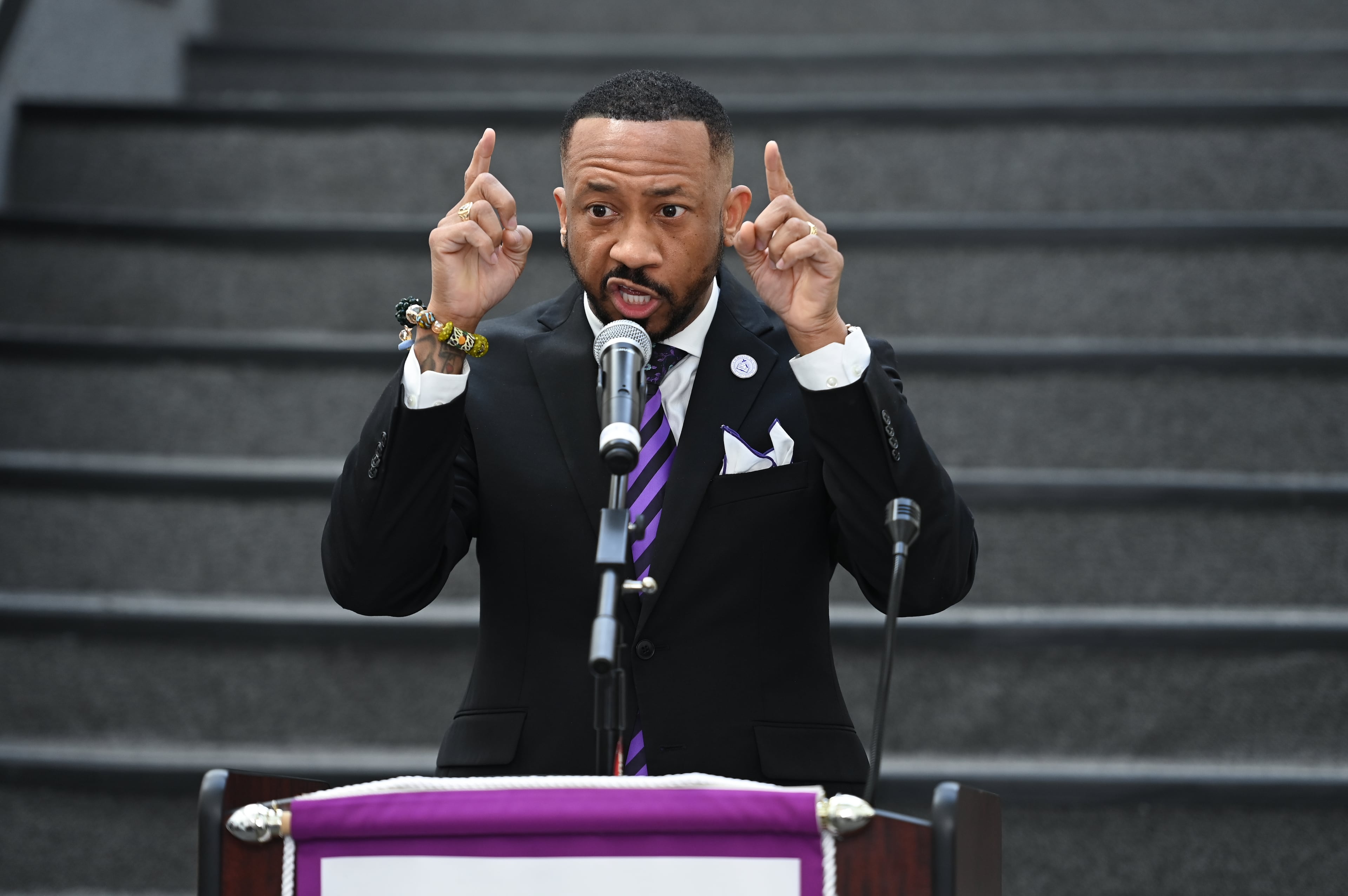
The Higher Education in Prisons Program’s goal is to position participants for a “second chance so that they can build viable lives after they leave,” Morehouse President David A. Thomas said Thursday in a news release. “Our hope with the work that we are doing is that in some way those men getting exposure to the educational resources, pedagogy, and experiences that we know how to provide will increase their human capital.”
U.S. Rep. Nikema Williams, D-Ga., joined Thomas and others at Morehouse to announce the funds and said Morehouse’s program is much needed due to challenges that come after a person has served their sentence in prison.
“Few communities need this support more than incarcerated and formerly incarcerated individuals,” she said. “Historically, we haven’t invested in the futures of incarcerated individuals, and this helps no one. Our prison population — overwhelmingly and disproportionately — is comprised of Black men. It continues to grow, and the recidivism rates are sky high.”
Kipton E. Jensen, a Morehouse professor who helped found the program, said he’s seen it be transformational for everyone involved: “I’ve come alive in the last five years (since the prison program’s inception). I’ve seen students and faculty come alive, and, primarily, I’ve seen men inside come alive.”
About the Author

Josh Reyes covers Gwinnett County Public Schools for the Atlanta Journal-Constitution. A native of Virginia, he wrote about local government and public safety at the Daily Press and The Virginian-Pilot. He graduated from Christopher Newport University with a B.A. in English.