


Atlanta health, diet and fitness news 11:26 a.m. Friday, June 25, 2010

Cancer centers revitalize survivors

Post-treatment care fills a need traditional medicine cannot

  • Print
  • E-mail

The Atlanta Journal-Constitution

For almost five months, Priscilla Tomlinson’s life revolved around regular trips to the basement of Piedmont Hospital. There, on every third Tuesday, she underwent chemotherapy sessions lasting almost eight hours to battle ovarian cancer.

Priscilla Tomlinson of Decatur reacts to the other participants after she leads a drumming session at the Cancer Wellness Center at Piedmont Health Care.
Jason Getz, jgetz@ajc.com Priscilla Tomlinson of Decatur reacts to the other participants after she leads a drumming session at the Cancer Wellness Center at Piedmont Health Care.
Cindy Stark Reid (left) leads a drumming class in the Cancer Wellness Center at Piedmont Health Care. Participants in the class include (back, from left to right) Harriet Sims of Fairburn; Maureen Hill of Atlanta; and Francine Reeves of Atlanta.
Jason Getz, jgetz@ajc.com Cindy Stark Reid (left) leads a drumming class in the Cancer Wellness Center at Piedmont Health Care. Participants in the class include (back, from left to right) Harriet Sims of Fairburn; Maureen Hill of Atlanta; and Francine Reeves of Atlanta.

After each session, she went into her backyard and lit a bouquet of dried sage, letting it waft over her like incense. Two days later, a flu-like wave would smash her to her core. Slowly, she would begin to feel better. And then it was time for the next Tuesday chemo date at Piedmont.

Then suddenly, in January 2007, her cancer treatments were done. She would require checkups and medication, but she was no longer a cancer patient.

Yet, moving forward was difficult, and she found herself returning to Piedmont, again and again. But no longer to the basement. Now she takes the elevator to the 7th floor, to Piedmont’s Cancer Wellness Center.

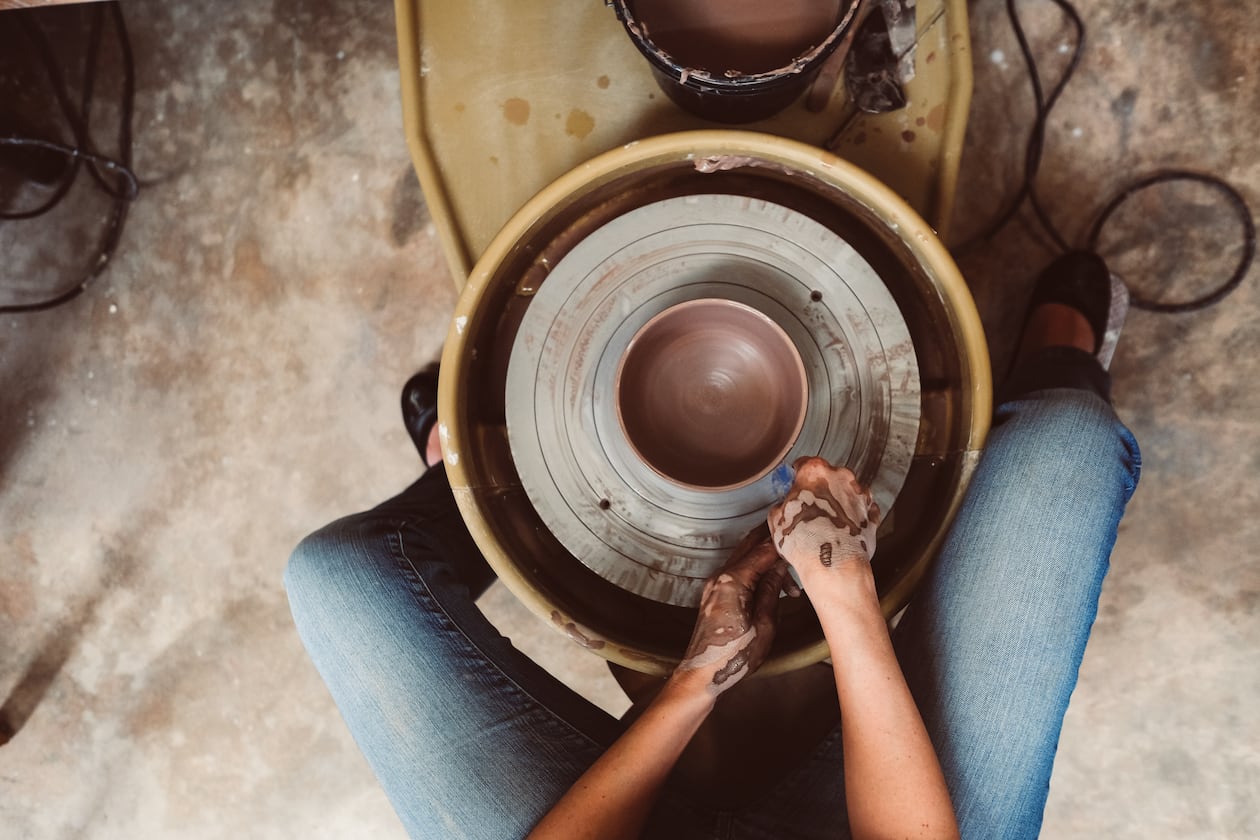
There, Tomlinson takes African drumming classes. She molds clay into pinch pots. She jots down her thoughts in an “expressive arts room.” She participates in food demonstrations. She meditates and meets with therapists.

Tomlinson is among a growing number of cancer patients who are looking to cancer centers for help in making the transition to life as a survivor. And more cancer centers are offering post-treatment options.

Yoga, massage therapy and mind-body studios are becoming mainstream as medical facilities extend the traditional boundaries of health care. It allows them to maintain relationships with the patients, as well as meet patient demands for more complementary and alternative approaches to wellness.

“It helps me deal with the anxiety of scans and helps me stay in the present,” said Tomlinson, 70, who lives in Decatur. “It helps me from not running stories in my mind thinking of all of the bad things that can happen. This helps me live my life.”

Seeking help

Cancer survivors are living longer and healthier lives. The chance of surviving most cancer has been steadily rising. For example, the 5-year survival rate for breast cancer is now 90 percent, up from 75 percent in the mid-to-late 1970s, according to the National Cancer Institute.

Still, fighting a deadly disease can leave survivors feeling battered and confused, and struggling to find their way. From soreness and scars to being emotionally shaken, survivors often need help grappling with everything from depression and fatigue to body image concerns and relationship woes.

At the same time, Americans overall are increasingly looking outside traditional medicine for their health care needs. About a third of Americans are using at least one form of what’s referred to as “complementary or alternative medicine.” When megavitamins and prayer are included in this definition, the percentage rises to 62 percent, according to the National Institutes of Health. Americans spend $34 billion annually in out-of-pocket expenses on complementary and alternative approaches, according to a 2009 analysis by the Centers for Disease Control and Prevention.

Several smaller studies of cancer patients suggest many of them are seeking alternative care. A study published in the 2000 issue of the Journal of Oncology found 69 percent of 453 cancer patients turned to some aspect of alternative care as part of their cancer treatment. A more recent study published in a December 2004 issue of the Journal found 88 percent of 102 cancer patients enrolled in a research study turned to CAM therapy, which can include vitamins or minerals and acupuncture.

Filling a void

Dr. Perry Ballard, an oncologist at Piedmont since 1987, said he used to be skeptical of nontraditional care but now embraces its role in helping a person get better.

“Life is never the same after you have cancer, and it goes beyond having the most cutting-edge therapies,” said Ballard. “You have to heal yourself psychologically and spiritually. We are learning more and more about the mind-body connection.”

As a doctor seeing as many as 25 patients a day, Ballard said he hears a wide range of emotional aches and pains: a young woman who’s been prematurely thrust into menopause because of a mastectomy; a man losing sexual function; young singles wondering if they will ever get married.

Complementary care, he said, helps fill the void of what traditional medicine can do. And patients addressing emotional and physical needs are better patients — they are more likely to keep appointments and stay on top of their treatments.

Erika Baube, a licensed social worker at Georgia Cancer Specialists, said the majority of her clients seek counseling after they complete treatment.

During the treatment stage, patients are intently focused on doctors’ appointments, chemotherapy and other all-consuming medical needs. Once that intense routine ends, many emotions bubble up.

“There’s this emotional letdown at the end of treatment,” said Baube. “They have been so focused on getting through the treatment, and then it’s, ‘Now what?’ They are finally allowing themselves to feel the fear.”

Feeling up to par

After surgery and undergoing several rounds of radiation in 2007, Alice Stubblefield turned to Turning Point in Alpharetta, a nonprofit resource for women with breast cancer offering physical therapy, massage, counseling and other services.

Stubblefield couldn’t shake lingering soreness and lymphedema, an accumulation of fluid that sometimes builds up and causes swelling after cancer treatment. She also worried about her body image, concerned about her husband’s reaction to the mastectomy.

“I know my husband is here for me and still loves me, but the women there helped me work through the process and really accept myself,” said Stubblefield.

Going to Turning Point also encouraged her to set goals. Among them: To play golf with her husband again.

For the longest time after her cancer, she had no interest in picking up a set of clubs. Over time, her outlook on life brightened. She and her husband are golfing together again.

“Not only do you want to do more things, but it’s not the end of the world,” she said.

‘What do I do now?’

For Ned Crystal, who is 36, launching a new support group helped re-energize him after his cancer treatments.

“We have been going through this ritual of doctors and restrictive diet and you have this moment of clarity that gets clouded again. What is a normal life and what do I do now? How do I go through a transition of getting back to the grindstone of work?” said Crystal, who was diagnosed with sarcoma, a rare form of cancer developing in the soft tissues of the body, after suffering a knee injury three years ago.

“They are calling me a survivor and saying I am in the clear now. ... It’s frightening and it’s unnerving” said Crystal, who lives in Smyrna with his wife.

Crystal, who underwent treatment at Emory University’s Winship Cancer Center, joined a steering committee to help design a new program for cancer survivors, including a peer-to-peer program matching newly diagnosed cancer patients with survivors. He’s also founded a new sarcoma support group, believed to be the first in Atlanta.

“According to the statistics, there is a 95 percent chance I’m not going to make it five years. You can fold up the tent and go home or make a difference. ... For me, getting involved has renewed my passion.”

‘I really needed this’

On a recent afternoon, Priscilla Tomlinson closes her eyes and taps on an African drum.

Then her eyes spring open and she begins pounding the instrument — boom, boom, boom! She releases nervous energy. She releases anxiety.

All of the participants in this class are cancer survivors. The chemotherapy, the radiation, the surgery is behind them. Yet, they all wrestle with the fear it may one day return.

Harriet Sims, 40, is among those in this class. Dripping in sweat and tearful, she smiles. Sims was diagnosed two years ago with multiple myeloma, a blood cancer. She underwent a stem-cell treatment a year and a half ago. She will get a follow-up biopsy during the coming days to see if the cancer has been kept at bay,

“I can’t tell you how much I needed this,” said Sims. “I come here and it makes me feel good.”

Tomlinson gives her a hug.

As the class comes to a close, they sing together: “I’m a tower of strength within and without, I am a tower of strength within. All my fears slip away, slip away, all my fears slip away.”

---------------

Life after the Big C

Many metro Atlanta cancer treatment centers are creating new survivorship programs to help survivors get a grasp of the long approach to care. Here’s a look at some of them:

  • Georgia Cancer Specialists: This treatment center is in the final stages of a new “Life After Treatment” program that involves a special meeting after treatment is completed to get a comprehensive overview of follow-up care and what the patient can expect — such as when blood will be drawn and when scans will be done — over the next several months, even years. It’s a time when patients are offered help with everything from tips for dealing with post-treatment fatigue to resources for getting fitted for wigs.
  • Cancer Wellness at Piedmont: About 1,200 cancer patients and survivors use this Piedmont Hospital facility, which is surrounded by windows and includes a mind-body study, a reading library and cooking demonstrations. The 7th floor wellness center is also used for beach parties and other social events. Free and open to all cancer patients and survivors — regardless of whether they underwent treatment at Piedmont. Underwritten by Piedmont Foundation and grants.
  • Emory University’s Winship Survivorship Program: Still in the planning stages, the goal is to establish a survivorship clinic that will offer follow-up care as well as other treatment for fatigue, soreness and other residual impact from the cancer treatment. A peer-to-peer volunteer program, already under way, matches newly diagnosed patients with survivors. Winship also plans to research ways to improve the quality of life for survivors, and to create a special Web site for cancer survivorship.

Helena Oliviero

Inside ajc.com

Atlanta day trip getaways

Atlanta day trip getaways

Escape from the grind using our list of destinations that require only a tank of gas and a sense of adventure.

Essence of music

Essence of music

Music industry veteran Sylvia Rhone and Kelly Rowland were honored at the Essence Black Women in Music event.

Lady in red

Lady in red

Actress Minka Kelly is among the celebrities who walked the Heart Truth red dress fashion show in New York.

Pass the Haterade

Pass the Haterade

Forbes' list of most disliked athletes is out, and Atlantans will find a familiar face tied for No. 1.

Is that really Lindsay?

Is that really Lindsay?

Lindsay Lohan arrived at amfAR's annual kickoff to Fashion Week looking not so fresh-faced.

V-Day with the Angels

V-Day with the Angels

Victoria's Secret Angels celebrate Valentine's Day while showing off some the lingerie store's goods.


AJC Breaking News Updates

Kudzu Services » Find the right people for the job