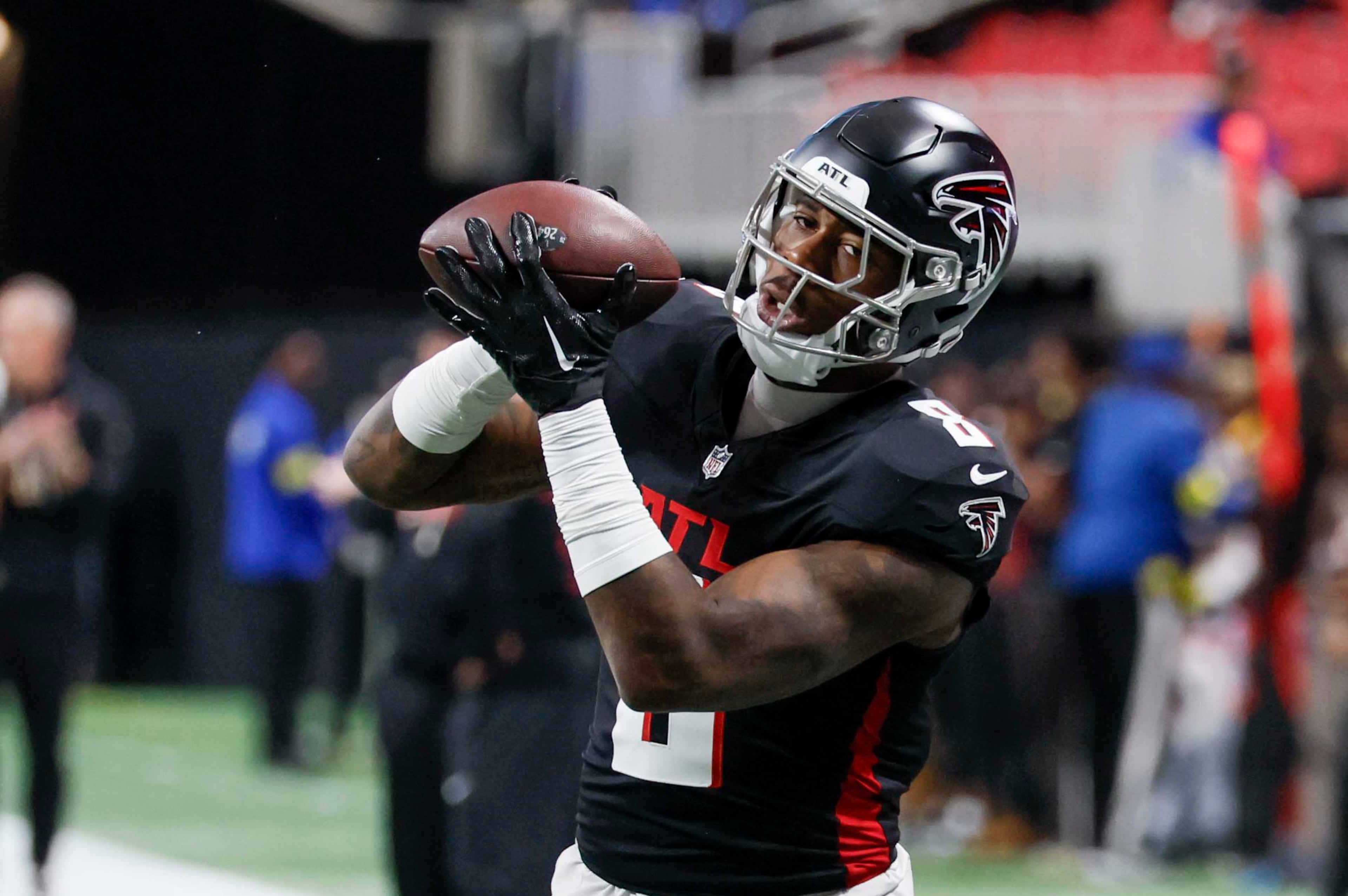
Falcons smart to franchise tag Kyle Pitts, should avoid big-money extension

It’s too risky for the Falcons to sign tight end Kyle Pitts Sr. to a long-term contract. Letting him walk isn’t a good idea.
The Falcons reportedly are prepared to split the difference for now.
According to NFL Media, the Falcons plan to use the exclusive franchise tag on Pitts before the start of free agency on March 11. He’ll play on a one-year contract for about $16 million unless the two sides agree to a long-term deal before July 15.
The Falcons might do that to gain cap relief and keep Pitts under contractual control beyond 2026. It’s better if they just roll with the one-year deal.
It’s noteworthy that Pitts didn’t have a breakout season until his contract was set to expire. If money were the motivation, it would still be the case when he’s playing on a one-year deal. Paying Pitts big money risks getting the underachieving athlete from 2022 to 2024 instead of the complete tight end of 2025.
Before last season, I’d say Pitts wasn’t worth the franchise tag. The memories of his promising rookie season had faded. Lots of tight ends with much lower salaries performed better.
Better for the Falcons to let some other team pay to find out that Pitts would never reach his potential.
Then Pitts produced 928 yards on 88 catches with five touchdowns in 2025. He was efficient: sixth-best among tight ends in receiving yards per route run, per Pro Football Focus. Pitts made contested catches and moved the chains: 51 of his receptions resulted in first downs.
Pitts became the No. 2 pass-catcher for a team that didn’t have a good No. 2 wide receiver while significantly improving his blocking. That performance made Pitts a bargain at a salary of $10.8 million.
Pitts was in line to cash in on the free agent market next week. The Falcons prevented that by using the franchise tag. Pitts probably will seek an extension that’s comparable to deals signed by tight ends T.J. Hockenson ($42.5 million guaranteed in 2023) and Dallas Goedert ($35 million guaranteed in 2021).
Pitts and his agent can argue that he’s younger now (25) than Hockenson (26) and Goedert (26) were when they signed their extensions. The salary cap has increased since then. Pitts has played in every game for three straight seasons.
Pitts can also note that Matt Ryan was the quarterback during his strong rookie season. Since then, Pitts has played with Marcus Mariota, Desmond Ridder, Taylor Heinicke, Kirk Cousins (diminished) and Michael Penix Jr. (unproven). Hard to shine with those QBs.

But Pitts, the highest-drafted tight end in NFL history, is supposed to be the kind of player who makes plays with marginal quarterbacks (see preinjury Brock Bowers in Las Vegas). That didn’t happen until last season. If his salary demands get too wild, then the Falcons should tell Pitts he’ll get his money after another big season in 2026.
That’s not an ideal situation for Pitts, but the franchise tag is designed to keep valuable players off the market. It’s smart business for the Falcons to use it on Pitts, even if the salary-cap hit is a bit high. Among tight ends, only Hockenson, Goedert and Dawson Knox are projected to count more against their team’s 2026 cap.
It’s a worthy investment for the Falcons.
They need Pitts as a good complement to No. 1 wide receiver Drake London. The Falcons won’t find a good receiver on the market for $16 million. They don’t have a first-round pick to select a top prospect in the draft.
Also, new Falcons coach Kevin Stefanski favored two-tight-end formations with the Browns last season. Per Sumer Sports, Cleveland ran the alignment on a higher percentage of plays (41%) than any team in the league. That may have been out of necessity.
The 2025 Browns had the worst wide receiver corps in the NFL, but two solid tight ends: rookie third-round pick Harold Fannin and veteran David Njoku. During the previous three seasons, Stefanski’s offense ranked 23rd, 27th and 22nd in the percentage of plays run with two tight ends.
Stefanski’s Browns were bad when passing from two-tight-end formations last year. They ranked 31st in Expected Points Added per attempt, which is a measure of play-by-play impact that accounts for game situations. The Browns ranked tied for 13th in EPA per rushing attempt when using two tight ends.
If Stefanski and offensive coordinator Tommy Rees want to run two-tight-end sets with the Falcons, one of them will be a superlative talent who excels at catching passes and blocking. To really make it work, they’d have to find another tight end to pair with Pitts — Charlie Woerner played a lot of snaps for the Falcons in 2025 but only saw nine targets — but serviceable No. 2 tight ends can be acquired on the cheap.
It’s interesting that the new regime has decided to keep Pitts around. Franchise owner Arthur Blank fired the general manager who drafted Pitts, Terry Fontenot. Coach Raheem Morris and offensive coordinator Zac Robinson are gone, too.
Ryan, now president of football for the Falcons, signed off on retaining the tight end who caught 68 of his passes for 1,026 yards in 2021. Pitts looked like he could be worth the No. 4 pick after that Pro Bowl season. Three consecutive disappointing seasons followed, before last year’s second-team AP All-Pro campaign.
That was enough to convince me that the Falcons should keep Pitts with the franchise tag. I still don’t think it’s enough to justify a big-money contract extension. The Falcons should tell Pitts to deliver two great contract years in a row, and then they can talk.
About the Author