Where they stand: Bottoms, Jackson on education
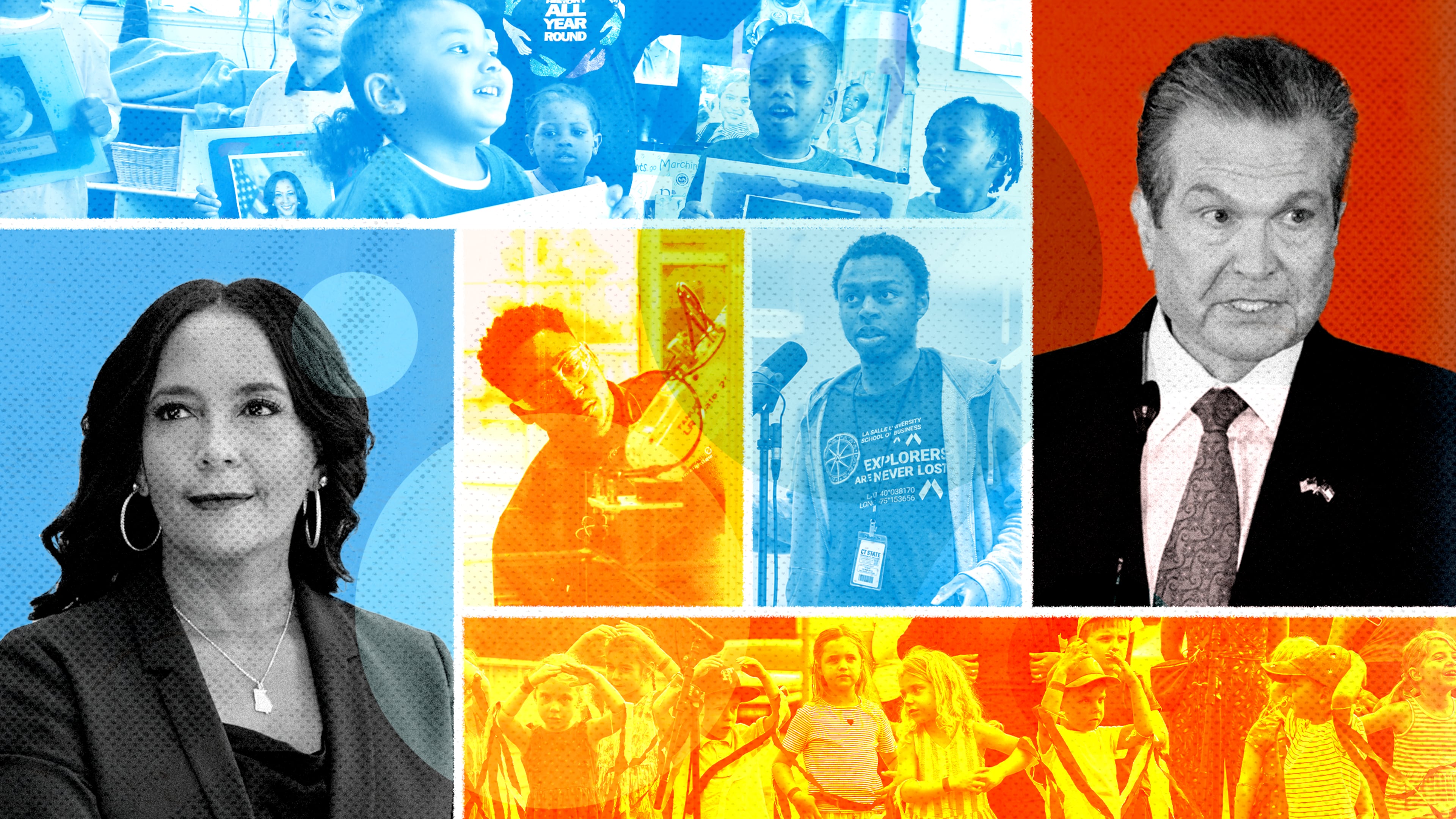

Raising teacher pay. Improving literacy. Expanding pre-kindergarten. Making college more accessible.
Georgia’s gubernatorial candidates have pledged to tackle some critical — and potentially complicated — education issues if elected. They agree on some areas, such as improving literacy rates, but they differ on how they want to achieve that goal.
On The Issues
The Atlanta Journal-Constitution has gone in-depth on how Democrat Keisha Lance Bottoms and Republican Rick Jackson stand on these major issues facing Georgia as they campaign for governor.
Here’s a look at some of the big issues Democrat Keisha Lance Bottoms and Republican Rick Jackson have pledged to address if elected.
Early education
During a recent forum on early education, both candidates emphasized the importance of students entering kindergarten prepared.
Georgia’s lottery-funded pre-K program launched in 1992 and served 54% of the state’s 4-year-olds in 2025.
Bottoms said she’ll expand the program so it would serve every 4-year-old who wants to attend. The plan, though, would hinge on legalizing casino gambling — which has failed so far to make it through the Republican-led Legislature — and using the profits to fund the estimated 2,600 additional seats, teachers and assistant teachers she says are needed. However, Bottoms said she’d include the expansion in her first budget as governor. She estimates the plan will cost $300 million to $500 million a year. Bottoms said she’d tap into the state’s $2.5 billion in lottery reserves earmarked for education programs “where necessary.”
“It is something that I will begin work on day one because the budget begins in the governor’s office, and for whatever reason, over the past 30 years or so, leaders in this state have opted not to make sure that we are properly funding education.”
In a video message played during the event, Jackson said he’d make childcare less expensive for providers and more affordable for families.
“We’ll expand insurance options, streamline licensing and cut unnecessary regulations, all without compromising children’s safety. Investing in early childhood pays dividends for our state and spares us long-term costs, both financial and societal,” Jackson said.
Literacy
After Georgia lawmakers passed a comprehensive literacy bill in 2026, both candidates have made improving literacy rates part of their campaigns. The new law funds literacy coaches in elementary schools and focuses on the benchmark of ensuring students are reading proficiently by the third grade. State data show 35% of third graders in 2025 achieved proficiency on English/Language Arts exams, and 65% of them were reading on grade level.
Bottoms has framed her early education plan as a path to improving overall literacy rates.
“If Georgia wants stronger readers, stronger schools and stronger communities, the state has to invest in the early years, when the foundation for all three is built,” her pre-K plan reads.
Jackson has made third-grade reading proficiency the centerpiece of his K-12 education plan, which also aligns with the new law.
“Schools will focus on methods that build the basic skills children need to become confident readers,” his plan says.
Teacher pay
Both candidates have pledged to raise teachers’ salaries if elected. Increasing salaries from the state level is tricky because the money is distributed through a funding formula that only pays for about half of the state’s teachers. For example, if a school or district pays for an extra history teacher at a particular school, that teacher wouldn’t receive a salary bump unless the district or school pays for it.
Jackson hasn’t said how much he’d raise teachers’ salaries.
Bottoms told the AJC she wants to raise starting teacher pay to $60,000 a year. The state’s starting salary for a new teacher this year is $43,592.
“As a state, we will pay on the front end or the back end, and unfortunately, leaders in this state have opted to pay on the back end,” Bottoms said. “I propose that we pay on the front end, making sure that we invest in education at the earliest opportunity.”
Higher education
As the cost of college continues to rise, more alternatives to four-year degrees are emerging. Some Georgia high schools offer apprenticeships, career training and opportunities for students to earn job credentials before graduation.
Jackson has said he’ll expand work-based learning programs and on-the-job training in addition to freezing the cost of tuition and room and board at Georgia’s public universities.
Bottoms has said she’ll make technical college free for students.
The Technical College System of Georgia currently offers free tuition in 18 high-demand fields, including health science, aviation technology and computer programming.