Keisha Lance Bottoms made history with her win. Now comes the hard part.


Keisha Lance Bottoms shattered political barriers by becoming Georgia’s first Democratic governor in a generation. Now comes the challenge of making good on her promises.
She’ll likely inherit a divided Legislature, with Republicans ready to challenge her at every turn and Democrats eager to deliver on promises they’ve made after decades in political exile.
The political landscape has shifted dramatically in her favor, with Democrats apparently capturing control of the Georgia House for the first time since 2004 and Republicans clinging to a narrow edge in the Senate.
That gives Bottoms a path to deliver on an ambitious agenda that includes expanding Medicaid, guaranteeing access to Georgia’s pre-K program, grocery tax relief and a sweeping ethics overhaul. Even rolling back Georgia’s anti-abortion law could suddenly be within reach.
After clobbering Republican Rick Jackson, she will have the power to shape the state budget, veto legislation and wield the state’s largest bully pulpit. And Democratic victories up and down the ballot will only raise expectations for her administration.
One immediate threat is already off the table. Gov. Brian Kemp has ruled out a special legislative session to redraw political boundaries or strip Bottoms of some powers before she takes office.
Here’s a look at the political battles awaiting Georgia’s next governor.

A new balance of power
Georgia voters didn’t just elect Bottoms. They swept Democrats into every other statewide office, and the new governor is poised to gain a crucial ally in the Legislature: a Democratic-controlled House that could help turn her campaign promises into law.
And while Republicans retained the Senate, their majority has shrunk to just two seats. That means Democrats would need only a handful of defections to muscle through their priorities.
Bottoms will have an important ally in Democratic Lt. Gov.-elect Josh McLaurin, who will preside over the Senate. But GOP lawmakers could use their narrow majority to rewrite chamber rules and limit his influence over which bills reach the floor.
Even a thin Republican majority can still block legislation, particularly if GOP leaders face pressure from their base not to hand Bottoms major political victories.
For Democrats, the opportunity is enormous. But turning an election sweep into legislative victories will still require wooing GOP support — and keeping their coalition together.

Breaking the Medicaid logjam
For more than a decade, Georgia Democrats have made expanding eligibility for Medicaid, the government-funded health insurance program, a centerpiece of their campaigns. Bottoms is the first Democratic governor with a chance to actually fulfill that promise.
Even before her victory, Medicaid expansion was losing its negative stigma in Republican circles. A growing number of rank-and-file Republicans support expanding the program to shore up struggling hospitals and bring billions in new funding.
A proposal nearly cleared a Senate committee two years ago. Even Jackson called for “intelligent Medicaid expansion,” a sign that the word “expansion” was no longer political poison for Republicans.
Still, full expansion was a nonstarter under Govs. Nathan Deal and Brian Kemp. And even with Democrats taking control of the House, Republican Senate leaders could stand in the way.
Bottoms plans to start with an executive order directing state agencies to prepare for expansion. But a 2014 law requires legislative approval to broaden Medicaid eligibility.
A Democratic House could make that first hurdle far easier to clear. The real test would come in the Senate, where plenty of Republicans are already open to the idea.
Delivering on affordability promises
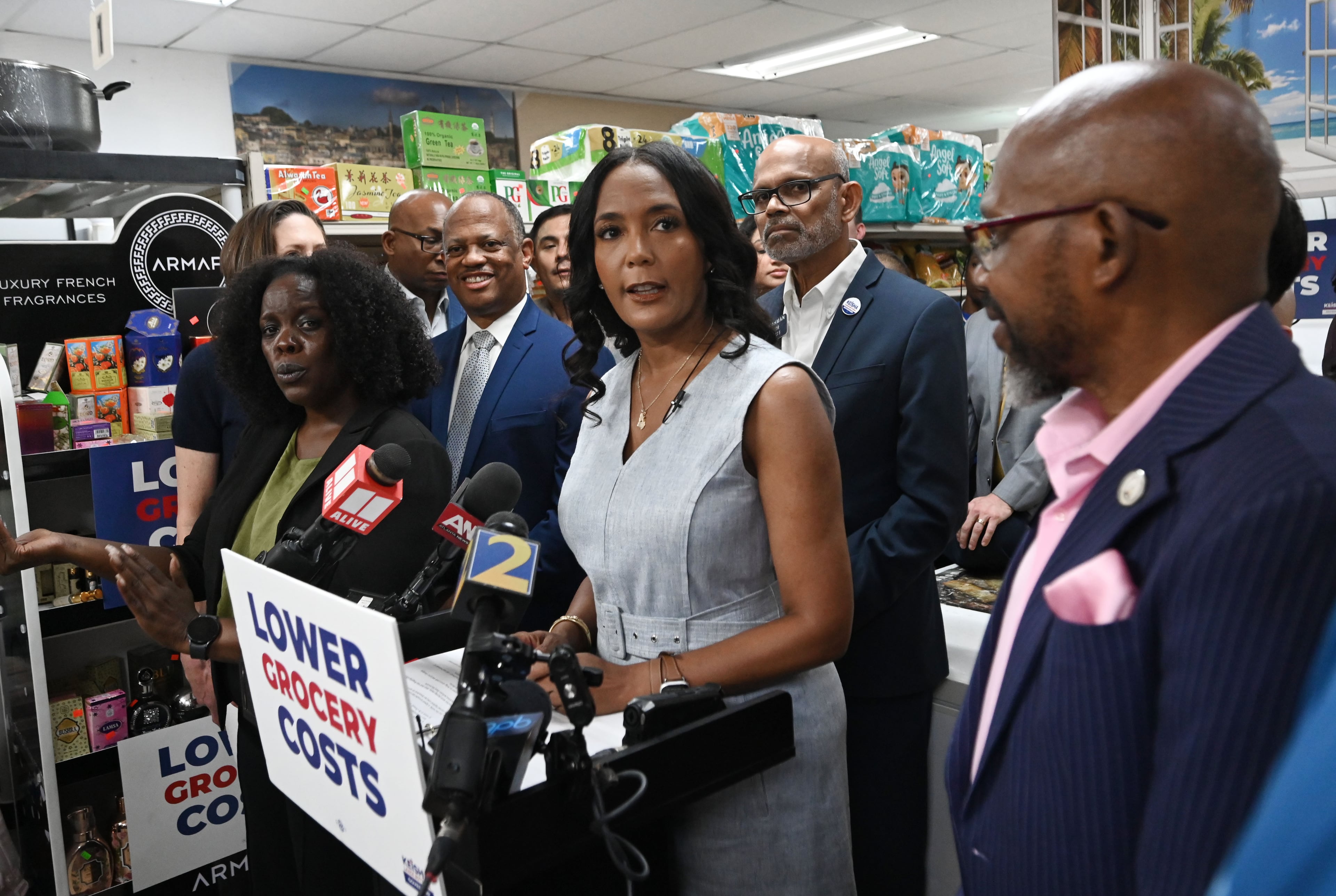
Affordability dominated the race for governor. Now Bottoms has to find a way to make good on her pledges to lower costs for Georgia families.
Some proposals may be easier sells, like her plan to exempt public schoolteachers from state income taxes and offer targeted tax relief for veterans and military retirees.
Others face steeper hurdles. Some Republicans have pushed back on Bottoms’ plan to give local governments the option to either suspend or eliminate sales taxes on groceries.
The price tag could complicate another signature promise: universal pre-K. The lottery-funded program served just over half of Georgia’s 4-year-olds in 2025. Bottoms wants to guarantee a spot for every family, which could cost at least $300 million annually.
At first, Bottoms would tap lottery reserves to pay for it. But her longer-term plan hinges on legalizing casino gambling, an idea that has long struggled to gain bipartisan support in Georgia.
Then there’s issue of tackling the rising cost of residential power bills.
Bottoms wants to pause new data center projects while the state assesses their impact. Many Democrats have pressed to deny state incentives to new projects or claw back subsidies for existing ones.
But putting the brakes on data centers would mean confronting Georgia Power, some of the state’s most influential business interests and a cornerstone of Kemp’s economic development legacy.

Managing expectations
Some of Bottoms’ toughest challenges may come from Democrats who expect her historic victory to swiftly usher in sweeping changes.
She’ll have to manage those expectations while figuring out how much she can deliver — and how quickly.
Consider one of Georgia’s thorniest divides. Republicans have little appetite for revisiting Georgia’s anti-abortion law, one of Kemp’s signature policies and the fiercest legislative fight of his first term.
But the election has changed the political calculus.
A Democratic House could advance repeal legislation, leaving the fate of the measure in a narrowly divided Senate. If all 27 Democrats supported it, just two Republicans would have to cross party lines to pass it.
That’s still a steep climb on an issue that has long been a litmus test for Georgia Republicans. But for the first time in years, repeal is no longer entirely out of reach.
Progressive Democrats will also push Bottoms to roll back other GOP laws and pursue policies long out of reach, including some that could divide her own party.
There were signs of that tension even before the election.
When Bottoms unveiled a sweeping ethics package in August, the Democratic lawmakers flanking her suddenly fell into an awkward hush after she also said she wanted to expand transparency requirements to the legislative branch.
Winning over Republicans will be hard enough. Bottoms may find that persuading her own party isn’t always easy, either.