Pocketbook issues fueled Georgia’s blue wave. Business leaders have noticed.




Voters’ economic concerns were central to the blue tsunami that washed over Georgia during the midterm election, flipping control of all statewide offices for the first time in decades.
Promising pocketbook relief, Keisha Lance Bottoms and her fellow Democrats outlined plans ranging from expanding Medicaid to boosting government support for housing.
But Democrats face a tall task ahead, economists say, especially because the broader economic challenges that vexed voters stem from global conflicts like the Iran war and stubborn inflation. In addition, Georgia’s economic development record is already well-regarded, including recent project announcements with thousands of jobs and a pro-business reputation that’s touted by both sides of the political aisle.
The governor-elect and her incoming administration will look to put its stamp on the state’s business strategy without upending aspects of its economic development machine that seem to be humming, economists told The Atlanta Journal-Constitution.
“It’s very clear that the status quo is not working, and that the voters don’t like what the status quo is,” said Tom Smith, an economist and finance professor at Emory University’s Goizueta Business School.
But at the same time, “Georgia’s economy is quite robust,” he continued. “The economy that she is inheriting is probably a very good economy at its core.”
The standard metrics of a “good economy” have been out of sync in the years following the pandemic. Inflation is high, but unemployment in Georgia is lower than the national average. Stock prices and economic output have increased, but voters feel financially squeezed — and have the receipts to prove it.
It’s a dynamic that marred President Joe Biden’s term, helping thrust Donald Trump back into office. But tariffs, the war with Iran, high fuel costs and other economic challenges came back to hurt Republicans in the midterm, the worst night for an incumbent party since the Watergate scandal’s fallout in 1974.
Bottoms did not respond to requests for comment for this article.
The abrupt shift from decades of Republican rule in Georgia raises questions about how Democrats will try to deliver their campaign promises while grappling with the same macroeconomic headwinds that have defined the past half-decade. And how will the state’s business community respond to the changing tides?
“Voters spoke loudly,” said Katie Kirkpatrick, president and CEO of the Metro Atlanta Chamber.
“The economy and the wallets of voters really matter right now,” she continued. “So they’re looking for our elected leaders, our community leaders and our business leaders to work together as a team to help address those affordability issues.”
Addressing affordability
Inflation rose to 3.7% over the year to September, and consumer sentiment is hovering near historic lows. Residents are also grappling with high housing costs and rising health insurance premiums.
“Folks feel pretty confident about their jobs. Layoffs are lower today than anytime since the 1960s,” said Mark Vitner, chief economist at Piedmont Crescent Capital. “But just because you have a job doesn’t mean you’re making enough money to pay the bills. That’s the real challenge.”
And it’s not an easy problem to fix, Vitner said, nodding to the fact some voters picked Trump in 2024 because of his promises to tame inflation.
Bottoms campaigned on eliminating the state’s sales tax on some essential goods, such as diapers and feminine hygiene products. She also has proposed giving cities and counties the option to eliminate local sales tax on groceries or temporarily suspending them during price surges.
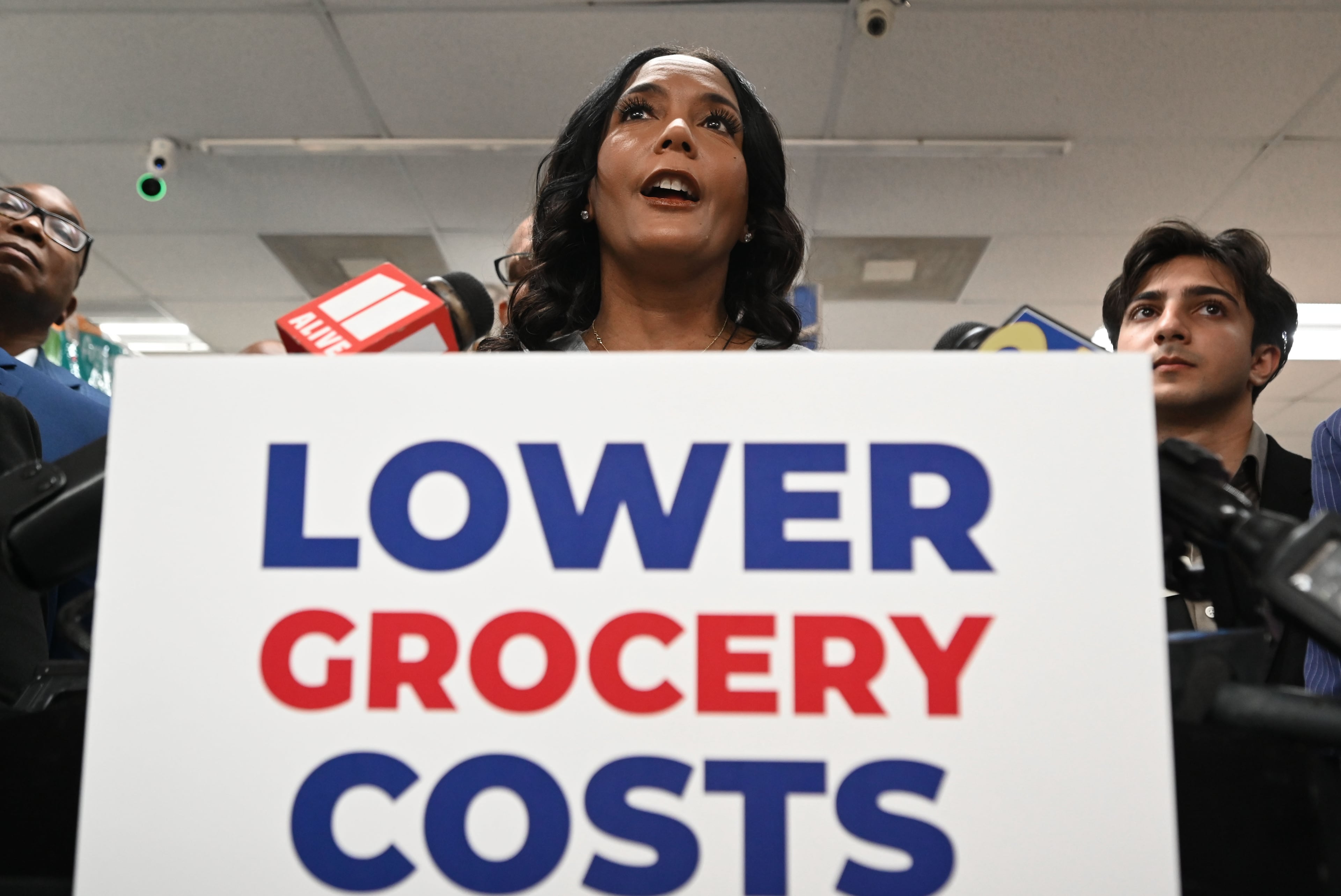
Another visible piece of the affordability problem is escalating fuel prices.
The cost of gasoline has soared this year amid the Iran war, costing Georgians an additional $2.3 billion, according to estimates by Brown University. Higher diesel prices have also pinched Georgia farmers and the state’s robust trucking industry.
Smith with Emory suggested the new governor gather the people, such as farmers, hit hardest by fuel prices and “address their concerns immediately” with new policies.
Aspects unlikely to change
As a former Atlanta mayor, Bottoms is a familiar face for many in Georgia’s business world. Both parties have entrenched relationships with the state’s companies and pro-business lobbyists.
“We’ve had a relatively friendly small business climate here in Georgia,” said Hunter Loggins, the National Federation of Independent Business’ state director in Georgia. “I think both parties recognize that and hope not to shake the status quo too much.”
Kirkpatrick of the Metro Atlanta Chamber added that Georgia’s infrastructure, higher education system and business culture separates the state from competitors. Policy debates are certainly around the horizon, but she emphasized that maintaining those three broad strengths will keep Georgia on track.
“We have to stay focused on making sure that we don’t cede ground on that particular piece,” Kirkpatrick said. “ … We hear from companies all the time that Georgia’s business climate is so well-rounded that we’re very attractive.”
The Georgia Chamber of Commerce endorsed Rick Jackson, Bottoms’ opponent, for governor. But its president and CEO Chris Clark said the chamber will focus on “finding common ground and advancing the policies that will strengthen Georgia cross all 159 counties.”
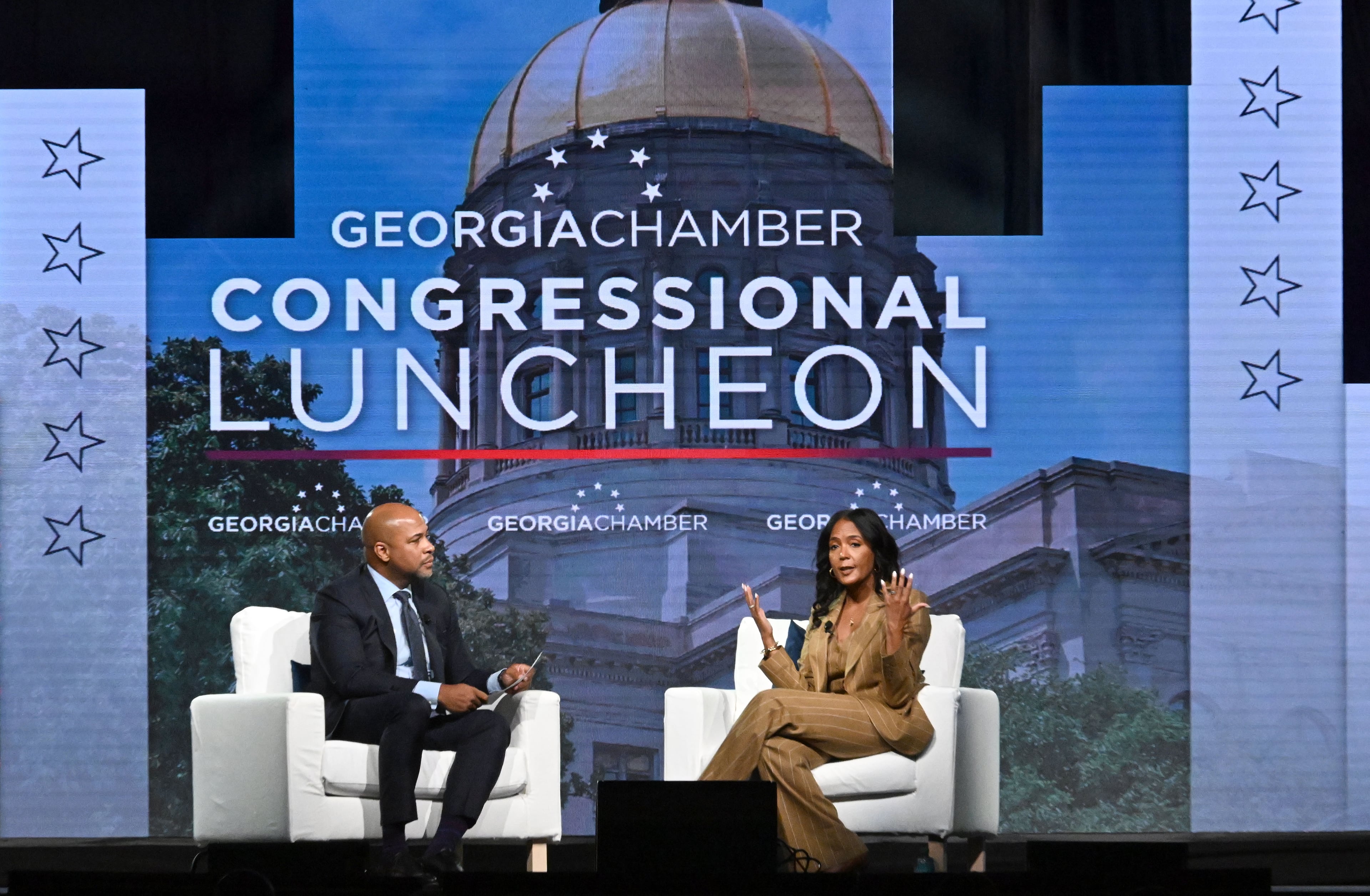
Joseph Jones, executive director of the W.E.B. Du Bois Southern Center for Studies in Public Policy at Clark Atlanta University, said he believes there won’t be radical changes to economic policies. But, he added, a “savvy” Democratic official can still be pro-business and pro-worker.
“I think that there can be an opportunity for true collaboration between workers, elected officials and corporations around how Georgians and other people in the South can actually, you know, all win as opposed to just one side winning,” Jones said.
What about big business?
While midterm voters took out their ire on Republicans, some corporate interests across the nation didn’t have a great night either.
Montana voters passed a ballot initiative to strip companies and nonprofits of their political spending power, likely setting up a Supreme Court challenge. Big Tech also had a bad night, with dozens of ballot measures passing to restrict data centers that power artificial intelligence.
Georgia’s ballot did not feature any statewide data center items, but the state does lead the country in the amount of computer storage space under construction, according to real estate services firm CBRE. These facilities have grown deeply unpopular across the Peach State, highlighted by an AJC poll last month that found nearly 70% of voters want more government regulation of AI and 61% opposing the construction of additional data centers.
Bottoms campaigned on issuing a statewide moratorium for data centers to study their environmental and economic impacts.
Gov. Brian Kemp has found success during his two terms recruiting large developments, namely auto factories, including an Audi plant announced in recent weeks.
“It’s hard not to be impressed with the win we had … with Audi coming into central Georgia,” said Roger Tutterow, economist and professor at Kennesaw State University.
Bottoms said she plans to restructure the state Department of Economic Development to focus more on small businesses rather than large corporate recruitment. Pat Wilson, who has led that department since 2016, said it’ll be ready to “continue creating opportunities for Georgians and helping the businesses that invest here succeed.”
“Companies making long-term investments need to know they have a reliable partner, and Georgia has built that reputation over decades,” he said. “That commitment to the companies and communities we serve does not change with an election.”
Focus on job growth
Though unemployment remains low, job growth has stagnated.
Georgia lost 200 net jobs in the 12 months to September, according to state Department of Labor data. The Bottoms administration will look to reverse that trend.
Jay Bailey, president and CEO of the H. J. Russell Innovation Center for Entrepreneurs, said he thinks the new elected officials will bring “a spike in inspiration” to business owners, particularly Black women. In 2025, they faced large numbers of layoffs, higher than any other group of women.
“What we saw (Tuesday) night will only reaffirm the dreams and the aspirations of Black women across the state because we had unprecedented layoffs and firings, and you’re going to see those very same women enter the marketplace again as entrepreneurs and business owners,” Bailey said.

“I think the South has needed a correction in the marketplace, a balance and an energy that did not exist. And I’m looking forward to this next season of politics that brings balance to a system that has been one way since the very beginning,” he added.
Some entrepreneurs hope more opportunities will come to business owners as a result of the election, particularly for historically marginalized communities.
“I think it’s going to usher in a new wave of opportunity,” said Al Edwards, the CEO and president of engineering firm CERM.
“As we make huge infrastructure investments, I think it’s equally important to focus on and be very intentional about empowering marginalized communities,” he said.
Policy debates to come
Under decades of Republican leadership, the state’s economic policies around minimum wage, union participation and taxes were generally well-established. But the upcoming changing of the guard could mean new approaches to policy.
“I think it’s going to be a turning point,” said Jones of Clark Atlanta University.
He said a lot of Fortune 500 companies have been wooed to the region over the past few decades “because the policies here in the South have been favorable for corporations, but not so much for the workers.”
Jones said it would be “a big ask” to change Georgia’s right-to-work status, but in the meantime, the new officials can have conversations with corporate leaders about changing their own policies and working conditions to favor employees more.
But he added the new leaders could push to increase the state’s minimum wage. It currently sits at $5.15 an hour, though the federal $7.25 hourly rate supersedes.
Loggins, with the National Federation of Independent Business, said small businesses will want their interests represented, especially amid debates over property tax bills.
“We want lawmakers to keep in mind that oftentimes, if there’s an elimination or a significant cut in homestead (property taxes), a lot of times locations will just shift the burden,” he said. “Oftentimes that goes on the business property tax.”
Bottoms will be asked to make voters feel the downstream effects of Georgia’s business strategy, Edwards said. Factory announcements and job pledges may not be enough.
“We have this tremendous economic development platform in our state, but somehow we’ve not been able to leverage that to the benefit of families,” Edwards said.