3 things to know about Keisha Lance Bottoms’ plan to cut grocery costs
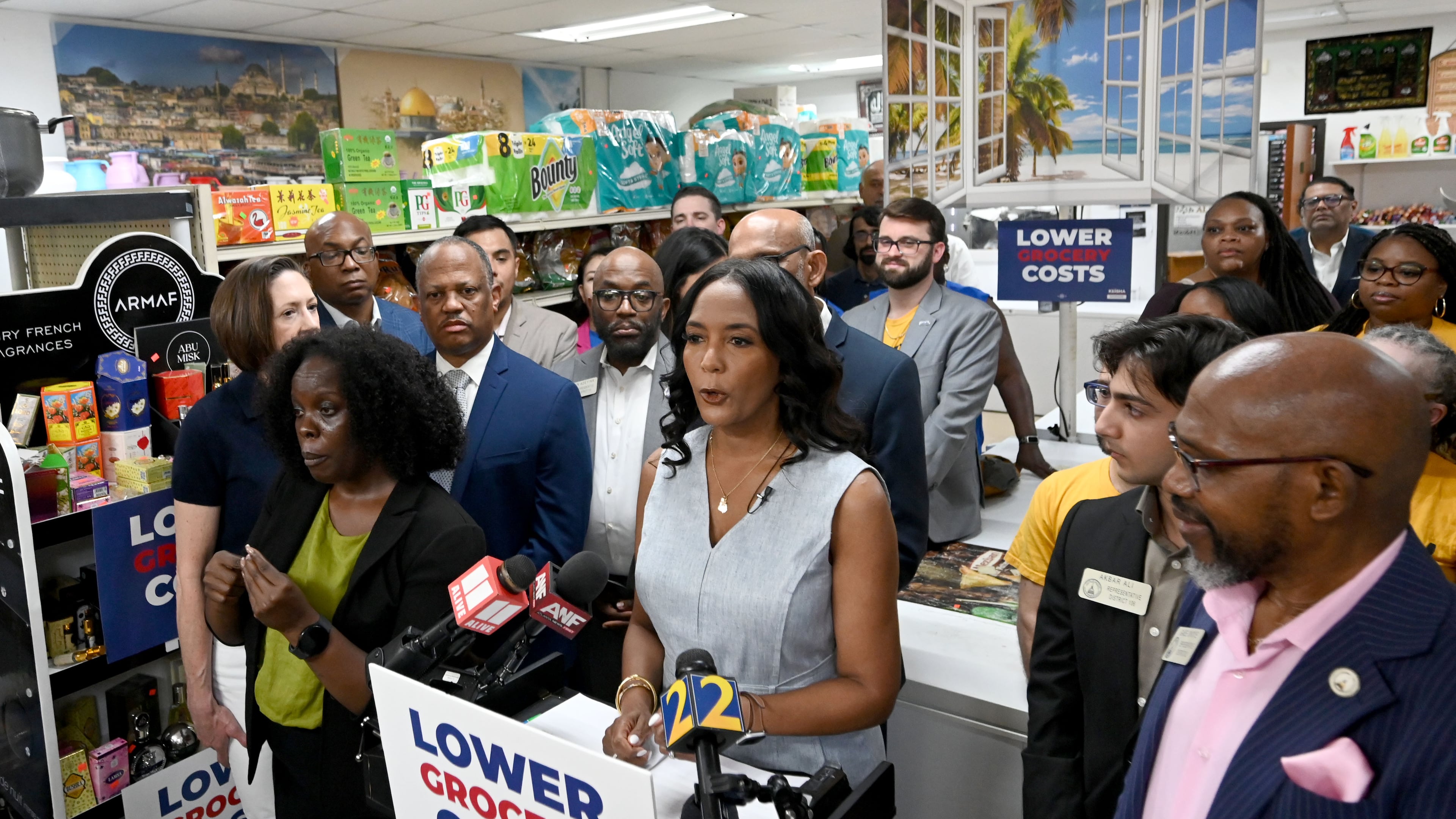

Sandwiched between the aisles of Al Huda Groceries on Lawrenceville Highway in Gwinnett County, Keisha Lance Bottoms on Wednesday unveiled her plan to tackle soaring grocery prices that are squeezing Georgians’ pocketbooks.
The Democratic candidate for governor is proposing to allow cities and counties to temporarily suspend or eliminate local sales tax on groceries, baby formula, diapers, feminine hygiene products and other necessities.
“This is something that can move the needle, can help relieve the cost burden for families across this state, and it can — and will — make a difference,” Bottoms said, while surrounded by a crowd of local Democratic officials.
But the proposal also requires buy-in from the state Legislature to make it a reality. Here are three things to know about Bottoms’ “Local Grocery and Family Essentials Tax Relief Plan.”
Local leaders get to decide
Under the proposal, local governments would have the final say whether to keep the grocery sales tax in place as it stands, suspend temporarily or eliminate it.
That could look like tax holidays, defined time periods where the tax wouldn’t be collected or doing away with it completely. Cities and counties could also freeze the tax when inflation spikes.
The flexibility, according to the campaign, would allow local governments that rely more heavily on grocery sales tax to make decisions that align with their budgetary needs.
State would offer one-time revenue support
The state would create a $250 million “Local Tax Relief Stabilization Fund” to offer one-time financial support for local governments deciding to suspend or eliminate their grocery taxes while they adjust their budgets.
A municipality would qualify for state assistance if its estimated revenue loss from suspension or elimination exceeds 5% of the jurisdiction’s total local sales tax and use tax collections for the previous fiscal year.
The state would backfill a portion of that loss, based on availability of funds.
“By our calculations, if every single county and locality decided to do it this year, then ($250 million) would cover it,” Bottoms said. “There are some counties and localities that may be able to absorb it without that backstop, but for those smaller counties and localities who perhaps can’t, then we’ll have that in our budget.”
The Legislature needs to sign-off
If elected, Bottoms will need the support of the Georgia General Assembly to make good on many of her campaign promises — including a grocery sales tax exemption.
The Legislature would need to approve the change to not only allow local governments to suspend or eliminate grocery taxes but also establish the $250 million fund in the state budget.
Bottoms pitches the plan as a way to give local leaders another tool to help residents struggling with the rising cost of living.
But the Democrat could face an uphill battle convincing lawmakers to back her policy agenda if Republicans retain control of both the state House and Senate.
“If for some reason it’s not this year that we take the House and Senate, then I’m going to do what I’ve always done as a leader: I’m going to work across the aisle,” Bottoms said.
Correction
September 17, 2026This story was updated to correct the day the plan was unveiled.