Here’s how Georgia leaders recruited Audi’s $4.2B plant, its first in the U.S.


It started with a cold call.
Gov. Brian Kemp was reading a business publication that mentioned Audi’s desire to build its first U.S. plant. That set off a two-year pursuit that helped Georgia land one of the biggest economic development prizes in its history.
When Kemp traveled to Germany in February 2025 for the Munich Security Conference, he asked economic development Commissioner Pat Wilson to arrange a meeting with the German automaker.
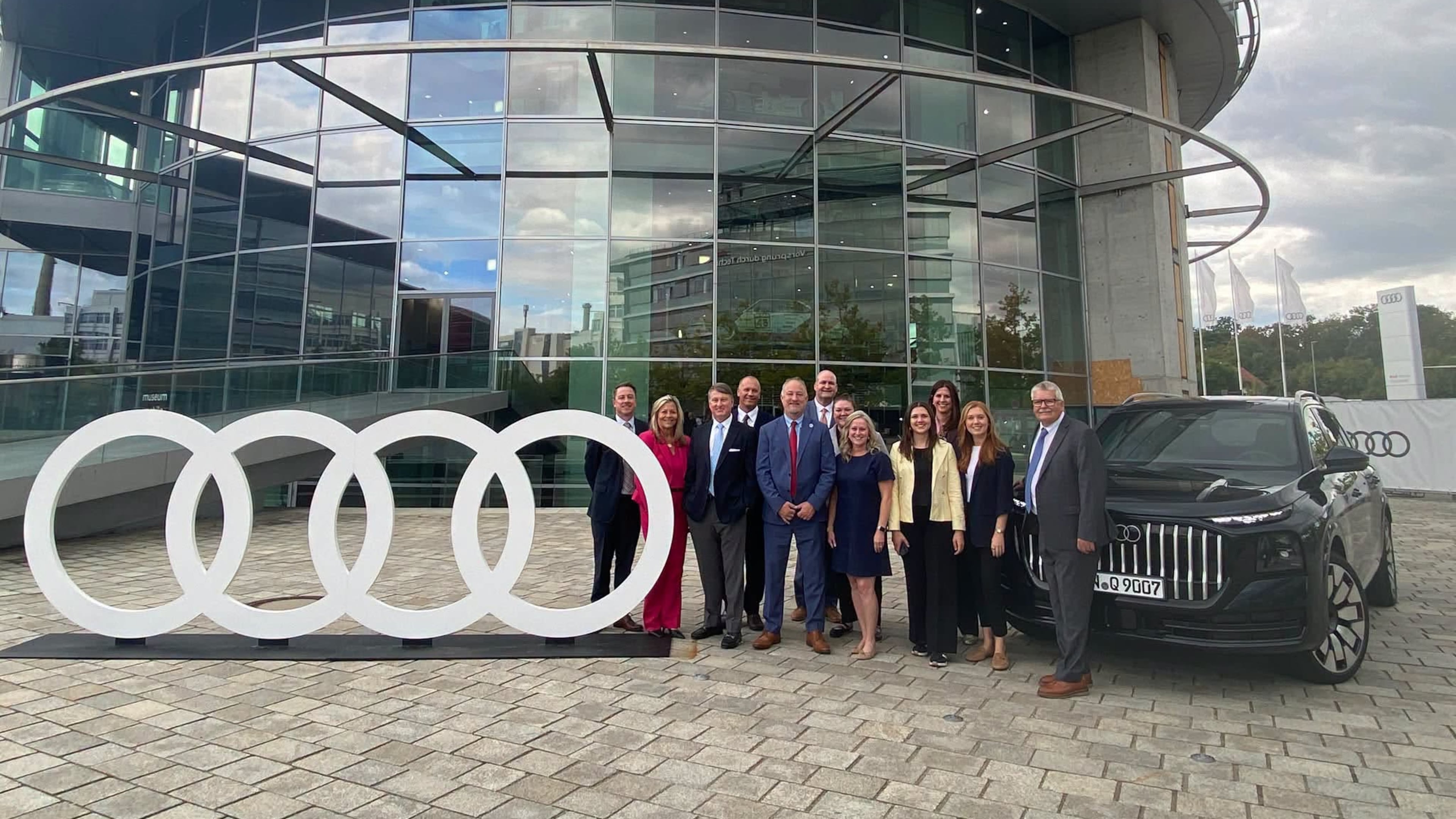
It was hardly a splashy sales pitch. Kemp and Wilson met in what the governor called a “very, very quiet, secretive” meeting with Audi CEO Gernot Döllner and his leadership team in a small hotel conference room on a Sunday. The Georgians came armed with a pitch book showcasing a sprawling industrial site in Peach County. They knew little about Audi’s plans, and Kemp recalled that the executives barely spoke.
As many of these multibillion-dollar negotiations do, the talks gained momentum, then stalled. At one point, Georgia officials resumed marketing the Peach County site to other prospects. But Wilson said the relationships forged in Munich helped keep the state in the running.
The payoff came Saturday, when President Donald Trump and Döllner announced plans at a campaign rally for a roughly $4.2 billion Audi plant near Macon that is expected to employ 4,500 workers. Although Kemp wasn’t at the rally, he and his aides were the ones who actually sealed the deal.
“This will be a transformational project for Middle Georgia. It’s a huge investment, huge amount of jobs,” Kemp said at the state Capitol on Monday.

“We’ve had a lot of great companies look at that site,” he continued, “but I think the size of this project, the amount of jobs that are coming, is really the right fit for that region.”
‘It couldn’t just be … a piece of land’
For decades after Kia announced its West Point plant in 2006, Georgia chased the elusive white whale of another major automaker.
Now, in Kemp’s eight years in office, the state has landed three enormous automotive projects: Hyundai near Savannah, Rivian east of Atlanta and Audi in Middle Georgia.
“It indicates the suitability of Georgia and attractiveness of its economy for the auto industry,” said Sina Golera, assistant professor of supply chain management at Georgia State University’s Robinson College of Business. “This is Audi’s first U.S. plant. And after looking at every possible option, they chose Georgia.”
Kemp credits much of that success to a deliberate strategy to prepare massive industrial sites before manufacturers come calling.
“It couldn’t just be, you know, a piece of land,” Kemp said. “It had to be a piece of land that was either graded or the state-owned, or we had a utility plan.”
Along with workforce development and logistical advantages, Kemp said, “speed to market” has become a decisive factor in landing major manufacturers.
Starting in 2022, the state began acquiring land in Peach County that eventually became the Middle Georgia Megasite, spanning about 2,400 acres along Ga. 96. Wilson said it held the potential for transformational projects, which led to state and local leaders staving off other interested companies.
“We’ve had numerous offers for this site to be considered for smaller projects, but the goal was to find the right project to take down the entire site,” Wilson said.
“We didn’t want it to be an industrial park,” he continued. “We wanted it to be a major regional employer that will change the trajectory of the region.”
‘Lots and lots of jobs’
The site was destined for something big, said Dan Perdue, Houston County Commission chairman.
He was among the officials who knew for some time that Audi was eyeing a Georgia site. The property in neighboring Peach County only made sense.
“If you look at what the state had already invested in this site, we knew it was going to be a big project that was going to land on the site,” said Perdue, who is the son of former Gov. Sonny Perdue.
Dan Perdue said Peach County did “a tremendous job” of cobbling together enough adjoining property for a megasite even as it wasn’t always clear what might be built there.
“They’re not going to invest the amount of money they had in the land and in the infrastructure necessary to support a site, unless it’s going to create lots and lots of jobs,” he said. “So, certainly, we wanted a seat at the table in terms of determining what that meant for our community. But we also wanted to help.”
Perdue said it was important that the negotiations were kept under wraps despite an array of people being in the know, from technical college leaders and personnel to healthcare administrators and workers who provided information that Audi needed to make its decision. He noted that projects of this scale across the state have often involved multicounty or multicity efforts, a joining of forces to appeal to major manufacturers.
Wilson said constant communication and access helped build trust with Audi during the recruitment effort.
“When you’re investing $4 billion, the company needs to know everything about the site,” he said.
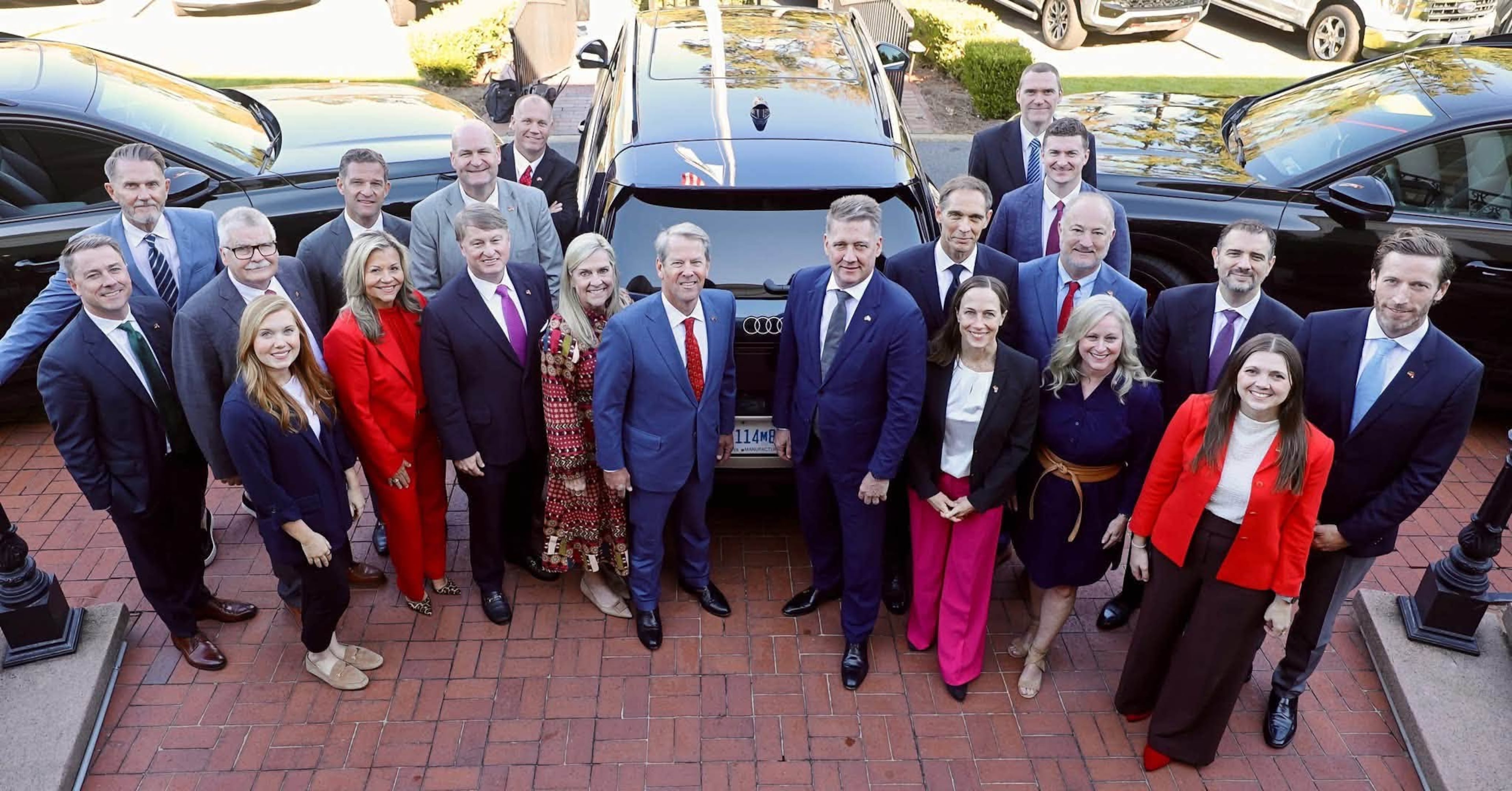
In September, a state-organized trip to Germany included a contingent of Middle Georgia officials who were hoping to land the Audi factory in their backyards.
The proposed site lies about 5 miles west of I-75 on the outskirts of Fort Valley. The area is 20 minutes or less by car from the more-populated regional hubs of Macon and Warner Robins, the latter of which has for decades promoted itself with the motto “the International City” for its strong ties to Robins Air Force Base and its steady flow of global visitors.
September’s trip abroad included a tour of the Audi plant in Ingolstadt. The journey, barely a month ahead of the deal’s finalization, was considered a gesture of goodwill by the Middle Georgians. It served to show the company that the three-county group was unified in supporting Audi’s American growth.
“In a situation like this, you really want complete buy-in between the community and the company as long-term partners,” Wilson said.

Driving confidence
Georgia leaders have plenty of experience selling the state to automakers, but Kemp had a unique advantage — recent success.
Kia’s plant in West Point opened in 2009, under Gov. Sonny Perdue, shortly after the states’ only two car factories closed: a Ford plant in Hapeville and General Motors factory in Doraville. The announcements by Rivian and Hyundai in recent years built upon the foundation Kia provided, coinciding with automakers eyeing the American South for their latest generation of factories.
For Audi, what may have been even more important was the supplier network that’s flocked to Georgia to be near those other assembly plants, Golera said.
“When an assembly plant starts working, it needs a full ecosystem of various suppliers,” he said. “A typical car might need something like 30,000 parts and components that come from various suppliers.”
Dozens of Korean parts suppliers have clustered in West Georgia near Kia’s factory, and Coastal Georgia near Hyundai’s plant. Wilson that said provides Audi a unique opportunity by selecting a site in the middle. The German automaker will also likely bring over some of its own suppliers and use the handful that already have facilities in Georgia that serve plants owned by Volkswagen and BMW in neighboring states.
In his campaign rally, Trump said his sweeping tariffs spurred Audi’s decision. He said, “Without tariffs, they wouldn’t be coming in.”
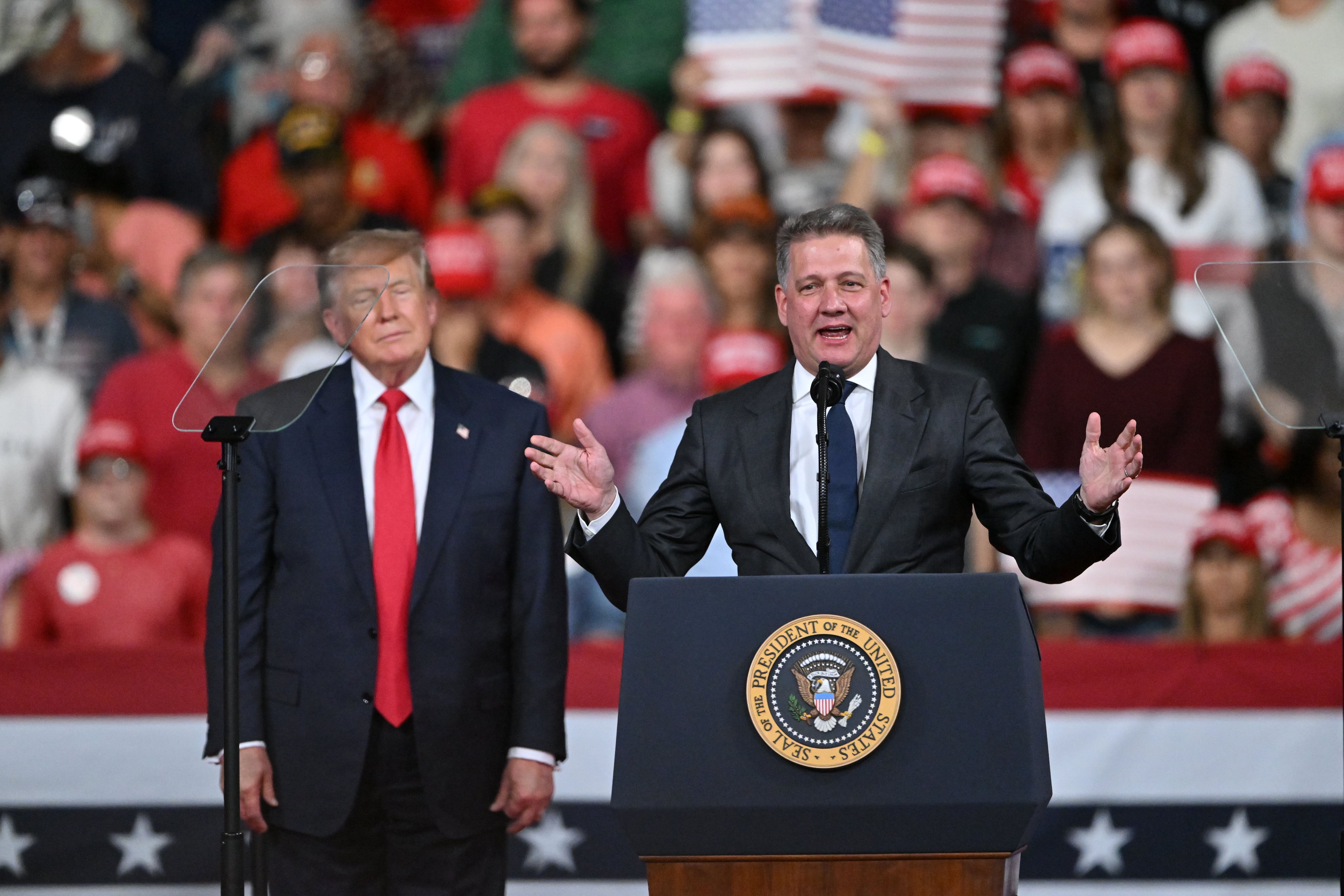
Changes in trade policy have hurt Audi and its parent Volkswagen, especially because all of Audi’s vehicles sold in the U.S. currently are manufactured either in Mexico or Europe. Döllner, who shared the stage with Trump on Saturday to tout the Georgia announcement, told Bloomberg that the Audi brand is now losing money in the U.S.
Solara, however, said multibillion-dollar decisions like a car factory aren’t driven solely by one factor, such as tariffs. He said Audi would not build a factory in a new market “just to save on tariffs unless it really makes economic sense.”
Macon Mayor Lester Miller, who is vice chairman of the joint development authority comprised of Bibb, Houston and Peach counties, said there had in recent years been “several prospects” interested in the megasite property.
That included automakers. “And we had talked to several,” he said.
The effort to land an automaker strengthened bonds between the three counties, home to more than 360,000 people combined, that hadn’t always existed or been so strong.
“Together we are really dominant,” Miller said.
He said during the mission to Germany, the Middle Georgia contingent told Audi officials that if “such a time came that we could work together, we would do everything we could to make that happen.”
Stakes at play
The stakes are enormous for Middle Georgia.
Wilson said the 4,500 jobs are expected to pay an average of more than $63,000 annually, generating roughly $283 million in payroll each year once the plant reaches full employment in 2031.
Details of Georgia’s incentive package have yet to be released, but recent ones to Hyundai and Rivian were valued at more than $1 billion each. Kemp said the state is following the same approach it used to recruit other major manufacturers. That’s typically a mixture of property tax breaks, grants, workforce training tax credits and other incentives.
“Unlike other states, we can’t just throw cash at projects, which I think is good for the taxpayers,” Kemp said. “The companies will earn these incentives, you know, after they build the plant and hire workers, and they’ll start getting the tax credits and other things.”
Georgia’s other auto factories also have on-site Georgia Quick Start training centers as part of their incentive packages, and Audi will be no different, said Technical College System of Georgia spokesman Mark D’Alessio.
“We will have a similar agreement with Audi as we do with Kia, HMGMA (Hyundai’s Georgia factory), and Rivian, under which Quick Start will build and operate a dedicated training center for the company.”
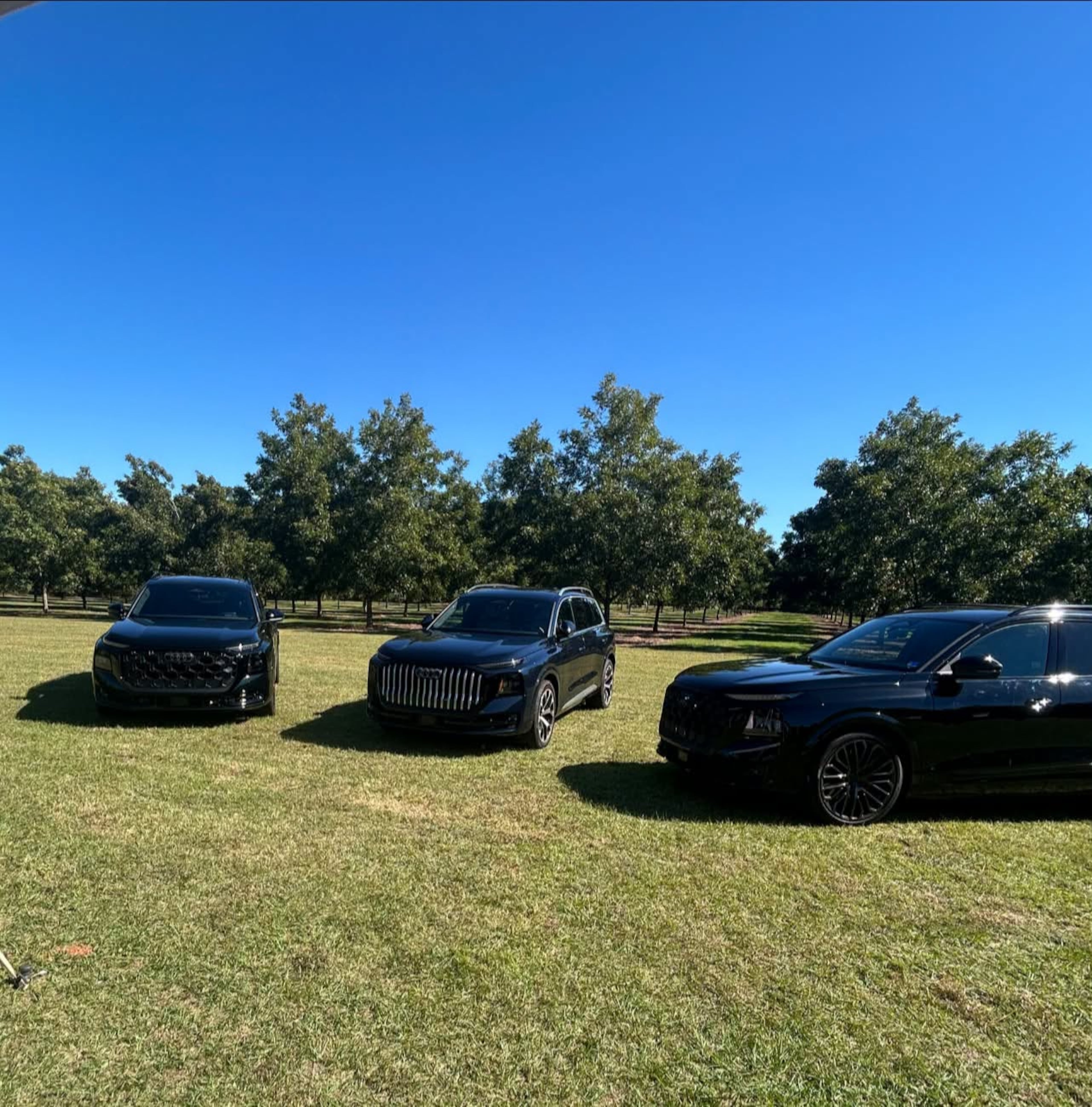
In recent weeks, Audi officials visited the Macon area, touring Peach, Houston and Bibb counties. Miller said that while the officials were in Macon, the mayor said the Audi people seemed to enjoy the city and its vast musical and historical heritage.
On Saturday, ahead of Trump’s announcement, local officials along with Kemp met again over lunch with the company’s officials. There was even an Audi parked on display outside the site of the president’s rally.
Miller, the Macon mayor, said the anticipation on Saturday was “very surreal,” akin to preparing for a big dance.
“Saturday was a roller coaster,” he said. “Saturday was one of things where you’re on the date and now you’re about to go on the dance floor. … You’ve asked them out to the dance, and they’ve said yes, and everybody’s having a fun moment.”
One major step remains: Audi’s parent company’s supervisory board must give its final approval. Wilson said the terms have been worked out and state and local officials have completed their preparations. Kemp is already looking ahead.
“We’re ready to get a date for the groundbreaking,” he said.
— AJC Education Editor Eric Stirgus contributed to this report.