Feel financially trapped? New Atlanta coalition to address economic mobility.



Atlanta received a wake-up call two years ago.
A research team at Harvard University released its most recent list ranking the 50 largest metro areas by economic mobility, measuring how easily a child born in poverty can escape it.
Metro Atlanta ranked dead last.

The dour placement put a spotlight on a decadesold problem: Metro Atlanta’s poorest residents tend to have a harder time climbing out of dire economic straits than those in other major metros.
Anna Roach, executive director and CEO of the Atlanta Regional Commission, told The Atlanta Journal-Constitution the research became “a motivator” behind a new coalition backed by the regional planning agency, civic groups and local governments to coordinate a response.
Opportunity Rising, a new task force announced Wednesday during the ARC’s annual meeting, will evaluate the region’s economic inequality, identify structural barriers preventing upward mobility and coordinate solutions.
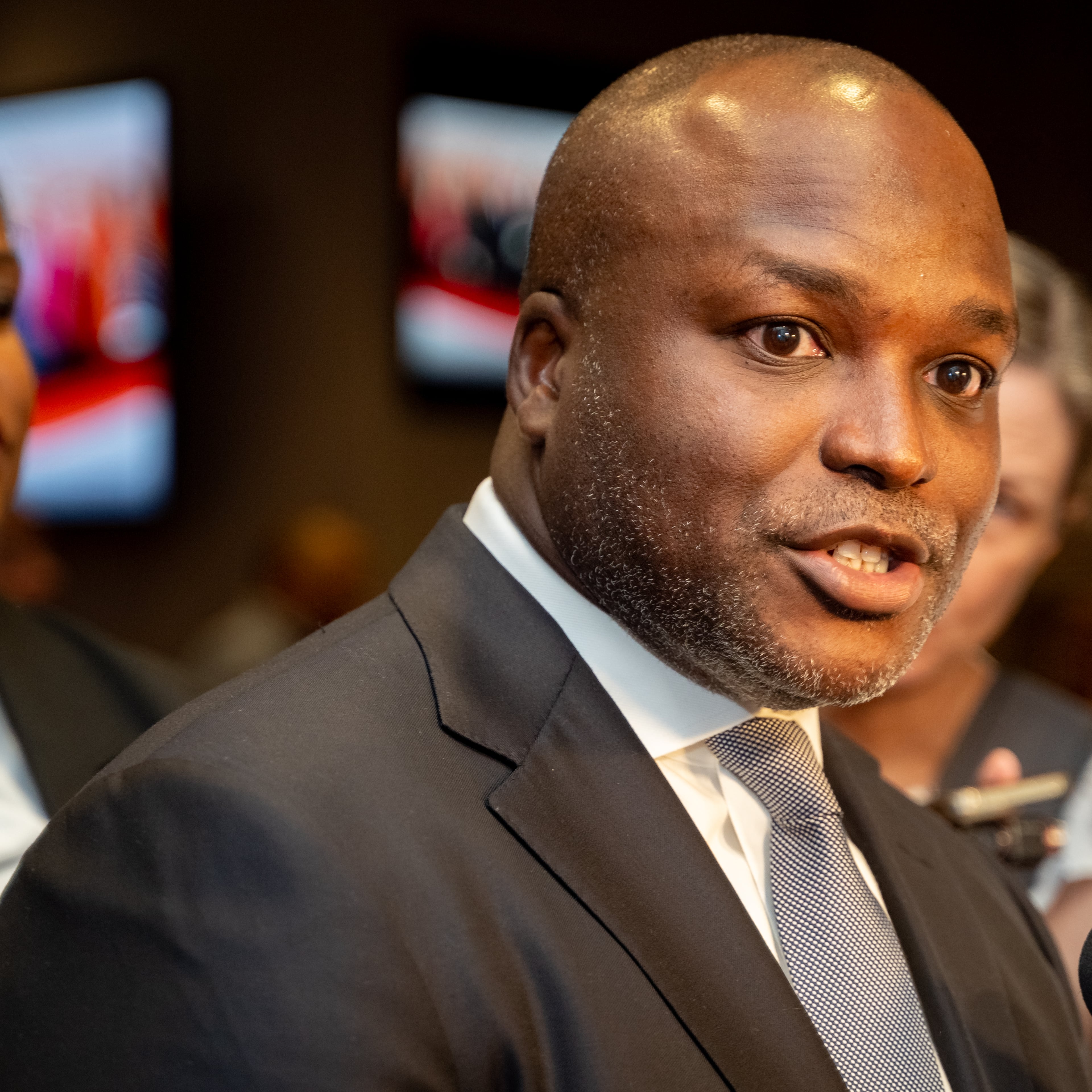
“Think about it as a group project, just even bigger,” Atlanta Mayor Andre Dickens, who also serves as ARC’s chair, said at the annual meeting.

Its members include ARC, United Way of Greater Atlanta, the city of Atlanta’s Neighborhood Reinvestment Initiative and the Arthur M. Blank Family Foundation.
“Good work happening in isolation is never enough,” Milton Little, president and CEO of United Way of Greater Atlanta, said in a news release. “Opportunity Rising brings our efforts together, so more children, families and communities have a fair chance to thrive.”
Metro Atlanta’s unemployment rate is better than the national average, but job growth in recent years has stagnated and consumers have been hit hard by inflation and surging housing costs during the pandemic.
Pocketbook issues, meanwhile, have emerged as top concerns across the state and during the midterm elections, which saw Democrats sweep back into power. Roughly a third of respondents to an AJC poll last month said inflation and the cost of living were the most important issues facing Georgia.
The ARC’s annual regional survey backs that up.
For the second year in a row, housing affordability was the top concern for residents in the ARC’s 11-county area, topping traffic, the broader economy and crime.
Dickens said housing affordability solutions and the broader ambitions of Opportunity Rising require the region working in lockstep.
“The challenges facing our families do not stop at city or county lines, and neither should our efforts to solve them,” he said in a news release.
‘Hard truths’
Harvard’s study wasn’t the first warning sign of deeper economic inequality issues bubbling beneath the surface in metro Atlanta.
Across the city, children born into poverty in Atlanta have only a 4% chance of getting out of it in their lifetime, according to Atlanta Black wealth-building organization Kindred Futures. For select neighborhoods, the challenges are even more steep.
For children who grow up in Atlanta’s English Avenue neighborhood, for instance, their average household income by the time they reach 35 years old is about $14,000, according to the Opportunity Atlas, a collaboration between the U.S. Census Bureau and Harvard.
“Economic mobility needs to be part of the vernacular of this region,” Roach said. “It is probably the single most important thing that we struggle with as a region, so we need to get people talking about this.”
Housing affordability is one place with a lot of “hard truths,” Roach said.
Rents have surged more than 18% in the broader 29-county Atlanta metro area since the COVID-19 pandemic, according to Apartmentlist.com.
The median sales price for a house in September was 57% more expensive than eight years prior, according to Georgia MLS, which tracks a 12-county Atlanta metro.

About 51% of ARC survey respondents rated housing costs as a major impediment to economic mobility, following by a lack of job opportunities (35%) and transportation costs (28%).
In addition, 4 in 10 respondents said they have two or fewer friends whose household income is very different from their own, which research said often acts to lock people into their economic status. The ARC poll, administered by Kennesaw State University, surveyed more than 4,100 respondents with a margin of error of 1.5 percentage points.
“Metro Atlanta residents are telling us what stands in the way of getting ahead: housing they can afford, jobs they can reach, and connections across income lines,” Dickens said.
Every city and county controls its own zoning and housing regulations, which govern supply and choice. Prior ARC guidance to local governments in the region focused on increasing housing stock as the central solution without designating the cost of that housing or its location.
That is changing as a result of the most recent ARC survey that highlighted metro Atlanta’s growing frustration with housing affordability. Roach said getting housing “in the right place” and “at the right price point” has become central to ARC’s plan moving forward, which is called Housing Forward 2035, incorporating county-by-county housing targets.
“That’s all from listening to metro Atlanta say that this (housing affordability) is their biggest pain point,” Roach said.

Despite the city’s reputation as a mecca for Black wealth and opportunity, the racial wealth gap is stark.
Median household incomes for all racial groups in Atlanta increased from 2013 to 2021, but it grew more gradually for Black residents, according to the Annie E. Casey Foundation. Despite the increased incomes, the gap between Black and white households widened from about $72,000 in 2013 to more than $75,000 in 2021.
It’s reflective of broader national trends.
A recent report from the Federal Reserve found that median net worth for Black non-Hispanic families in the U.S. fell by 25% between 2022 and 2025, the only group to experience a decrease. All other families grouped by race or ethnicity saw an increase in their median net worth.
Roach said Opportunity Rising’s work won’t specifically target racial inequities, saying that targeting economic mobility overall will inherently address gaps in racial wealth and opportunity.
“I don’t know that we necessarily need to describe this in the context of race,” Roach said. “We just have to look at our geospatial inequities in metro Atlanta. … We are looking for economic mobility for anyone who has been forgotten by this region.”
Opportunity Rising’s plan
The new coalition has a four-pronged approach: analyzing data, evaluating policies, aligning investment and collecting community feedback.
The task force partners were recruited because of their existing work on economic mobility issues, aiming to create a brain trust without duplicating efforts.
Roach said ARC will hire a chief prosperity officer to focus solely on this effort, aiming to have the role filled no later than 2027’s first quarter. She said the region currently doesn’t have anyone “waking up and thinking about this day after day after day for the region.”
She added that Southern Co., the Atlanta-based parent of Georgia Power, will serve as the “corporate champion” for Opportunity Rising.
“No city or county grows alone,” Chris Womack, the president and CEO of Southern Co., said at the ARC annual meeting.
“No business succeeds alone. No infrastructure system can operate independently, and no community can be left disconnected without the consequences for all of us. We are all a part of what I call this connected grid of metro Atlanta,” Womack said.
By the middle of next year, Roach said ARC will create a regional dashboard of economic mobility metrics alongside several tangible goals.

“No one organization is going to define success for this region,” Roach said. “What we are proposing is that we come together, we identify what success looks like collectively … and how we’re going to measure progress going forward.”
To show that progress is possible, just look northeast to the Queen City.
Charlotte, North Carolina, ranked last in 2014 when Harvard released its first economic mobility study, setting off the same kind of alarms currently ringing through Atlanta. By 2024, North Carolina’s largest metro area moved up 12 spots, which Roach said serves as an inspiration.

In the years following 2014, the Charlotte-Mecklenburg Opportunity Task Force was formed, resulting in a 21-point action plan. Those efforts led to more than $1 billion of public-private partnerships focused on housing, education, workforce development and racial equity initiatives.
She said the Atlanta Regional Commission and other Opportunity Rising stakeholders are in contact with Charlotte leaders to learn what worked and what pitfalls to avoid. The main lesson so far, Roach said, is that these efforts require perseverance.
“It took us a long time to get here. It’s going to take us time to get out,” Roach said. “So that stick-to-itiveness is something that we’ve heard loud and clear from our friends in Charlotte.”
“You’ve got to stick with the work,” she added.