AJC poll: Georgians concerned about inflation, economy as midterms loom
Though Republican and Democratic voters in Georgia have vastly different opinions on most topics, they do agree on at least one thing: Inflation is the single most important issue facing the state today.
Their concerns reflect the rocky national economic landscape as gas prices keep increasing in the wake of the war with Iran and the cost of goods and services continues to climb.
In the latest Atlanta Journal-Constitution poll, 17% of respondents who plan to vote in the Republican primary cited inflation and cost of living as the state’s biggest issue. Those voting in the Democratic primary agreed, but by an even larger margin, with nearly one-third ranking inflation and cost of living as the top concern.
“The current economy is definitely a challenge,” Laura Rose, 77, told the AJC. Rose, who will likely vote for whomever is the Democratic candidate for governor, lives in Watkinsville, near Athens, on a fixed income. Her spouse recently passed away, cutting her monthly income in half, but she said she is weathering the challenge for now.
“I am not in economic trouble right now because I try to keep everything within my monthly income and I have savings. I don’t have a lot of savings, I’m not a millionaire, but I am OK,” she said.
In the AJC polling, Democrats overwhelmingly disapprove of President Donald Trump’s handling of the economy. The vast majority of Republicans like Lilburn resident Scott Galt, who plans to vote in the GOP primary, say they like the job Trump is doing.
“I think he has a long-term outlook. He’s done a lot of things that nobody else had the guts to do,” said Galt, a retired union pipe fitter, who approves of Trump’s aggressive trade policies.
The AJC’s polling in early 2025, just before Trump’s return to the White House, generally showed Georgians optimistic about economic prospects, though divided by party lines. Tariffs were also a concern.
With tariffs still an issue and conflict in the Middle East sending oil prices skyward, inflation has reemerged as a challenge for consumers.
A key measure of inflation, the personal consumption expenditures price index, jumped in March. Compared with a year ago, prices (including food and gas) rose 3.5%, the largest increase in nearly three years.
The persistence of higher prices is the bigger problem, said Mark Vitner, chief economist of Piedmont Crescent Capital, a longtime analyst of the Southeast economy.
Inflation surged during the pandemic when government stimulus packages and low interest rates boosted consumer spending. The surge in demand hit during a time of limited production, causing supply chain disruptions, and prices skyrocketed during the Biden administration, though they ultimately started to wane.
Overall, prices are roughly 30% higher today compared with the start of the pandemic, Vitner said. That puts households making the median income of about $90,000 or less in a pinch. They are now spending more of their money on necessities, such as food.
“With the cost of those necessities going up, they get squeezed out (of) spending on everything else,” Vitner said.
Trump campaigned on taming inflation, but rising prices have remained stubborn.
Food banks and other support agencies in the Southeast told economists from the Federal Reserve Bank of Atlanta that they are receiving a rising number of requests for assistance earlier this year, according to the central bank’s latest Beige Book.
AJC polling was conducted by the University of Georgia School of Public and International Affairs in late April. Surveys included 1,000 likely Republican voters and 1,000 likely Democratic voters. The margin of error for both surveys was 3.1 percentage points.
AJC primary elections polls
Democratic Governor: Bottoms leads as Democratic rivals hope for runoff
GOP Governor: More than $100M later, race is neck-and-neck
Lieutenant Governor: Democrats, Republicans have no idea who should be lieutenant governor
Democratic Senate: Democrats high on Ossoff heading into tough election
GOP Senate: Collins leads in primary, but most voters undecided
Explore complete poll results: Democrats | Republicans
Popularity test: Gov. Brian Kemp bets his clout can lift Derek Dooley
Technology: Voters back AI rules as campaigns’ fake videos, deepfakes prompt concerns
Elections: Georgians, even many Republicans, oppose a federal election takeover
Economy: Georgians concerned about inflation, economy as midterms loom
Foreign policy: War in Iran creates another deep split among Georgia voters
Undecided voters: Georgia’s midterm voters are worlds apart. But neither group can decide.
Voter confidence: Georgia Democrats show growing confidence in fairness of elections
Presidential approval: Georgia Republican voters are still all-in for Trump
PDF crosstabs: Democrats | Republicans
FAQ: How the AJC polls Georgia voters
Poll archive: View past AJC poll results
Gas prices and wages
Today, the most visible sign of pain is at the gas pump. The war in Iran has disrupted the global energy market, elevating oil prices. The average price for regular unleaded gas in metro Atlanta was more than $4 per gallon on Wednesday, up more than $1 from a year ago, according to AAA.
“It’s a daily reminder of higher inflation,” Vitner said, that hits harder in a heavy commuter region like metro Atlanta.
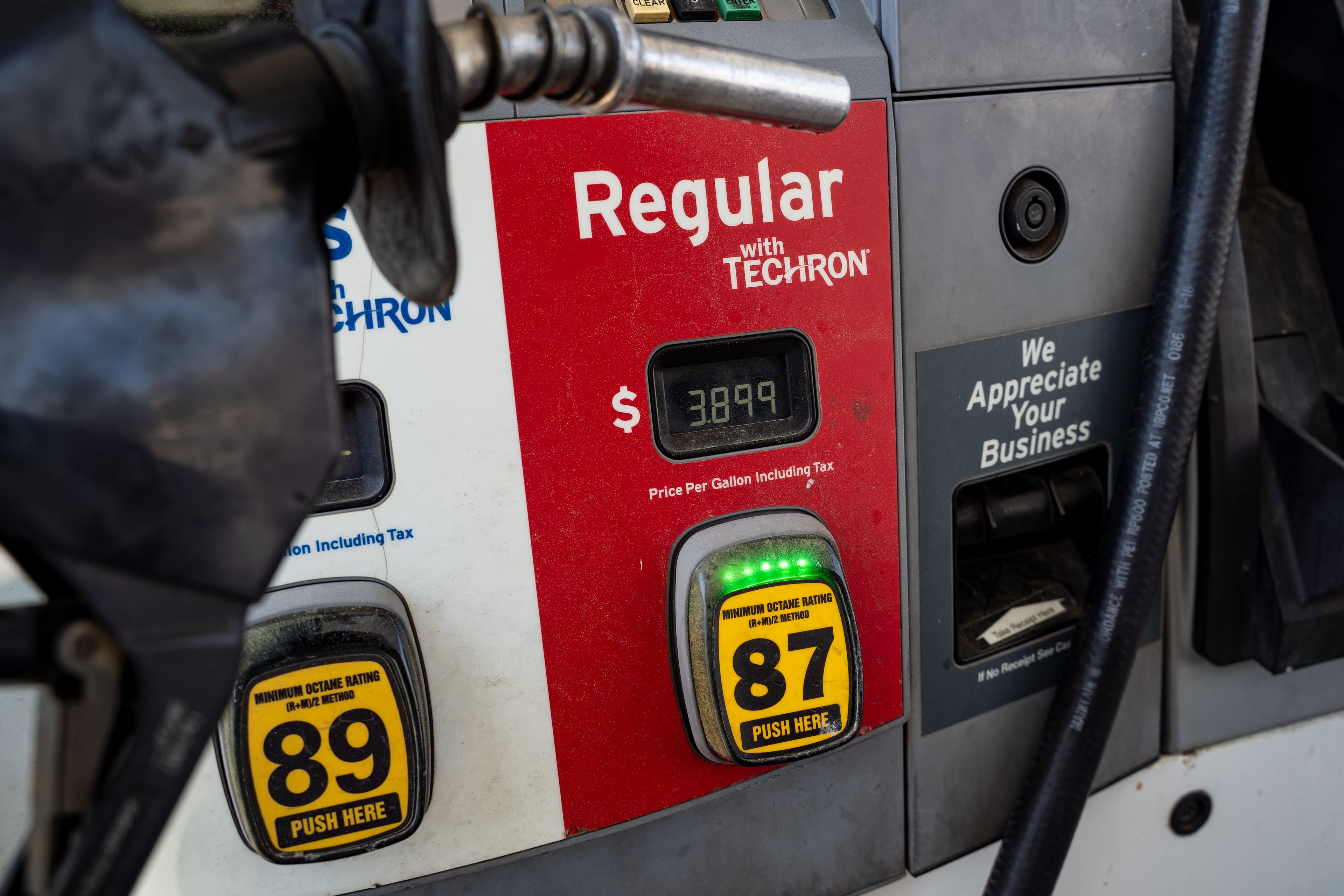
Even if the war in Iran is resolved, it could take some time for gas prices to retreat, said Patrick De Haan, a petroleum analyst with Gas Buddy.
“It could take beyond a year for prices to fully go down to their prewar level, and that’s pretty sobering,” he said.
Vitner expects inflation to moderate when the war ends, predicting the consumer price index could lower to 2.5%. The CPI rose to 3.3% for the 12 months ending in March.
“That doesn’t mean that the cost of living has gone down,” he said. “It’s just things are getting more expensive a little less rapidly than they were previously. We have to see incomes grow more rapidly, and that takes time.”
Wage growth is still increasing, just at a slower pace.
The average worker’s raise the past three months has been 3.9%, according to March data from the Federal Reserve Bank of Atlanta’s wage tracker. That wage growth is still outpacing inflation, but is down about 9% from a year ago.
Will the economy get better or worse?
Though Georgians agree on inflation being the state’s top issue, Republicans and Democrats diverge when it comes to their views on Trump’s economic policies.
About 80% of Republicans think the strength of the U.S. economy will be better 12 months from now, while that’s completely inverted for Democrats.
Galt, the Lilburn resident, said he supports Trump’s implementation of new tariffs in his second term, which he believes will spur more investment in the U.S. and bring back jobs from overseas.
“We had all these large manufacturing jobs that paid good money and people had good benefits, and it really helped the Atlanta economy,” Galt said.
Rose, meanwhile, who voted for Kamala Harris in 2024, thinks the tariffs have had a significant impact on cost and inflation.
She said Trump didn’t understand that “people in the country receiving the foreign goods are the ones paying for the tariffs.”
She is not optimistic that prices will go down, despite the U.S. Supreme Court striking down many of the president’s tariffs.
“I know for sure that none of these companies are going to reduce their prices once they get their tariff money back,” she said.
Ultimately, Rose thinks come midterms, voters will make their choice based on the old political adage: “It’s the economy, stupid.”
But how both sides view it is less simple.
AJC Exclusive Poll
As part of its commitment to being the essential source of political news in Georgia, The Atlanta Journal-Constitution regularly commissions polls to measure public opinion about issues important to the state’s voters and about the officials who control the levers of power.
The AJC surveys, which are conducted by the University of Georgia’s School of Public and International Affairs, are among the few independent polls in the state during election years.
The AJC’s stories on the poll examine voter opinions and preferences heading into the May 19 primary. Stay tuned as we share results in the Democratic race for governor, the U.S. Senate contest and more.
For more on the candidates and this year’s election, check out the AJC’s 2026 AJC Voter Guide.
If you’d like a daily update on politics, subscribe to the Politically Georgia newsletter for analysis and insight delivered weekday mornings to your inbox.