Data centers, factories bring billions to Georgia. How can more prosper?

Billions of dollars of investment have been pouring into Georgia over the past few years as data centers and advanced manufacturing construction booms. Now, a new report is looking at how that potential prosperity can be shared.
In 2024, Hyundai opened a $7.6 billion electric vehicle manufacturing plant near Savannah and has already promised a $2.7 billion expansion. Georgia was already a top data center construction market before this summer, when OpenAI announced a $20 billion data center project, which is slated to begin construction in 2028.
Add to that the approximately $5 billion the Georgia Ports Authority is investing in improving infrastructure, Rivian’s future $5 billion EV factory and the $16 billion Georgia Power plans to spend to expand its power fleet, and that totals more than $50 billion. Yet those dollars are still just a fraction of the overall investment coming from data center, advanced manufacturing, energy and other infrastructure projects being built in Georgia and the region overall.
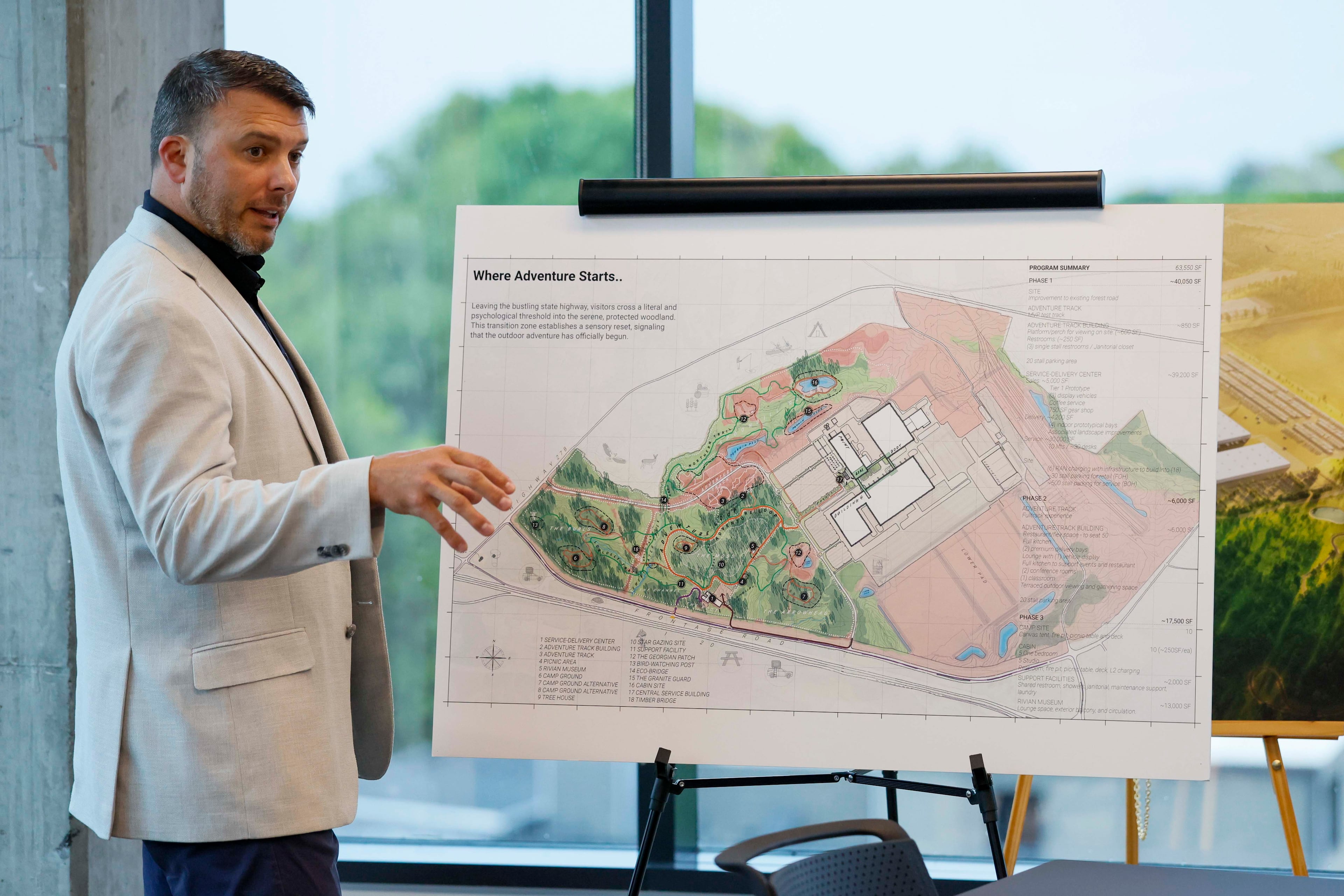
Across six states in the Deep South — Alabama, Arkansas, Georgia, Louisiana, Mississippi and Tennessee — hundreds of billions of dollars for projects ranging from nuclear generation to data center campuses have been committed, according to a new report, “The $271 Billion Question: Who Will Build, Own, and Benefit from the Deep South’s Next Economy?”
The study lays out how the economy of the Deep South is changing from the scale of the investment being injected into the region. The report tracked projects worth $1 billion or more and was produced by Yancey Consulting in partnership with Mississippi-based HOPE, which is a trio of organizations, including a credit union, working to advance economic mobility in the region. It was presented as part of this year’s Delta Fest, an event aimed at advancing economic prosperity in the Deep South.
“It’s really critical that we ensure that these investments flow through the economy, and it is broad participation, not just a few people extracting the benefits,” Bill Bynum, the CEO and founder of Hope, told The Atlanta Journal-Constitution.
“Make sure that the consumers, the workforce, the small businesses, the entrepreneurs are positioned to optimize this opportunity because quite honestly without that, the investments are not going to realize their full potential,” Bynum said.
Operating factories typically have huge workforces. Hyundai, for instance, has promised to hire 8,500 workers. Hyundai suppliers have already hired thousands more. Data centers generally employ armies of workers during construction, but far fewer once operational.

The investment is the stone in the pond that then sends waves rippling out through a local community and state, but it alone does not tell whether a community will prosper, according to the new study.
“It does not tell us who will win contracts, whether workers will be prepared for the jobs being created, whether entrepreneurs in the region will become recurring suppliers, or who will own the land, businesses, homes, intellectual property, and productive assets that appreciate as these economies expand. Nor does it tell us whether the wealth generated during this period of growth will remain in the region long enough to circulate and compound,” the report’s authors write.
But every project creates demand beyond what its stated purpose is, which creates opportunity. For example, a data center needs plumbers, who then need food and housing, Lisa Yancey, the president of Yancey Consulting, told the AJC.
“There’s a lot of conversation around the AI infrastructure, but as a singular tech,” she said.
“There needs to be the ecosystem and community development. And so we’re seeing in the conversation those ties and those different sectors seeing where they directly connect and are starting to talk about what that means in terms of workforce labor and prepping different communities and the region for this rippling economy,” she added.
Raphael Bostic, former president and CEO of the Federal Reserve Bank of Atlanta, spoke at Delta Fest this year and told the AJC that the new report gives people information on how to position themselves in the money that’s coming to the region.
“That would be for small business leaders, for local communities, for contractors and the like to find ways to plug in and be participants to help create all of this infrastructure around AI, around advanced manufacturing, around broadband,” Bostic said. “There are so many things and so much money that is slated to come to the region.”
While a lot of fear and uncertainty about community and environmental impacts has accompanied large-scale projects, some people may also be wondering how they can benefit from the investment these companies and municipalities are making.
“The reality is I don’t know of other investments that come close to reaching the level that the investments that we have documented equate to, and so it’s a question of either finding other resources to drive the economy or working to make the most of these investments, make sure that they benefit everyday people and that the concerns are addressed,” Bynum said.
There are a few ways people at all levels of the economy can play a role in making sure the investments bring shared prosperity to the South, according to the report:
- Entrepreneurs and business owners can look for a demand before it’s obvious and think beyond just a single contract but at what can be recurring business.
- Investors and capital providers can build funding strategies that help businesses respond to the coming demands.
- Corporations can assess how a project can expand regional participation, particularly looking at its supplier pipeline and procurement processes.
- Universities and community colleges can build training pathways for the skills that the changing economy will require of workers. (Atlanta Technical College recently opened a classroom for data center operations.)
- Philanthropists can connect institutions and fund research and coordination.
- Public leaders can address a consequence of the coming growth and investment now instead of an emergency response later.
- Community developers and civic institutions can identify what people will need in order to stay and build wealth in the places where investment is growing.
“This has allowed us to see what is happening right now at what scale,” Yancey said, “and is giving us information around what growth is looking like from an economic lens, with the opportunity to shape it with intention.”