How Keisha Lance Bottoms overcame the odds to win Georgia’s race for governor
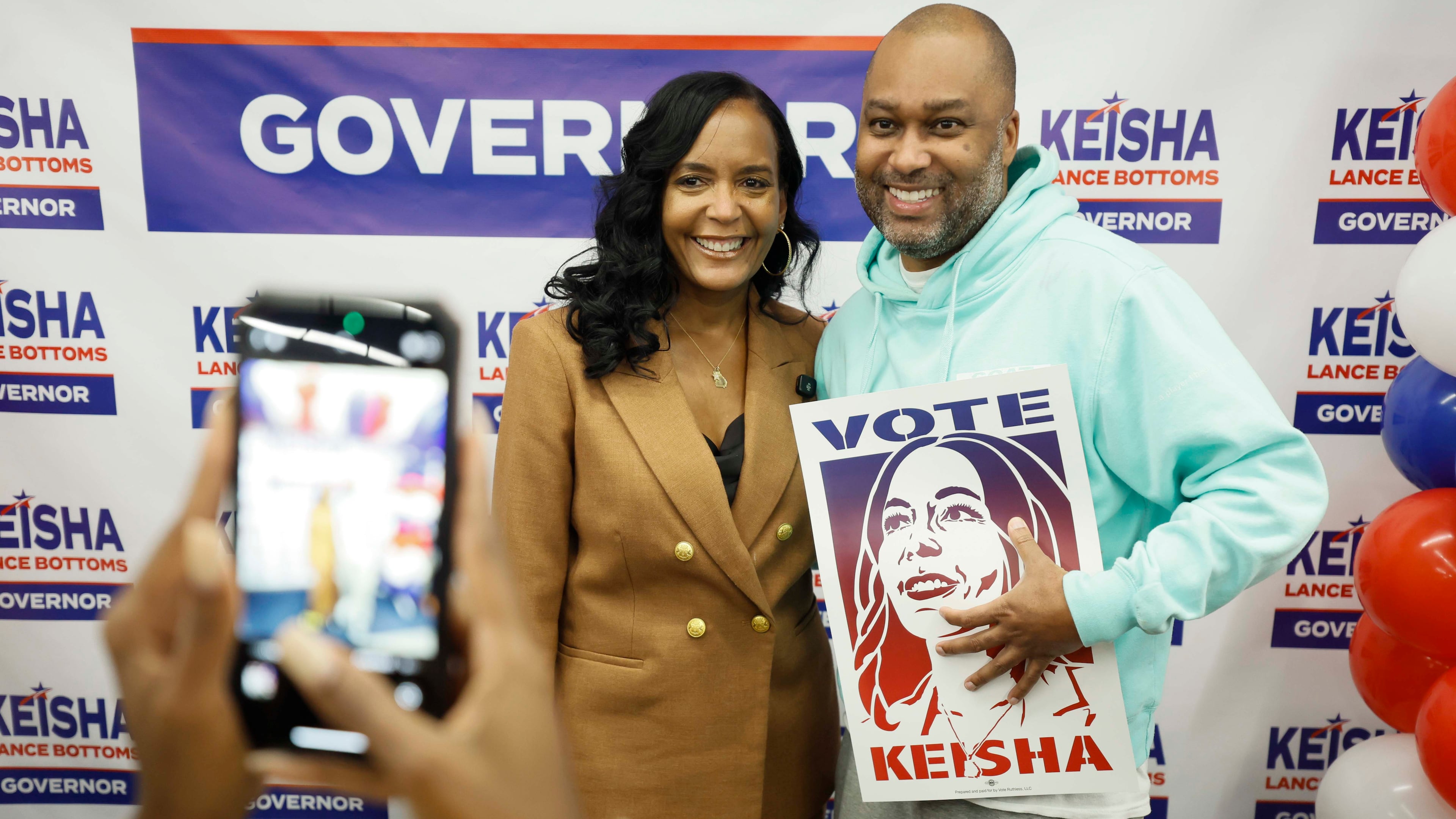

The $87 million announcement hit Keisha Lance Bottoms’ campaign like a gut punch.
Rick Jackson had already spent more than $100 million of his own fortune to win the Republican nomination for governor. Now the billionaire was preparing an even bigger onslaught against Bottoms. And she couldn’t begin to match his financial firepower.
Interviews with the Democratic governor-elect and a half-dozen top advisers reveal how Bottoms overcame that enormous financial disadvantage to pull off a historic victory.
The spending spree rattled Democrats in Georgia and Washington. And it took a toll on Bottoms herself, who confronted the prospect of months of attacks with nowhere near enough money to answer them.
“For every $10 that someone drops off at the door, it seemed as if my opponent was able to spend a million,” she said. “There were some days that it really was a faith walk.”
But she and her advisers resisted the temptation to panic, betting that Jackson’s spending could only go so far if they stayed focused and relentlessly tied the Republican to President Donald Trump.
The result was a 9-point victory that made Bottoms the first Democrat elected Georgia governor since 1998 and the first Black woman elected to lead a state in U.S. history.
Here’s how she and her campaign team pulled it off.

The advantage of being underestimated
From the beginning, Bottoms’ rivals tried to make the election a referendum on her record as Atlanta mayor, portraying her as an ineffective and corrupt leader who would be easy to defeat.
But her advisers saw it differently. Republicans had spent so much time tearing Bottoms down that they figured voters might be surprised when they actually got to know her. And they believed Jackson was wasting millions on predictable attacks.
“The misconceptions about her played to her advantage,” said Adam Magnus, the Democratic ad maker behind her campaign.
It was nothing new for Bottoms. Plenty of Democrats wrote off her chances of winning the Atlanta mayoral race in 2017 and then scoffed at the idea of a political comeback after she decided against seeking another term at City Hall.
Even this year, many expected her to get dragged into a bruising Democratic runoff. Each time, she proved them wrong.
“The overarching thing is people kept underestimating her. And they regret it,” said Cornell Belcher, her pollster.
Bottoms’ advisers leaned into her personality, presenting her as a relatable mother of four, an experienced leader and an advocate for everyday Georgians struggling with rising costs.
Jared Leopold, another senior campaign strategist, said Bottoms’ greatest strength was her ability to connect with voters in personal terms and communicate a clear sense of her values.
Instead of running away from the candidate Republicans were attacking, Democrats made her the centerpiece of their pitch.
Surviving the $87 million ‘gut punch’
No challenge loomed larger than Jackson’s money.
When he announced his $87 million ad buy in late July, it threatened to overwhelm Bottoms’ general election campaign before it got off the ground.
Inside Bottoms’ operation, advisers acknowledged a period of uncertainty as Jackson kept pouring more money into the race.
“But it didn’t make her cower. We weren’t going to fight him dollar-for-dollar. That’s madness,” said Lauren Passalacqua, a partner with Magnus at MPWR Media Strategies. “We just used his own words against him.”
Magnus warned against what he called the temptation to “chase the rabbit,” constantly reacting to Jackson’s latest attacks rather than pursuing a strategy of their own.
“We had to play golf not tennis,” he said. “We had to play the course and make sure we stay focused on what we knew we had to do to win.”
The spending gap was staggering. Jackson poured more than $200 million of his own money into the race, outspending Bottoms by an estimated 10-to-1 in August and 7-to-1 in September.
But the campaign spent enough to keep her competitive her through the summer, then waited for more resources to arrive after Labor Day, when support from national donors, the Democratic Governors Association and local Democrats began to pick up.
Tharon Johnson, a veteran Democratic strategist who joined the campaign after the primary, helped sharpen the operation as the general election intensified.
“This campaign was all about Keisha being able to take gut punch after gut punch after gut punch and still stand tall,” he said.
Sticking to the plan
One of the campaign’s biggest advantages was an unusually disciplined message.
Bottoms launched her campaign emphasizing making more people eligible for Medicaid, lowering costs and standing up to Trump. Eighteen months later, those remained the pillars of her closing argument.
The issues were Democratic mainstays, but that was the point. While Jackson struggled over how closely to align himself with Trump, Bottoms kept returning to those core issues.
The gulf between them was particularly sharp on healthcare. Jackson made his fortune in the industry, and Bottoms questioned whether he could be trusted to overhaul a system that had made him wealthy.
Turning on Trump
Behind much of Bottoms’ strategy was a decision that might have seemed risky in Georgia just a few years earlier: Make the race about Trump.
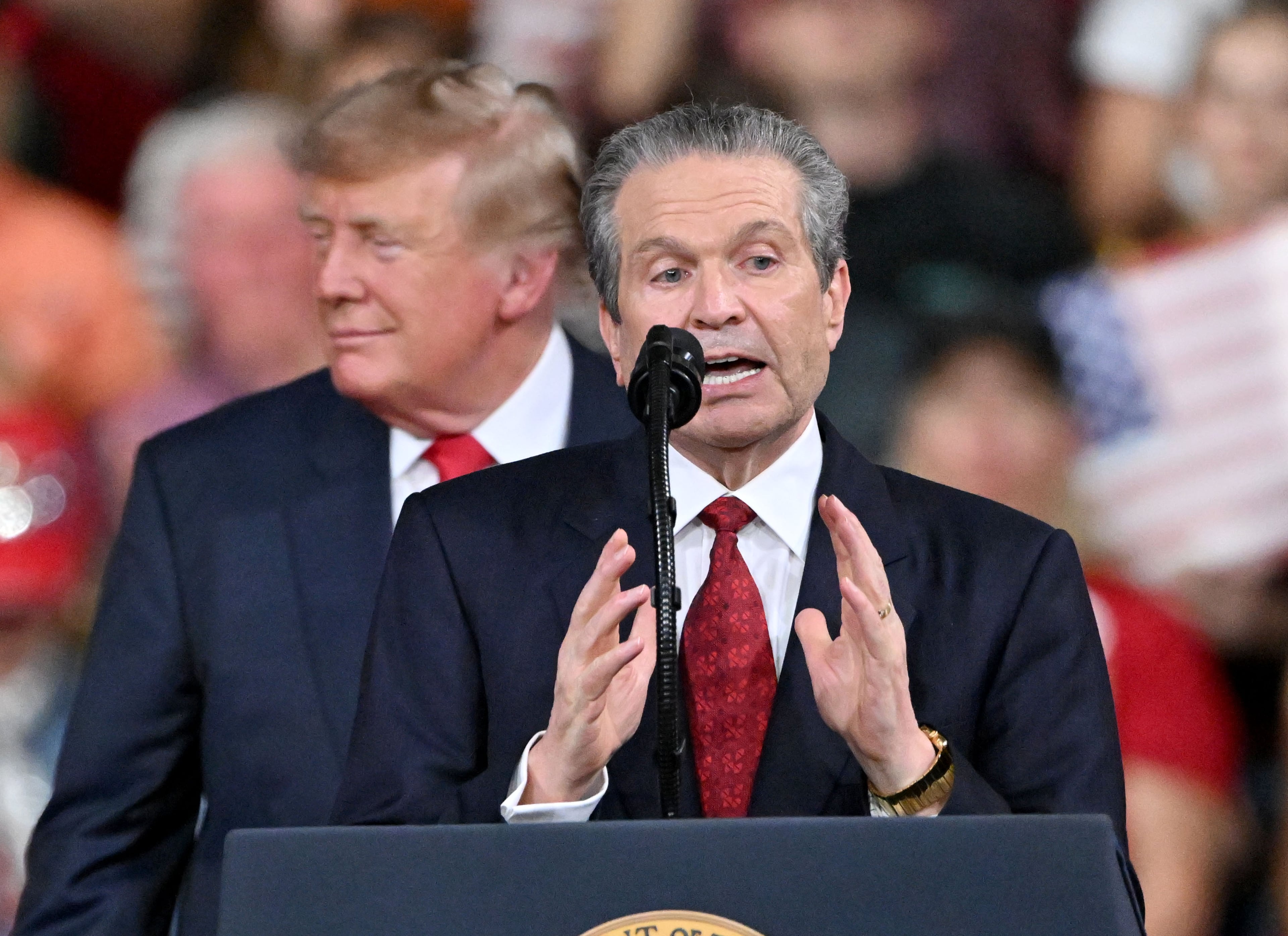
After all, the president had carried the state in 2024, and Jackson repeatedly pledged to be Trump’s “favorite governor” through the Republican primary.
But Bottoms’ internal polling showed just what a liability Trump had become among independent voters whose support could decide the governor’s race.
And the campaign’s research showed that two words dominated voters’ perceptions of Jackson: Billionaire and Trump.
“He was an anchor around Rick Jackson’s neck that Jackson put on himself,” Magnus said.
So Bottoms aired a blitz of ads highlighting Jackson’s own words praising the president, turning his MAGA-pleasing statements into fodder for the November race.
“A third of our ads featured Jackson and Trump,” said Magnus. “Jackson wrote the scripts himself — we just played what he said.”
Jackson tried to pivot toward Kemp ahead of November. But Bottoms’ advisers believed the Republican couldn’t escape Trump by that point.
“Our decision early on to lean into Trump even in a state that Trump won was pivotal,” Belcher said. “We weren’t afraid to lean into that conversation. And it paid off.”

A ‘turning point’ debate
By the campaign’s closing stretch, Jackson had delivered the same refrain countless times: Bad mayors don’t make good governors.
Then came their Oct. 6 debate.
It was their only formal confrontation of the general election, a town hall-style encounter where undecided voters peppered the rivals with questions.
Neither candidate committed a major gaffe. But inside Bottoms’ campaign, the matchup reinforced a growing belief that Jackson was faltering.
“The turning point was the debate,” Johnson said. “When we saw that he couldn’t really stand there for an hour and articulate a vision for Georgia other than his campaign slogans, we knew he was truly vulnerable.”
Passalacqua reached much the same conclusion.
“Keisha could have done that for another hour, and Rick seemed like he wanted to get out of there as quickly as possible,” she said.
It was a confidence boost at a critical moment, just before early voting began.
Making history without running on it
When Stacey Abrams ran for governor, the prospect of becoming the nation’s first Black woman elected to the office was at the center of her campaigns.
Bottoms took a different approach. She understood the significance of her candidacy and spoke often about her family’s roots. On the eve of the election, she carved out time for an emotional visit to the east Georgia town where her ancestors were enslaved.
But she didn’t try to make it a central argument for her election. Her advisers said she was determined to make the campaign about the challenges facing voters rather than a barrier-breaking milestone.
“This race was about Georgia. She was determined to meet people where they are. It wasn’t about making history. For her, it was about getting stuff done,” Passalacqua said.
Belcher offered another angle. While Bottoms avoided making racial identity the centerpiece of her campaign, he argued that Republicans were inadvertently energizing voters for them.
“Republicans leaned into identity politics and that backfired,” he said, by pushing immigration crackdowns and seeking to redraw districts to dilute Black voting strength. “They did more to mobilize Democrats than we could have done with $100 million more in spending.”

Ending with joy
For much of the campaign, Bottoms and her advisers had been on the defensive, trying to withstand an extraordinary financial assault. But the final stretch looked and felt different.
Her campaign stepped up interviews, rallies and other ways for free media exposure to help offset Jackson’s financial edge.
The pace picked up as she and U.S. Sen. Jon Ossoff welcomed a parade of high-profile Democratic figures to Georgia.
But advisers noticed something else, too.
Bottoms seemed to be having fun.
She sang at the polls, joked with supporters, teased her husband Derek and poked fun at herself on social media. For Belcher, the mood shift mattered as much as everything else.
“She ended her campaign with joy,” he said. “Losing campaigns don’t do that.”
On election night, the victory came faster than Bottoms expected.
She was in her hotel suite, AirPods in, working on a draft of her victory speech when her husband, Derek, nudged her. The race had been called. The burst of applause she heard was from supporters in the lobby below.
It was the culmination of a campaign she always believed she could win, even when she wasn’t sure how she’d pull it off.
“I didn’t know where the resources would come from,” she said. “I didn’t know how we would do it, but I never wavered in believing that we could do it.”