The future Audi plant in Georgia could get much bigger, docs show

Audi’s recently announced $4 billion auto factory coming to Middle Georgia is slated to become one of the region’s largest projects and biggest employers with 4,500 workers.
But that could just be the beginning.
Documents obtained by The Atlanta Journal-Constitution show a potential second phase of the plant, totaling $3 billion in additional investment and 3,000 more jobs if Audi were to pursue it.
If both phases are built as described, it would make Audi one of the largest recruitments in Georgia history, rivaling the Hyundai factory near Savannah and the Rivian factory under development east of Atlanta.
The documents also lay out many, but not all, of the incentives, land and infrastructure improvements that state and local leaders offered Audi to recruit the project, the German company’s first in the U.S.
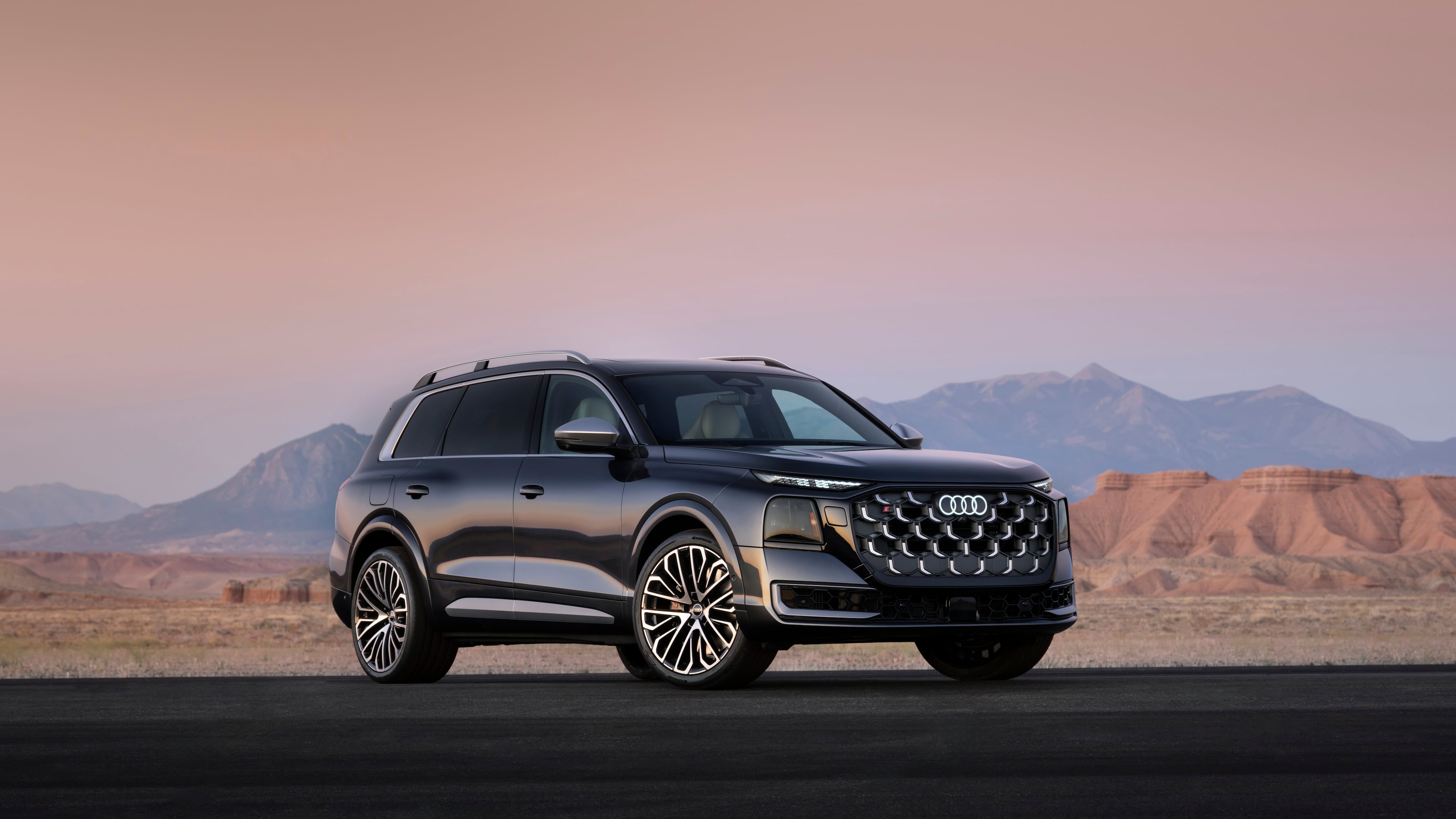
At least $958.4 million in various incentives were offered to Audi for its first phase, the documents show. These include more than $450 million in property tax breaks. Audi also would quality for statutory incentive programs such as the state’s mega project job tax credit that could add hundreds of millions to the incentive figure.
Certain incentives, such as job tax credits, only materialize if the company creates promised jobs or meets other thresholds. The documents also outline “clawback” provisions to force the company to repay portions of the incentive agreement if it fails to meet certain benchmarks.
The proposed Audi deal, including free worker training and a training center built for the company, appear similar to packages negotiated with Hyundai and Rivian. State and local officials offered Hyundai $2.1 billion in incentives for its $7.6 billion project, while Rivian was offered a $1.5 billion package for its $5 billion planned factory.
The documents were obtained by the AJC through an open records request with the Mid-Georgia Gateway Joint Development Authority, one of the government agencies involved with recruiting the project. The documents were unsigned, so it’s unclear if details of final agreements could change.
In response to a separate records request, the Georgia Department of Economic Development on Thursday said the Audi project is “an active economic development project,” citing state law that exempts documents and reports from open records requests for pending projects. More information would be provided “at such time as the project is no longer active,” the agency said.
“The company is completing its corporate approval process, which is a normal part of a project of this magnitude,” the GDEcD told the AJC.
Audi’s American division said in a statement it “does not comment on confidential discussions with government authorities or on potential future investments.”
In a statement, the joint development authority said local parties have signed all the documents, adding that the terms have not changed since then. The JDA said, “Finalization of the Agreement remains subject to approval by the State of Georgia and Audi of America.”
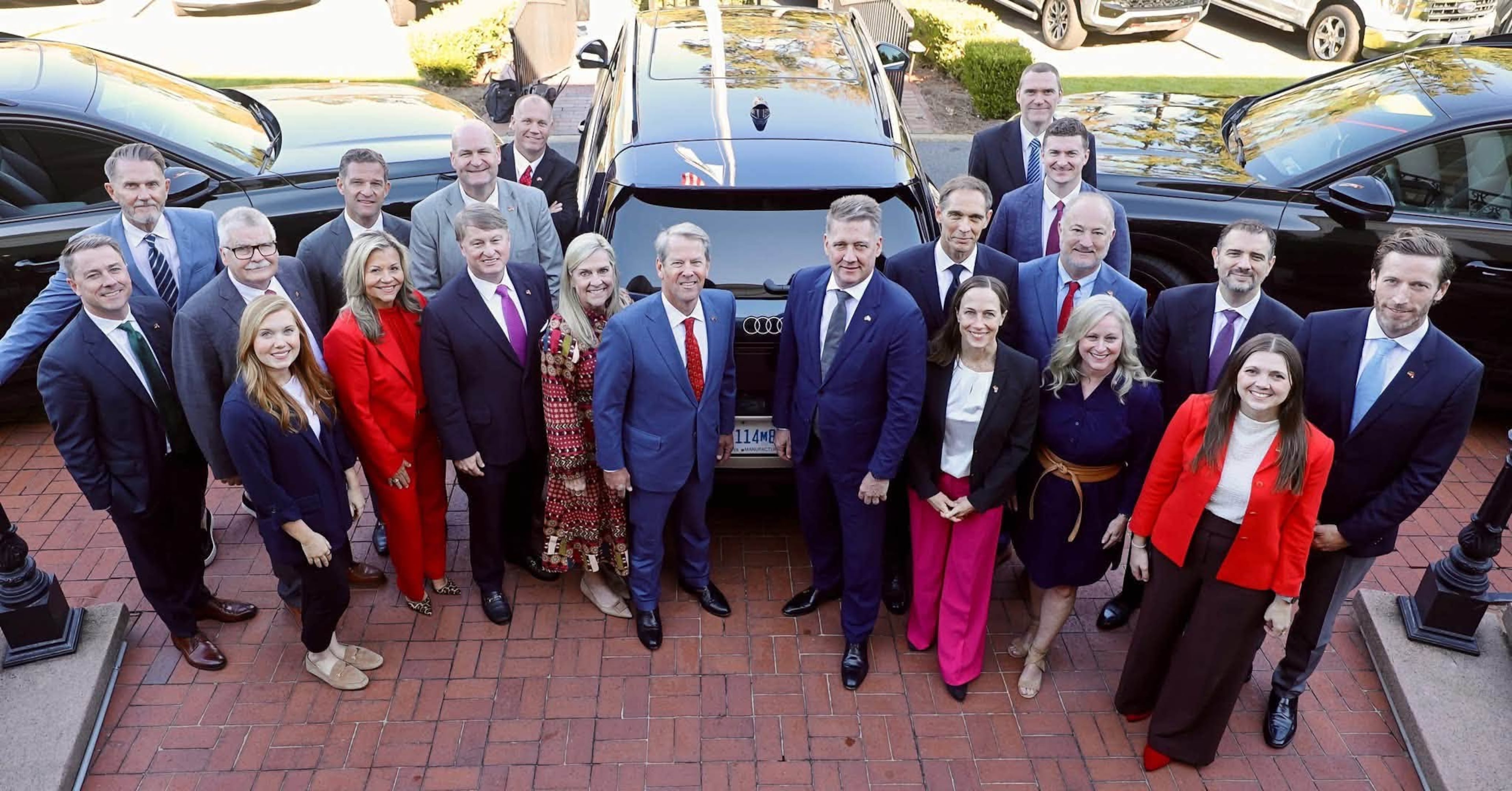
President Donald Trump and Audi CEO Gernot Döllner announced the project’s first phase at a campaign rally Oct. 24. Although Gov. Brian Kemp wasn’t at the rally, he, his aides and Middle Georgia officials were the ones who actually sealed the deal over a two-year recruitment process that involved multiple trips to Germany.
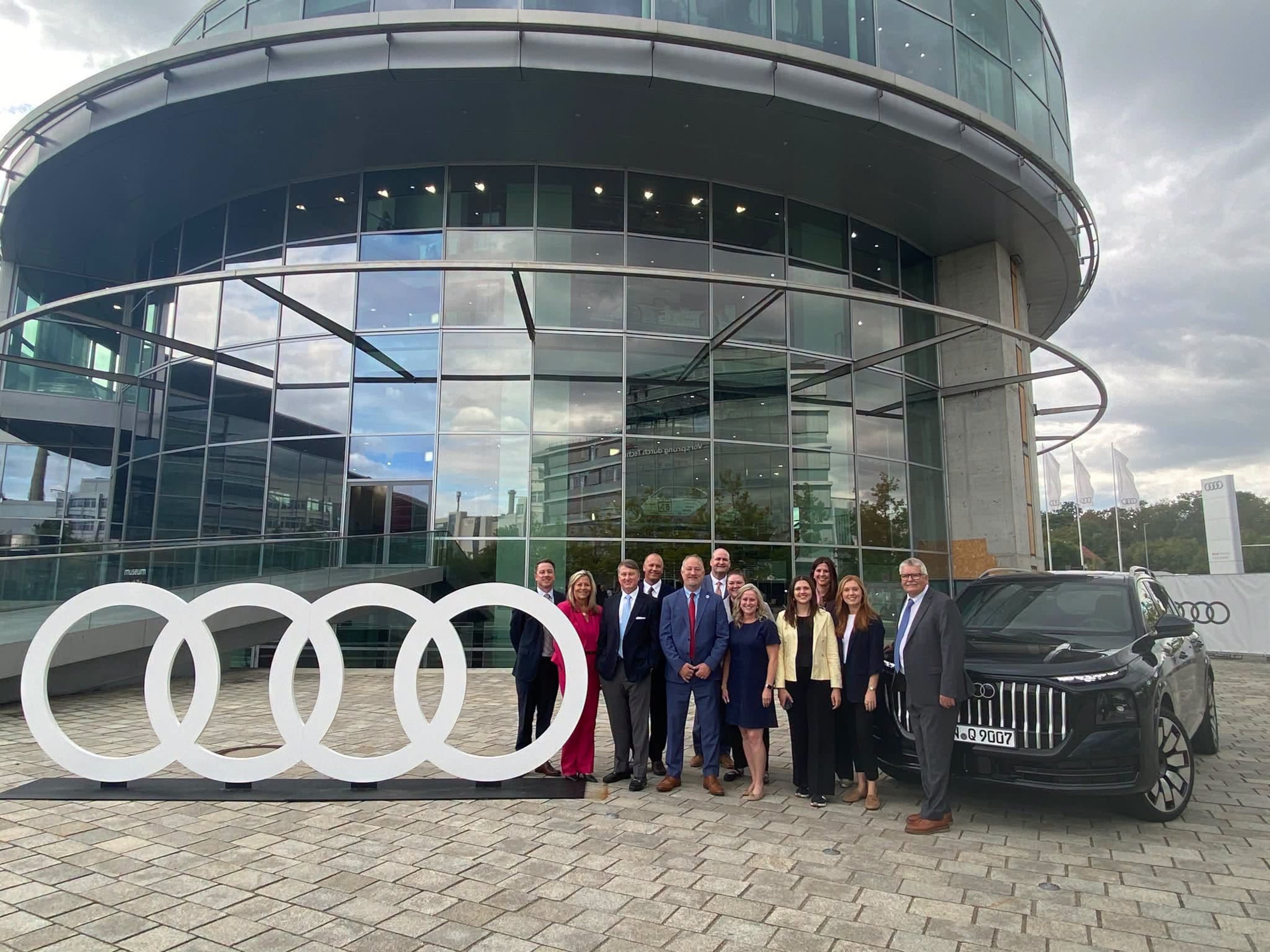
A cornerstone of Georgia’s recruitment strategy is attracting companies the state thinks are likely to later expand. In 2025, expansions of existing businesses accounted for 79% of all state-recruited economic development projects, totaling $24.7 billion in investment and 15,370 jobs.
“When a company chooses Georgia, our goal is to build a relationship that lasts for decades, supporting its success and creating opportunities for continued growth,” the GDEcD said.
What was offered?
Starting in 2022, state officials began assembling the roughly 1,500-acre site near I-75 and the outskirts of Fort Valley in Peach County. Named the Middle Georgia Megasite, it was identified as the state’s best site for a large project, such as an auto plant.
Georgia leaders told Audi they’d prepare the site for vertical construction. That includes finishing acquiring the last parcels under state ownership along with rezoning about 66 acres, handling road abandonments and performing survey work. The state will also handle nearby road and access route improvements.
Much of the site — about 986 acres — will be graded. The site will also undergo environmental remediation and improvements to its Norfolk Southern rail access, all of which will be financed using a $94 million grant through Georgia’s Regional Economic Business Assistance program.
Audi will benefit from a $30 million Economic Development Growth and Enterprise Fund grant, which is designed to encourage rural Georgia projects. Those funds can assist with site preparation, building construction or machinery and equipment purchases.
The state previously used about $76.2 million in American Rescue Plan Act funds to improve the megasite’s water and wastewater infrastructure. The Fort Valley Utility Commission agreed to relocate a wastewater line on the site, a $7.4 million project.
The Georgia Department of Transportation will invest an estimated $224.5 million into public road improvements in the area along with a $1 million paving of Lilly Creek Road.
A transmission line will be relocated at an estimated cost of $18.5 million, a cost split between the state and local development authority. They’ll also co-fund the relocation of a distribution power line and fiber line that currently cross the site, a $1.7 million tab.
Georgia agreed to provide a dedicated Quick Start Training Center for Audi to use on the site, a $73.5 million cost. The state will also cover its operating costs and training services for the first five years, an estimated $25.4 million tab. The Technical College System of Georgia will also provide $6 million worth of customized workforce recruitment assistance.

To support Audi’s project, the state and local development authority said they would hire dedicated employees to help with the project’s implementation. Each position would be for a period of five years as an annual salary no more than $125,000.
The joint development authority, Peach County and Georgia Ports Authority also agreed to waive millions of dollars worth of permitting, storage and regulatory fees.
By far, the largest incentive outlined is property tax savings.
For the first phase, the state and local officials offered about $458.6 million in tax savings over a 20-year period. If Audi pursues a second phase, that will trigger an additional 20-year tax break for that portion worth an estimated $361.1 million.
What will Georgia gain?
The thousands of jobs is the central focus of Audi’s promise to Georgia in exchange for the incentives.
The average salary of a future Audi employee at the factory site will be more than $63,000 annually, generating roughly $283 million in payroll each year once the plant reaches full employment in 2031. The second phase includes the same wage commitment from Audi.
“We remain excited about the prospect of Audi of America establishing its state-of-the-art facility in Middle Georgia and the opportunities it would bring to our region, including the creation of thousands of high-paying jobs for members of our community,” the joint development authority said.
Because government-owned land isn’t subject to property taxes, Audi has agreed to pay a portion of what it would have owed if the state didn’t control the site. This is called a payment in lieu of taxes agreement, or PILOT.
For phase one, the offered PILOT is about $295 million over 20 years, starting in 2028. Those payments will be split between the three counties that comprise the JDA and the city of Fort Valley. Peach County would get 57% of those payments; Houston County and Macon-Bibb County would get 19% each; and Fort Valley would receive 5%.
At the end of the PILOT, Peach County would get all of the site’s future property tax revenue, and the site would be valued at its appraised market value. The economic development agreement said the local communities will receive a projected tenfold return on the JDA’s investment as part of phase one’s PILOT.
If a second phase takes place, there’s a similar PILOT agreement for $237.5 million over 20 years related to that portion of the site.
Audi has until the end of 2033 to exercise the expansion under the incentive agreement. Otherwise, terms would need to be renegotiated.
Audi has to meet 80% of its investment and job promises to receive the full value of its incentives. Otherwise, the company is subject to claw backs, meaning it’ll have to repay the state and local governments a portion of its accumulated incentives.
“Our immediate focus is on the successful implementation of Audi’s announced investment and the tremendous opportunities it will bring to Middle Georgia,” the GDEcD said. “We would certainly welcome the opportunity to support additional investment and job creation in the years ahead.”