Amid GOP infighting, Democrats lean on unity for an early edge
Today’s newsletter highlights
- Democratic voters helped reelect two state Supreme Court justices.
- Republican state Rep. Bill Werkheiser lost his primary Tuesday.
- U.S. Rep. Mike Collins rolls out new endorsements in the Senate race.
Early edge
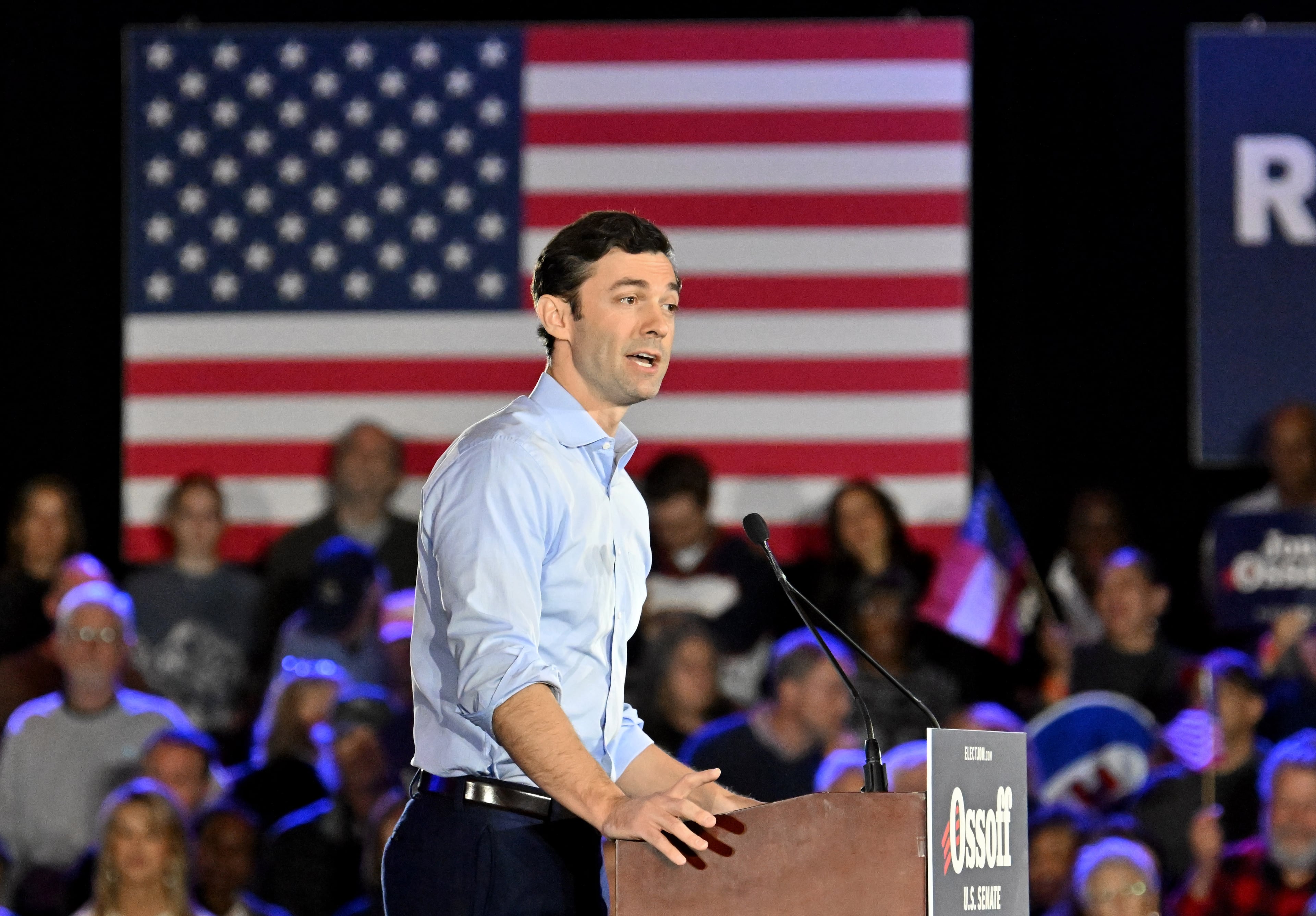
As Republicans remain in a bruising and deeply expensive primary season, Democrats are trying to capitalize on something they suddenly have that the GOP doesn’t: unity and a head start.
U.S. Sen. Jon Ossoff will travel to south DeKalb County on Saturday to help open a new Democratic field office, part of an effort to jump-start coordinated grassroots organizing months before Republicans settle their marquee statewide runoffs.
The location is no accident. South DeKalb County is one of the state’s most vote-rich Democratic strongholds and a centerpiece of the party’s turnout strategy heading into 2026. Democrats see it as both a firewall and a launching pad as they try to rebuild the coalition that powered statewide victories in 2020 and 2022.
The move also underscores an emerging dynamic after Tuesday’s primaries. While Republicans remain locked in costly internal battles for governor and Senate, Democrats are already pivoting toward building turnout and campaign infrastructure for November.
Expect Democrats to frame the organizing push as an early sign they’re focusing intensely on voter mobilization now that the top of the ticket is set.
Democratic Party of Georgia Chair Charlie Bailey said the office will have an “unprecedented level of staff, resources and research.”
“Between now and November, that operation will help us turn out voters at historic levels and deliver wins from the U.S. Senate, Governor’s Mansion, to the Statehouse,” Bailey said.
Things to know
Good morning! Here are three things to know for today:
- The Voting Rights Act changed Georgia. Now Black officials fear the worst, the AJC’s Tamar Hallerman reports.
- Tuesday’s results showed once again that Black women power the Democratic Party in Georgia, Greg Bluestein reports.
- Money isn’t everything, but it sure helped healthcare executive Rick Jackson and Lt. Gov. Burt Jones in the Republican primary for governor, Patricia Murphy writes.
Supreme court
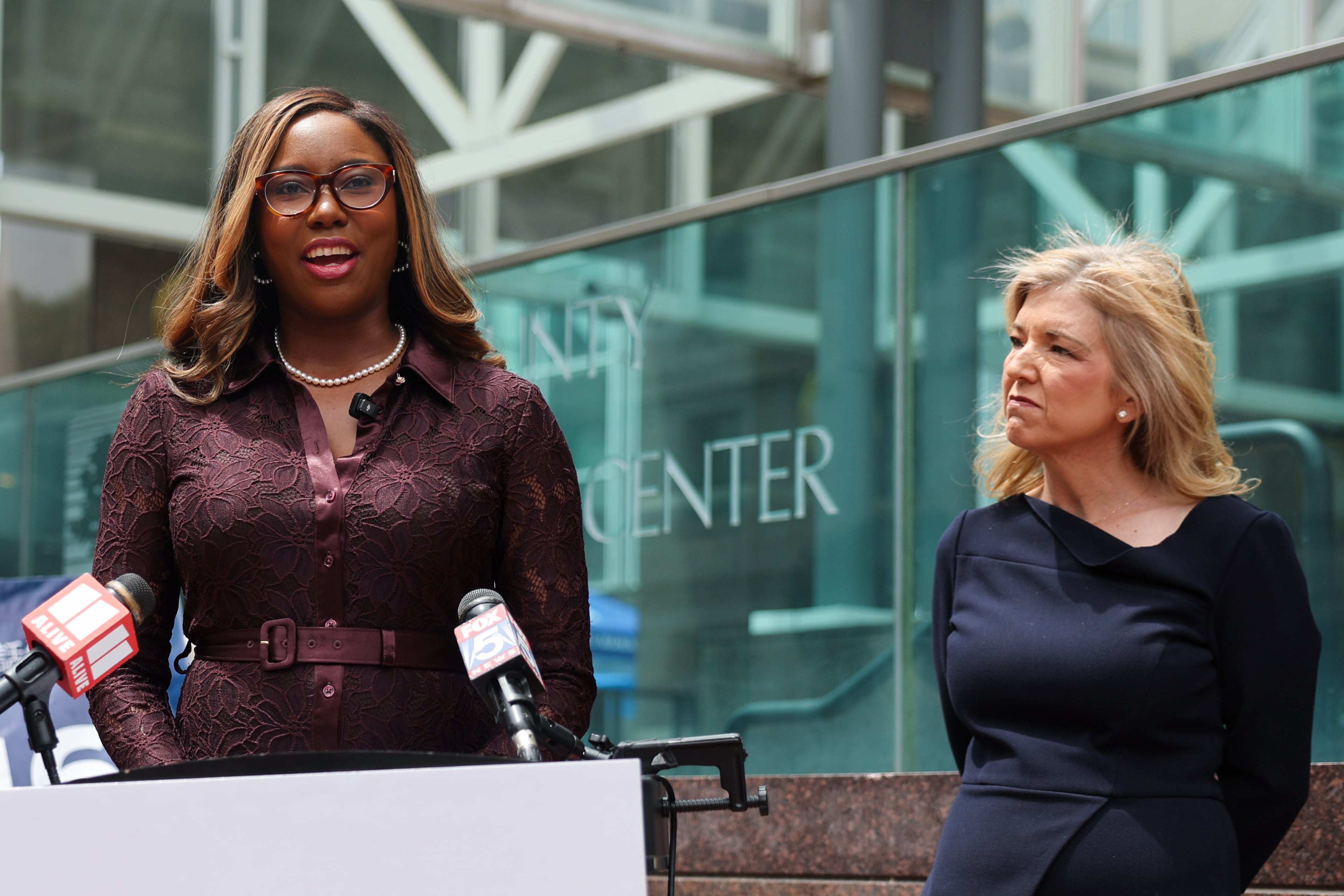
The Georgia Democratic Party bet $8 million it could do something that hasn’t happened in over a century — knock a sitting state Supreme Court justice off the bench. It lost that bet. Twice.
The party went all in on the nonpartisan races ahead of Tuesday’s primary: statewide TV and radio, five rounds of mail, more than 50,000 targeted mailers and endorsements from Barack Obama and Kamala Harris behind challengers Jen Jordan and Miracle Rankin. They even outhustled Republicans on turnout.
And still, Jordan lost her race by 18 points. Rankin lost hers by 2.
An analysis of the returns explains part of what happened: Tens of thousands of Democratic voters backed the incumbents anyway, either out of genuine support for Justices Charlie Bethel and Sarah Hawkins Warren or because they simply didn’t understand the partisan stakes attached to officially nonpartisan races.
Now Bailey is doing what party chairs do: finding the silver lining. He said the operation helped drive broader Democratic participation statewide — and reminded critics that he promised to take risks when he took the job.
“I can’t promise you we’re going to win every race, but we’re going to win a hell of a lot more than we lose — and even in those that we lose, we are going to make Republicans crawl over broken glass to get these seats from us,” he said.
What’s also clear is what Tuesday night means for the next fight. Gov. Brian Kemp signed a law making many local offices in five deep-blue metro Atlanta counties nonpartisan. If they couldn’t flip two nonpartisan races with an $8 million push backed by the party’s leading state and national figures, what happens when that formula gets stress-tested county by county across their own base?
Legislative update

All 236 seats in the state Legislature are on the ballot this year. Here’s a roundup of what happened in Tuesday’s primaries.
- Upset alerts. Werkheiser is the only incumbent to lose so far. The Glennville Republican lost to Bradley Anderson, a funeral director and coroner in Tattnall County. Another incumbent in trouble is Democrat Mary Ann Santos, who finished second to Kim Smith in District 117 in a five-way race. The two will face off in a runoff June 16. Democrat Sheila Nelson is hoping to avoid a runoff in House District 130. The AP has not called the race as she leads with 50.3% over three challengers.
- Party switcher. Former state House Democratic Leader Doug McKillip lost his House seat after he switched parties in 2010. Now, he’s trying to make a comeback in Senate District 45. McKillip will face Marc McMain in a runoff next month for a chance to replace state Sen. Bill Cowsert, who gave up his seat to run for attorney general (he lost).
- Moving up. State Reps. Saira Draper and Teddy Reese both won Democratic primaries for seats in the state Senate. State Rep. Ruwa Romman is in a runoff with Rahul Garabadu to replace former state Sen. Nabilah Parkes, who is in a runoff with state Sen. Josh McLaurin for lieutenant governor.
Endorsement battle

U.S. Rep. Mike Collins is rolling out new endorsements as he tries to consolidate Republican support ahead of the June Senate runoff.
Republican U.S. Reps. Austin Scott, the dean of Georgia’s Republican delegation, and Brian Jack, a close Trump ally and rising GOP figure, are both backing Collins over former football coach Derek Dooley.
The endorsements help Collins sharpen his argument that he’s the proven conservative in the race, while Dooley’s biggest asset remains Kemp’s all-in support.
Scott called Collins “a friend and a fighter for the people of Georgia.” Jack called him “a conservative workhorse, a proven legislator and a steadfast supporter of President Donald Trump and his America First agenda.”
Collins also got endorsements from U.S. House Majority Leader Steve Scalise, R-La., and Republican U.S. Rep. Kevin Hern, who is running for the U.S. Senate in Oklahoma.
Meanwhile in the Georgia governor’s race, U.S. Sen. Rick Scott, the former Florida governor, endorsed Jackson in the runoff for the Republican nomination. Scott and Jackson share similar rags-to-riches stories fueled by careers in the healthcare industry.
“I know what it’s like for a conservative outsider and a businessman to come in and shake things up to take the state to the next level,” Scott wrote on X. “I did it in Florida, and Rick will do the same in Georgia.”
Plus, Scott and U.S. Rep. Clay Fuller both backed Lt. Gov. Burt Jones this week, adding to his list of Georgia-based backers.
Deep dive
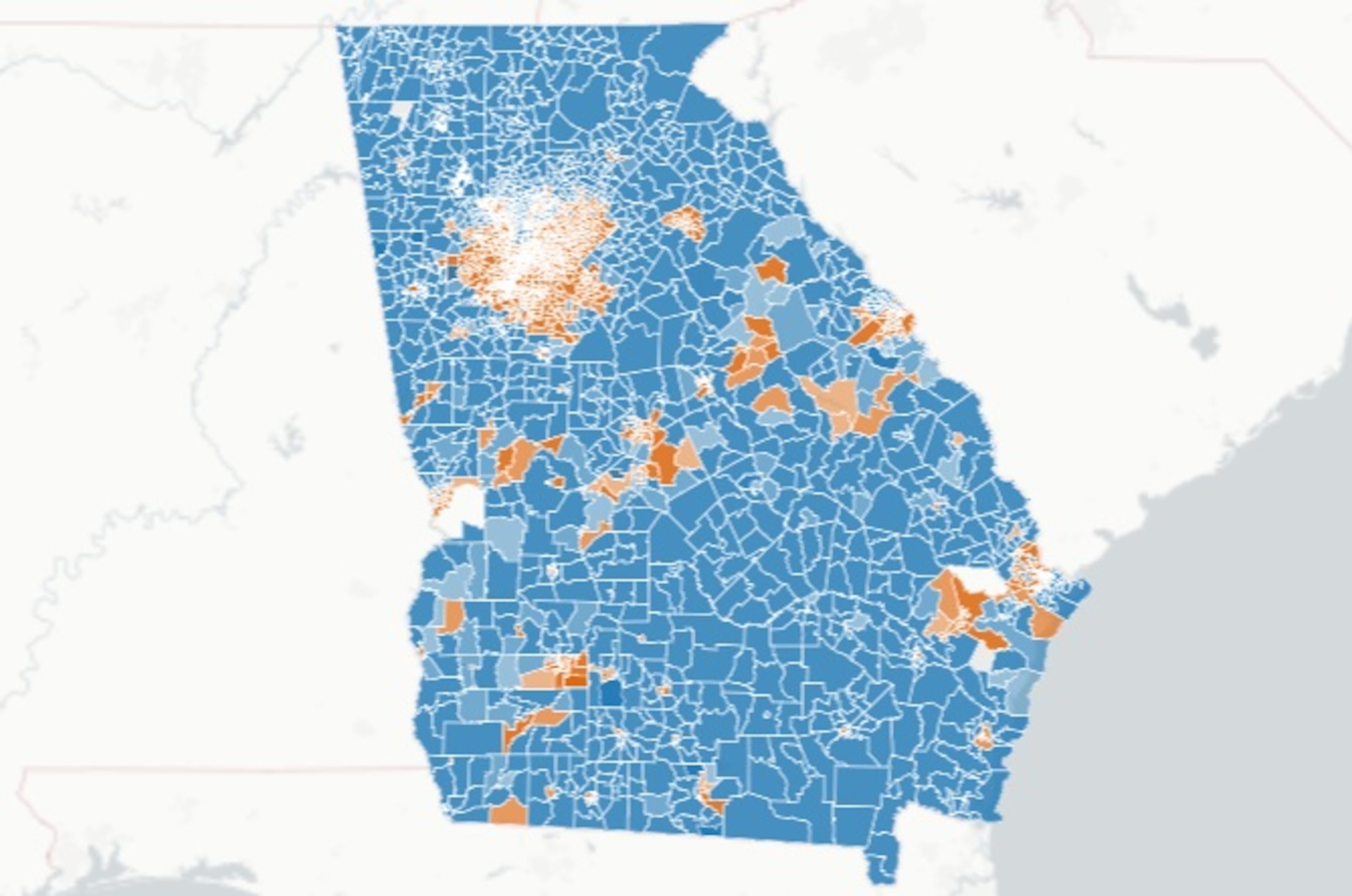
AJC Senior Data Editor Charles Minshew and his team have built this amazing tool to explore Georgia’s election results precinct by precinct.
The map shows you just how dominant Keisha Lance Bottoms’ victory was in the Democratic primary for governor. It shows how U.S. Rep. Buddy Carter’s support for U.S. Senate was limited to the area around his coastal House district.
But perhaps the most interesting view is of the contested state Supreme Court races. Rankin had a better showing in metro Atlanta and Middle Georgia than Jordan.
Minshew also crunched numbers that showed how the Democratic primary electorate has widened since 2022.
Black voters remained overwhelmingly Democratic, with 96% choosing a Democratic ballot this year, up slightly from 95% four years ago. But the sharper shifts came elsewhere.
Nearly three-quarters of Hispanic voters, 72%, chose a Democratic ballot this year, compared with 47% in 2022. Among Asian voters, the Democratic share grew from 44% to 63%.
Democrats were also boosted by a notable increase among white voters. In 2022, just 14% of white voters pulled a Democratic ballot. This year, that rose to 25%.
Listen up
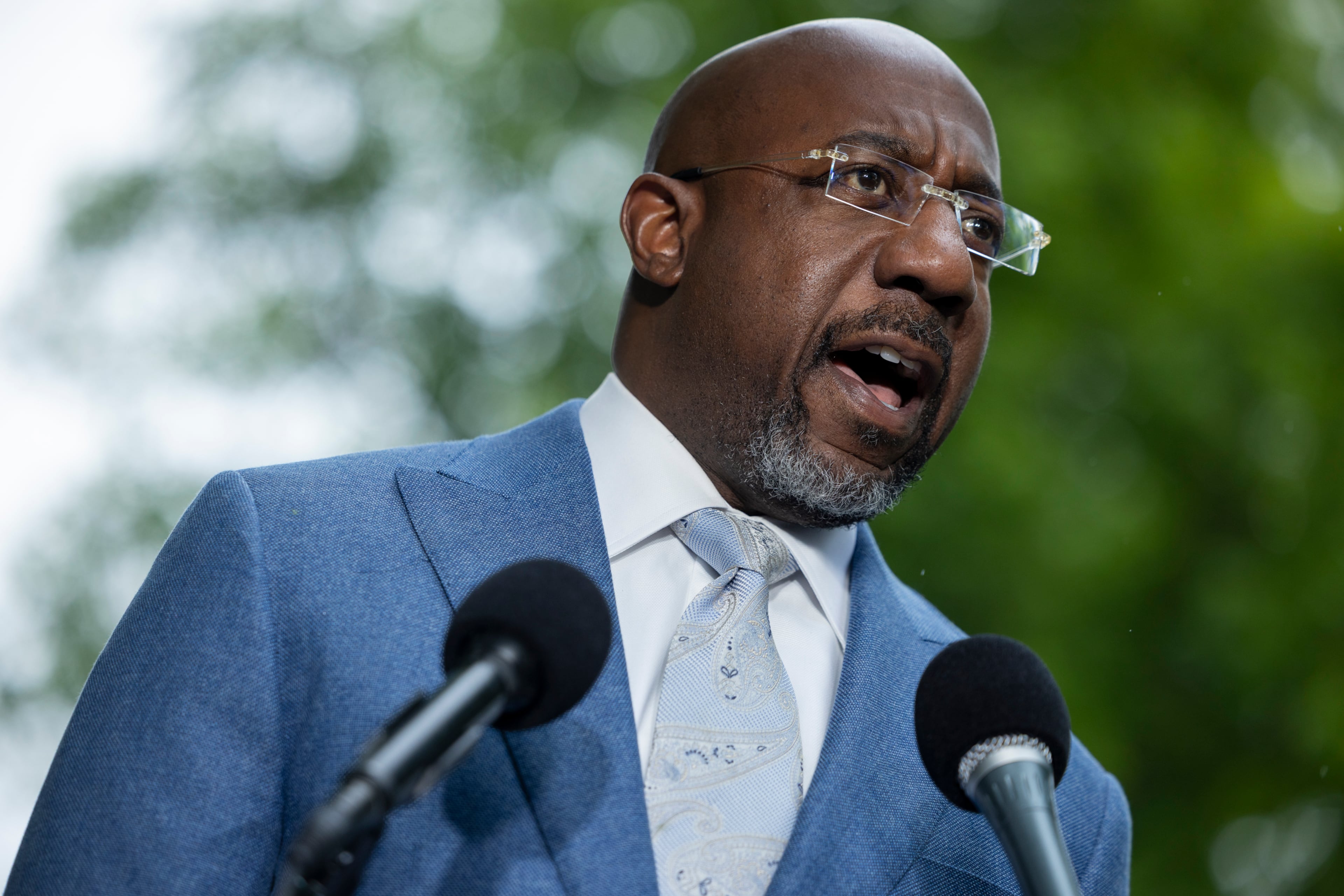
Today on the “Politically Georgia” podcast, U.S. Sen. Raphael Warnock joins the show to talk about the U.S. Supreme Court ruling that weakened the Voting Rights Act.
You can listen and subscribe to “Politically Georgia” for free on Apple Podcasts, Spotify, YouTube or wherever you get your podcasts.
Have a question or comment for the show? Email us at politicallygeorgia@ajc.com or give us a call at 770-810-5297 and you could be featured on a future episode.
Warnock speaks out
In his appearance on the “Politically Georgia” podcast today, Warnock was outspoken about recent events related to voting and democracy.
On the recent U.S. Supreme Court decision that weakened a key portion of the Voting Rights Act:
“What the Supreme Court did the other day is devastating. It’s a massive blow to the progress led by Martin Luther King Jr., whose church I still lead, and those who marched alongside him, set the table for us.
“I would not be sitting in the Senate were it not for the Voting Rights Act of 1965, which by the way has always been updated on a bipartisan basis up until the last few years. The last time it passed the Senate, it was under a Republican president, George W. Bush, and the vote was 98-0.
“But this new MAGA Republican Party doesn’t believe in democracy.”
On Kemp’s decision to call a special session to redraw congressional and legislative lines:
“It’s about power. I mean, pure and simple. It’s about power and race is up in that mix, right?
“Black voters are at the center of this debate, but I’m really clear: This is about power and people who are hungry for power. They will use anything to hold on to that power.”
Housing bill compromise
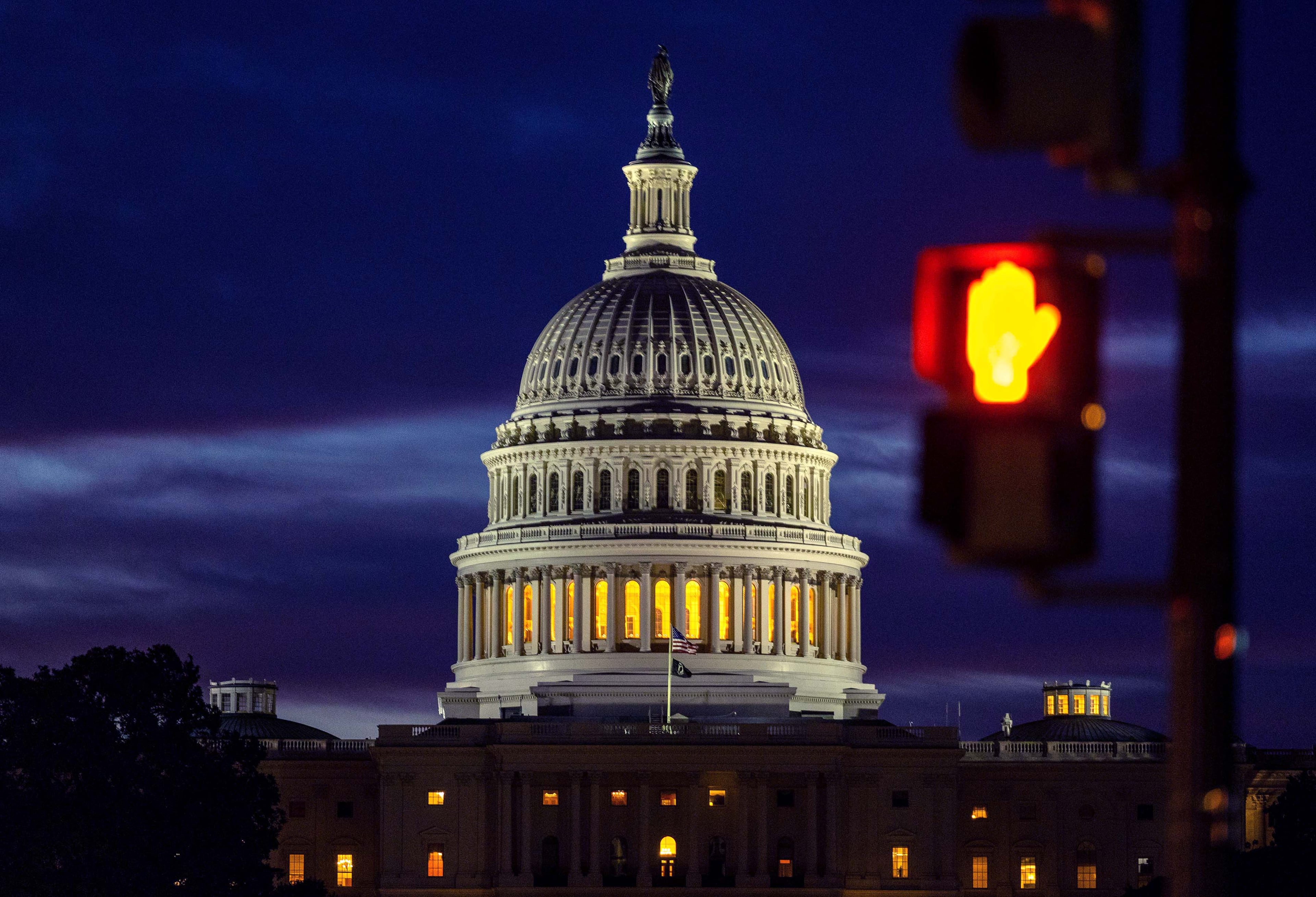
The U.S. House overwhelmingly voted in favor of a housing affordability bill that is being marketed as a compromise agreement between the House, Senate and the Trump administration.
The House-passed bill weakens some of the provisions supported by the Senate that aim to restrict large companies from owning large numbers of rental homes. For example, institutional investors no longer would be required to sell rental homes within seven years.
However, the revised 21st Century Road to Housing Act doesn’t go as far as the House originally threatened in eliminating much of the language regarding investor-owned housing.
The House vote was 396-13. Every member of Georgia’s delegation voted for it.
The bill now goes back to the Senate for consideration.
Today in Washington
- Trump will join Environmental Protection Agency Administrator Lee Zeldin for an announcement.
- The House will vote on a war powers resolution limiting further strikes in Iran and on legislation regarding the location of the Smithsonian American Women’s History Museum.
- The Senate could vote on amendments to the reconciliation bill being crafted to fund immigration enforcement.
Shoutout
Today’s birthday
- Cedartown City Commissioner Matt Foster.
Want a birthday shoutout in the Politically Georgia newsletter? There’s a form for that. It’s not just birthdays. We’re also interested in new jobs, engagements, birth announcements, etc.
Before you go

Worker advocates warn a looming Trump administration policy change could soon make the immigrant-dominated poultry industry more hazardous.
That’ll do it for us today. As always, you can send your best scoops, gossip and insider information to greg.bluestein@ajc.com, tia.mitchell@ajc.com, patricia.murphy@ajc.com and adam.beam@ajc.com.