In Georgia primary, Black women show they still power the Democratic Party
Black women are the undisputed heart of the Georgia Democratic electorate, serving as the state’s most reliable and mobilized voting bloc. On Tuesday, they flexed their muscles like never before.
They powered former Atlanta Mayor Keisha Lance Bottoms to an outright win in the Democratic race, moving her closer to a potential history-making victory in November as the nation’s first Black woman elected governor.
Down the ballot, state Rep. Tanya Miller easily bested a rival for the attorney general nomination. Former TV judge Penny Brown Reynolds was the leading vote-getter in the party’s race for secretary of state. State Rep. Jasmine Clark won the nomination for a deep-blue U.S. House seat.
Then there’s Fulton County, where three Black women defeated incumbent county judges and Fulton County Commissioner Mo Ivory forced longtime Commission Chair Robb Pitts into a runoff.
“It wasn’t even a wave,” Democratic strategist Fred Hicks said. “It was a Black woman tsunami in Fulton County. And no one was spared. From governor down to state court. I’ve never seen anything like it.”
For some, it’s no surprise. Cobb County Democratic Party Chair Essence Johnson said it’s a continuation of a movement that has been building within the party for decades.
“Black women are not just the backbone of the party’s turnout operation, they are increasingly shaping the party leadership, messaging and direction,” she said, cautioning they can also feel forgotten in a party often wrestling with how to reach white swing voters.
“Black women have consistently had to save democracy, organize communities, mobilize turnout to protect their families and communities. But often while doing all of this they are still overlooked by the party and those that need the saving when it comes to power, investment, visibility and political protection. That tension still exists today.”
A coalition built in years
Bottoms’ victory extended a streak of Black women Democratic nominees that began with Stacey Abrams in 2018, when her campaign centered on expanding the electorate by reaching Black and other nonwhite Georgians who rarely voted in midterms.
Abrams lost both of her campaigns for governor. But the organizing infrastructure she helped build reshaped Georgia politics, bolstering Joe Biden’s 2020 presidential win and the 2021 U.S. Senate runoff victories of Jon Ossoff and Raphael Warnock.
In 2022, there were signs of erosion. An Atlanta Journal-Constitution analysis of voter data found that 32% of white adult Georgians cast ballots, but only 22% of Black Georgians voted. It was the largest gap in at least a decade, according to the nonprofit Brennan Center for Justice.
This year, that gap closed as 27% of registered Black voters cast a ballot in the primary, almost at the same rate as white voters — 28%.
Overall, the party boosted its primary turnout by 48% over 2022, when there were no marquee matchups on the ballot, and outdid GOP voter participation.
Bottoms was the leading vote-getter in all but one of Georgia’s 159 counties, and unofficial tallies show she lost that county — rural Bacon in southeast Georgia — by only three ballots.
She also ran strongly in parts of metro Atlanta, where critics expected her record as mayor to be a liability, including her response to violent protests and decision not to seek reelection.
An AJC analysis of votes in the city of Atlanta shows a split between the whiter, north part of town and the majority-Black south part of town.
But even in the northern part of the city — where a Buckhead secessionist movement took root during Bottoms’ tenure — she held her own against former state Sen. Jason Esteves, former Lt. Gov. Geoff Duncan and former DeKalb County CEO Michael Thurmond. She carried nearly 40% of the city’s vote, topping Esteves by roughly 400 ballots.
“Last night’s impressive win by Keisha Lance Bottoms proves without a doubt that Black women are the bedrock of the Democratic primary electorate,” said Reese McCranie, a longtime strategist who was Duncan’s top adviser.
But he stressed that to prevail in November, Bottoms must reach out beyond the party’s base to recruit independent voters and disillusioned Republicans exhausted by President Donald Trump’s agenda.
“Keisha will need to present voters a viable alternative to the chaos with steady leadership and a bold vision to improve the lives of everyday Georgians,” he said. “I think she can do it. Voters are hungry for a return to normalcy.”
A mobilization challenge
Kendra Little is one of the Atlanta voters backing Bottoms.
The Grant Park resident said she was concerned there was too much of a “handshake” between Gov. Brian Kemp and Trump. She’s worried the special legislative session Kemp called this summer to redraw political boundaries could weaken the influence of Black voters.
Little wants Bottoms to be a “catalyst of moving away from gerrymandering and those sorts of things.”
Miller, the party’s nominee for attorney general, said that surge carries a broader message into November. She is focusing her campaign on lowering costs, protecting rights and upholding the rule of law.
“Black women turned out strong for this campaign, and the message is unmistakable: all working families are ready for change,” Miller said.
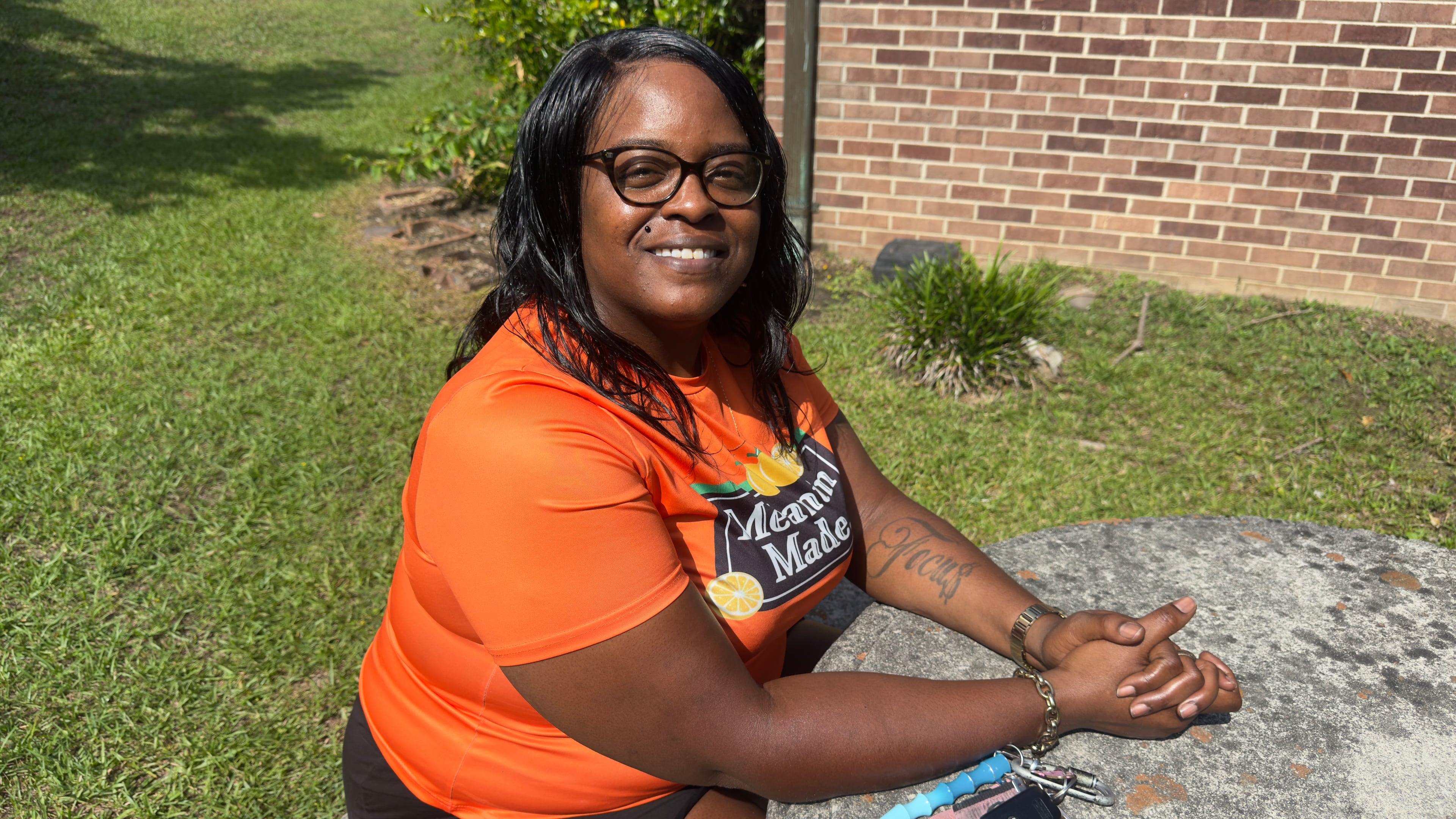
Still, some voters warn that enthusiasm has limits. Shameca Jordan, a Macon postal worker and Uber driver, said she hopes more young people start paying attention.
“No one even talks about politics in the circles that I’m in,” said Jordan, who is also an Uber driver. “I don’t think enough people care.”
Johnson, the longtime party activist, said she’s seeing signs of change. She noted a state that has historically excluded Black women from political power has now nominated multiple Black women for statewide leadership positions in the past decade. With Bottoms and U.S. Sen. Jon Ossoff atop the ballot, a different task awaits in the run-up to November.
“The challenge for Democrats will be whether the party fully invests in and protects the very coalition that continues to deliver for them,” she said. “Energy alone is not enough. Mobilization, policy, turnout, infrastructure and sustained engagement will matter.”
Staff writers Brooke Duncan and Joe Kovac Jr., and data editor Charles Minshew contributed to this report.
