Line speeds at poultry plants could surge under Trump, spurring safety concern

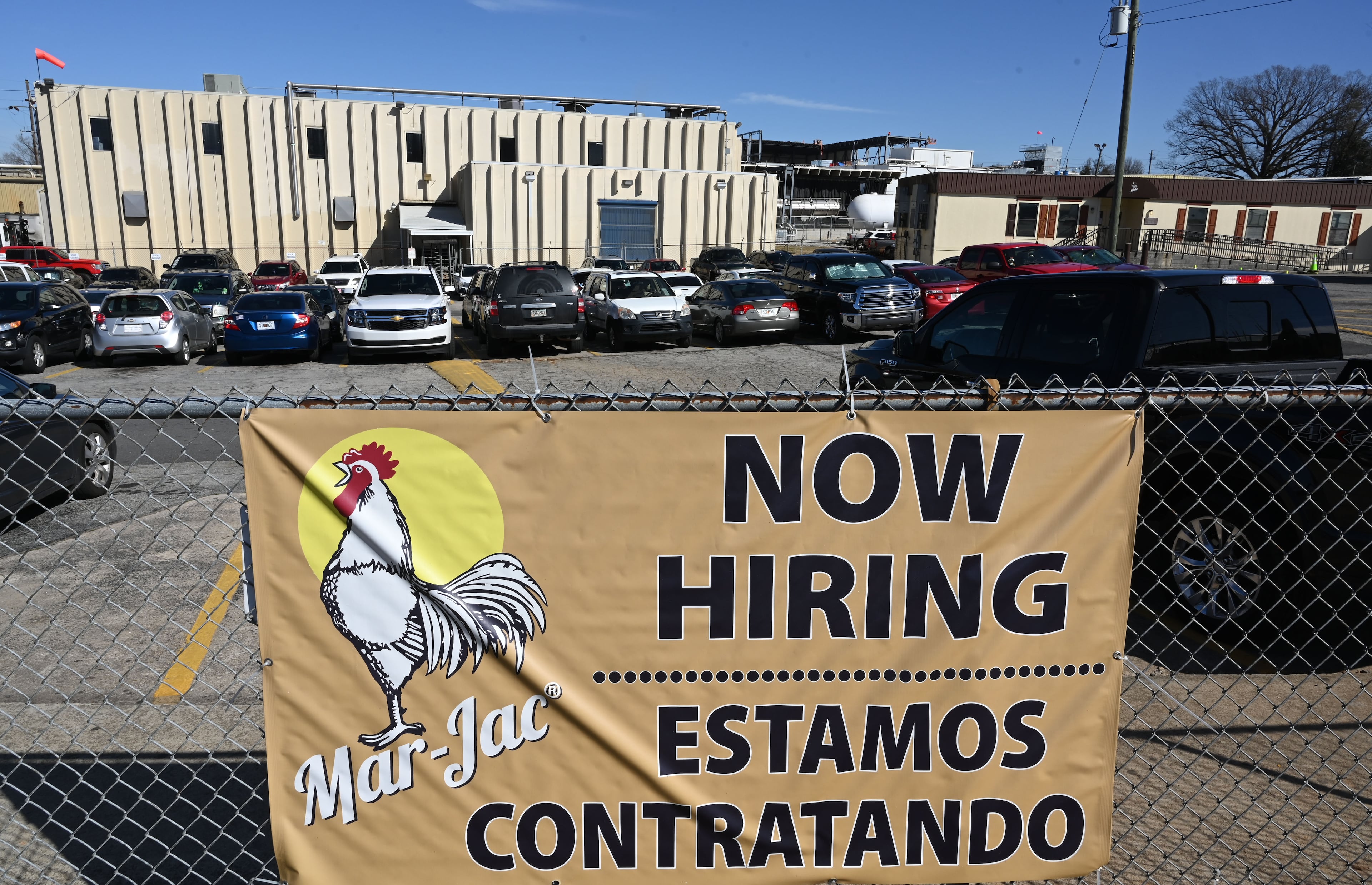
Founded shortly before a nitrogen leak at a Georgia poultry plant killed six workers in 2021, the Atlanta-based workers’ rights nonprofit Sur Legal Collaborative has spent the ensuing years working to identify labor abuses in immigrant-heavy industries, such as poultry processing plants.
Since President Donald Trump’s return to the White House last year, the number of calls from poultry workers reporting safety violations on the job “has gone down drastically,” said Elizabeth Zambrana, the collaborative’s legal director.
But fewer ringing phones are not a sign of safer conditions inside the plants, according to Zambrana. Instead, it reflects a growing reticence to speak up amid an ongoing national surge in immigration enforcement — a top-of-mind concern for the immigrant laborers who make up the bulk of the poultry sector’s workforce.
And a looming Trump administration policy change could soon make this immigrant-dominated line of work more hazardous, Zambrana and other worker advocates warn.
Earlier this year, the U.S. Department of Agriculture unveiled a proposal that would allow plants that process young chickens, or broilers, to increase their line speeds by 25%.
In a 2025 press release, the department said faster speeds would allow producers to meet demand “without excessive government interference.”
A department spokesperson told The Atlanta Journal-Constitution that the proposed rule change would “clarify and streamline regulatory requirements.” The spokesperson added that “federal inspectors retain the authority to slow or stop lines if food safety or process control is not maintained.”
Any federal changes regulating poultry plants are especially relevant to Georgia, the top poultry-producing state in the country. The nerve center of the local poultry industry is in the Gainesville area. The city, with a population that is 37% Hispanic and 22% foreign-born, dubs itself the “poultry capital of the world.”

Industry leaders have long agitated for faster line speeds.
In 2017, the National Chicken Council, a trade association representing U.S. poultry producers, asked the government to remove caps on line speeds in young chicken slaughterhouses. Last month, the council released a statement in support of USDA’s proposed rule change, arguing it will make chicken more affordable, create jobs and help the U.S. poultry sector match the faster speeds common across competitors abroad “all while maintaining our industry’s commitment to food and worker safety.”
But labor advocates say faster processing rates inside chicken plants will likely exacerbate an already significant strain on workers’ bodies, putting them at higher injury risk.
“This is a system that’s already cruel, about to become crueler,” said Debbie Berkowitz, former chief of staff at the Occupational Safety and Health Administration from 2009 to 2014. “This is really just about getting every ounce of sweat and blood out of workers that are already being worked to the bone.”
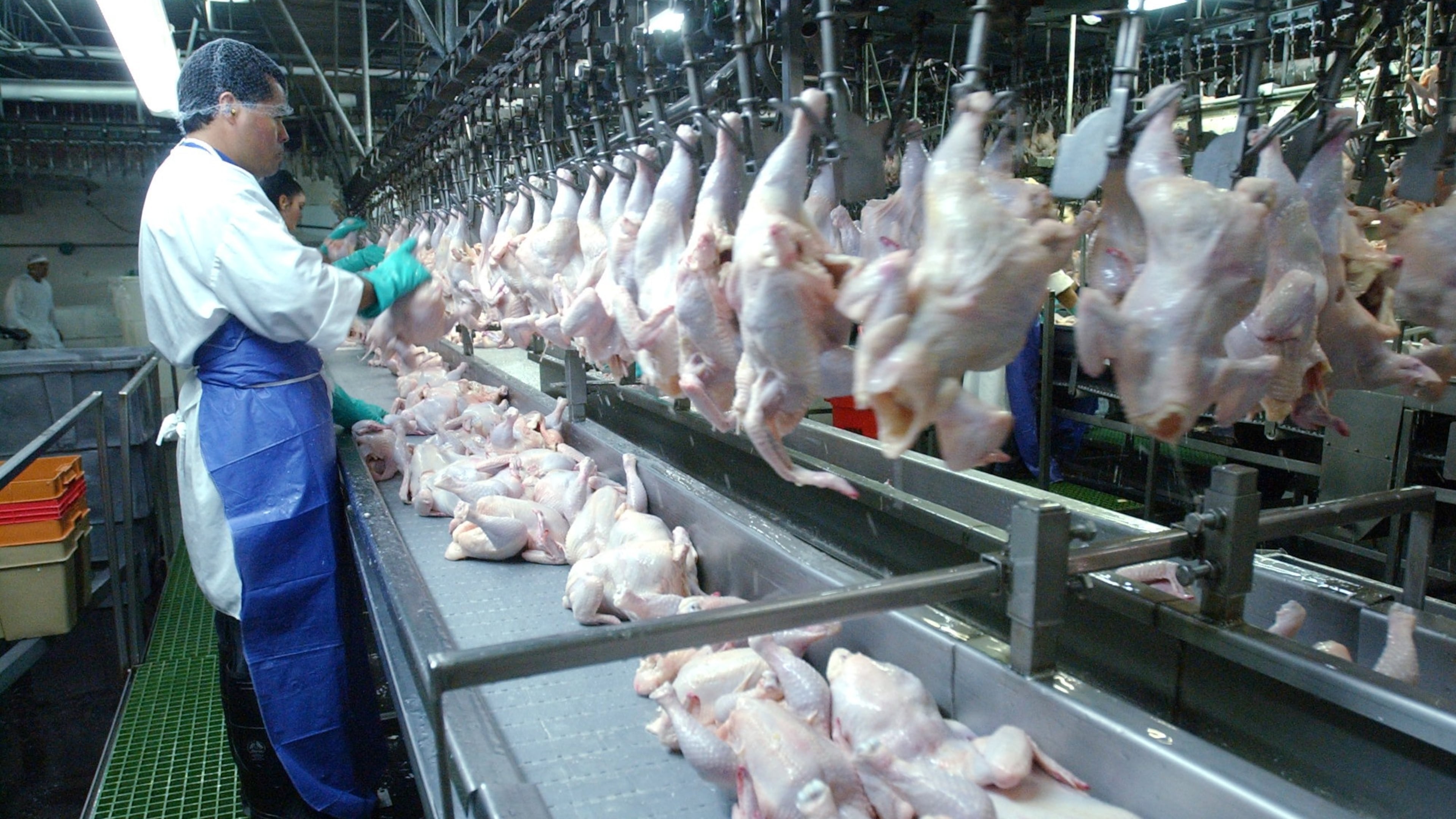
According to Berkowitz, the only aspect of poultry processing that is meaningfully automated is gutting the birds, which is performed by an evisceration machine. Otherwise, turning chicken carcasses into the parts recognizable by consumers rests on workers wielding knives and scissors to manually perform tens of thousands of cuts per shift, Berkowitz said.
The repetitive nature and speed of the required cuts can lead to musculoskeletal disorders such as carpal tunnel syndrome. Beyond mechanical injuries, workers in poultry plants also face risk of exposure to dangerous chemicals.
According to OSHA data from 2015 to 2022, poultry companies reported some of the highest numbers of severe work-related injuries across all U.S. employers.
“If you ask any poultry worker, they will tell you that everything (inside a plant) goes too fast,” Berkowitz said.
The line speed increase sought by the Trump administration applies to the automated evisceration line. But advocates say that would still ratchet up the pressure on employees.
Sur Legal staff said workers are already struggling under current line speeds. They expect accidents to become more common as surging speeds add to workloads and compromise employees’ reaction times.
“We had a client last year that said that she’d get dizzy because the lines were moving so quickly that she couldn’t keep up. She told her employer, and her employer basically said: ‘Too bad. Keep working,’” Zambrana said. The proposed rule change “is going to make this kind of stuff worse.”
‘No other choice’
During the first Trump administration, federal authorities granted individual poultry companies waivers to increase their line speeds from the industrywide maximum of 140 birds-per-minute to 175 birds-per-minute — the same change that was proposed for all employers in 2026.
To investigate the impact on worker safety at the higher speeds, the USDA tapped researchers at the University of California to study the difference between worker injuries in facilities with accelerated speeds and those with normal speeds.
As noted in the USDA’s proposed rule change, researchers did not find greater injury rates in the facilities with faster lines. But according to the study, those facilities mitigated individual worker risk by hiring more workers to handle the greater production demands associated with faster lines. Under its proposed rule, poultry companies would not be obligated to adopt mitigation strategies.

Two of the report authors posted a public comment last month in opposition to the rule change.
“Until this epidemic of (musculoskeletal disorder) risk and work-related pain is properly mitigated, (USDA) should not approve or facilitate increased line speeds in poultry establishments,” the University of California researchers wrote. They expressed concern that the federal government “is about to make the problem even worse, because its proposed rule fundamentally misunderstands and mischaracterizes the scope and results” of their study.
Worker advocates say they are bracing for a ripple effect of injuries should line speeds rise.
“When productivity expectations increase, workers are often denied bathroom breaks and rest, and because of that, this makes workers decrease their water intake, and that leads to dehydration,” said Lucia Gambino, a worker rights organizer at Sur Legal.
Poultry plants have in the past been cited by OSHA for inadequate access to toilet facilities, which the watchdog says can expose employees to bladder and kidney infections. In a 2019 report from Human Rights Watch, investigators reported speaking with workers who said that colleagues had resorted to wearing diapers on the job.
For years, Miriam Marín has volunteered to teach reading and writing to marginalized members of the Gainesville immigrant population. Born in poor areas of Latin America, her students have typically had to start working at a young age instead of going to school, Marín said. Their illiteracy means Marín’s students are ruled out as potential employees by most employers. A notable exception: poultry plants.
“There is no other choice,” she said.
According to Marín, poultry jobs are “very intense” as is. She said she hopes line speeds don’t go up.
“I don’t even want to think about it, what it would be like,” Marín said. “My God.”