Ted Turner’s colleagues, friends remember the mogul
Everyone has a Ted Turner story. And if they’re lucky, multiple.
Whether it’s declaring at a business meeting that he doesn’t want to hire anyone who smokes or getting on his hands and knees and barking like a dog in a hotel lobby, Turner was a larger-than-life figure, an iconoclast who stood apart from other business leaders in Atlanta and the television industry at large.
Turner died Wednesday at the age of 87 after a period of declining health.
When colleagues and friends reminisce about Ted Turner, a few patterns emerge. He was loud, uninhibited and brash. A champion of bold ideas. Unafraid to trust and take risks on young talent.

Atlanta publicist Bob Hope remembers Ted Turner
Before longtime Atlanta public relations executive Bob Hope worked for Turner, he couldn’t imagine anyone going to work for him.
At age 24, Hope was named the public relations director of the Atlanta Braves, the same year Turner acquired the rights to telecast Braves and Atlanta Hawks games on Channel 17. He got to know the mogul in sales meetings for the channel.
When Turner acquired the Braves four years later, he fired several department heads, Hope said. He figured Turner would eventually get to him. Turner had all of the departments report to Hope until he hired replacements.
Later, Turner convened a lunch meeting with Hope. He was convinced he was going to get fired. So with all of the forced bravado of a 20-something executive trying to keep his job, Hope told Turner he was worried about him.
“He got big and he said ‘What are you worried about?’” Hope said. “I said, Ted, ‘I am a very aggressive promoter, and I just don’t think you can keep up with me.’ He lit up.”
Hope went on to work for Turner for four years, serving as his original publicist and promoter, and another 10 years as a member of the Atlanta Braves board.
It was an exciting and endlessly fascinating time, he said, and each day was different from the next. When Turner was in town, he would hear from him constantly and receive back-to-back assignments. When things were going smoothly, Turner itched to come up with something to stir the pot. Hope said he would be able to come up for air when Turner left town.
When Turner bought the Braves, he vowed to be “everyman’s owner” and attend all of the games. He quickly learned that was impossible with his schedule.
He found out the commissioner could ban him if he acted uncouth. So one day, he got on his hands and knees in a hotel lobby, started barking and saying negative things about the commissioner, Hope said. This and a few other antics got him banned.
At times, working for Turner was high-pressure. Hope pushed himself to please Turner and ensure he thought he was the best promoter in the business. Hope said he would wake up in the middle of the night with immense chest pain. When he eventually went to his doctor and told him he thought he was dying, his doctor told him that it was just the stress from working for Turner.
“So sometimes I look and think how stupid I was to leave when I did, but I just realized that I’d be dead by now if I had stayed with him,” Hope said.
Hope remembers Turner valuing loyalty and chutzpah. If someone worked for Turner, he had complete trust in them and he would do whatever they told him to do.
The longer Hope worked around Turner, the more he felt he was absorbing his quirks.
Turner had an act he’d pull during sales meetings where he would put his head down on the table and throw his arms up after a representative made a particularly critical comment. During a meeting with Dairy Queen, Hope, without thinking, did the same thing.
“Oh my God, I’m becoming Ted,” he thought at the time. “This is crazy.”
Years after Hope left the Braves, Turner called him to say he was starting a club and he wanted Hope to join. He agreed tentatively, and asked Turner what he needed to do. He told Hope to send him $25.
Hope asked him what the club was going to do.
“He said. ‘Well, we have three things. We’re going to eliminate world hunger, we’re going to clean up the world’s environment and we’re going to eliminate war.’ I said, ‘So what do I do?’ He said, ‘You take war,’ and hung up.”
Steve Korn remembers Ted Turner
It was by sheer luck that Steve Korn began to work for Turner.
During Korn’s first year working for Troutman Sanders, a senior partner came off the elevator to look for a junior associate to work on a case for Turner, one of the clients the law firm represented. Korn’s office was 5 feet closer to the elevator than his colleague’s, and by chance he became the draft pick.
In the years following, Korn spent about 95% of his time on work for Turner. He helped oversee the launch of CNN and sued to allow CNN to gain access to the White House press pool.
So when Turner Broadcasting decided to start an in-house legal department, Korn left the firm and began serving as the company’s general counsel in 1983.
Korn spent just under two decades working for Turner’s enterprises, eventually transitioning to the role of vice chairman and chief operating officer of CNN in 1996. He left in 2000, a date he timed to the 20th anniversary of CNN.
Turner made Korn’s business life exciting, he said. The company would do something significant every six months, whether it needed to or not.
Turner had an incredible presence, Korn said. He had more energy and vibrancy than anyone Korn had ever met, with 10 new ideas constantly on his lips. Four of them might be crazy and five of them illegal, but one of them was usually brilliant, he said.
“He’s also one of the most brilliant people I’ve ever known, although people would often lose that because of his audacious personality,” Korn said. “They wouldn’t focus on how damn smart he really was.”
Korn was young when he began working for Turner. He never made him feel like he was a kid or didn’t know what he was doing. But it was expected of everyone to be prepared.
Korn saw Turner for the last time about a year and a half ago at a group lunch with his former colleagues. Turner’s health and memory was already declining by that time. But Turner pointed at him and said: “Steve Korn. We spent a lot of time together.” This touched him deeply.
Korn’s former colleague at Troutman Sanders, the one whose desk was 5 feet further away from the elevator, was a really smart guy, he said. But he spent his entire career representing clients like Georgia Power.
“I couldn’t have done that for a month,” Korn laughed.
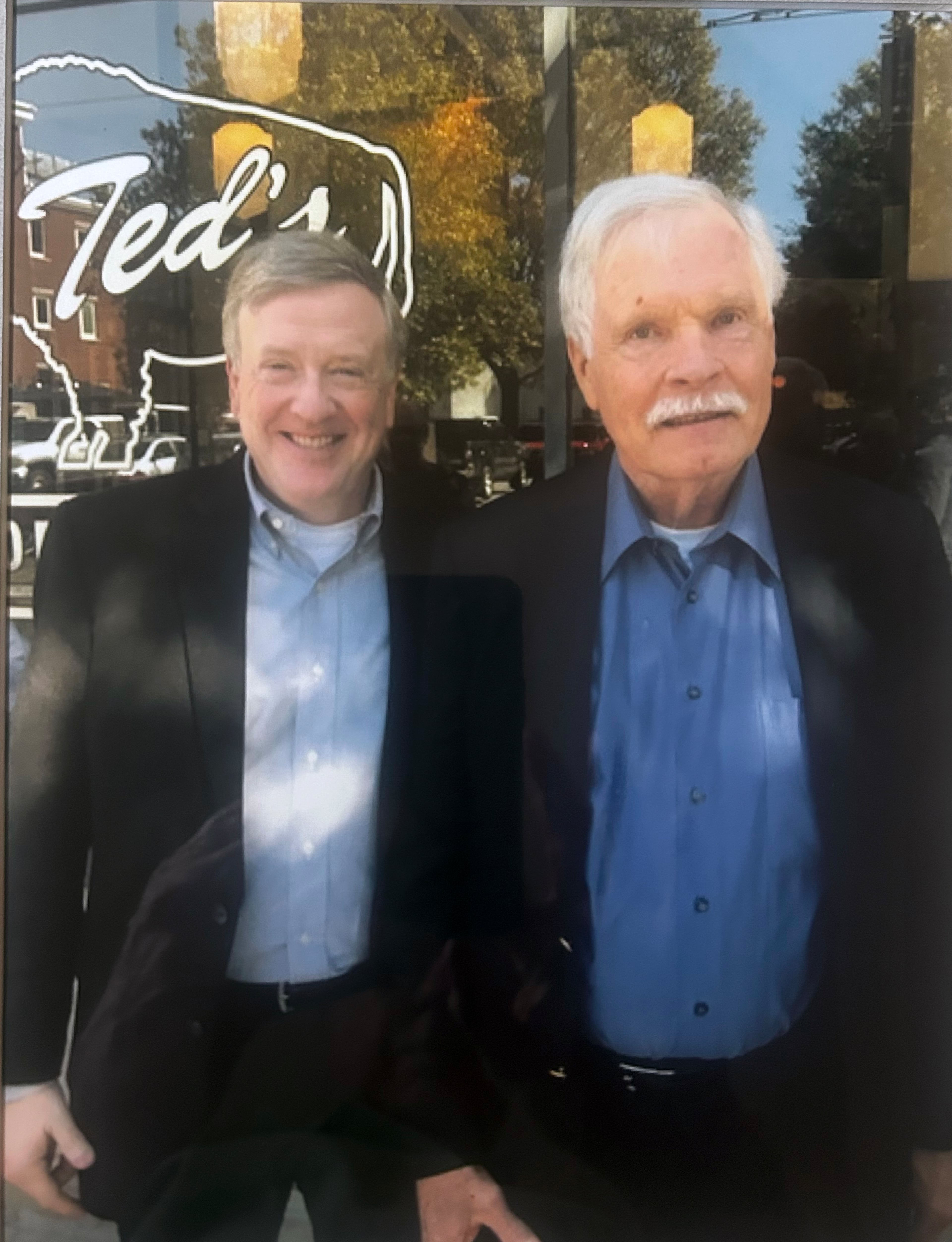
Jack Womack remembers Ted Turner
When Jack Womack began at CNN as a national assignment editor in 1985, he didn’t know how to address Turner.
Womack was in college when Turner beamed a superstation to his home state of Montana, and he thought his plans to create 24-hour news network were out of left field. What do you call the progenitor of both? Mr. Turner? Or his full government name?
Turner told him adamantly to call him Ted.
“I said, ‘Well, it’s great to work for you.’ He said ‘No, no, you don’t work for me. We work together,” Womack said, who spent about four decades with the network before retiring in 2024.
Womack stepped into a high-pressure environment when he started at CNN. The network was losing money and Turner was pumping resources into it. But the station soon began to see a turnaround when the Challenger explosion occurred in 1986.
At a staff meeting in the ’90s, Turner declared he didn’t want the network to hire anyone who smoked. Another executive told him he didn’t think he could do that. Turner responded: “Well, people that smoke are stupid, and you can’t hire anybody that’s stupid.”
At CNN, he instilled the spirit that it was “us against the world,” Womack said. He never stopped investing in the business, even when it wasn’t making any money and he was days away from losing all of it.
Before Womack retired as a senior vice president of CNN Worldwide, he met Turner for lunch. He asked Turner what he thought was his biggest accomplishment outside of CNN. Turner’s answer: the restoration of the buffalo population in the United States.
“It’s incredible what this guy was able to do,” Womack said. “Talk about an adventurous, incredible, well-lived life.”
Steve Koonin on Ted Turner
Long before Atlanta Hawks and State Farm Arena CEO Steve Koonin went to work for Turner Broadcasting System, the mogul held a coveted spot on his list of people with whom he would want to have dinner. Koonin saw him as a wild-eyed entrepreneur who was going to change the world and was willing to do anything and everything in order to do that.
Turner was worth $10 billion and had already transitioned to vice chairman by the time Koonin began in 2000, so he didn’t get “primetime Ted,” he said. But he certainly lived up to the idea he had in his head, and the fingerprints of what he built were still all over the business.
“He far surpassed it,” said Koonin, who worked at Turner Broadcasting for 14 years and served as its president. “I couldn’t get enough of being in the same room with him. It was just inspiring. Rarely in somebody’s career do you have a chance to work for somebody who literally changed the world.”
In a formal statement issued May 6, Koonin said: “Ted didn’t just build businesses — he built movements. From TBS, TNT, TCM and all of the related networks as well as his ownership of the Atlanta Hawks, Braves, and Thrashers, he transformed Atlanta into a global center for media and sports, leaving an indelible mark on the world.”

Lynne Russell on Ted Turner
Lynne Russell, who worked as an anchor at HLN from 1983 to 2001 and left the company about the same time as Turner, said he would call her “the one that got away.”
“I’ll never forget the night we ran into each other in a hallway at CNN and he asked if I was still married,” she said. “When I said yes, he grinned and began with his famous, ‘Aww … then I guess I’ll give Jane Fonda a call.’”
She said he’d show up in the newsroom unexpectedly any time day or night. “He’d always come over to the set and give me a little peck on the cheek,” she said. “You can imagine that did not make me popular with other anchors. One night he was standing there on set waiting for a commercial break when I killed the mic and the break started rolling. He didn’t come over. I looked up and there was Jane Fonda. He was doing show and tell! That night it all came together and I couldn’t stop laughing.”
But for all his flirting, she said, “He always treated women with respect, and if things didn’t work out, he never just left them ‘standing there’ in life.”
She loved how much Turner enjoyed being the center of attention. She recalled having lunch with him while she was learning how to sail and they were discussing how to navigate a certain part of Lake Lanier. “He looked over his shoulders conspiratorially and motioned for me to lean in. After a long pause, he whispered in my ear and people stopped eating. He loved it. What Captain Outrageous was actually saying was, ‘There’s no wind on the lake!’”

Bill Tush remembers Ted Turner
Bill Tush was a low-level employee at WTCG-TV Channel 17 in Atlanta in 1974, doing voice-over work and overnight news.
He didn’t think anybody was watching, so he did a parody of the local Channel 11 News called “Dull News.” The next morning, owner Turner told him he thought it was funny. “That gave us carte blanche to go crazy and turn it into what it became,” he said, an early parody of super-serious newscasts.
Before CNN started, Tush confided with Turner that he wasn’t sure what he wanted to do next. Turner, he recalled, said, “You can sit in the lobby so whenever I come down, you can tell me a joke.”
Instead, Turner hired him as an entertainment reporter in New York, where he worked for 20 years. He recalled giving Turner and Jane Fonda a tour of the New York studios and Turner musing, “If I didn’t start this place, I could never get a job here.’ I said, ‘If you didn’t start this place, I couldn’t get a job here either!’”
Tush said others may wax romantic about Turner’s business smarts or his charitable donations, but “I think the bottom line for me was this: He made it fun. I never went to work dreading it.”
More reflections on Ted Turner
“Ted Turner led a life as big as the American Dream he lived. … His media empire reimagined the American news cycle and broadcast TV as we know it, ultimately making his beloved Atlanta Braves ‘America’s Team’ for decades.” — Georgia Gov. Brian Kemp
“Atlanta is so much better because he chose to build much of his legacy here.” — Atlanta Mayor Andre Dickens
Turner was “a pioneering entrepreneur and philanthropist who revolutionized television news. … His work has touched millions of people as they have been able to witness historic moments here and around the world over the past 40 years.” — Atlanta City Council statement
“I was lucky to know Ted for over 50 years and travel to many of his incredible properties. We both shared a love of wild places, and we had a lot of fun. I learned a lot from him, and I think he learned something from me. I can honestly say Ted Turner was one of a kind and he made the world a better place.” — Jim Kennedy, chairman emeritus of Cox Enterprises and chairman of the James M. Cox Foundation
“The word legend almost doesn’t do justice to the impact Ted Turner had on the media and on Atlanta. His vision and his courage continue to set a standard for everyone at CNN, and anyone called to the craft of journalism.” — Andrew Morse, president and publisher of The Atlanta Journal-Constitution and former executive vice president and chief digital officer, CNN Worldwide
“I am deeply saddened by the passing of Ted Turner — a true original, a visionary and a force of nature whose impact will be felt for generations. … Above all, Ted was committed to making the world a better place. Whether through his groundbreaking work in media, his dedication to environmental causes, or his philanthropic leadership, he consistently used his platform to drive meaningful change.” — Tony Ressler, Atlanta Hawks Principal Owner
President Donald Trump on Truth Social called Ted Turner “one of the Greats of All Time.” “He founded CNN, sold it,” and was “devastated” because the network became “everything he is not all about.” Trump said he hoped the new owners in the latest acquisition by Paramount Skydance could restore CNN to “its former credibility and glory.” “Regardless, however, one of the Greats of Broadcast History, and a friend of mine. Whenever I needed him, he was there, always willing to fight for a good cause!” — President Donald Trump (via TruthSocial)
“Ted Turner was a once in a lifetime figure whose impact on the way the world gets its news is immeasurable,” former President of CNN Worldwide and Chairman of Turner News and Sports Jeff Zucker told the AJC. “While he had many extraordinary accomplishments throughout his lifetime, CNN was his boldest vision, built on the foundation of truth, fairness and facts. He lived and breathed the news and he loved it. Journalism has lost a legend, but his legacy will live on for countless years to come.”
“He swept into my life, a gloriously handsome, deeply romantic, swashbuckling pirate and I’ve never been the same. ... He had a big life, a brilliant mind and a soaring sense of humor. ... He also taught me more than any other person or school classes, mostly about nature and wildlife, hunting and fishing (hunters and fishermen who follow the law are the best environmentalists), but also about business and strategy. ... Ted was challenging, but I’ve always been up for a challenge, and with Ted it was almost always worth it.” — Jane Fonda, actress and ex-wife (via Instagram)