The subtle red flags you may be overlooking in your relationship
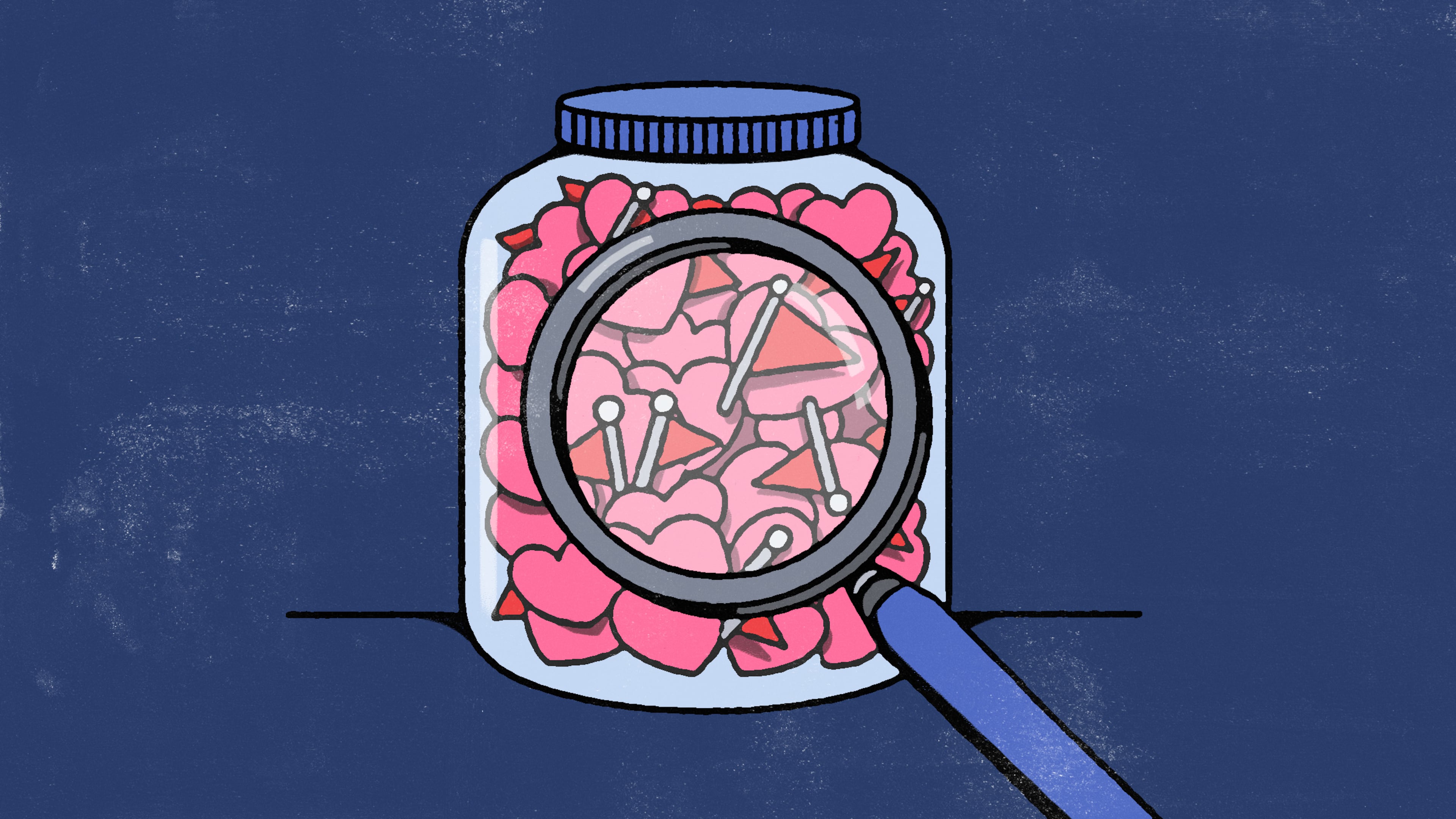

It’s likely that you’ve heard about the more obvious red flags that indicate a relationship may be unhealthy, like cheating, a pattern of lying, or physical harm. But not all warning signs are easy to spot. Some are far more subtle and often go overlooked.
In some cases, we miss them because we’ve observed similar patterns in other relationships in our lives and believe this is just how things are supposed to be. Other times, we assume that the behavior is simply a challenge to work through.
However, it’s important to recognize the difference between random quirks that you can learn to live with (leaving the dishes in the sink or talking in their sleep) and behaviors that gradually erode trust and your self-esteem (being insulted or cursed at when you make a mistake).
Here are five more subtle red flags that deserve some attention.
1. Your accomplishments are consistently diminished.
If every time you get good news your partner can’t make time to celebrate or is dismissive, this may be an indication that your partner is more interested in exerting power over you vs. sharing power with you.
In healthy relationships, there is space for everyone’s accomplishments to shine and make each other better. When your successes are consistently diminished, it can result in you feeling as if you have to minimize your good news or, in some cases, may result in you limiting your potential so as not to upset your partner. Over time, that might look like holding back from applying for a promotion you’ve been thinking about or stepping away from interests that once excited you, simply because your voice is no longer the one you’re listening to the most.
2. Your partner limits your access to finances or controls your ability to make money.
In any relationship, couples make a lot of decisions about finances, from whether to create joint accounts or keep them separate to how to approach paying off debt. These choices often involve ongoing negotiations and, at times, difficult conversations. The key to making this process healthy is ensuring that both partners feel heard and their feelings are validated.
In unhealthy relationships, money can be used as a tool of control in many different ways. This might look like expecting your paycheck to be deposited into a joint account they control, then restricting access to it through an allowance. It can also show up in decisions that limit your growth, like discouraging or preventing you from pursuing certifications or additional education that could potentially increase your independence.
Control doesn’t always look strictly financial. You may notice patterns like your partner picking fights with you right before an important presentation or sharing embarrassing stories about you at company functions. These behaviors can be used to sabotage you by either getting you fired or limiting your earning potential.
3. Your partner limits your interactions with loved ones.
Mistreatment often thrives in silence. The more isolated you are from people who care about you, the easier it can be for someone to mistreat you.
This red flag is easy to miss because it may start off feeling very innocent and flattering — “I just love you so much that I want to spend all of my time with you.” At first that kind of attention can feel special, but it’s often an attempt to shrink your world so that they become the central character.
When your partner attempts to monopolize your time and attention, it makes it much harder to access a much-needed “reality test” that can help you stay grounded. For example, if you’re used to having weekly dinners with your best friends where you openly talk about everything — from careers, to finances, to romance — and you mention receiving a monthly allowance, it’s very likely that one of your friends will ask you to explain more. You could be reminded that this arrangement isn’t typical. This kind of reality testing can lead you to question why your partner insisted on this arrangement.
Having an outside circle who can hold up a mirror to your experiences makes it far less likely that unhealthy and harmful behavior can continue.
4. Your partner insists on a lack of privacy.
If your partner insists on knowing the passcode to your phone or emails and consistently tracks your location, this is likely yet another ploy for control. This is another red flag that is often missed because the request is often couched in language around protection or trust.
But trust is something that is built over time through intimacy, and being required to share all of your personal information is attempted ownership. You may hear statements like, “If there’s nothing to hide, you shouldn’t mind sharing this with me,” but even in romantic relationships, you are entitled to private thoughts, information, and conversations. All of this does not become grounds to be shared simply because you are in a relationship.
The most insidious part of this insistence is that it is often not reciprocal. Partners who show up in this way can be very secretive with their own information.
5. Your partner weaponizes their incompetence.
If you’ve ever heard something like, “You are so much better than me at doing the dishes,” you may be the victim of weaponized incompetency. This term refers to the ways in which someone intentionally presents as helpless so that you are forced into a role of “the competent one.”
This helplessness is often reinforced through societal messaging, but the impact of this on a relationship can be a hefty one. If your partner shows up in this way, it can often lead to an unequal cognitive load where you are left not only doing the tasks but also the thinking for them, which can lead to decision fatigue and overwhelm. This behavior also sets up a parent-child type of dynamic in relationships, which can often lead to resentment and make it difficult to deepen intimacy as partners.
This red flag is especially important to pay attention to if you’re someone who has a tendency to just “do it yourself” instead of explaining to someone how you’d like things done. This tendency can make it easier to be exploited by those who weaponize incompetency.
If you notice any of these patterns showing up in your relationships, it could be helpful to talk with a mental health professional in your area who can help you process the patterns and develop a plan for moving forward.
This column is designed to be educational and informational only and should not be interpreted as medical advice. It is not a substitute for seeking the support of a licensed mental health or medical professional.
Did something from this column lead you to thinking about things differently or trying something new? I’d love to hear about it. Or if there’s something you’re trying to work through in your life that you could use some feedback about, let me know. Share it with me at drjoy@ajc.com.