Eve Milner, Wellstar West Georgia Medical Center
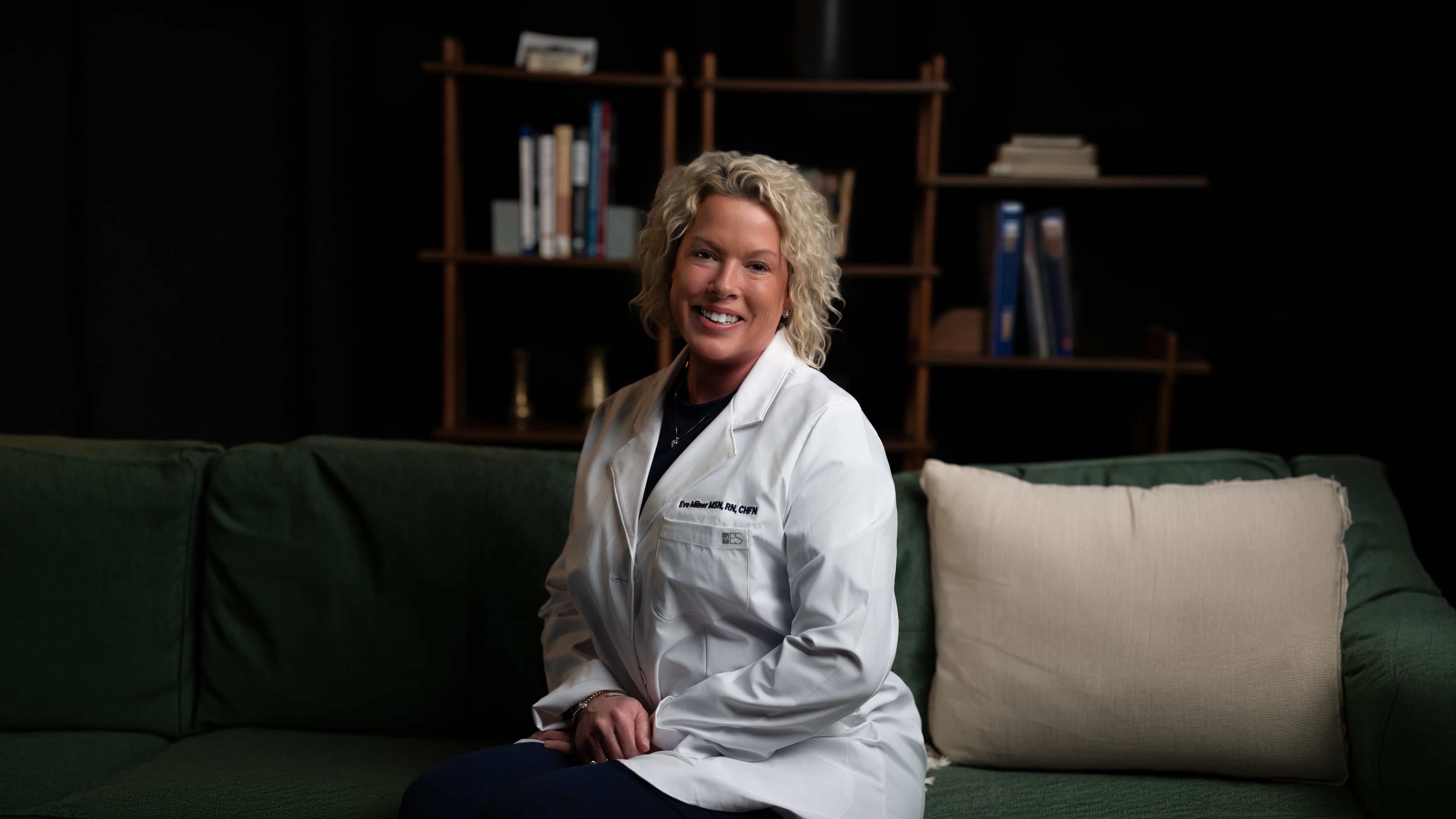
Eve Milner walked away from the boardroom and back to the bedside at 50.
She left behind her role as a hospital vice president — a career she built over nearly three decades — to take a job helping heart failure patients navigate life: their medications and appointments, and how they should eat and sleep, of course, but also harsher realities like how to get by without a support system of friends or relatives.
“I turned 50, and I was having a midlife crisis and changed my career,” Milner explained. “I had slowed down a little bit. In COVID, I got to interact with a lot of patients, and it made me realize how much I missed patient care.”
When she returned to her passion nearly two years ago, Milner discovered a renewed sense of purpose and a willingness to open her heart — and even her home — to her patients.
She’s been an inspiration to colleagues at Wellstar West Georgia Medical Center in LaGrange, said her supervisor, Lindsey Perkins.
“Her compassion is genuine and unwavering. Her care is transformational,” Perkins added. “Her commitment is limitless.”
Milner — a 2026 winner of an AJC Excellence in Nursing Award, presented Thursday during a ceremony at Curate Event Space — is committed to helping her heart failure patients have the best quality of life possible. That has meant taking time to understand why some patients don’t take their medications or eat properly, and often end up back in the hospital.
What Milner found was that her patients’ health problems are shaped as much by poverty and isolation as by disease.
“If they don’t have a stable home or enough money for food, then how am I going to expect them to pay for medicine?” she said. “It is my job to help them find the means to take care of themselves.”
She’s found them housing, helped them apply for government benefits and coordinated their care. And sometimes, she and her family have stepped in when no one else could.
One patient, a 24-year-old woman with postpartum cardiomyopathy, arrived in LaGrange alone and struggling. When the woman was readmitted to the hospital after initially improving, Milner learned the reason for her health reversal: She had been evicted and had stopped taking her medications.
“I immediately got my butt in gear, looking for an apartment she could afford,” Milner said.
She found the woman a room for rent and rallied staff to help furnish it.
“Come to find out, she had never even had her own bedroom before,” Milner said.
Now, she picks the young woman up for church every Sunday.
“My whole family has kind of adopted her,” Milner said.
They help with groceries and rides to doctors’ appointments.
“She just needed a chance,” Milner said. “She wanted to do all the right things, but she didn’t have the means.”
Milner saw a similar pattern with a 77-year-old heart failure patient.
“He was readmitted every single month,” she said. “We could not keep him out of the hospital.”
By his fourth admission, Milner decided to be direct.
“I went in his room, put my hands on my hips — I’m kind of feisty,” she recalled. “‘If you want to come visit me you can come visit me in the office. You do not need to be admitted to the hospital just to see me.’”
The approach worked, and the patient began seeing her as an outpatient. But as she got to know him better, Milner realized his challenges extended far beyond his medical condition.
The man, who is blind, had been sleeping on his sister’s couch for three years after mold forced him to leave his home. When Milner visited, she discovered just how little he had.
“He didn’t have a bed,” she said.
She also learned he had lost access to his veterans benefits after failing to navigate the government’s switch to direct deposits.
Milner stepped in, helping complete paperwork, coordinating care and involving family members. Eventually, he was able to move into a more stable environment — as a roommate to Milner’s own 84-year-old mother.
“They are just friends,” Milner said. “They are just hilarious.”
Milner helps manage the man’s medications, takes him to appointments and, every Sunday, brings him to church.
“He thinks I am his doctor,” she said. “He tells everybody, ‘She keeps me up out of the ground.’”
For Milner, these relationships are not exceptions to the job. They are the job.
“I just couldn’t let somebody live their last years without a refrigerator, without knowing when they were going to eat, without a bed,” she said.