Brian Kemp’s political gambles crumble in dual defeats
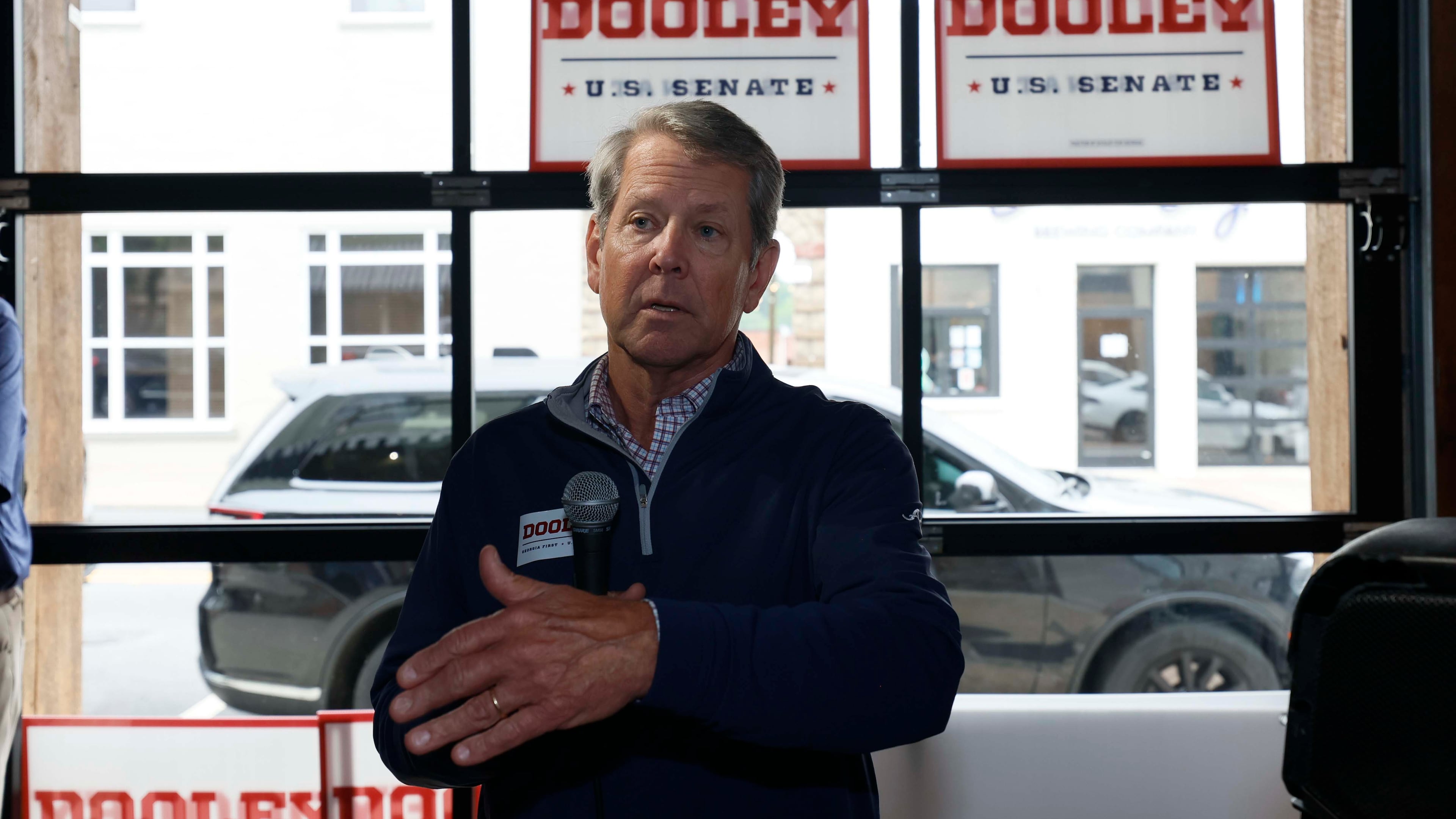
Gov. Brian Kemp spent years building a political machine that dominated state politics. On Tuesday, Republican voters delivered one of the clearest rebukes of his political career.
The governor’s hand-picked U.S. Senate candidate, Derek Dooley, lost to U.S. Rep. Mike Collins. His surprise pick for governor, Lt. Gov. Burt Jones, was defeated by billionaire Rick Jackson.
Taken together, the losses amounted to a stunning setback for a Republican governor who entered his final year in office at the height of his influence.
Add to that Wednesday’s reversal, when Republican legislative leaders rejected Kemp’s push to overhaul Georgia’s political boundaries during a special session despite the governor’s objections.
But it was the defeat of Dooley that stung the most. His endorsement was never just a simple show of support.
Georgia votes: Runoff elections
GOP governor: Rick Jackson topples Burt Jones
GOP Senate: Collins defeats Dooley, will face Ossoff
What’s next: Here’s who will be on the ballot in November
Georgia Governor: Keisha Lance Bottoms is in for a very different race against Rick Jackson
Analysis: Brian Kemp’s political gambles crumble in dual defeats
Map: Live results, mapped by precinct
Secretary of state: Georgia Republicans reject 2020 election denier
Results: See who won and lost
Recap: Election night as it unfolded
Photos: Scenes from the primary runoff election
Complete coverage: Georgia votes
Kemp recruited the former football coach to run for the U.S. Senate. He tried to clear the field for him, lobbied President Donald Trump to give Dooley a chance and dispatched trusted advisers to run his campaign. He spent months crisscrossing Georgia with Dooley at more than 90 campaign stops.
Kemp wasn’t merely backing candidates. He was trying to shape the next generation of Georgia Republican leadership. Voters rejected that vision.
Collins scored a convincing victory with the help of a late endorsement from Trump, who blindsided the governor Sunday with a pre-dawn snub of Dooley, saying he didn’t know him “and neither does anyone else.”
For Kemp, Tuesday’s runoff dealt a painful blow to a Republican who staked his political capital on a coach-turned-candidate who wasn’t even on the longest of short lists before Kemp drafted him.
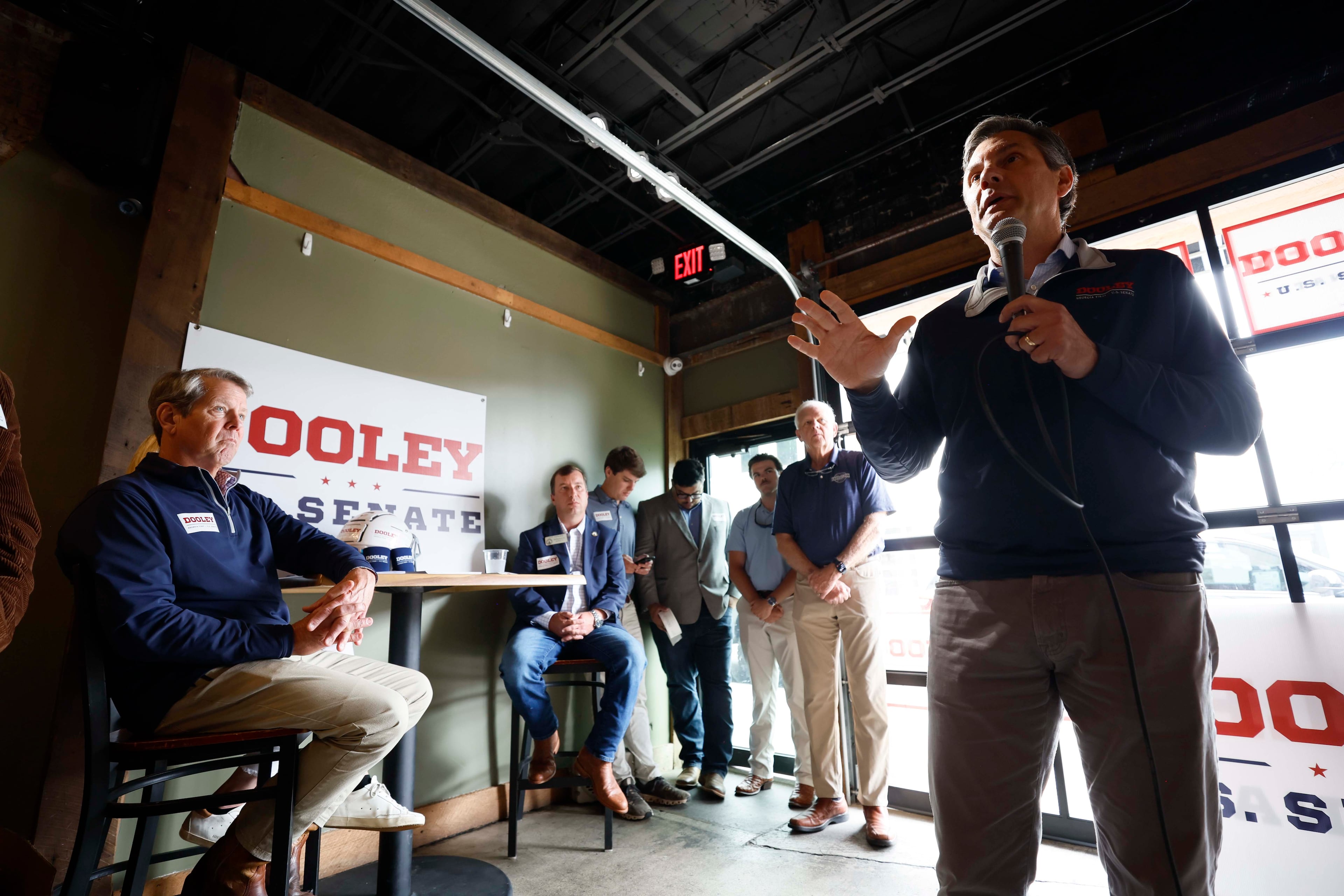
It was an audacious wager. When Kemp decided against running himself, he argued Georgia Republicans would trust his political instincts enough to follow him toward a first-time candidate with decades of gridiron experience and a name-brand last name as the son of legendary University of Georgia football coach Vince Dooley.
Nominating a congressman from a deep-red district, Kemp said, would be too easy for Democrats to caricature as a partisan Washington politician. The party needed an outsider, someone with a fresh biography and appeal beyond the GOP base.
Kemp saw Dooley as the embodiment of that strategy. He entered the race with a plan to run against Washington. He lacked the voting record, business experience or political background that are often the hallmarks of modern campaigns.
In fact, Dooley admitted he was so detached from politics that he didn’t vote in 2016 or 2020. He said it was resentment toward President Joe Biden’s policies that ultimately triggered his political awakening.
The governor saw Dooley as a candidate who could attract the independent and crossover voters who helped fuel his own victories over Stacey Abrams in 2018 and 2022. He believed Republicans would ultimately need those same voters to defeat U.S. Sen. Jon Ossoff, the only Democratic incumbent up for reelection in a state that Trump carried in 2024, yet one Republicans often acknowledge is still favored to win in November.
On campaign stages across Georgia, the two often looked less like candidate and endorser and more like running mates. They traded stories, reinforced each other’s arguments and delivered the same message: Republicans needed a nominee who could win in November.
“A vote for Mike Collins is a vote for Jon Ossoff,” was a favorite Dooley refrain.
Instead, the bulk of runoff voters gravitated toward Collins, a battle-tested conservative who offered a different theory of the race. Collins and his supporters argued Republicans needed a nominee who reflected the party’s combative mood and its deep loyalty to Trump.
Nor does Collins appreciate being labeled a feckless insider.
“I’ve only been in Congress for one full term. I just started my second term. I’ve shown you how I can deliver. I’ve been in the trucking business all my life, over 30 years in the private sector,” he told The Atlanta Journal-Constitution after a stop in Woodstock. “I mean, that is an outsider who’s also delivered for the state of Georgia.”
The final blow came Sunday when Trump endorsed Collins as a “warrior and a winner” just days before the runoff, shocking Kemp and other allies who tried to keep Trump neutral.
The irony was impossible to miss. Eight years ago at roughly the same point in the race, Trump’s endorsement helped propel Kemp to victory in a Republican runoff for governor. Eight years later, Trump helped deny the political heir Kemp was trying to coronate.
“Look, I was very clear with the president that I thought we needed a political outsider in this race. And the best political outsider was Derek Dooley to beat Jon Ossoff,” the governor said at one of their final tandem stops in Chamblee.
He added that his goal was simple: “Everything I’m doing is to win in November.”
A verdict
Kemp has made this sort of bet before.
Instead of tapping a more conventional Republican in 2019 to replace retiring U.S. Sen. Johnny Isakson, Kemp chose wealthy executive Kelly Loeffler.
Back then, Kemp viewed Loeffler as an unconventional candidate who could expand the Republican coalition. Instead, she spent much of the campaign racing to the right and lost to Democrat Raphael Warnock in a runoff that still haunts state Republicans.
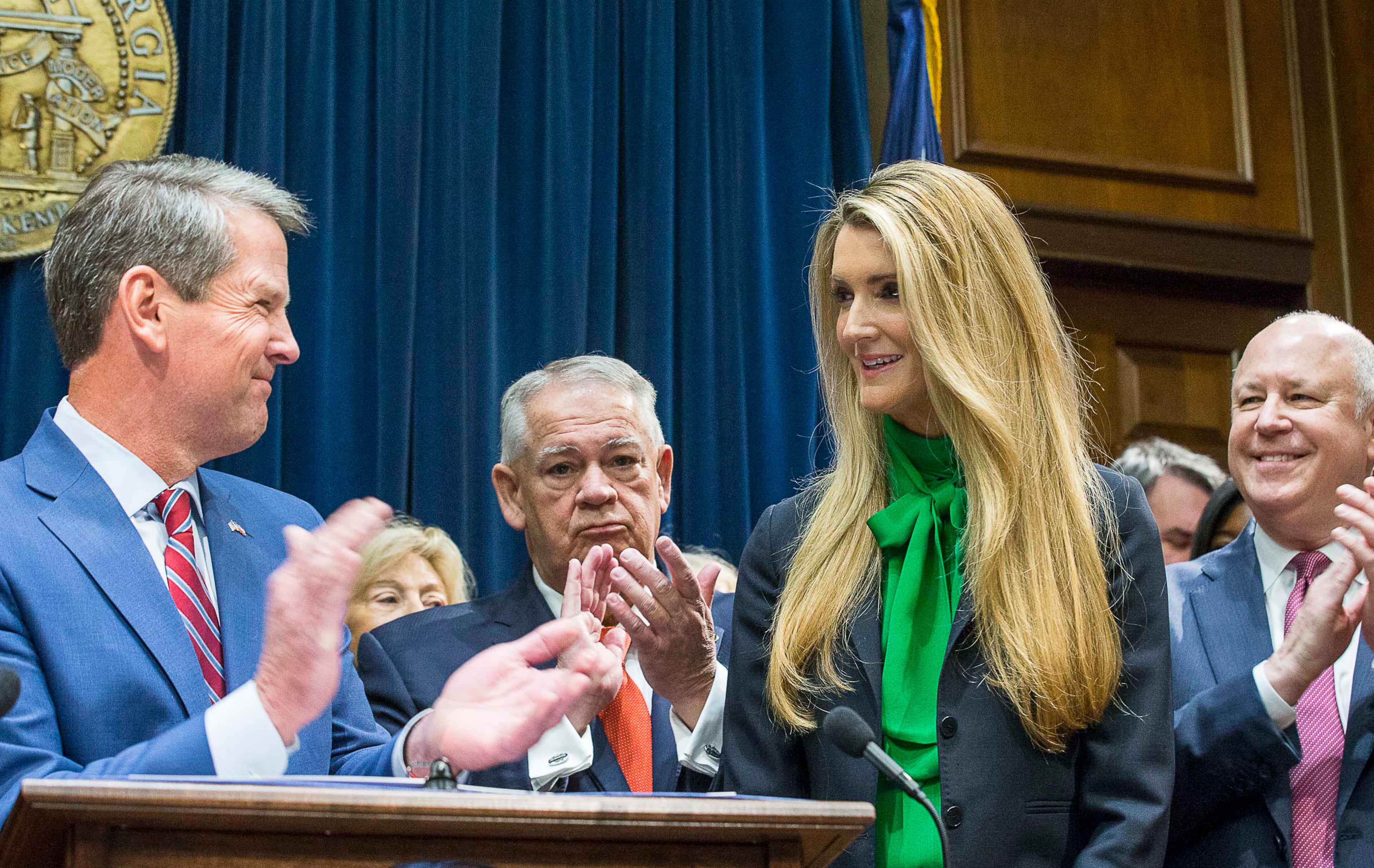
The parallel between Dooley and Loeffler is imperfect. She is a wealthy executive who self-financed much of her early campaign and now sits on Trump’s Cabinet.
But both reflected the governor’s belief that Republicans sometimes need a nominee who can reach beyond the party’s base. And both exposed a blind spot in Kemp’s political calculation.
Not every candidate can build an independent brand while holding together the party faithful, as Kemp has done for much of the last decade. Kemp asked voters to choose with their heads more than their hearts. In the end, the deciders were more drawn to Collins’ overt MAGA message than to the Kemp-Dooley argument about November appeal.
The double-decker defeats may not diminish Kemp in the eyes of many GOP stalwarts. He remains a broadly popular Republican with a maverick streak forged by his clashes with Trump and a record of checking off one conservative wish-list item after another.
But they will complicate the governor’s legacy. This was an unmistakable test of Kemp’s political coalition and case for the party’s future.
For now, Georgia Republicans have delivered a clear answer.