Georgia Senate GOP runoff to test whether Gov. Kemp’s formula still works

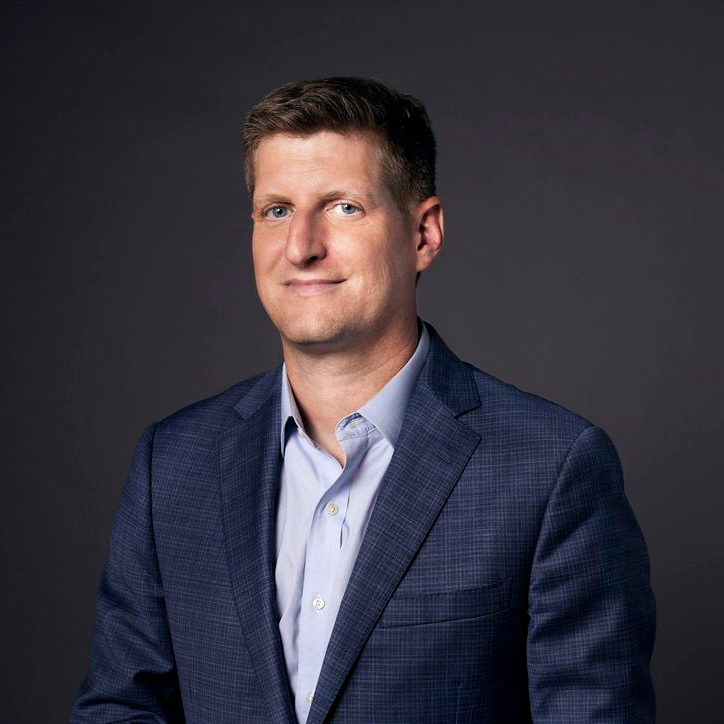
EATONTON — Derek Dooley entered the U.S. Senate race as a political novice. He may now be one of the last statewide standard-bearers for Georgia’s establishment Republicans.
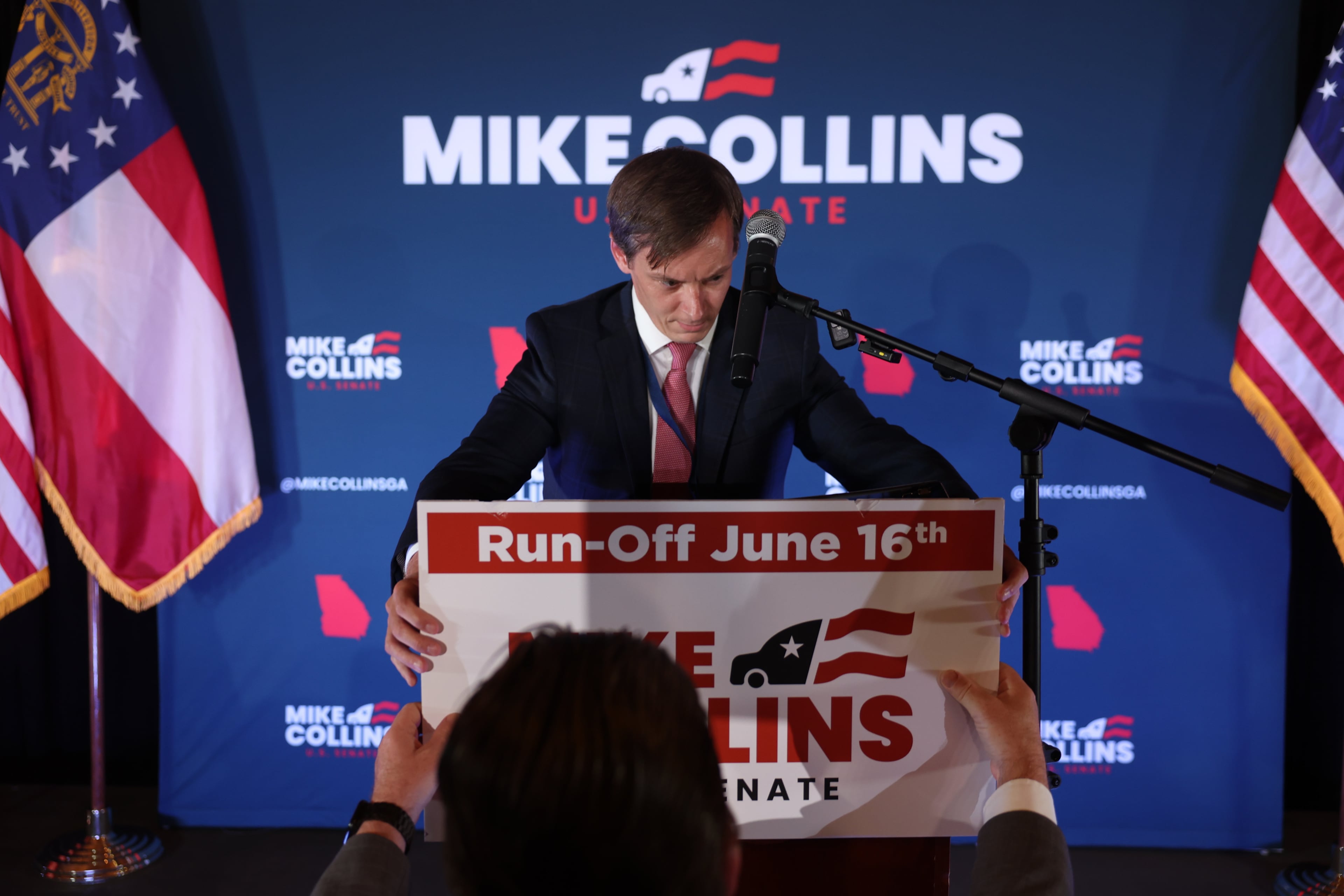
After the May primary wiped out a slate of establishment-friendly candidates, the former football coach backed by Gov. Brian Kemp is suddenly carrying a bigger burden than his own June 16 runoff against U.S. Rep. Mike Collins.
He is the most prominent remaining Republican still making the case that the GOP needs more than intense turnout from the party’s base voters to win in November. It needs a nominee who can reach the independents and crossover voters who have helped decide every major Georgia election since 2018.
It’s why Dooley warned a few dozen voters in Eatonton during one of the latest legs of his tour with Kemp that their choice in the runoff to take on Democratic U.S. Sen. Jon Ossoff should be decided as much with their heads as their hearts.
Or, as Dooley put it in an interview: “The question is, who’s the kind of candidate who can unite the most people under his tent? That’s what we’re doing.”
But that pitch is colliding with a very different argument from backers of Collins, who finished about 10 points ahead of Dooley in last month’s primary. They contend Republican voters aren’t looking for another electability lecture. They want a pro-Donald Trump fighter who reflects the party’s punchier mood.
“The people that are MAGA in this state, they know who the real Trump candidate is in this race, and that’s me,” Collins said. “I’ve never wavered.”
Collins, of course, also argues he can win in November. But his case is rooted less in crossover appeal than in a promise to deliver on the pocketbook issues he says matter most to voters.
“If you have a record of success in getting results for the state of Georgia that has helped make their lives easier, better and more secure — well, that’s a winning message,” he said.
Center of gravity
It is a surprising role for Dooley, who has never held office and casts himself as a pro-Trump outsider. But the primary results left him standing where more seasoned, Kemp-aligned figures fell.
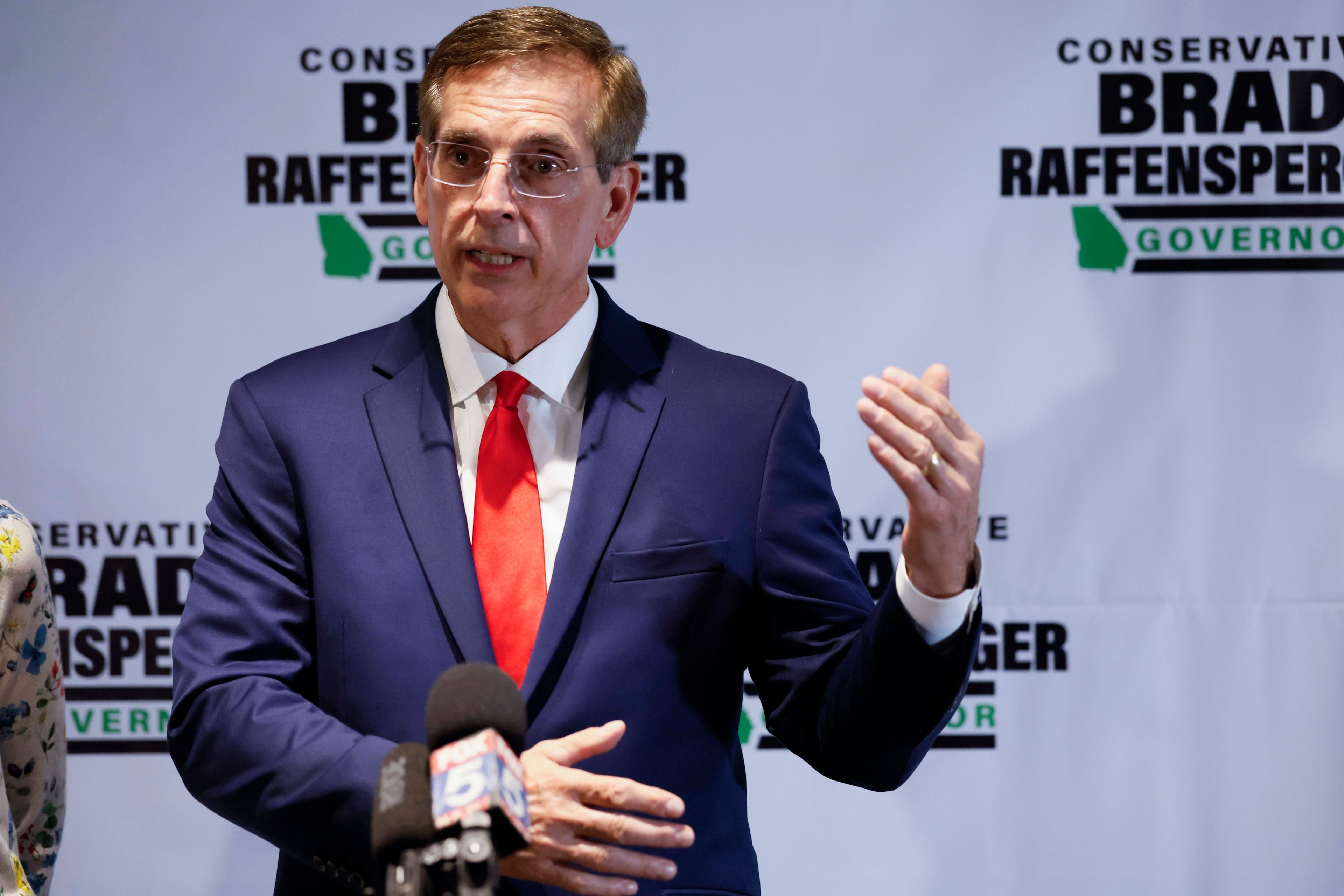
Attorney General Chris Carr barely touched double digits in the race for governor. Secretary of State Brad Raffensperger’s brightest spot in the same race was carrying deep-blue, establishment-friendly DeKalb County.
Former Lt. Gov. Geoff Duncan’s bid for the Democratic nomination as a centrist convert collapsed. Secretary of State candidate Gabriel Sterling was among the more mainstream conservatives who lost down-ticket contests.
Their defeats point to a broader shift in Georgia politics that has either pushed more mainstream conservatives out of power or forced them to fall in line with a MAGA movement that now defines the party. That marks a stark turn from the 2022 midterms, when Kemp and other more traditional Republicans scored decisive victories over Stacey Abrams and her Democratic allies on the ballot in all but one race.
As Kemp often argues on the campaign trail, the exception was the roughly 300,000 split-ticket voters who also cast ballots for Democratic U.S. Sen. Raphael Warnock over his scandal-plagued Republican rival Herschel Walker.
“To beat Jon Ossoff, we got to have somebody that’s not going to be defending their own record or ethical problems,” Kemp said. “We need somebody that’s going to be able to stay on offense against him and his record.”
Jason Shepherd, a former Cobb County GOP chair and Kemp ally, said Dooley has quickly emerged as one of the last champions of the party’s traditional wing still standing in Georgia.
“This runoff is becoming a test of whether Republican primary voters want to continue Kemp’s coalition-building approach or move in a different direction,” said Shepherd, a Kennesaw State University political science professor who has donated to Dooley. “The outcome will tell us a great deal about where the center of gravity of the Georgia Republican Party is headed.”
‘Leadership matters’
That tension is shaping the runoff, particularly as Dooley sharpens his case that a vote for Collins may as well be a vote for Ossoff.
Lately, he has hammered Collins over questions about his judgment and his hires. Collins recently dismissed longtime aide Brandon Phillips after a vulgar social media message from a campaign account infuriated national Republicans.
But Phillips had a long history of controversy before that post and is at the center of an ongoing House Ethics Committee complaint accusing both him and Collins of misusing taxpayer dollars. Collins has called it a “nothing burger.”
This week, Slate reported that another Collins aide, Kip Talley, told friends in a group chat he used his congressional position to attempt to free a Holocaust denier from prison. Talley said he didn’t act at Collins’ direction or use public resources.
“Leadership matters. Judgment matters. Who you hire matters,” Dooley said. “It goes to an electability issue, and that’s the most important thing our Republican voters should think about in this election.”
John Reale, a retiree from Chicago who attended Dooley’s Eatonton event, said he was undecided in the runoff, but said he liked Dooley’s outsider message. More importantly, he said Dooley had the stronger case to win swing voters.
“He’s not going to have to defend his old votes. He can be on the offensive in a way that others can’t. It’s a strong message,” he said.
As he spoke, fellow retiree Jim Hubbs nodded in agreement. He said he would be drawn to Dooley’s argument even if he weren’t longtime friends with his family.
“We have to play a different game. We can’t lose to Ossoff again,” Hubbs said. “It’s not about winning this race in June. It’s about winning in November. We have to be strategic.”
But Collins’ allies say that strategy misses what Republican voters are demanding now: a nominee who can channel Trump’s agenda without apology. State Sen. Matt Brass is among the MAGA-aligned Republicans who recently backed Collins, citing his reputation as a fighter for the party’s base.
“Mike knows and understands the issues of west Georgia,” he said, “and that’s the kind of person I want representing me and my family in Washington.”
State Rep. Steven Sainz said he “could not have been more impressed” with Collins for sponsoring a new law named for Laken Riley, whose murder became a rallying point for Republicans advocating stricter immigration enforcement.
“The choice in the runoff was easy,” Sainz said. “Mike has a clear conservative record of showing up for Georgians.”
Gut-check moment
That divide is now playing out on two maps at once: the Republican runoff terrain that seems to tilt in Collins’ direction, and the November battlefield that Dooley insists should worry the party far more.
In the first round, Collins dominated much of rural North and Middle Georgia, while Dooley was the leading vote-getter in metro Atlanta’s five core counties and several exurban areas. The vote-rich metro region will once again be decisive.
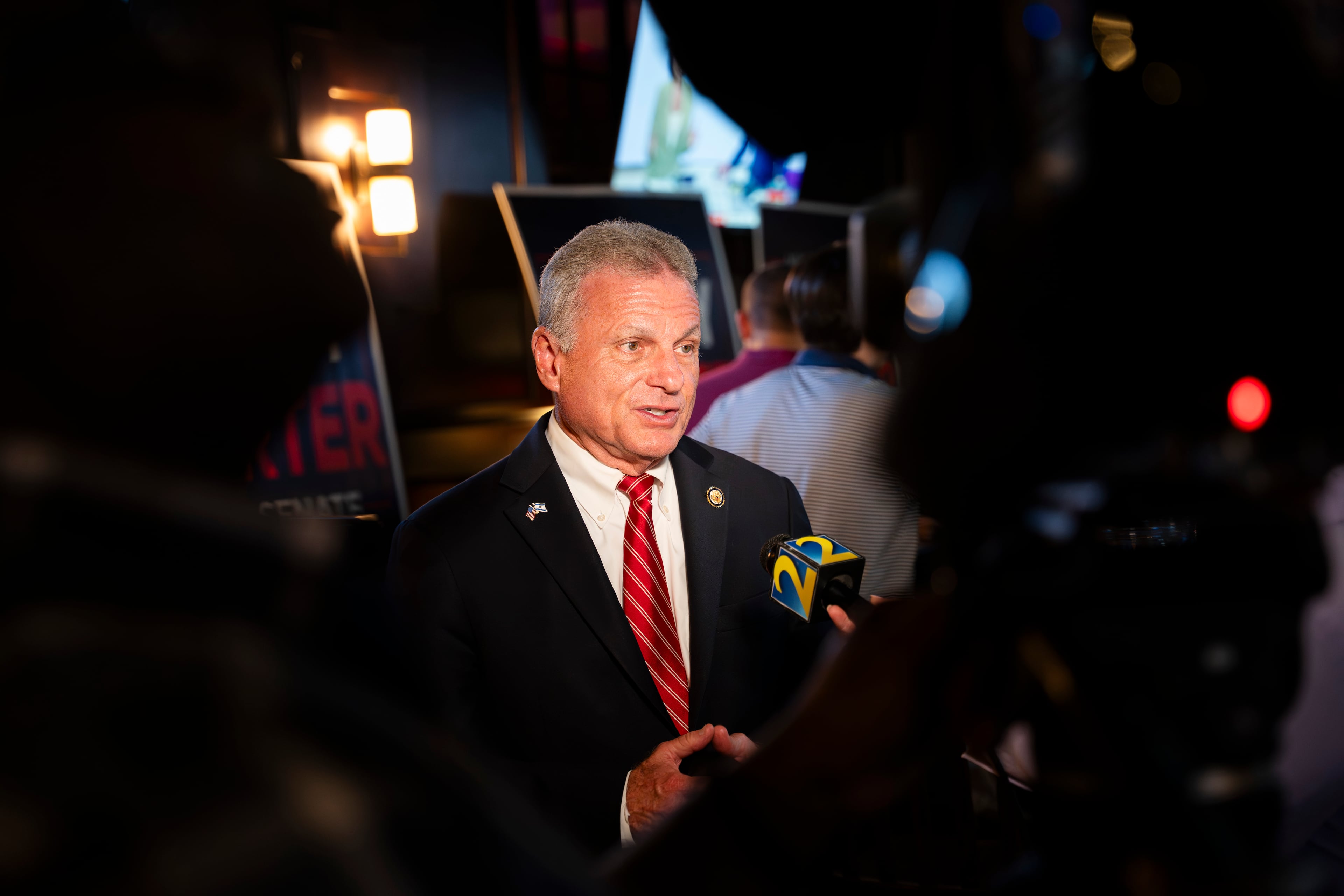
The other main battleground may be coastal Georgia, where U.S. Rep. Buddy Carter carried the region overwhelmingly on his way to a third-place finish. Carter hasn’t endorsed either runoff contender, though Dooley has showered him with praise.
For some Republicans, the runoff is a gut-check moment. Ben Burnett, a former Alpharetta City Council member, backed Collins in the first round but isn’t sure yet who he’ll support in the runoff. He worries, however, that Collins will alienate swing voters.
“I get the draw of a blue-collar candidate like Collins. But I’d ask those rural voters this: Do you want 50% of something or 100% of nothing? Because some Dooley voters in the suburbs won’t vote for Collins in a general,” he said. “The rural folks will absolutely back Dooley in November.”