In this economy? Turning Atlanta offices into homes is harder than it looks.

What can be done with all these empty office towers no one seems to want in a post-pandemic world?
That question has loomed large over Atlanta and its suburbs for more than six years. It may seem like only a problem for the owners of these buildings, but vacant skyscrapers help almost no one. Full towers create vibrant spaces for people, they support surrounding businesses and generate property tax revenue to run public services and schools.
As the scope of the problem became clear for office-centric areas like downtown, one solution seemed to present a win-win scenario: Convert those obsolete offices into apartments.
It’s a strategy cities have employed for generations, retrofitting buildings with good bones into a better use. From Chicago to New York City, many buildings are living their second or third lives.
In the past 15 years, Atlanta has had some successes to point to — including Ponce City Market, the Altitude tower along the Downtown Connector and the former Norfolk Southern building at Centennial Yards. In the wake of the pandemic, plans emerged to tackle hulking downtown buildings like 2 Peachtree and Georgia-Pacific Tower.
But for most, progress has stalled.
The Atlanta Journal-Constitution spoke to more than 15 commercial real estate experts, developers, architects and government officials who say the trouble boils down to simple economics — the math is fraught and it’s only getting more challenging.
“You’ve got this confluence of different market forces that have just made conversions that much more difficult,” said AJ Robinson, president of Downtown Atlanta Inc., the city center’s main civic organization.
“We’re set up for a wave, but it hasn’t hit us yet,” he continued.
About a third of office space in metro Atlanta is vacant or available for sublease, with the bulk in older properties, weighing on tax bases.
Most of conversion interest is concentrated downtown, according to real estate data and services firm CoStar Group.
An AJC analysis of more than 5.5 million square feet of office space that’s been removed or evaluated for conversion since 2020 revealed demolition has been almost exclusively favored outside downtown, while only a handful of office-to-residential projects have made meaningful headway.
Some have already been abandoned, including one of the largest conversion efforts in the Southeast: Georgia-Pacific Tower.
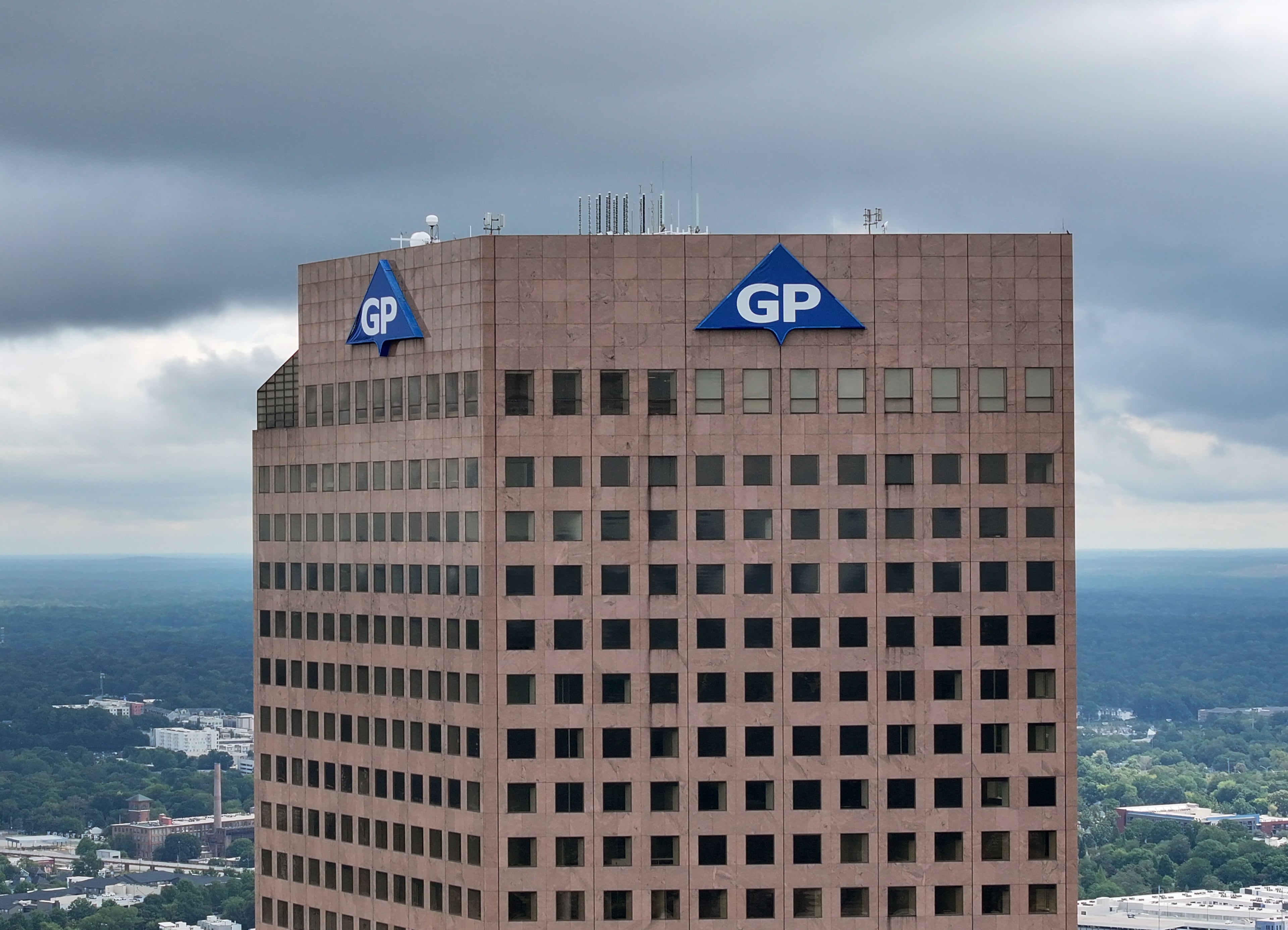
The pulp and paper giant last month scrapped its plan to transform much of its landmark skyscraper into apartments, shops, restaurants and entertainment spaces, citing economic headwinds. Atlanta’s seventh-tallest skyscraper, known for its distinctive pink granite stair-stepped facade, will remain office space and undergo renovations to try to compete with its newer peers.
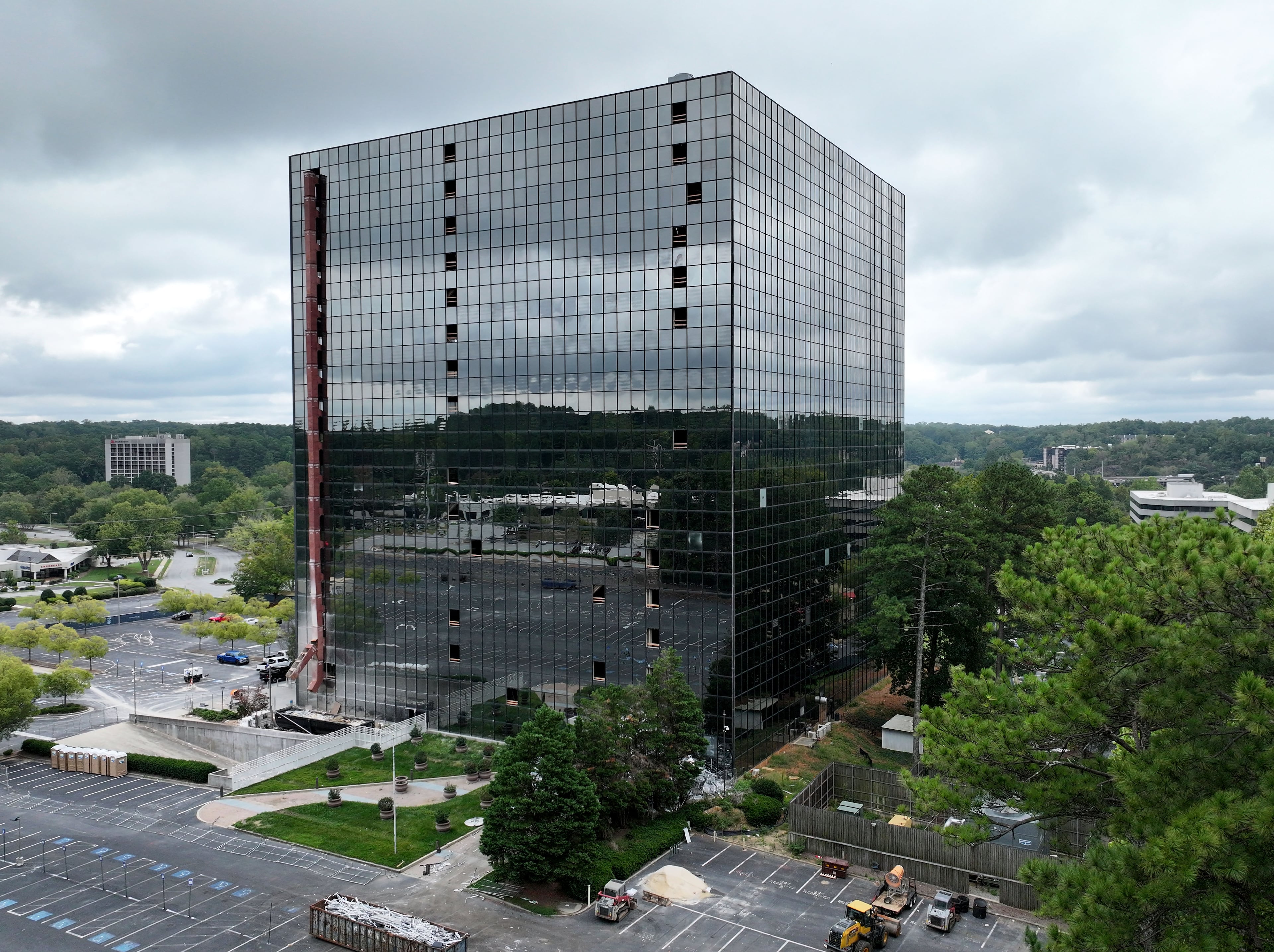
In Chamblee, a glassy 18-story tower that used to be state government offices was evaluated for residential conversion but instead will be torn down.
Atlanta’s effort to spearhead the conversion of a former state government office tower into 625 housing units near Five Points has spent years in limbo. The 2 Peachtree project began in 2022 with the city paying $39 million to buy it from the state, but it’s made little noticeable progress toward a groundbreaking. Companies that are part of the joint venture either declined to comment or did not respond to multiple requests for updates.
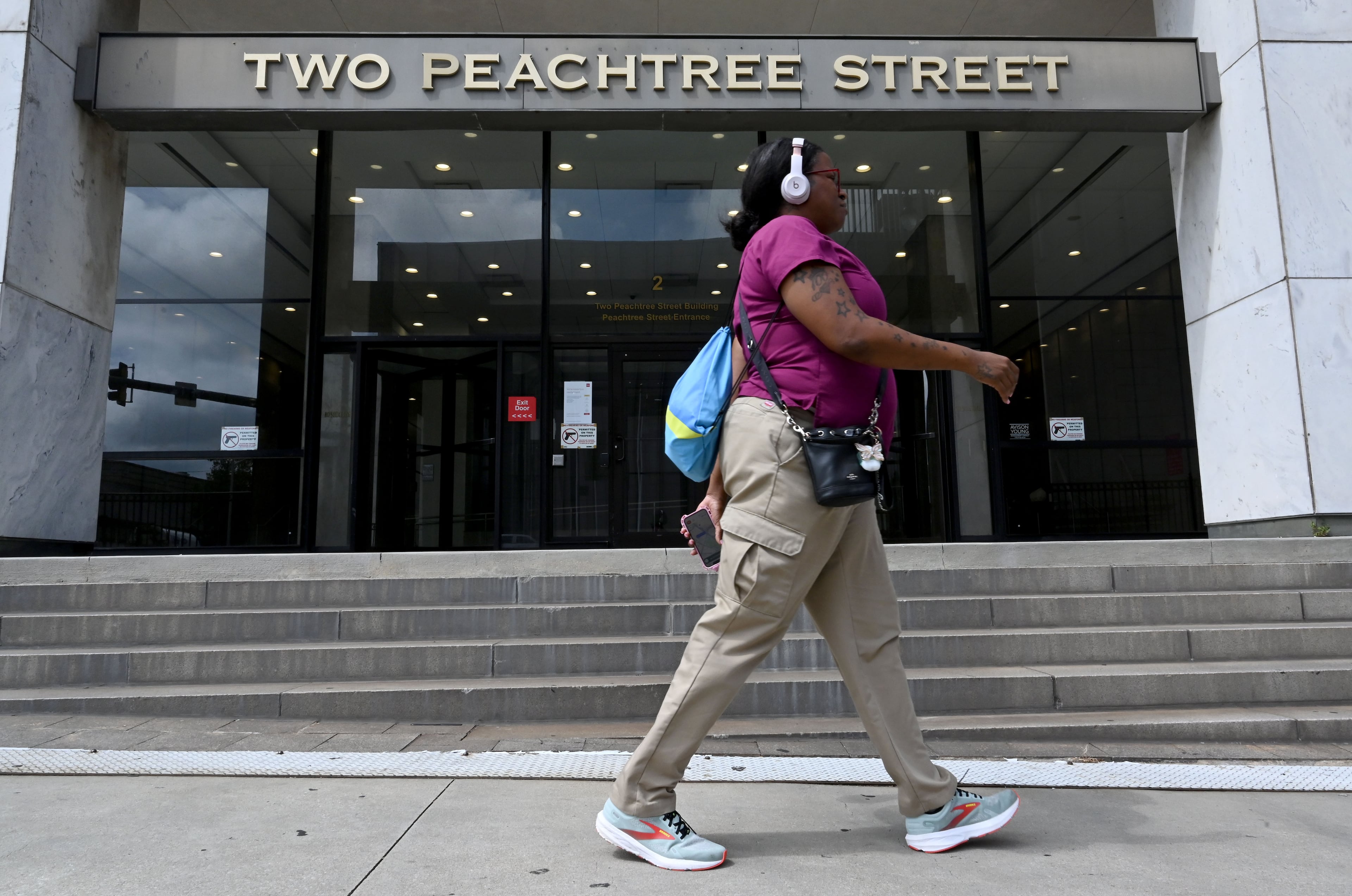
Invest Atlanta, the city’s economic development arm that’s overseeing the project, is moving forward with a new senior housing project on a lot next to 2 Peachtree while working through the economic headwinds.
“They’re very hard,” said Eloisa Klementich, CEO of Invest Atlanta. “We are committed to ensuring what we can do. … This is not for the faint of heart.”
Why are conversions challenging?
Turning an office building into apartments isn’t easy, even when the economic stars align.
It’s expensive and complicated, presenting a three-dimensional puzzle for architects to solve. Large floors designed for cubicles are often difficult to divide into cohesive residential floor plans that have bathrooms, kitchens and windows.
Rule Joy Trammell + Rubio, an experienced architecture firm, has cracked the code to make conversions make financial sense — or pencil, as industry experts often say. The firm was tapped by Georgia-Pacific before the project was abandoned, but company leaders declined to talk specifically about that endeavor.
“As soon as someone figures out that this project is more expensive than a new build, it doesn’t work,” said Dan Joy, one the firm’s principals.
Conversions are all about maximizing efficiency or else deals fall apart. Utility holes have to go through each floor to serve bathrooms and kitchens. Floor plates need to neatly divide into separate apartments layouts while avoiding unusable space or wonky designs.
In large buildings, maybe only some floors will be converted to apartments while others remain offices. But that opens up its own challenges, including how the two worlds interact.
“Do I want a resident coming down in their pajamas when I’m bringing clients up in the same elevator bank?” Joy asked.
Dan Rutulante, another Rule Joy Trammell + Rubio principal, said new construction tends to have predictable budgets. Conversions are a mystery box and require additional contingencies.
“There’s always a component of ‘We don’t know’ until we start opening up the walls,” he said.
Developers try to budget for unexpected expenses, but that can overestimate project costs. The opposite problem — underestimating costs — exposes the entire development team to risk and could result in a half-completed conversion.
The ability to physically convert a building is only half the battle. There also needs to be the potential for profit.
It becomes harder to see if a conversion will pencil when construction costs climb, inflation balloons budgets and interest rates make obtaining debt more expensive. Construction material costs surged after 2021 and have not receded, according to the U.S. Bureau of Labor Statistics.
Apartment rents have to increase enough to offset those costs and present a path to profit, which has not happened in Atlanta.
The city’s apartment rents jumped more than 15% in 2021 compared to the year before, according to real estate consulting firm Haddow & Co. A new wave of apartment projects launched, and rents stopped expanding. As development outpaced demand, rents dropped only two years later.
“That frenzy felt good for everybody when it was happening, but it was irrational exuberance,” said Ladson Haddow, managing partner at his namesake firm.
Economic headwinds and tepid rent growth have made all office-to-residential projects more challenging to complete, especially downtown.
“Sometimes you end up in a Bermuda Triangle of the demand getting weaker, the construction costs getting higher and the economic forecast going all over the place,” said Granvel Tate III, vice president of real estate operations for Invest Atlanta. “That just makes projects a lot more risky.”
Why is downtown unique?
It’s impossible to separate Atlanta’s conversion landscape from its history.
Built around a rail terminus and without geographic constraints like lakes or oceans, metro Atlanta has no shortage of available land on its edges to continue to grow. Every conversion has to compete with virgin land ripe for development.
“(Cities) grow out while land is cheap and easy to reach,” said Josh Kamin, a managing partner and real estate private equity lawyer at King & Spalding. “They come back in when traffic and commute times make the edges less attractive. And they go up when people want to live close together in desirable neighborhoods and land becomes scarce.”
Atlanta only began to mature as a high-rise market over the past half-century. Many of downtown’s towers were built when larger individual floors were en vogue, and a lot of those buildings make for more challenging conversion candidates, experts said.
“We didn’t have tall buildings here until long after some of our northern neighbors,” said Robinson, with Downtown Atlanta Inc. “You’ll find the same challenges that you’ll find in all newer cities with office stock that’s less than 100 years old, not like New York, Chicago and other places.”
Some more modest office-to-residential projects have made progress.
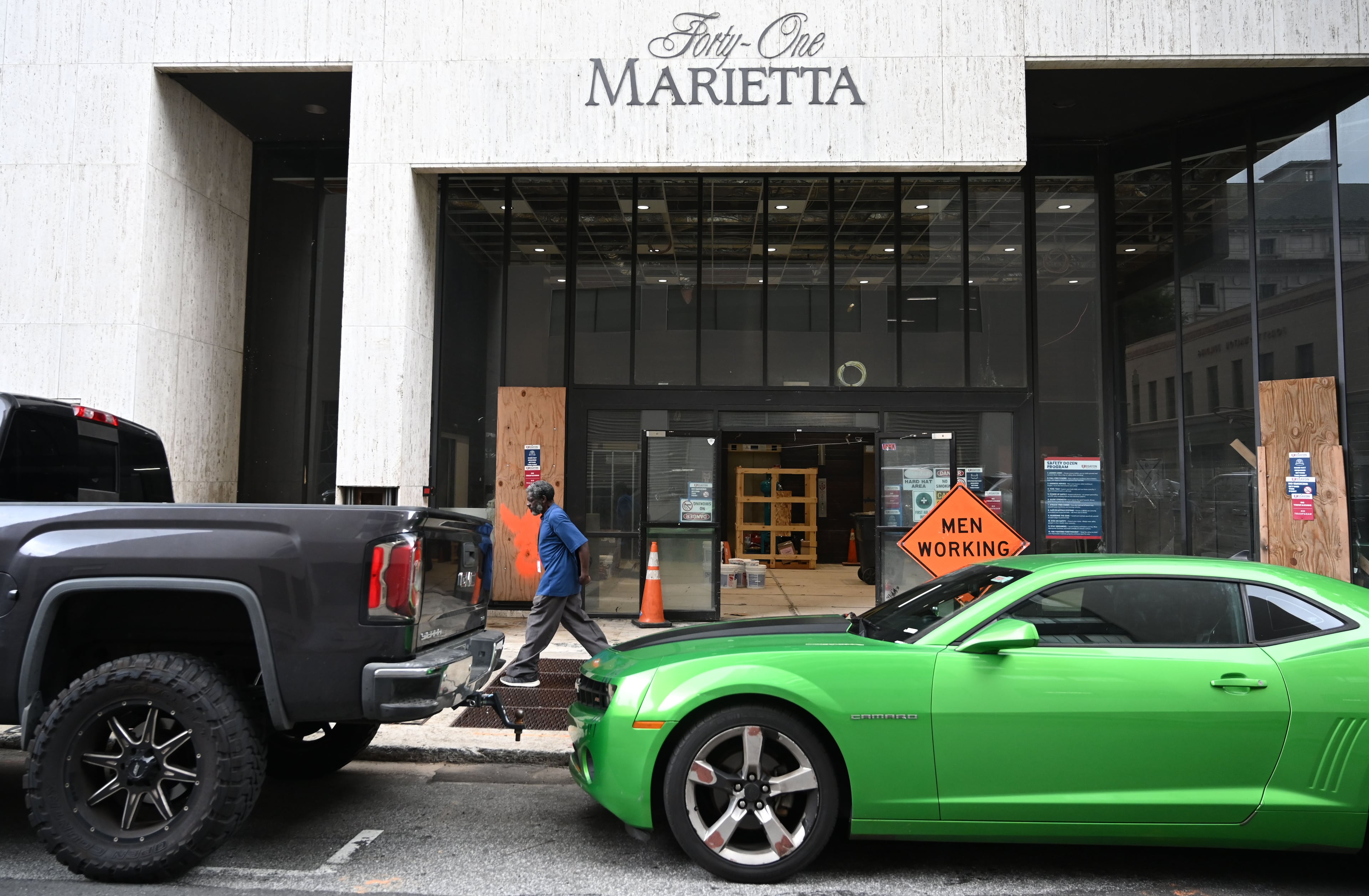
A city-backed nonprofit and developer Aramar Investments are nearly finished turning the 13-story building at 41 Marietta St., which they acquired out of foreclosure, into 120 apartments.
The owners of South Downtown, which includes blocks of century-old buildings near Five Points, have also successfully retrofitted many into restaurants, startup offices and lofts.
Adaptive reuse, the practice of preserving a building’s walls while retrofitting the interior for a new use, is common around Atlanta. But not when it comes to high-rise offices.
Most prominent adaptive reuse projects are transforming abandoned warehouses or brick manufacturing buildings into event spaces, lofts, offices or gathering places, such as Ponce City Market.
In Midtown and certain suburbs, the real estate beneath a vacant building is often worth more than the building itself, making demolition and new construction more profitable.
Downtown, however, acts as a discount alternative to most other parts of the city — both for office space and housing.
It commands significantly cheaper office rents than Midtown and Buckhead, and it’s the only part of intown Atlanta to see its average apartment rents decline over the past five years, according to Haddow & Co.
Lower rents mean a tighter budget.
“You’ve either got to prop it up significantly with government incentives, or it doesn’t work,” Haddow said. “No sound investor is going to put their capital in a deal banking on massive rent growth in an area where that’s just not proven historically.”
Chris Eachus, founding partner of CP Group, said rent growth is crucial.
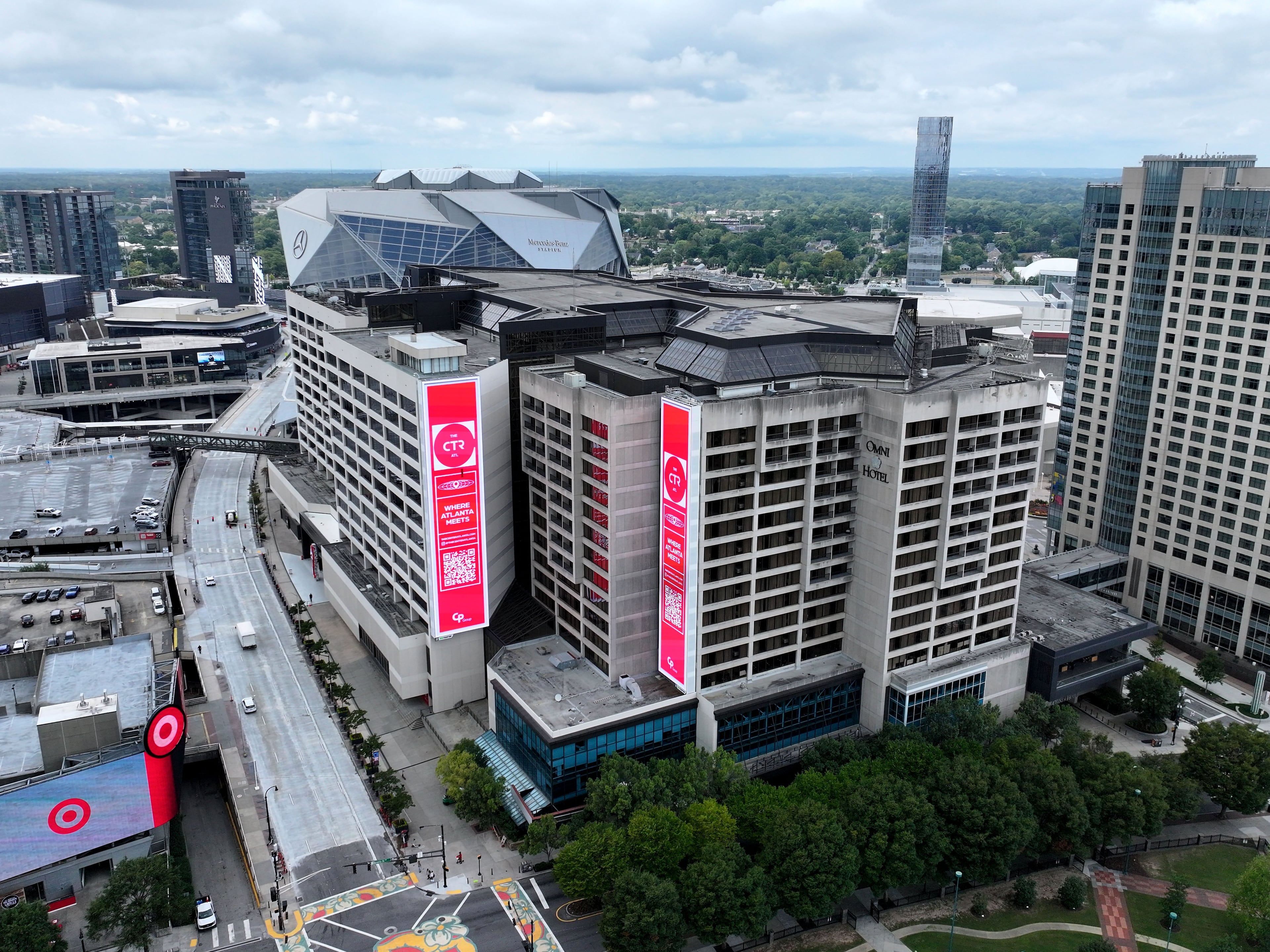
His team is evaluating whether to pursue turning two vacant towers into a hotel and apartments at the former CNN Center, now known as The Center. Downtown rents present a huge barrier.
“The price of concrete and steel doesn’t change between 14th Street and Marietta Street,” Eachus said. “The cost of the conversion remains the same, but the revenue generating side is different.”
Heightened construction and labor costs have stymied many projects. There’s currently no new office space under construction in the Atlanta market for the first time since 2009. And there’s a sizable drop-off in the number of apartments under construction since the post-pandemic boom.
“The construction pipeline is as thin as it’s been in 15 years,” Haddow said. “That’s not going to last forever, but is the thing that’s going to come back first conversions? Not likely. What’s going to come back before that is new construction.”
What happens now?
Most experts said the timing isn’t right for large-scale conversions, so a new window of opportunity is needed. That’s hard to manifest but not impossible.
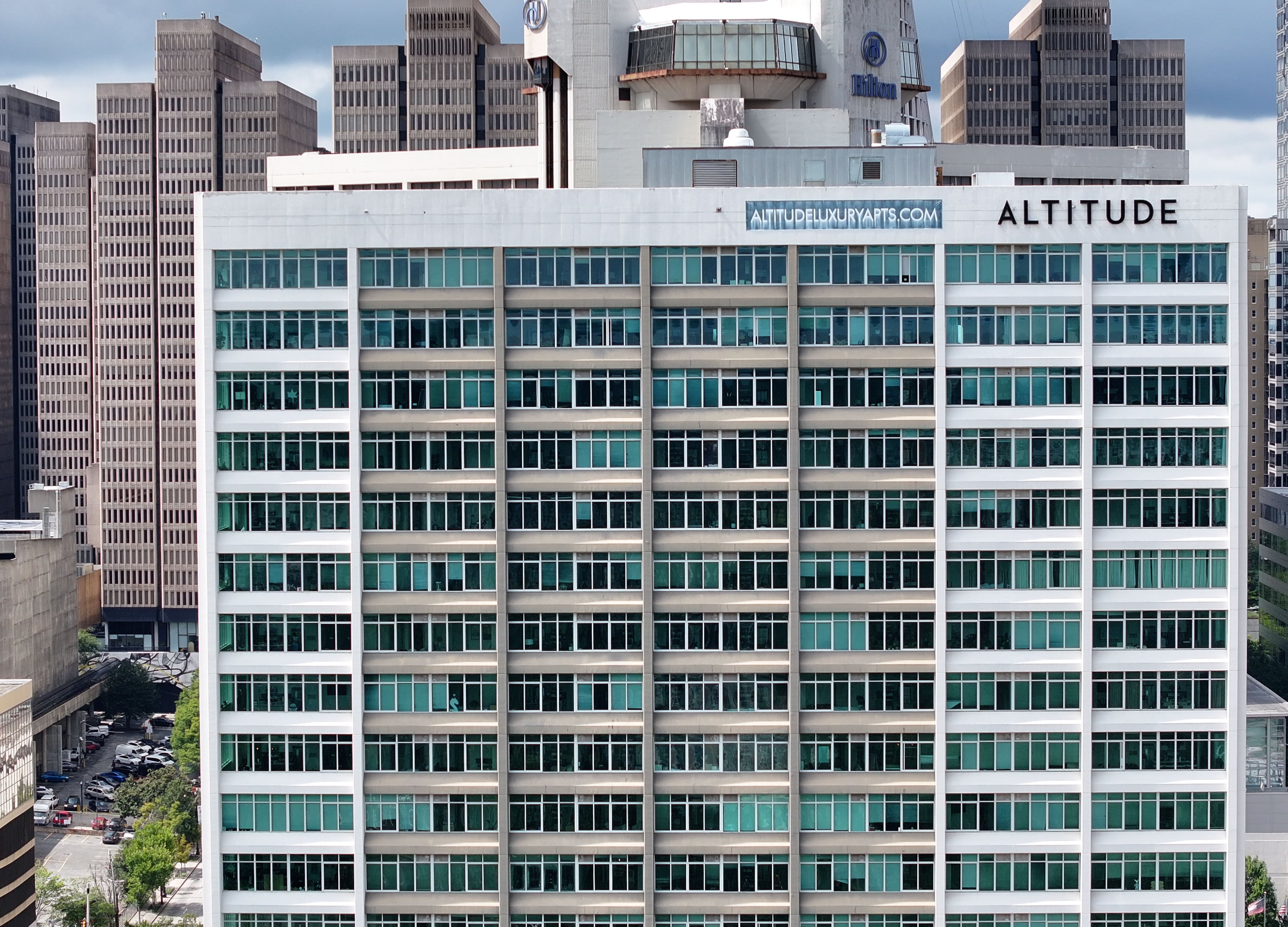
George Banks, founder of retail consulting firm Revel, helped lead one of urban Atlanta’s few high-rise conversions: the Altitude Apartments.
Formerly a SunTrust bank control center, the tower known as 250 Piedmont was transformed in 2015 by developer Paces Properties into 327 apartments. The tower had the right mix of good bones, a cheap purchase price and investors willing to bet on a building between downtown and Old Fourth Ward.
“It was the most slam-dunk conversion building … every checkmark lined up,” Banks said. “But you couldn’t do that deal today.”
He points to a deeper issue. It doesn’t matter how much office values decline and government incentives are thrown at a project if people won’t pay the right price to live there.
“If it’s not affordable to build, even the bonus doesn’t help you,” said Rutulante of Rule Joy Trammell + Rubio, referring to public incentives like those offered by Invest Atlanta.
Phil Mobley, national director of office analytics at CoStar Group, said conversions can be transformational for individual properties, but they don’t revitalize a broader office market. Removing empty office supply is just trimming bloat.
That helps inform why most parts of metro Atlanta outside of downtown are opting for demolition of old offices. The Central Perimeter submarket along I-285 and Ga. 400 has led the region by bulldozing unwanted buildings, even though many of them are less than 50 years old.
“It doesn’t seem like those buildings should be obsolete yet, but it seems like that’s the sweet spot,” said Michael Starling, the city of Dunwoody’s economic development director.
Dunwoody and surrounding cities get a larger proportion of their tax revenues from commercial properties than Atlanta. About 70% of Dunwoody’s tax digest is commercial, while Atlanta’s is less than half. That presents an existential threat to the tax base if buildings languish and bleed value without suitable replacements.
That has helped spur suburban cities to favor razing vacant buildings and allowing for new construction, especially apartments, townhomes and mixed-use projects.
“We want to hold on to as much commercial tax base as we can while understanding that there are significant changes happening,” Starling said. “Having a bunch of empty office buildings long-term is not going to benefit anyone.”
Real estate services firm JLL said since 2025 more than 70% of its watchlist for conversions and demolitions are in the suburbs.
Shelton Quantz, senior research analyst with JLL, said low-rise suburban offices are often more straightforward to approach “compared to larger urban assets that bring challenges with the existing structure and surrounding infrastructure and density.”
Some are optimistic that the only path forward for some of Atlanta’s largest struggling buildings are conversions. But they’ll take time.
“We have to do two things: be patient and wait for the apartment softness to rebound,” Robinson said. “I don’t think there’s any other future for some of these office buildings except conversions.”
There’s irony in the conversion struggles. Downtown is undergoing an unprecedented wave of investment, much of which made its debut this past summer at the World Cup.
The $5 billion Centennial Yards redevelopment of the former Gulch is in full swing, adding new high-rise hotels, apartments, restaurants and entertainment venues. South Downtown has been transformed into a vibrant area and recently added its first residential lofts. Underground Atlanta and The Center both continue to snag tenants.
Eachus of CP Group added that office demand is starting to rebound, citing interest in The Center’s vacant towers. There’s a chance office interest recovers before the economic picture brightens for large conversions.
“At the end of the day, it’s math. If there wasn’t an economic gap, this would have happened years ago,” Eachus said.
“So the question is, ‘How do we solve the math?’”