Downtown Atlanta civic group taps prominent nonprofit CEO as next leader

A well-known nonprofit chief executive will become the next leader of downtown Atlanta’s main civic organization, a group that influences the shape and feel of the city center.
Kyle Waide, president and CEO of the Atlanta Community Food Bank, was announced Monday as the forthcoming successor to AJ Robinson as head of Central Atlanta Progress and the Atlanta Downtown Improvement District. The transition will take place Dec. 1.
Robinson has led CAP and the improvement district, which operate collectively under the name Downtown Atlanta Inc., for 23 years. Waide’s appointment comes at a pivotal time for downtown following the World Cup spotlight and the progress of several high-profile and potentially transformative developments.

“Downtown is central to Atlanta’s identity and the face we present to the world,” Waide said in a news release. “This is a moment of great possibility, and I am humbled by the opportunity to build on AJ Robinson’s extraordinary legacy, and the work Downtown Atlanta Inc. has already accomplished.”
Robinson announced he would step down in April, kicking off a search for his successor. David Cummings, chair of Downtown Atlanta Inc. and one of the investors leading South Downtown’s revitalization, said Waide is positioned to “harness the tremendous energy generated by Downtown’s recent growth and FIFA success.”
The search was led by Sam Pettway at BoardWalk Consulting and a committee that included Cummings and Integral Group Chairman and CEO Egbert Perry, a prior Central Atlanta Progress chair. Robinson added that downtown’s next chapter is in good hands under Waide’s leadership.
Waide joined the Atlanta Community Food Bank in 2012, succeeding the organization’s founder, Bill Bolling, to become president and CEO in 2015. During Waide’s tenure, the nonprofit quadrupled its annual food distribution and moved to a 345,000-square-foot facility in East Point, establishing one of the country’s largest food bank operations.

Althea Broughton, chair of the Atlanta Community Food Bank board of directors, said a search will take place to find Waide’s successor at the nonprofit.
“In the meantime, we have an exceptional team in place at the Food Bank, a strong succession plan and a highly engaged board,” Broughton said.
Robinson, a former executive with Atlanta-based developer Portman Holdings, has long been downtown’s face and arguably its greatest champion. During Robinson’s tenure, downtown saw a surge of investments in hospitality, sports and tourism, such as the Georgia Aquarium, Mercedes-Benz Stadium and the College Football Hall of Fame.
Despite being the epicenter of the 1996 Centennial Olympic Games and the face of Atlanta, downtown’s vibrancy lagged behind other parts of the city at the turn of the 21st century. The Great Recession and COVID-19 pandemic and aftermath also shook the city center, leaving it with a glut of aging office buildings, a retreat in daily foot traffic and a slate of struggling retailers. It also struggles with perceptions of crime, blight and homelessness, despite efforts to alleviate those issues.
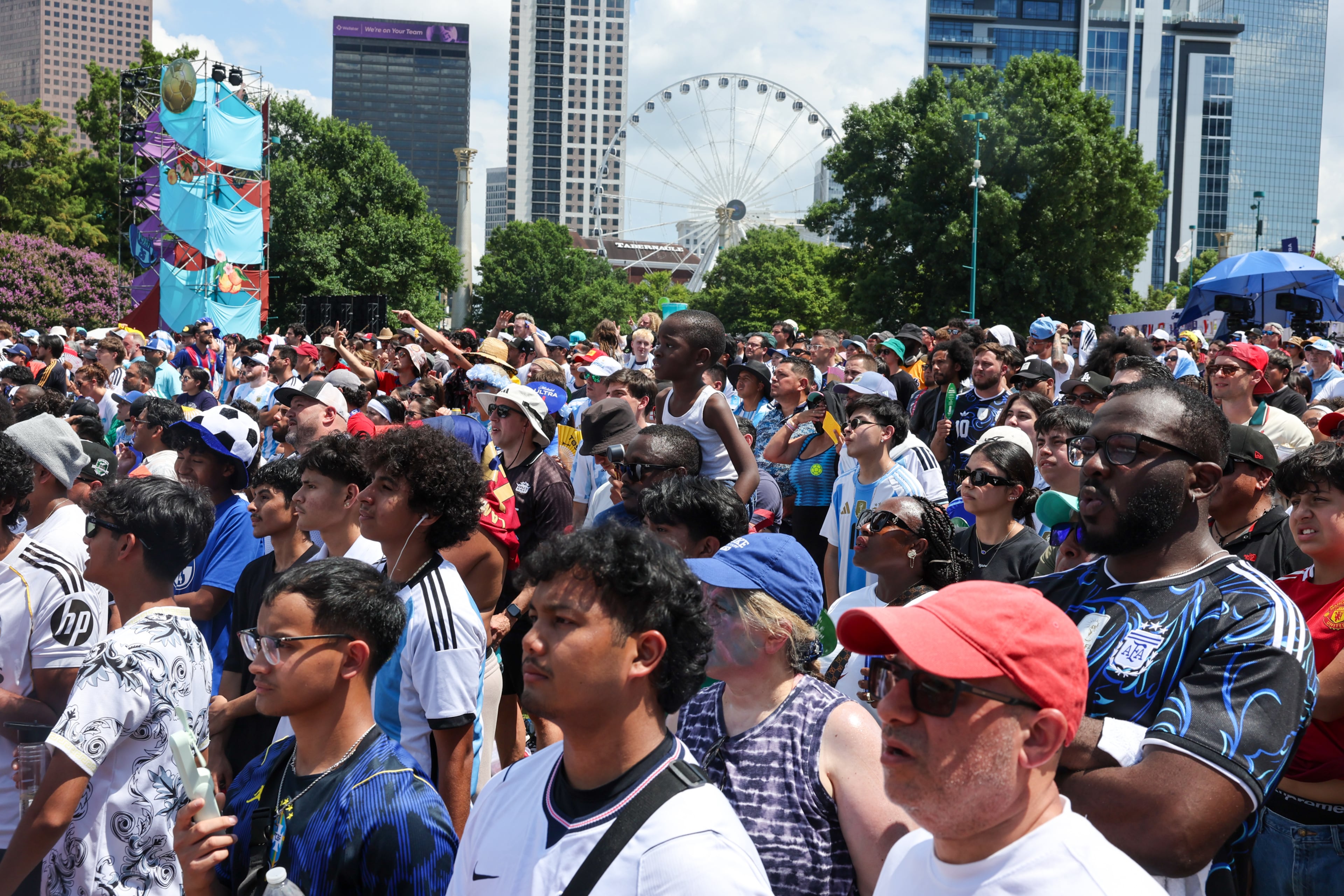
But in recent years, downtown has received an unprecedented wave of investment across several large projects. Those include the $5 billion Centennial Yards transformation of the Gulch, the 10-block redevelopment of South Downtown, the remaking of the former CNN Center into The Center and multiple residential projects aiming at adding around-the-clock vibrancy.
All those projects, and several others downtown, have obstacles to overcome as they aim to preserve the momentum from this summer’s World Cup and overcome other economic headwinds. Other ambitious projects like the Stitch, an effort aiming to cap the Downtown Connector with green space, also face financial and development hurdles.
“Together, we can build a Downtown that offers a world-class experience to everyone who comes here to live, work, learn and play,” Waide said.
Mayor Andre Dickens similarly said the work under Robinson and Waide picking up the baton will “carry that growth and excitement forward.”
“As I’ve been saying, Downtown is back!” Dickens added in the news release.