Georgia Tech moves into new high-rises at Midtown tech hub it fostered
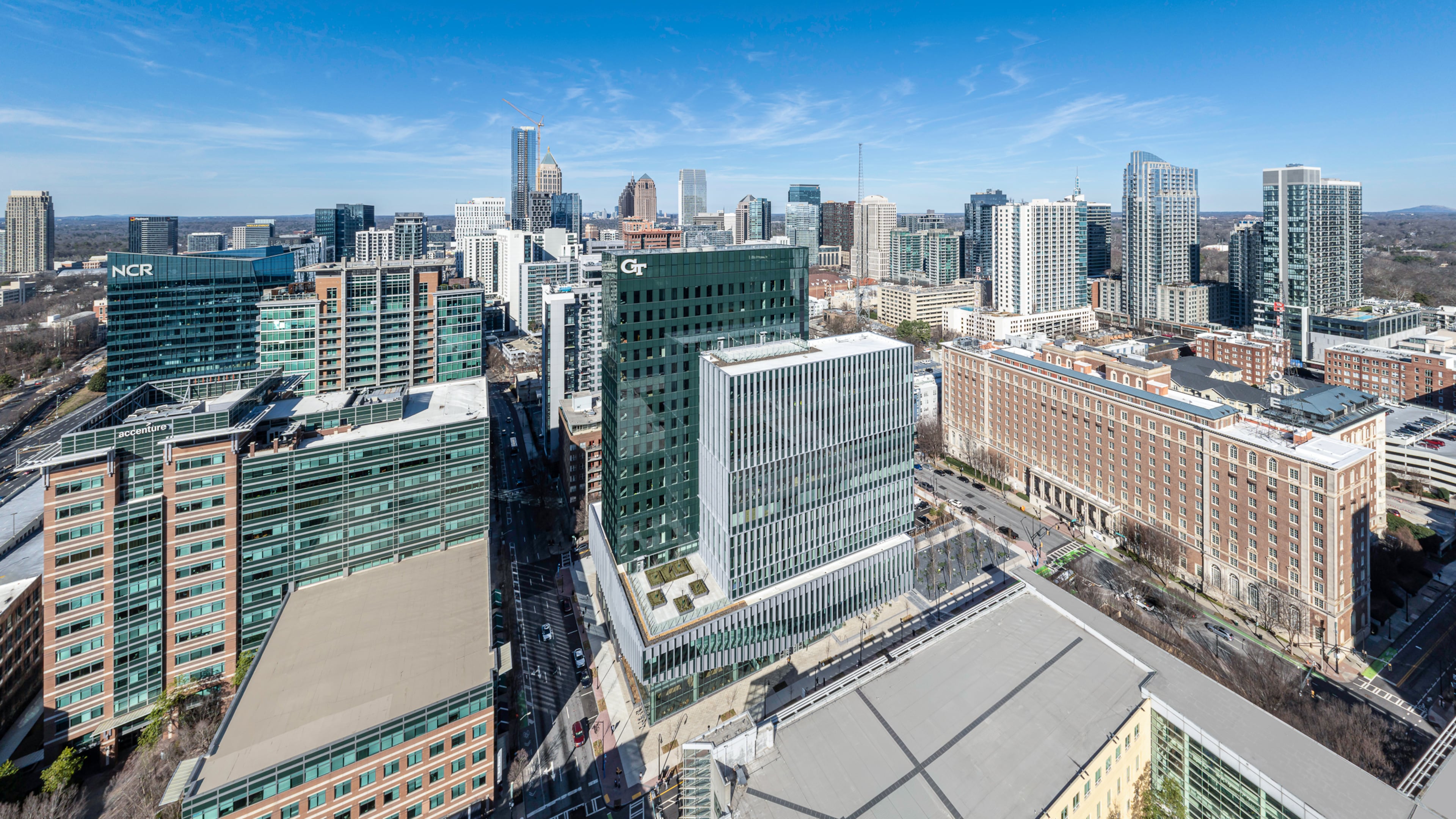
Georgia Tech in 2001 broke ground on an ambitious — and unproven — plan to to transform eight blocks of derelict lots in Midtown into an academic and corporate hub.
To see the results 25 years later, just look up.
The first two phases of Technology Square, better known as Tech Square, resulted in a new neighborhood of education facilities surrounded by skyscrapers bearing Fortune 500 logos aiming to get close to the institute’s graduates.
Georgia Tech on Friday added to that, finishing its latest high-rise project and hoisting its own logo high into the skyline array.
Georgia Tech and Atlanta leaders gathered Friday morning to celebrate the completion of Tech Square’s third phase, a two-tower project that provides a new learning environment for thousands of business and engineering students. The George and Scheller towers will anchor the institute’s business and industrial engineering programs going forward.
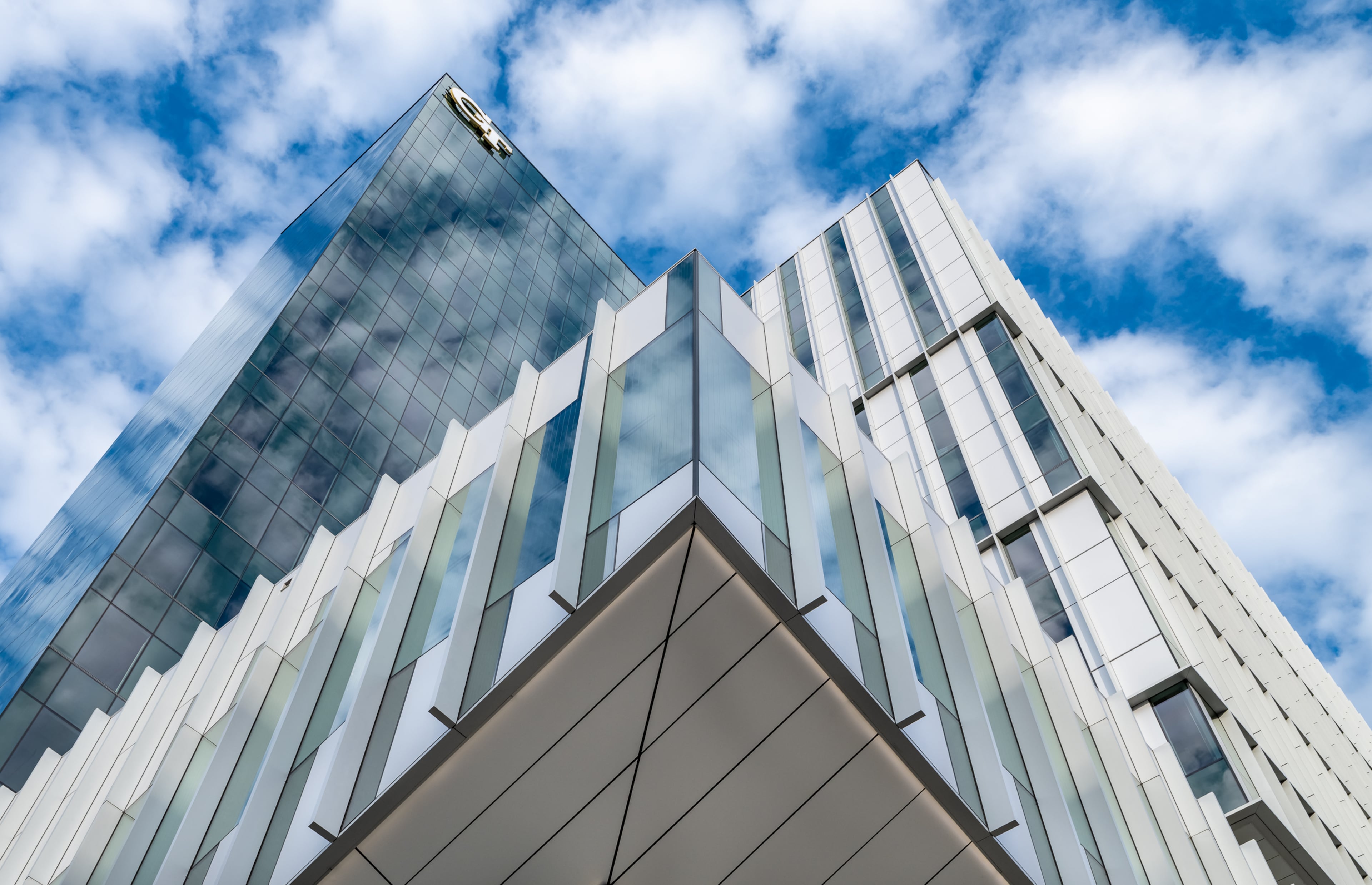
It’s the latest sign of how much this part of Midtown between 3rd and 8th streets has changed over the decades, going from eyesore to some of Atlanta’s most valuable real estate.
“Some of us when we were in school never dared cross the Fifth Street bridge,” Georgia Tech President Ángel Cabrera told the crowd at the opening celebration. “There was no good reason to cross that bridge … into what my city planning colleagues would call the sketchiest neighborhood in the city.”
“Right now,” he said during his ceremonial remarks at Tech Square, “we sit in one of the most interesting innovation neighborhoods in America.”

Tech Square now consists of roughly 2.5 million square feet of development, including a hotel and conference center, multiple education buildings and the 21-story Coda tower. The 18-story George tower and 14-story Scheller tower round out the district, replacing the area’s last large parking lot with vertical development.
Kevin Green, head of the Midtown Alliance, said Tech Square’s influence stretches beyond its borders. Adjacent skyscrapers by NCR, Anthem and Norfolk Southern were built, according to their company leaders, to get as close as possible to the innovation district.
Since 2000, Midtown has added roughly 145 buildings and about $22 billion in new development, according to Green.
“Tech Square didn’t cause all that, but it certainly became a major anchor that gave the market confidence to keep investing,” he said. “Tech Square has definitely changed the center of gravity in Midtown.”
Revitalizing the area
Georgia Tech’s campus west of the Downtown Connector used to act as an island for academic investment surrounded by disinvestment.
When the 1996 Centennial Olympic Games took place downtown, Midtown was broadly seen as a place to avoid, defined by crime, blight and a lack of urban density.
The neighborhood as it is today, which commands some of the city’s most expensive office and apartment rents, is a stark reversal of fortunes.
Wayne Clough, Georgia Tech’s president from 1994 until 2008, often spoke about seeing the lack of investment and wondering if the institute could play a role in revitalizing the area through its resources and connections. At the turn of the 21st century, the university and its foundation began buying blocks and laying out its ambitious plans.
“What started as a bold move by Georgia Tech in the early 2000s now looks obvious,” Green said. “But it certainly wasn’t obvious then.”
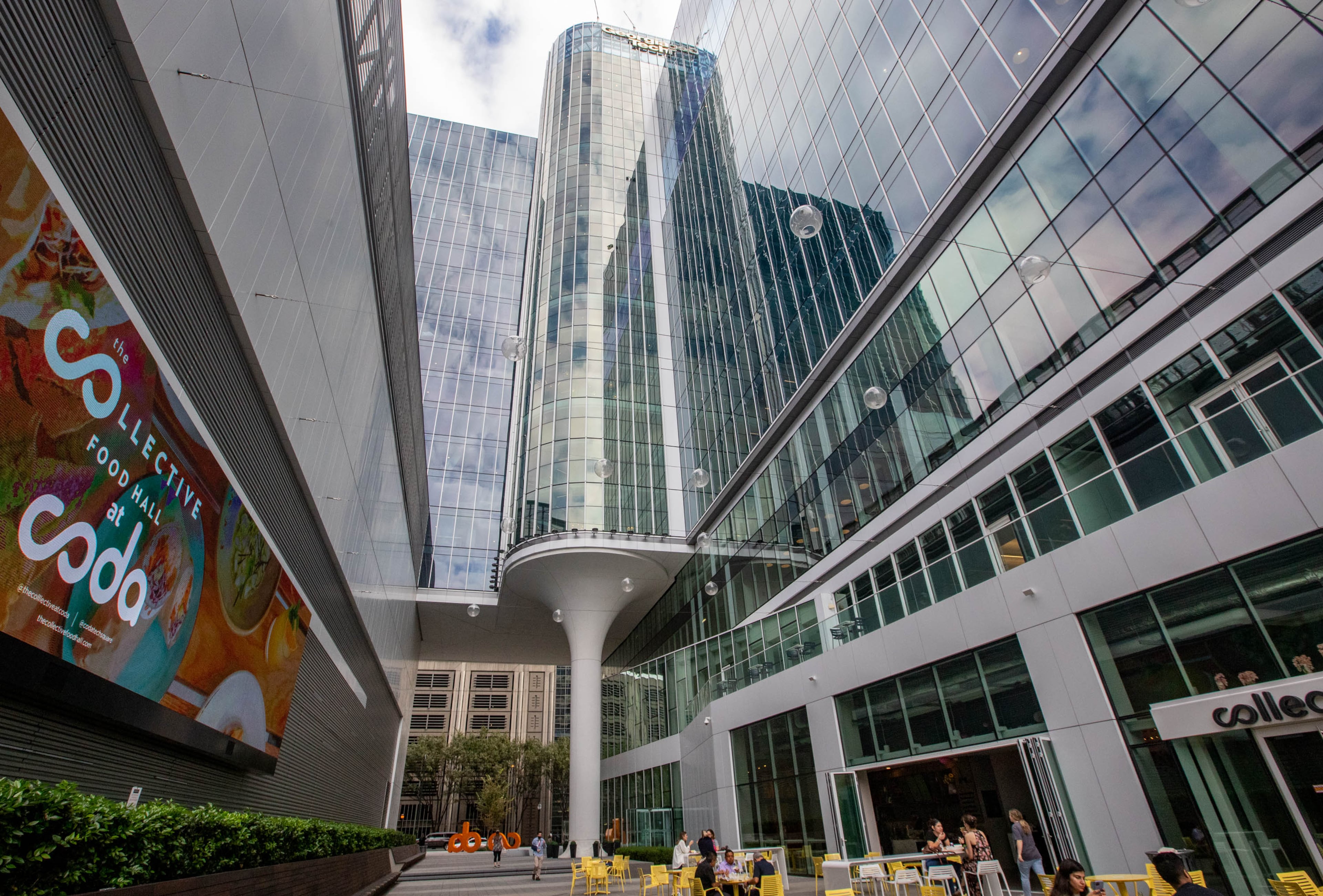
The project’s first phase opened in 2003, acting as the first step to luring the towers of major corporations. Coda, which was developed in partnership with Portman Holdings, opened in 2019 and further primed the pump, offering spaces for business incubators and innovation centers. Its tenants now range from Cisco and Travelers Insurance to artificial intelligence startups Tractian and Airia. DataBank also operates a data center out of three stories of the building.
“It’s hard to point to any one project that’s done more for metro Atlanta’s growth than Tech Square,” Katie Kirkpatrick, president and CEO of the Metro Atlanta Chamber, said. “It didn’t just add buildings. It physically stitched Georgia Tech into the business community.”
Sonny Perdue, chancellor of the University System of Georgia and former governor and U.S. Secretary of Agriculture, said one of the state’s competitive edges at winning corporate investment is its higher education system. Students can get degrees almost anywhere, but he said only some schools specialize in “FIO” and “GSD” degrees.
“That’s what the workplace tells me,” Perdue said. “They want students who can ‘Figure It Out’ and ‘Get Stuff Done.’”
From neighbors to partners
Georgia’s Tech third phase includes more than 400,000 square feet of faculty office and learning spaces for the Scheller College of Business and H. Milton Stewart School of Industrial and Systems Engineering.
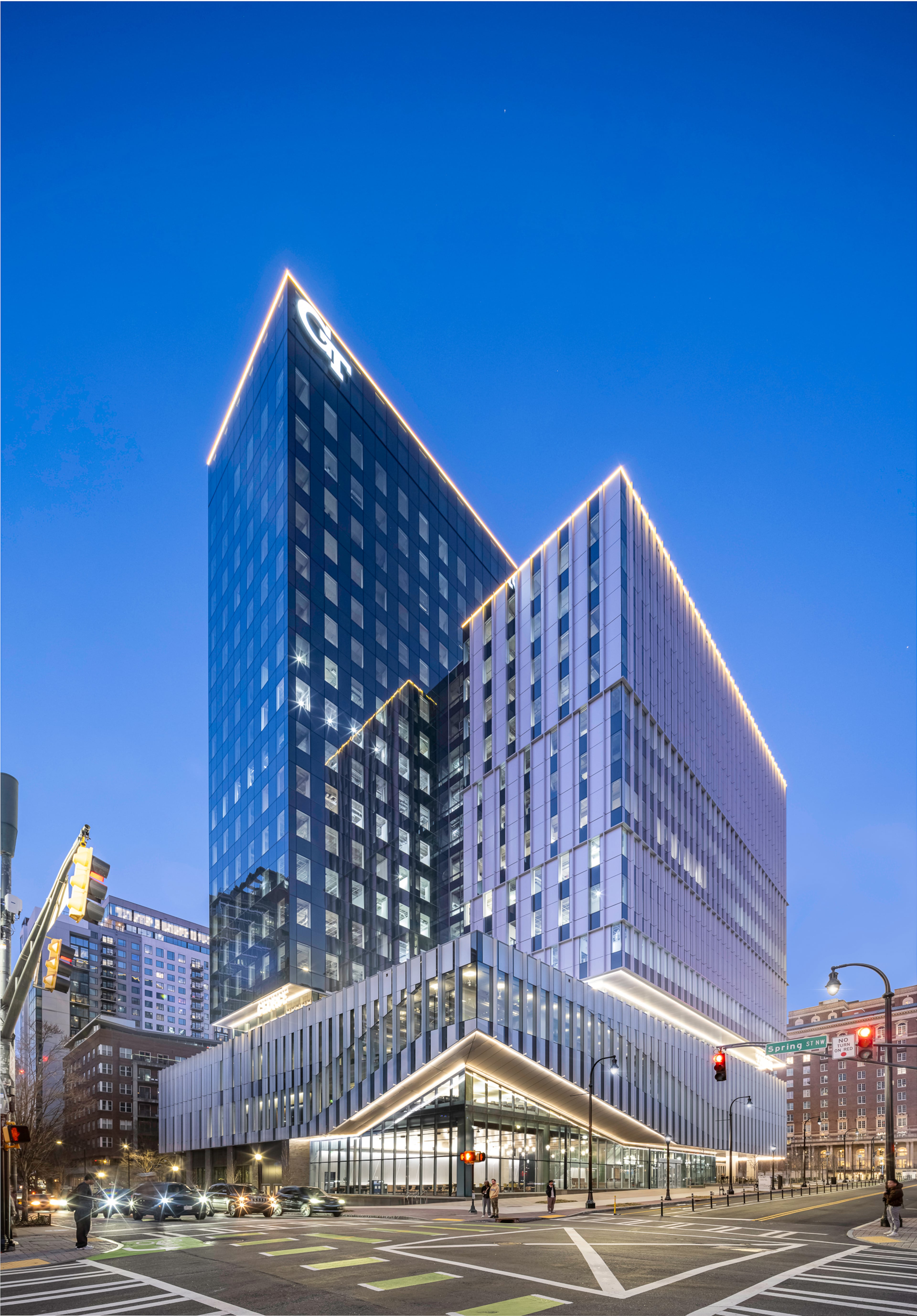
At first glance, it’s an odd combination of specialties: business and industrial engineering. But institute leaders said their skills overlap.
Anuj Mehrotra, dean of the Scheller College of Business, said the towers pair “industrial engineering systems thinking with business expertise to solve problems, launch ventures and lead industries.” He added that the departments used to be side-by-side on Georgia Tech’s campus, but the towers integrate both schools more intentionally.
“The two disciplines were neighbors,” he said. “Now, through George Tower and Scheller Tower, they will be partners.”
The first three stories of the building, which center on an expansive lobby, act as general spaces for all students, added Lindsey Cottingham, construction project senior manager for Georgia Tech. The building is meant to provide a library-like gathering function away from campus, which was informed through researching student travel patterns now that Midtown has changed.
“It’s really becoming an anchor to this side of campus,” she said. “A lot of our students are living in Midtown now, and not everybody’s living on campus.”
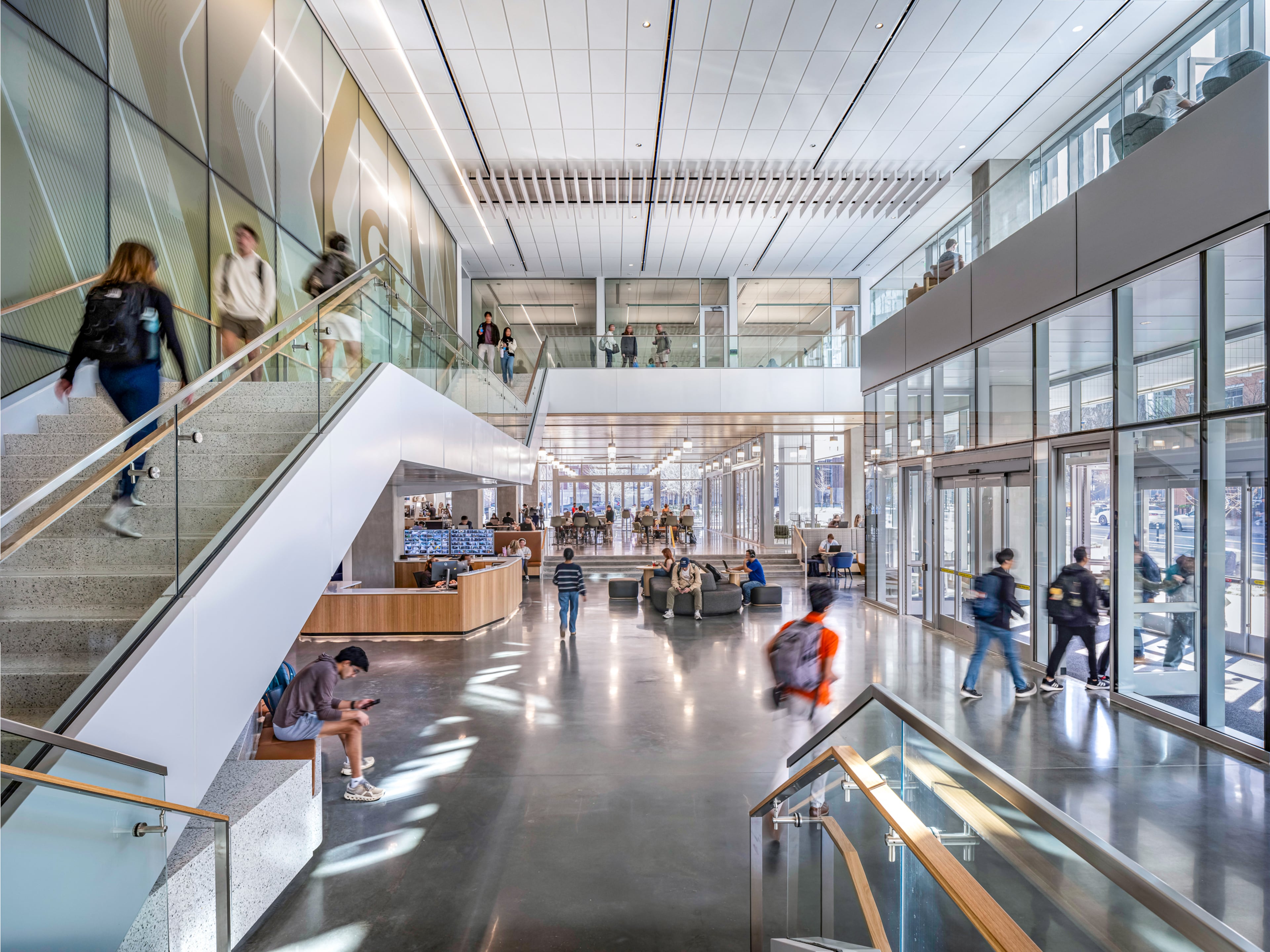
Georgia Tech’s development partners on the new towers included JLL’s project and development services team, general contractor Turner Construction and architecture firms Eskew Dumez Ripple and Rule Joy Trammell + Rubio.
The institute’s development efforts have only grown since Tech Square debuted. The similarly named Science Square opened its first phase in 2024, focusing on lab space and new apartments west of Georgia Tech’s campus. It is also developing an 8-acre district called Creative Quarter off North Avenue and Marietta Street to focus on more artistic industries.
In July, Georgia Tech finalized a $31.3 million deal to buy land and a two-story building off North Avenue from Coca-Cola for a future aerospace engineering school building.
Kirkpatrick said Georgia Tech’s investment and the work of Georgia’s other universities are among the first things she touts to prospective companies when trying to recruit new business. It’s something that remains top-of-mind for Cabrera and institute leadership.
“Those companies, the leading companies in the world, are coming to Atlanta because they want to be next to the talent that is coming out of Georgia Tech,” he said. “And now that we have this amazing neighborhood, they want to be right here.”