What is happening with Atlanta’s office-to-residential conversions?
1 / 8

When the COVID-19 pandemic upended the office market, many people looked at Atlanta’s empty workplace towers and imagined a future where families lived in them.
But a number of economic factors have presented challenges.
Some proposals are in limbo, others have been abandoned, and a few downtown are underway or have been completed.
The costs of construction and labor continue to increase. Apartment rents remain fairly stagnant. And all signs point to more interest rate hikes, leading to more costly debt.
“It’s just so expensive,” said Shaneel Lalani, owner of Underground Atlanta and partner on multiple downtown office-to-residential efforts. “Just because it’s possible doesn’t mean it’s affordable to build.”
Some projects have bucked that trend and are available to lease now, such as 26 residential lofts within a century-old building in South Downtown called 85 Peachtree. Others, such as the former Atlanta Constitution building off Alabama Street, are under construction.
But many of the region’s largest conversion efforts haven’t been able to make the same progress. Here’s the latest on some of the highest-profile office-to-residential candidates.
Georgia-Pacific Tower
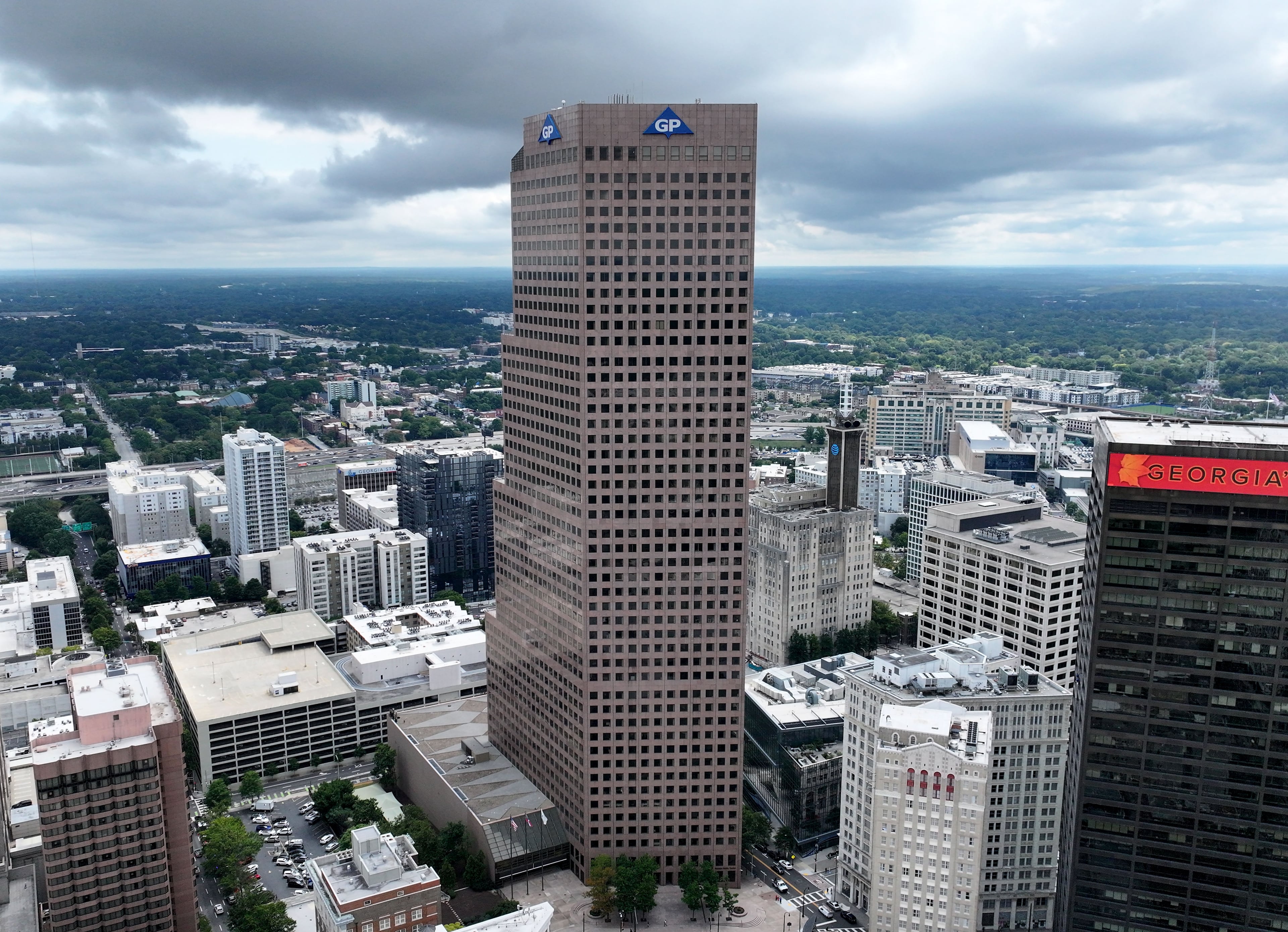
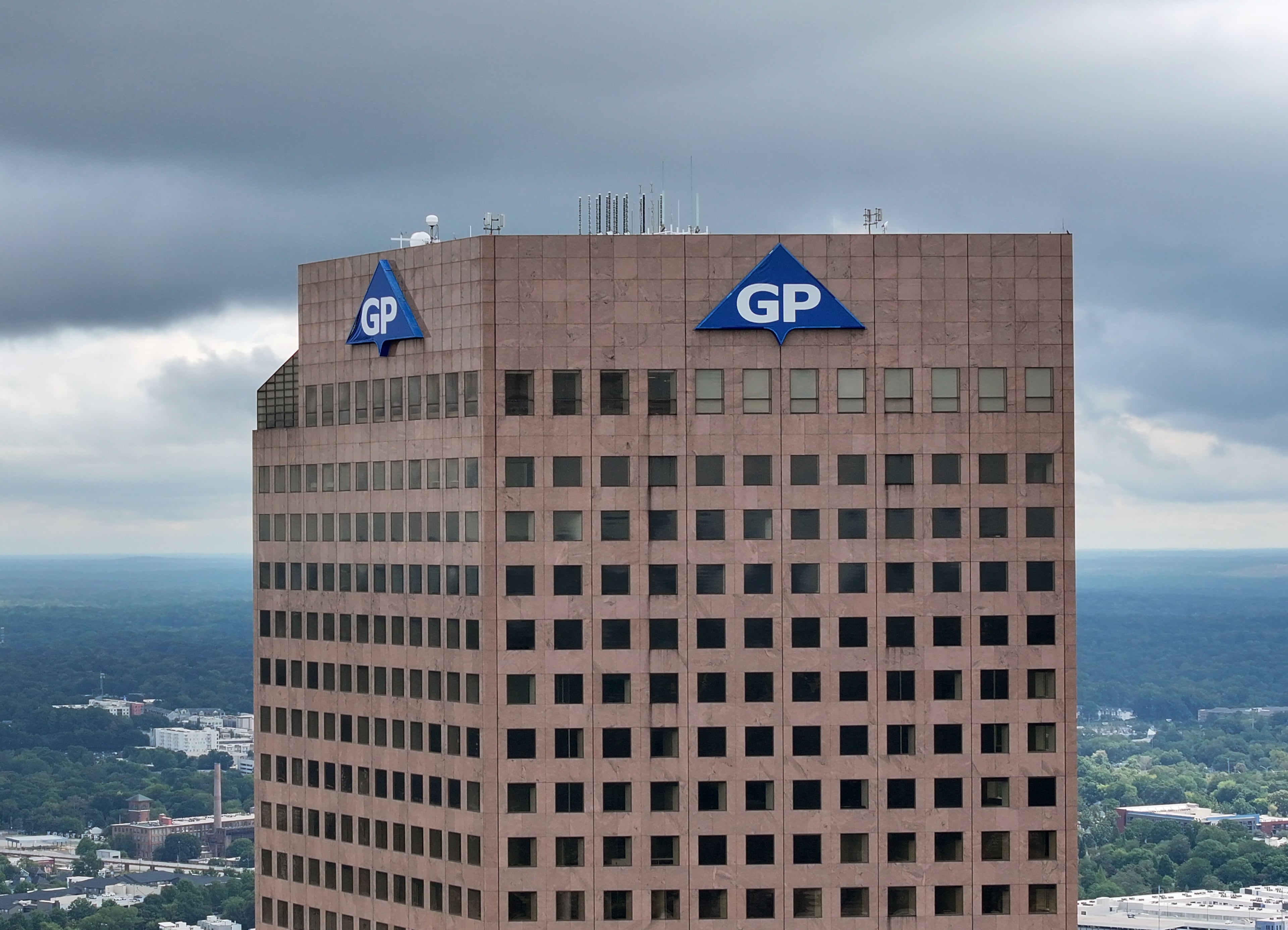
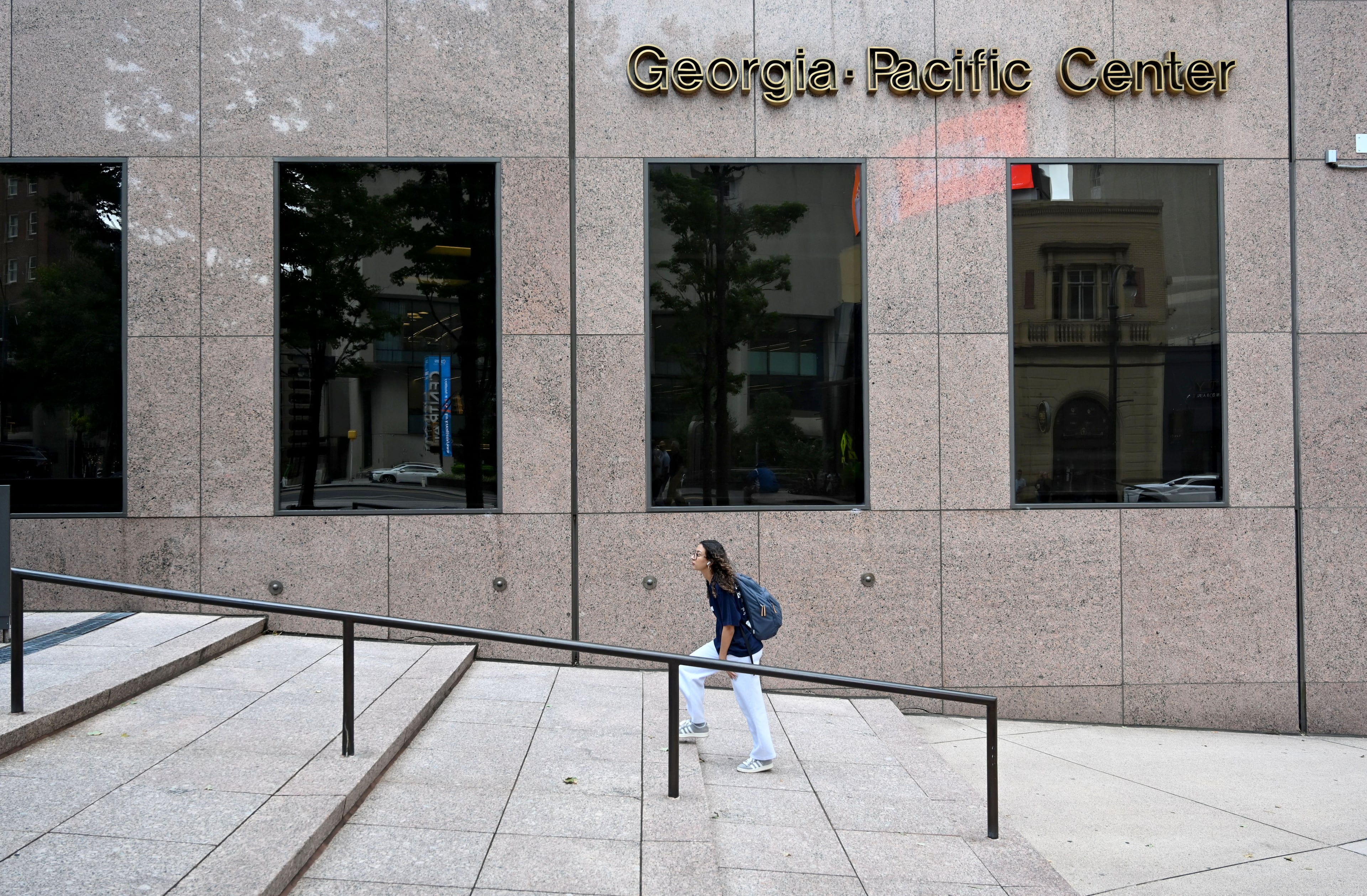
Georgia-Pacific, the paper and pulp giant, announced plans in 2024 to transform the upper floors of its 51-story headquarters at 133 Peachtree St. into about 400 apartments, creating some of the city’s highest-altitude residences. The lower floors were slated to become shops, restaurants and entertainment spaces.
Its plans were to leave less than half the tower’s floor space as offices, anchored by its namesake company and owner, Koch Inc. The financial heft of the companies provided legitimacy to the effort, and they assembled a top-notch development team.
But in September, Georgia-Pacific abandoned those plans, citing market headwinds and high construction costs. The skyscraper will instead undergo a renovation to modernize its workspaces and try to remain competitive.
“We have invested significant time, capital, and resources to bring this project to life, but higher construction costs and broader market headwinds changed the economic viability of the project at this scale,” Suzanne Maynard, Georgia-Pacific project lead, said in the written statement when the pivot was announced.
Georgia-Pacific said it had no further updates and declined interview requests for this article.
2 Peachtree
City Hall has thrown its weight behind this conversion, but its status remains up in the air.
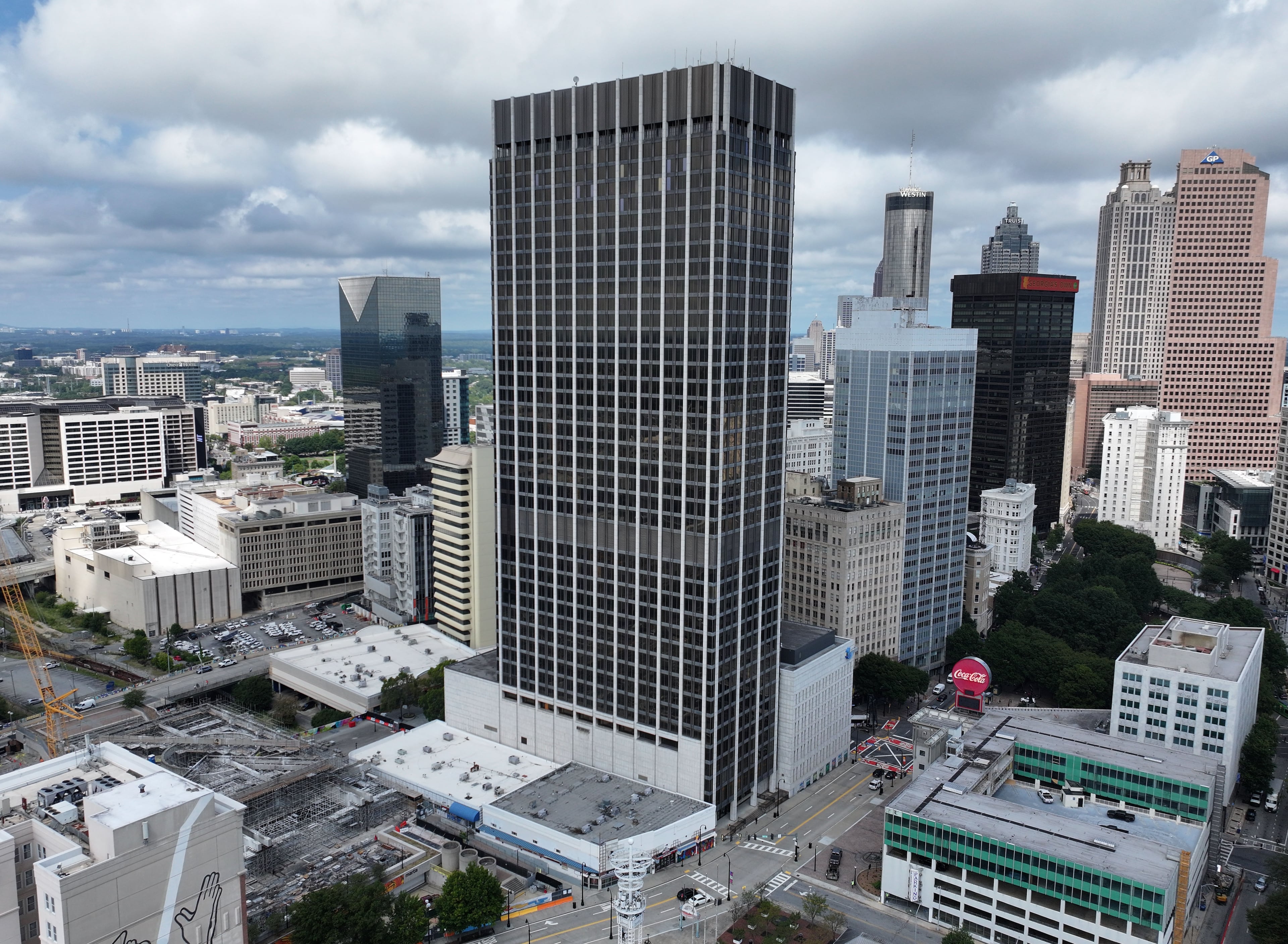
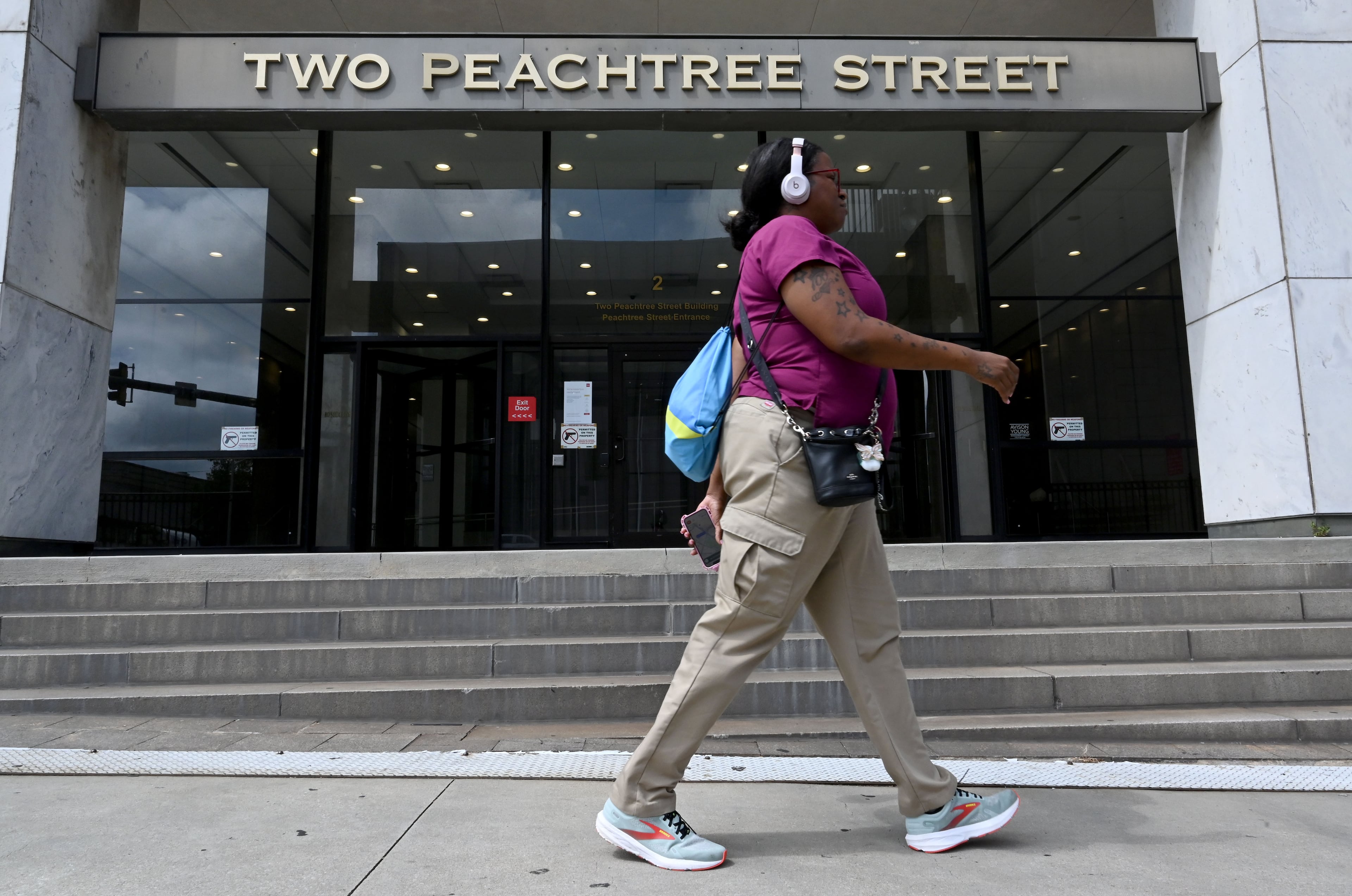
The 40-plus story tower at 2 Peachtree St. was built in 1966 as a home for the First National Bank of Atlanta. Since the 1990s, the 890,000-square-foot tower housed state workers, but it’s been a persistent drain on the state’s budget.
Atlanta acquired the building from the state in late 2022 for $39 million, unveiling a plan for 625 residences, roughly a third of which would be at rents below market rate. In January 2024, the city’s economic development arm Invest Atlanta selected a development team led by Egbert Perry, the chairman of Integral Group.
Perry spoke in August 2024 at the Intersection Conference in Sandy Springs, detailing some of the challenges obtaining federal historic tax credits that would help offset some of the conversion costs.
“There are a lot of costs that have to be taken into account, and it’s not an inexpensive proposition,” he said at the conference, saying it’ll likely cost $400 million. “We have the political will. We believe we have the skill, but ultimately, it’s the extent of the collaboration and commitment to that outcome that’s going to determine whether (it happens as envisioned).”
Perry and Integral did not respond to multiple requests for comment.
Earlier this year, Invest Atlanta announced the first phase of the 2 Peachtree project wouldn’t be its conversion but the construction of a new 65-unit affordable senior housing building on a site adjacent to the tower. Named 5 Peachtree, it is set to be complete by the end of next year.
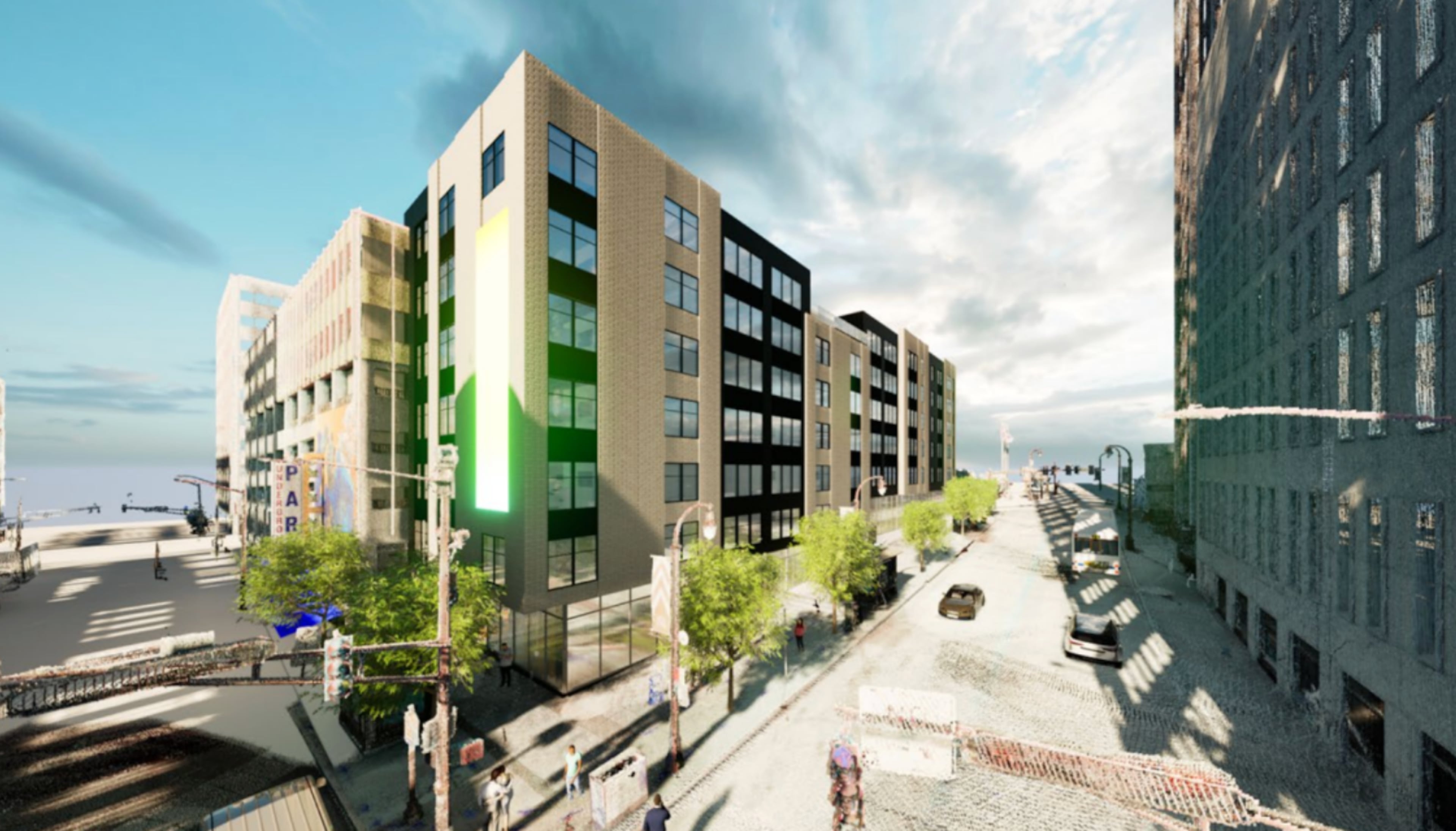
Invest Atlanta said it “is fully committed” to its 2 Peachtree conversion plan, adding that current market conditions “have created challenges for development projects nationwide.”
The Center
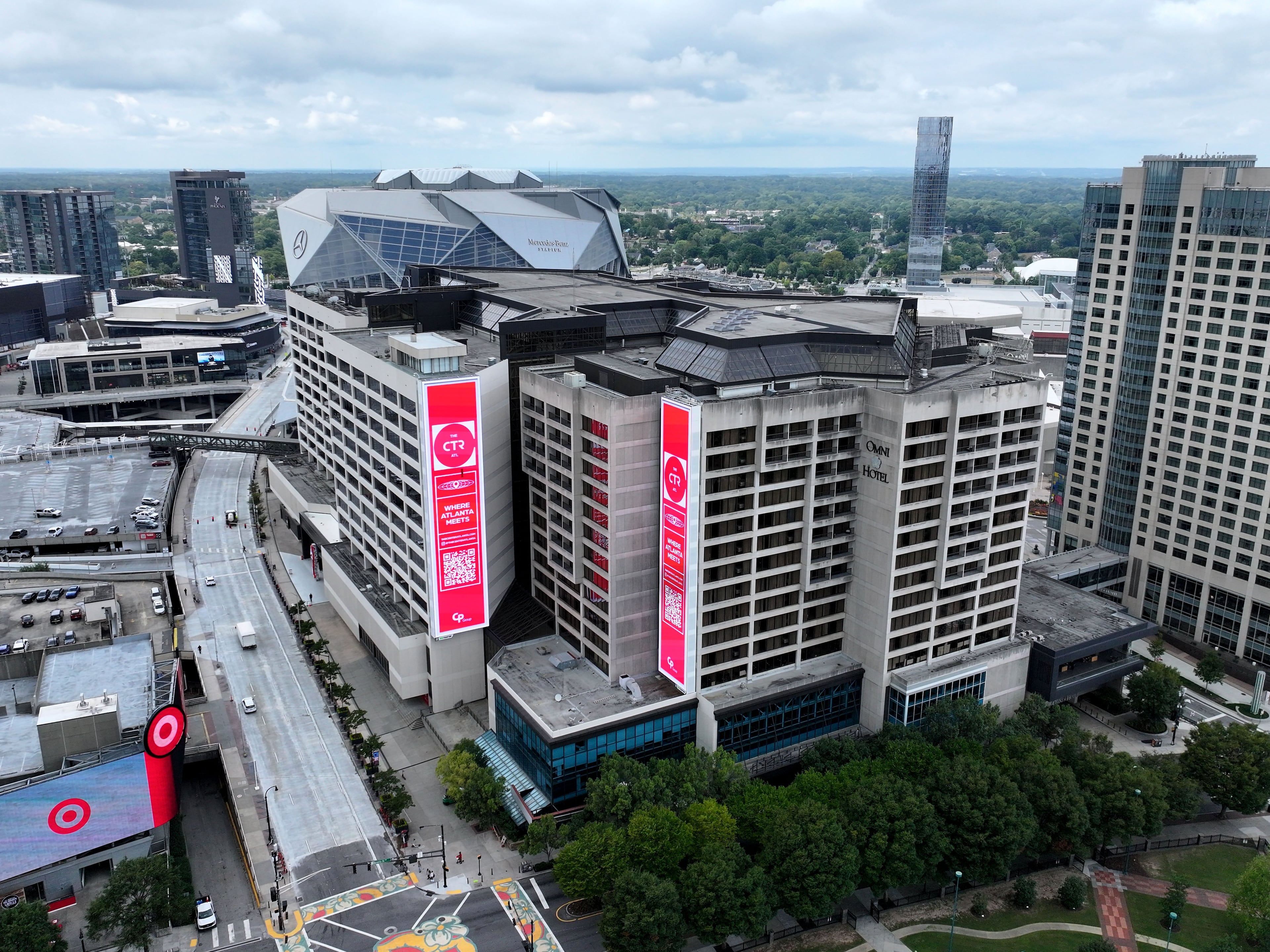
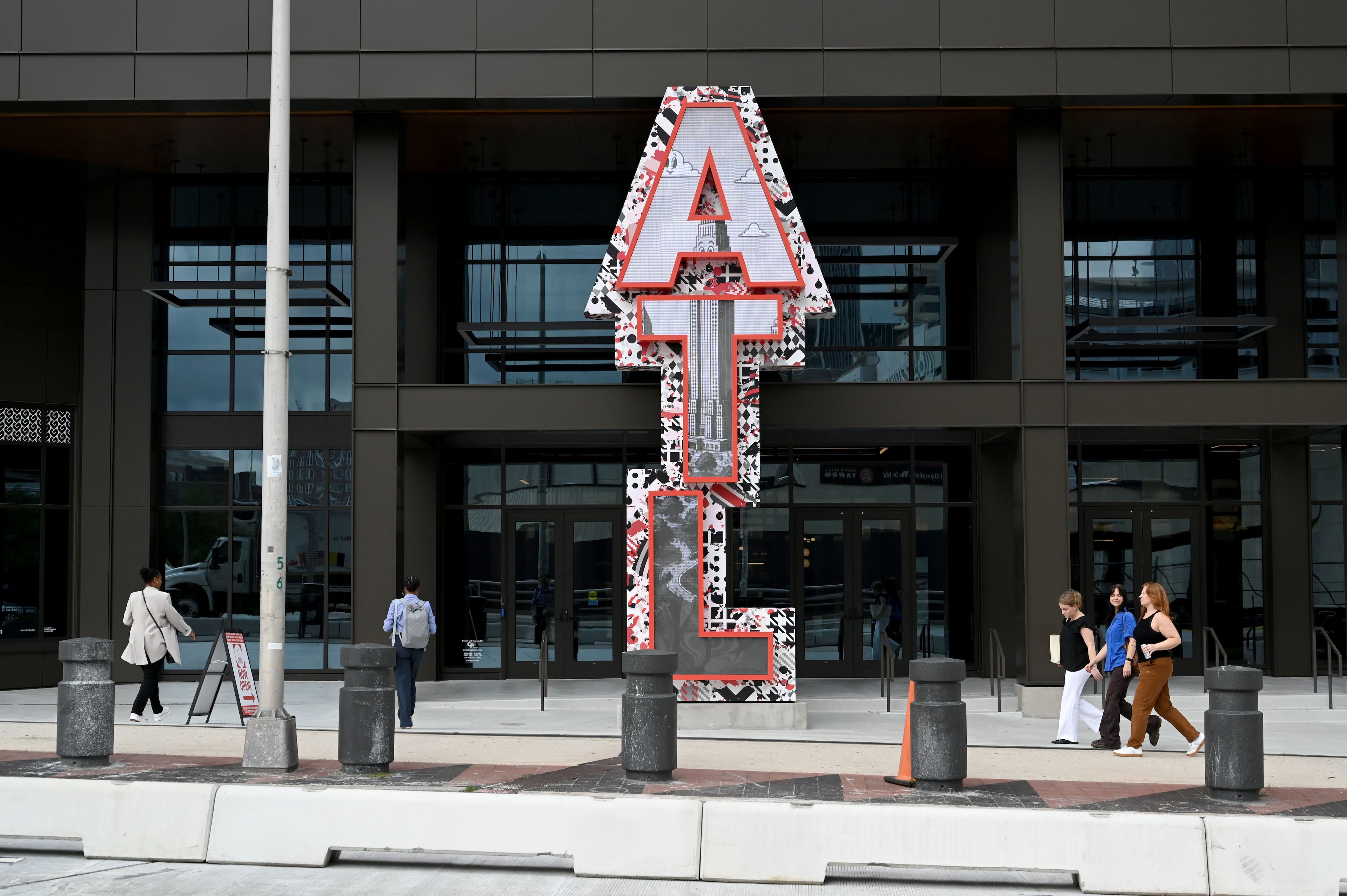
The complex formerly known as the CNN Center is already transitioning to its next life as The Center, stylized as The CTR.
Housing people could be part of its next phase.
Its owner, CP Group, has contemplated converting two of the complex’s empty office towers into a hotel and apartments. Those plans were first made public by The Atlanta Journal-Constitution in April, but plans have not been formally submitted to the city, although CP Group has begun exploring potential incentive structures.
“The conversion does not work without a private-public partnership,” Chris Eachus, the firm’s founding partner, said.
Plans are still being evaluated as the office market slowly rebounds. The office space remains advertised as available to lease. And CP Group has invested more than $200 million into the complex, including revamping the former CNN Center atrium ahead of the 2026 World Cup.
“The more successful a project becomes, the gap tightens on the economics to get a conversion done,” Eachus said.
“If I have a really successful retail base and I’ve leased up a bunch of great office space at good rents,” he continued, “then all of the sudden the rents that I pencil for the multifamily conversion go up because it’s a better environment and people want to live there.”
34 Peachtree
Lalani, the Underground Atlanta owner, is in the process of turning part of the 30-story tower at 34 Peachtree into apartments. His company Lalani Ventures is self-funding a $40 million effort to turn 10 stories into 150 apartments, aiming to debut the first units by next summer.
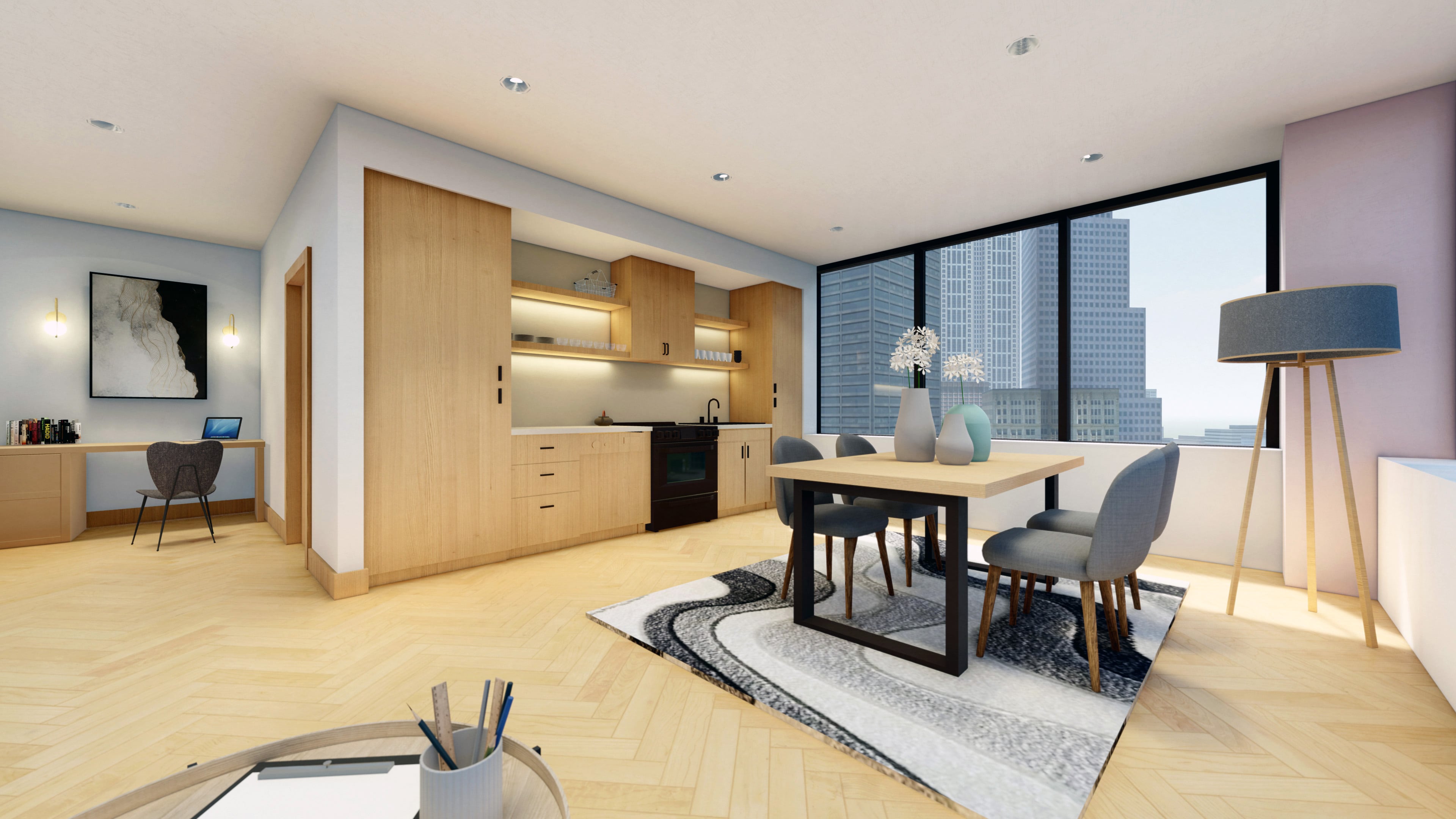
He said finding other investors, especially from banks or traditional commercial real estate lenders, is a challenge for these types of projects in cities like Atlanta, which don’t have a robust history of retrofitting high-rises for new uses.
His team’s larger ambitions for 34 Peachtree are to convert 20 stories into apartments, leaving the lower five for amenities and the top five as offices.
41 Marietta St.
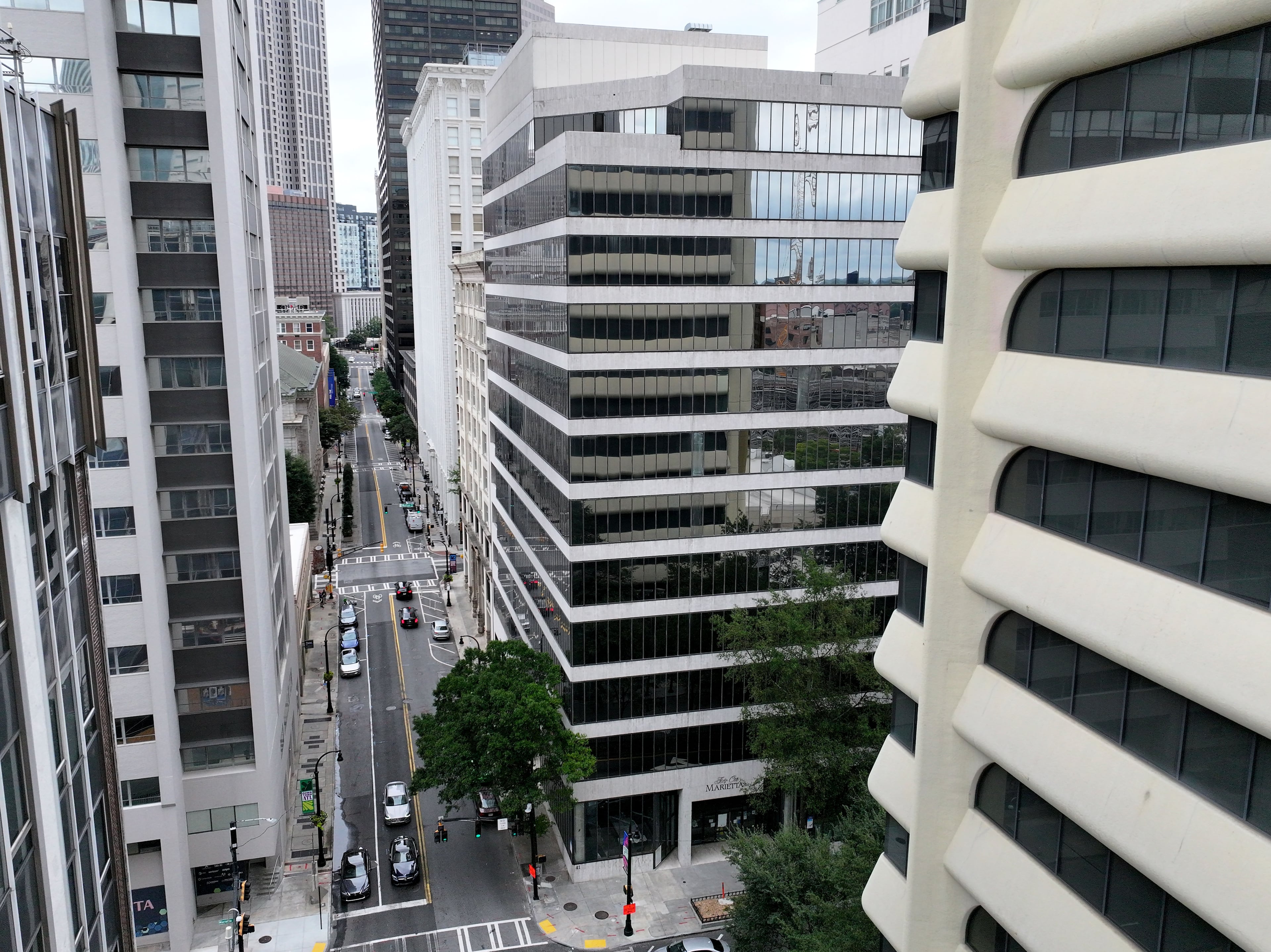
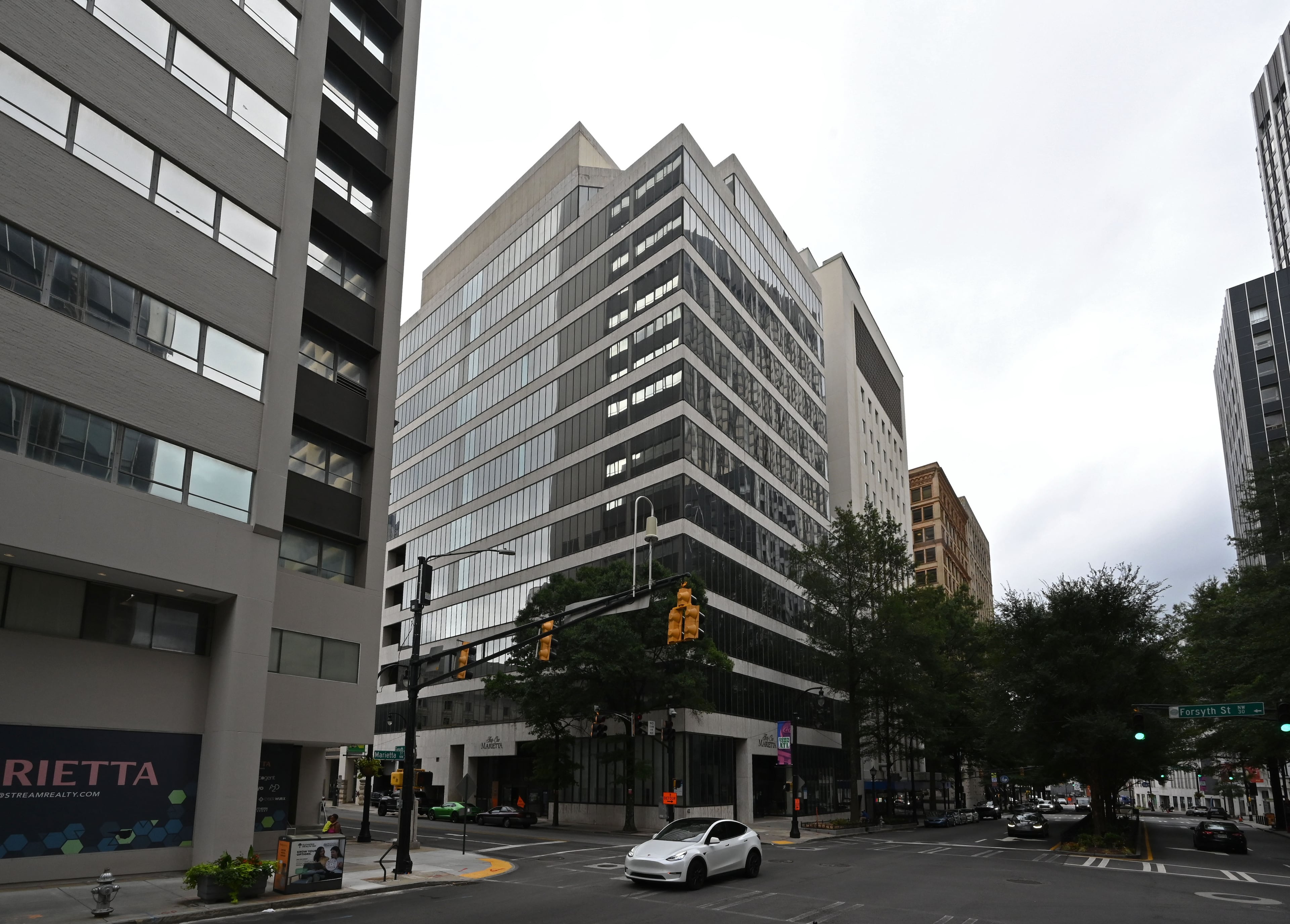
For a more modest conversion attempt, look at 41 Marietta St.
Two developers, Wolfe Investments and Bluelofts, in 2022 pursued retrofitting the 13-story office building in downtown’s Fairlie-Poplar district into 120 apartments. But in 2024, the property hit the foreclosure block because of missed debt payments.
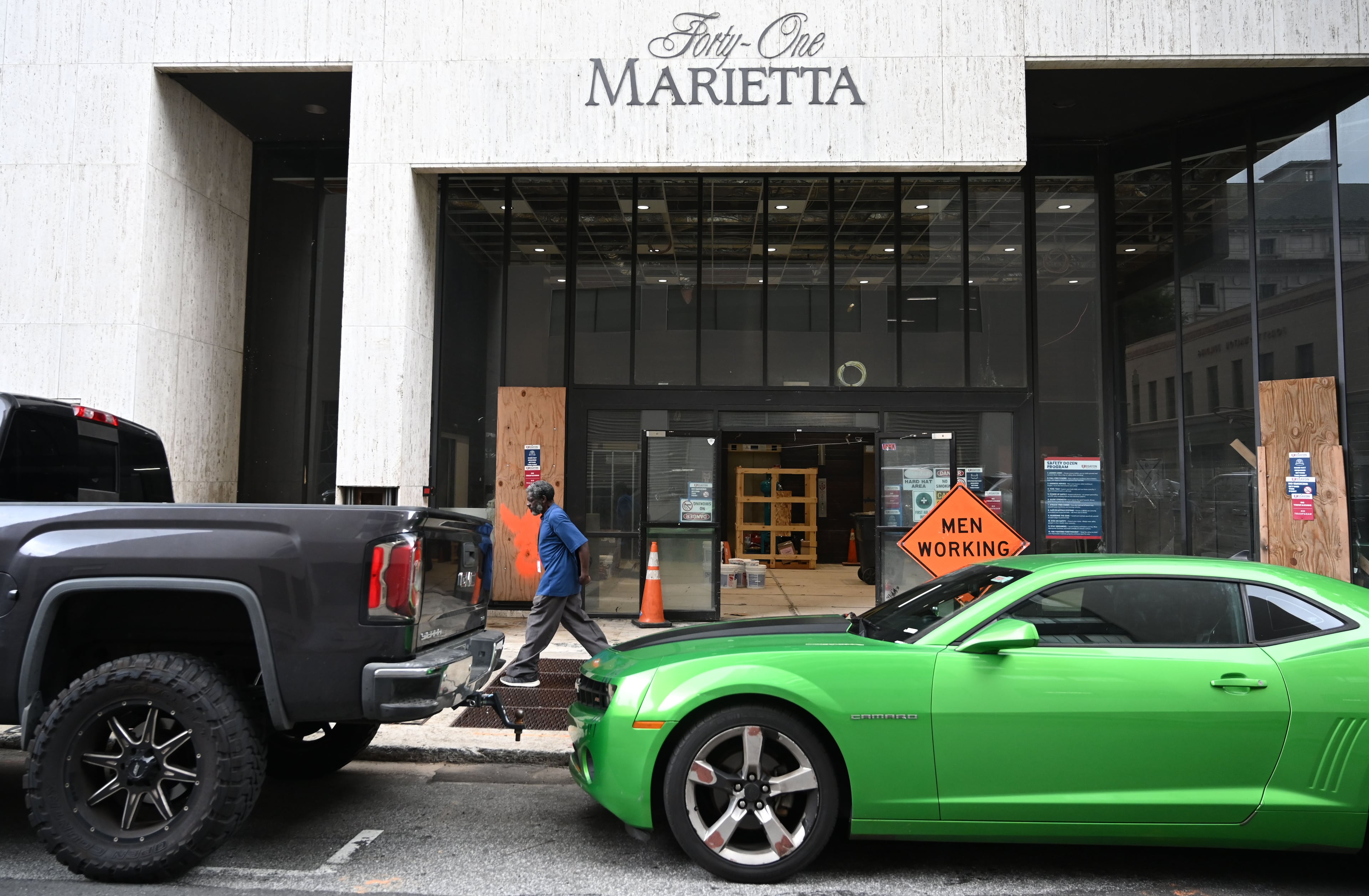
A city-backed nonprofit, the Atlanta Urban Development Corp., took over the imperiled building the following year and has partnered with Aramar Investments to finish the job. It’s on the cusp of completion.
Marcelo Aramendi, Aramar’s founder and a managing member, said leasing will begin later in October for the first units, which will be ready in November. He said the project was about two-thirds complete before the foreclosure stalled work in 2024.
“There’s a lot of challenges when jobs stop and you have to take over,” he said.
All of the units are on track to be complete by early next year, Aramendi added. He said it’ll be important to watch how quickly the units lease, especially as other large projects downtown make the area more vibrant and — presumably — attractive as a home.