Long content to rest in peace, Westview Cemetery seeks a higher profile
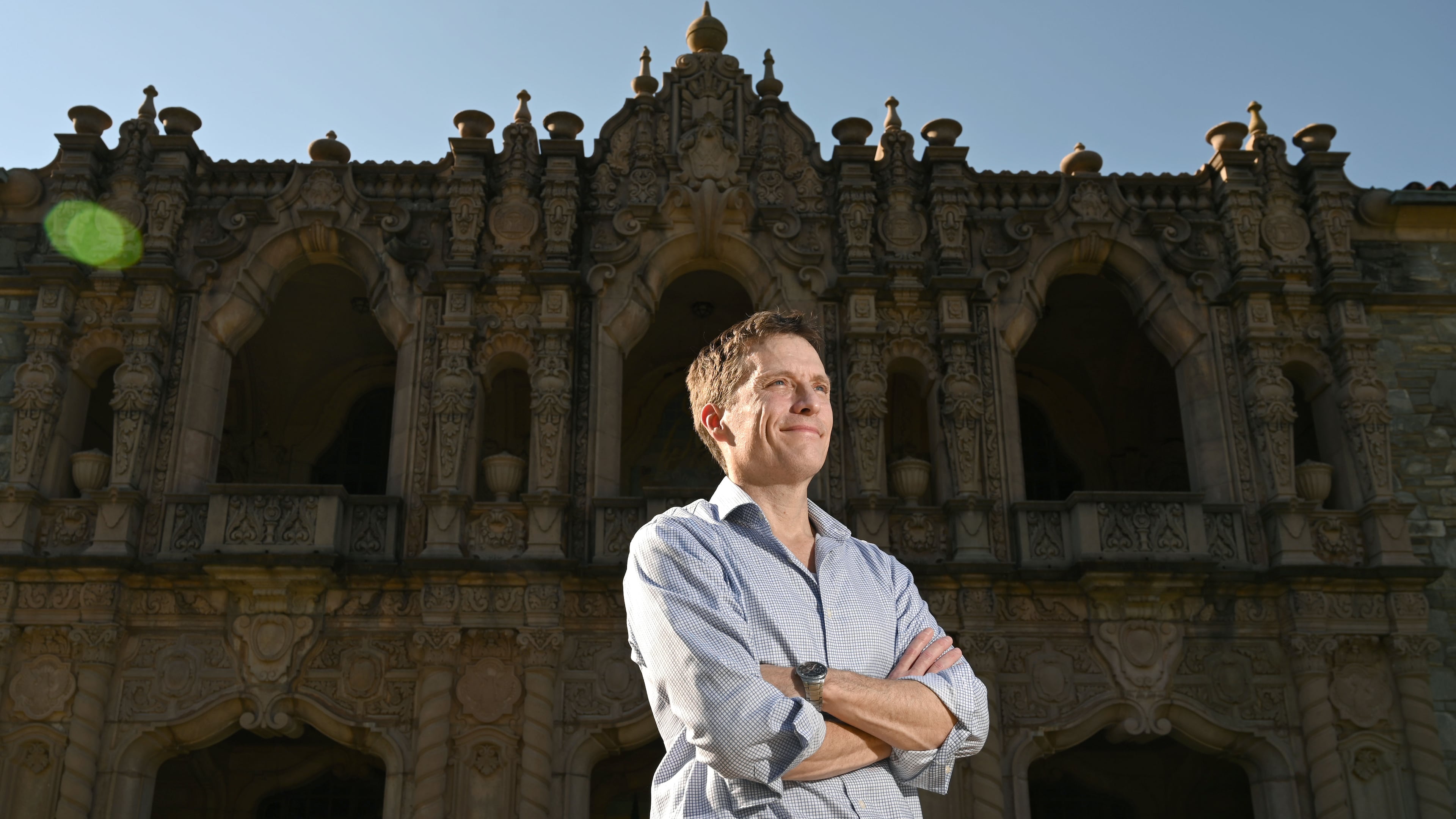
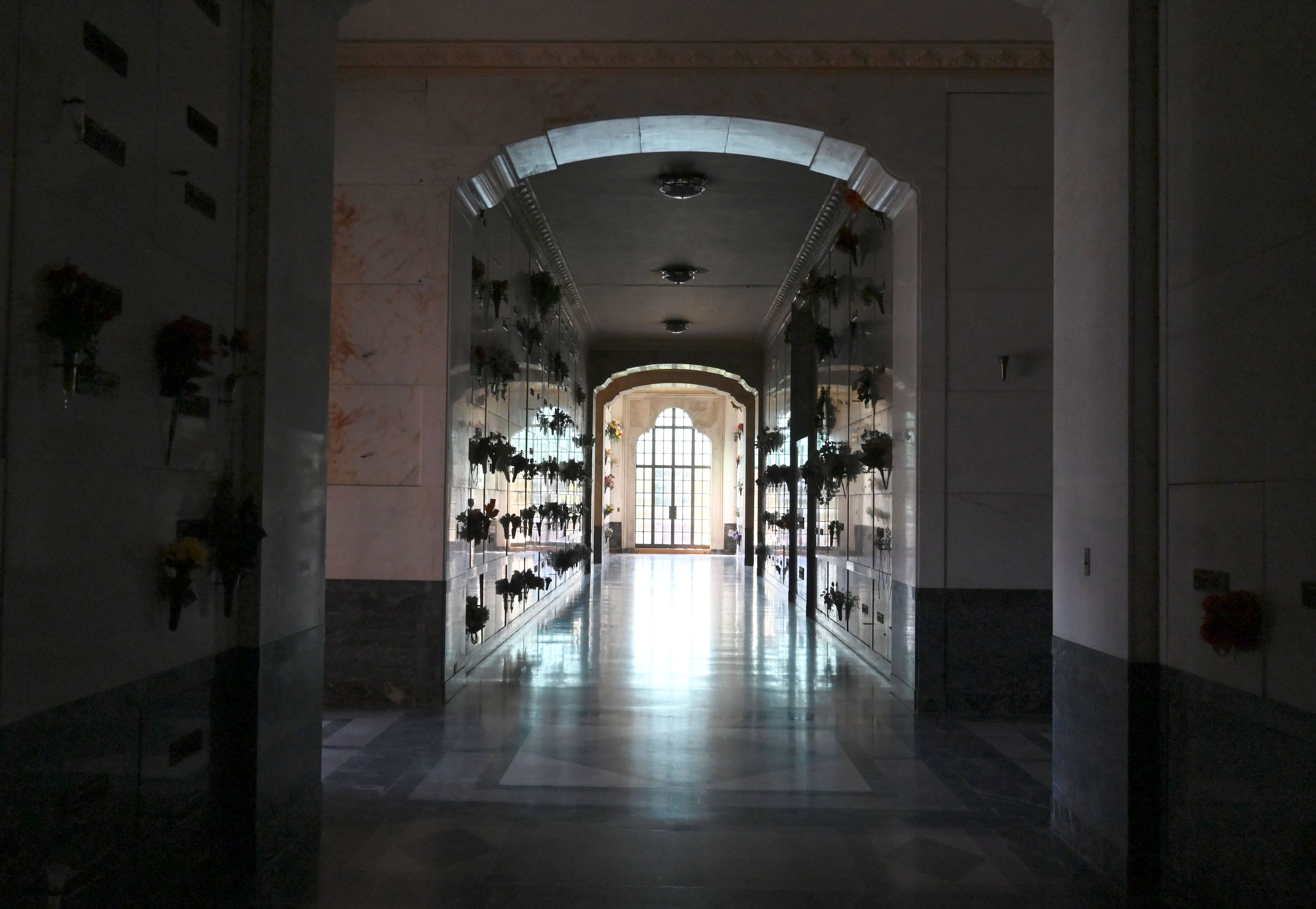
They don’t do ghost tours at Westview Cemetery. It’s not that the sprawling necropolis off I-20 on the west side of Atlanta can’t feel spooky. Westview Abbey, the grand mausoleum that looms over the back of the property like a castle on a moor, holds the remains of more than 11,000 souls and exudes an air of eerie stillness.
“Some people swear it’s haunted,” says Jeff Clemmons, Westview’s administrator, “but I don’t hold much for ghosts.”
Even so, when he unlocks the mausoleum doors for a new day, he often calls out, “Hello, everyone.”
Westview Cemetery is the largest burial ground in metro Atlanta and the biggest civilian one in the South. At 582 acres, it’s also the single biggest green space in the city, more than twice the size of Shirley Clarke Franklin Park at the Westside reservoir.
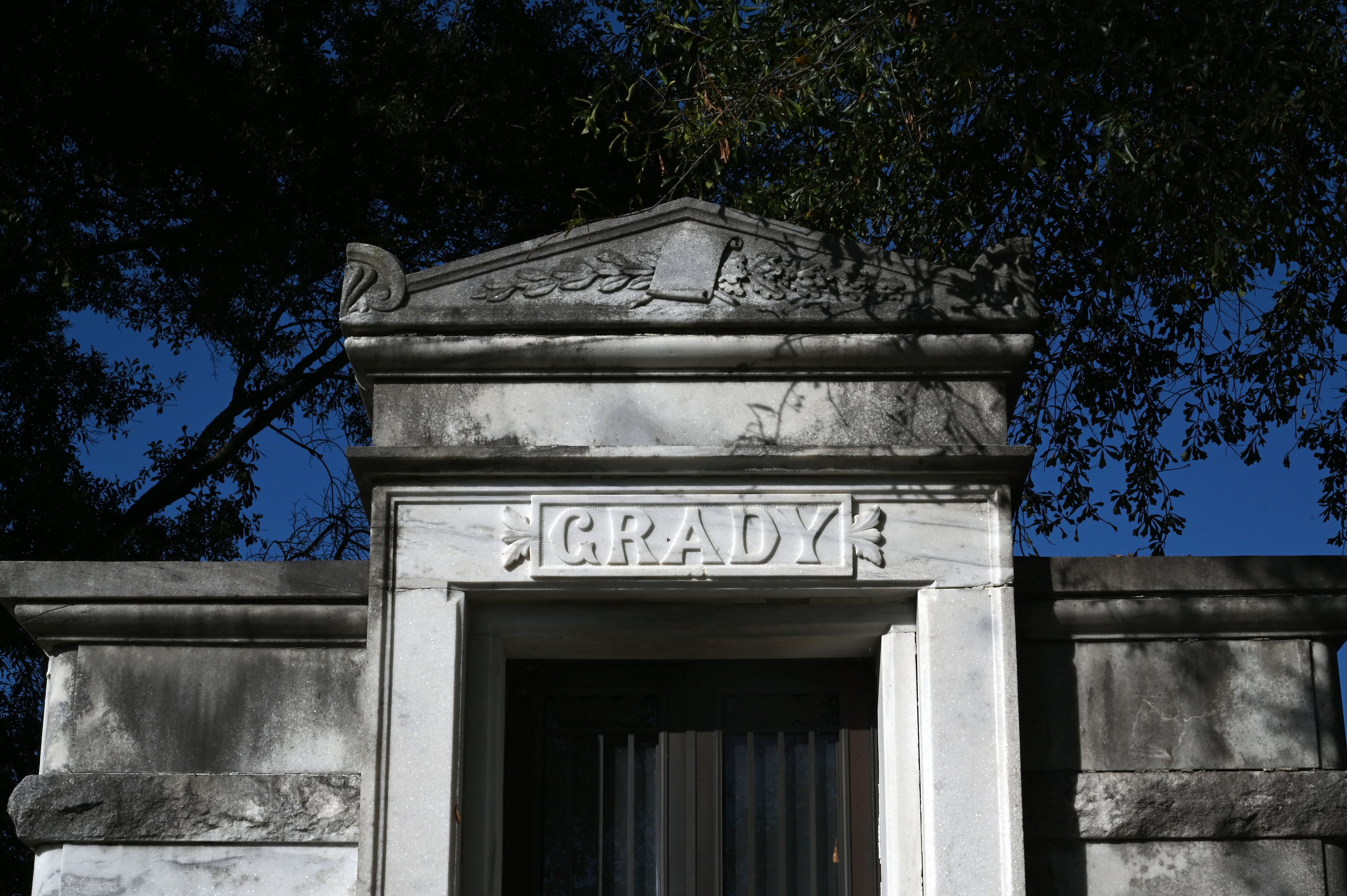
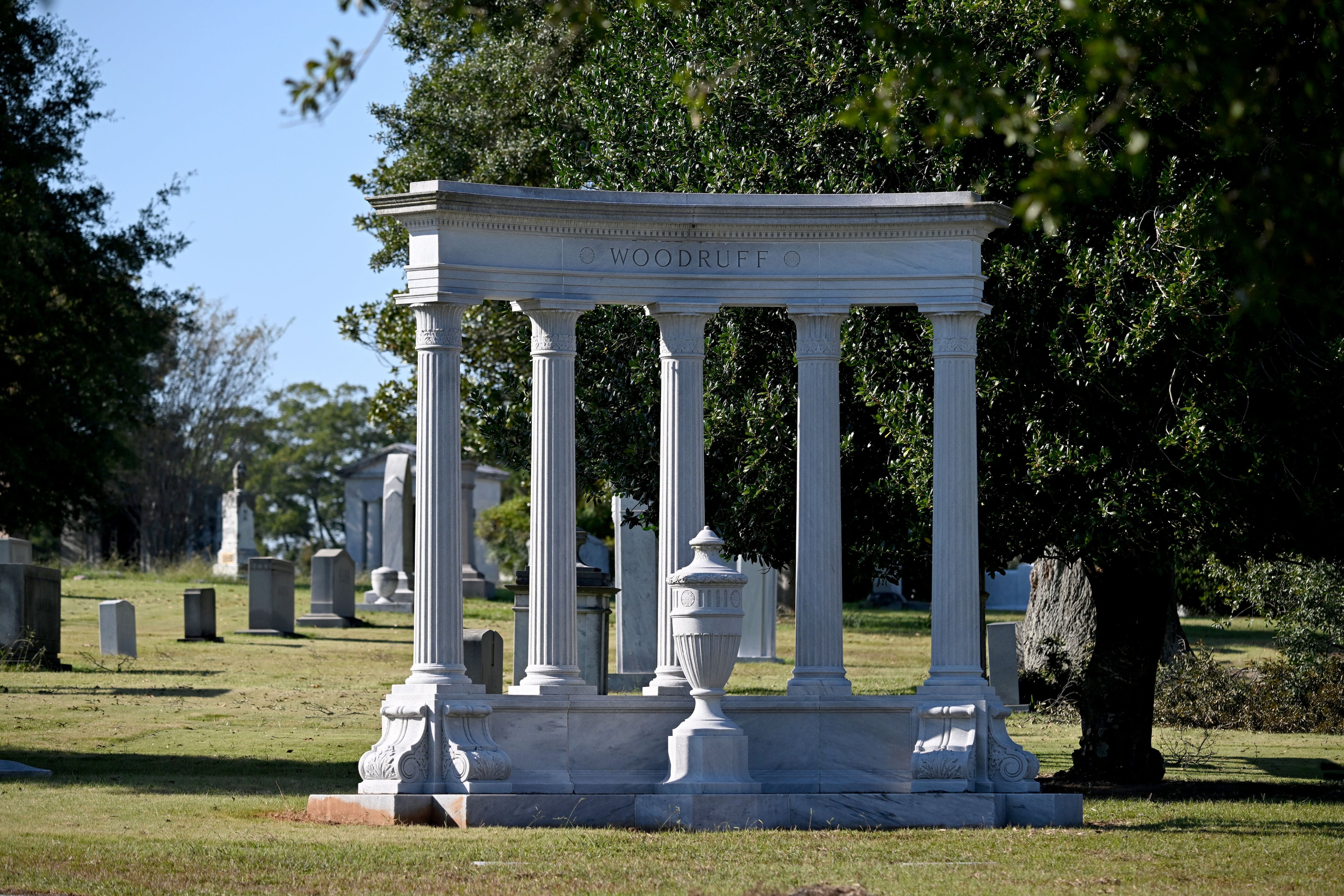
Since opening in 1884, Westview has become a repository of Atlanta history one burial at a time. Among its more than 125,000 eternal residents are captains of business (Coca-Cola’s Asa G. Candler and Robert W. Woodruff); titans of journalism (Ralph McGill, Henry Grady); once-familiar merchants (J.J. Haverty, the Rich family); restaurateurs (the Paschal brothers, the Varsity’s Frank Gordy); political figures (Mayor William B. Hartsfield, Herman Cain); civil rights leaders (Joseph Lowery, Donald Lee Hollowell); authors (Joel Chandler Harris, Tina McElroy Ansa); and cultural luminaries (maestro Robert Shaw, music producer Rico Wade). There are Confederate veterans, hip-hop stars, 48 victims of the Orly plane crash that decimated the Atlanta arts community in 1962 — and one “midget” circus performer from France who died far from home during the flu pandemic of 1918.
For all its history, Westview is far less known than the older graveyard on the other side of downtown, Oakland Cemetery — the one that had filled up by the 1880s, necessitating the founding of a new space for Atlanta’s bones.
“This place has been here more than 140 years, and people don’t even know it exists,” Clemmons says.
He himself had lived in Atlanta three decades before he heard of Westview. A communications specialist who writes history books on the side, Clemmons first visited the cemetery in 2014 to scope it out for tours he leads for the Atlanta Preservation Center. He was so taken that he did his next book about it (“Atlanta’s Historic Westview Cemetery”), wrote the nomination for placing it on the National Register of Historic Places and ended up taking a job as its director of administration.
One of his main goals: bringing more attention to an institution that hasn’t always invited it.
Unlike Oakland, a city property that hosts many public events but has relatively few new burials, Westview is a private nonprofit that handles about 700 interments a year. That’s why a sign near the entrance warns: “No Balloons or Bikes.”
“We’re a working cemetery,” Westview president Charles Bowen Jr., whose family has run the operation since 1952, says. “If you’re here for a funeral, you don’t want to see a bike race or people dressed up for Halloween. A lot of our patrons would be mad at us if we did that kind of thing.”
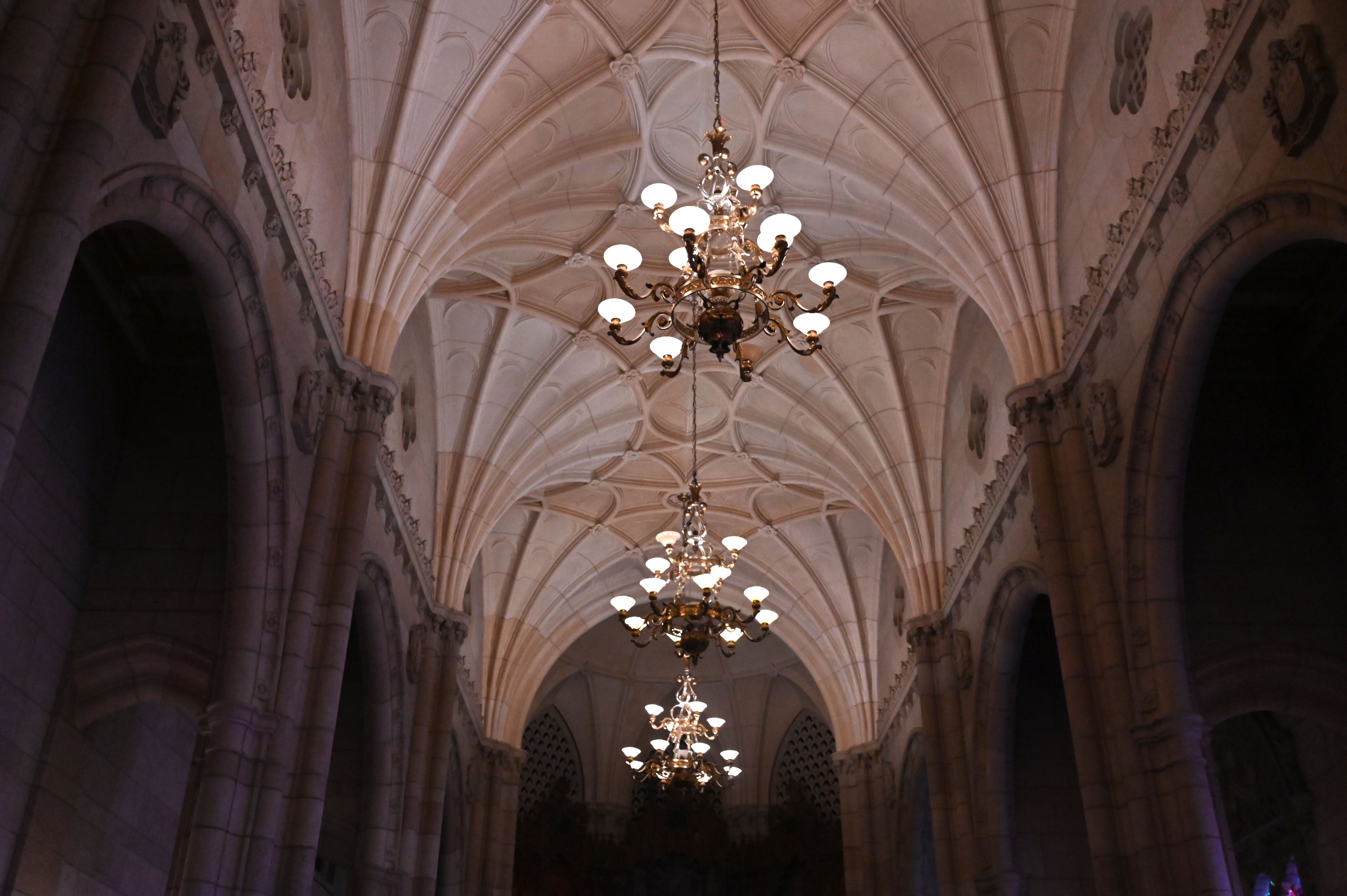
Westview has loosened up in recent years. It allowed a concert inside the Abbey chapel to celebrate the 100th birthday of Atlanta Symphony Orchestra music director Shaw. And a few years ago, it opened for film and TV shooting; more than 60 productions have set scenes at Westview, including “Cobra Kai,” “The Vampire Diaries,” “Ozark” and two installments of the “Fast & Furious” franchise.
Still, there’s a limit to what the cemetery will permit. One person wanted to built a crypt inspired by Hogwarts in the Harry Potter stories. “We might have allowed that,” Clemmons says, “but he also wanted to rent it out on Airbnb. We wouldn’t do that. We don’t have many lights out here, and it gets very dark.”
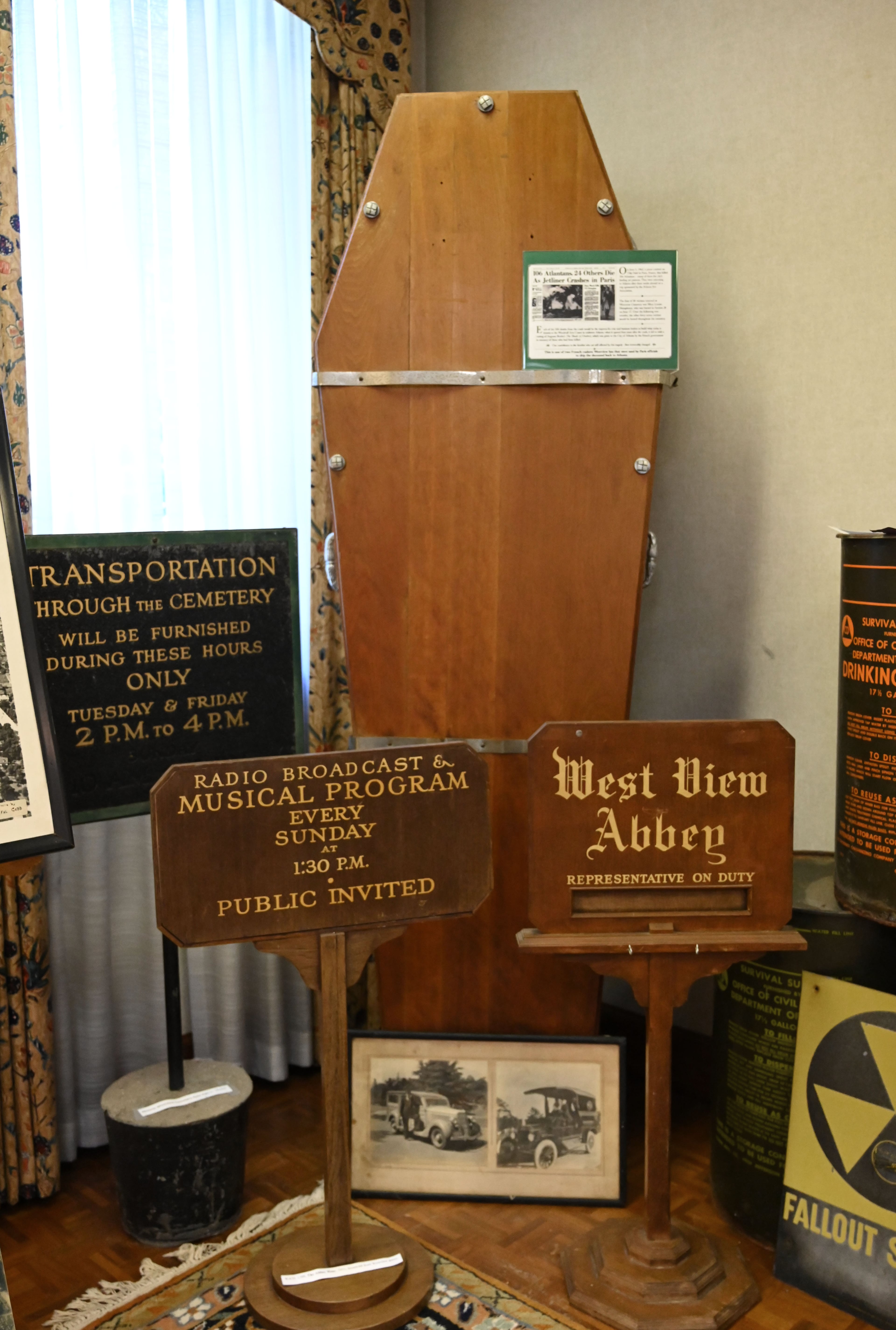
Once a month or so on Sunday afternoons, Clemmons leads guided tours of Westview. They’re entertaining outings in which he dispenses nuggets of history (who knew that a Westview gardener named Burford created the holly of the same name?), shows off the best of the cemetery’s funerary sculpture (there’s a striking piece by Daniel Chester French, who fashioned the brooding figure in the Lincoln Memorial) and displays unique pieces of Atlanta’s past (the cemetery has two of the handsome wooden coffins in which the government of France transported the remains of Atlantans who died in the Orly crash).
Clemmons wants to turn Westview’s 1890 stone gatehouse, now vacant, into a visitors center and small museum and has started a support group, Friends of Historic Westview Cemetery, to raise funds.
“We have so many things we could display,” he says. “We have all the records going back to 1884; they never threw anything away.”
When he was digitizing those records, Clemmons came across the signature of the great comic actor Oliver Hardy. Turns out the Georgia native’s mother is interred in the Abbey.
Westview was historic even before it was a cemetery. One of the Civil War battles for Atlanta, the Battle of Ezra Church, spilled over into the current property; you can still see eroded Union earthworks beyond the graves.
That war never really ended for Westview. One of the cemetery’s most prominent features is a 20-foot monument erected in 1889 with a Rebel soldier on top and the remains of 360 Confederate veterans in the soil below. During the Black Lives Matter protests of 2020, vandals attacked the monument and damaged some of the cannons and cannonballs at its base. It has not been repaired; Clemmons saved the chunks and wants to display them in the museum.
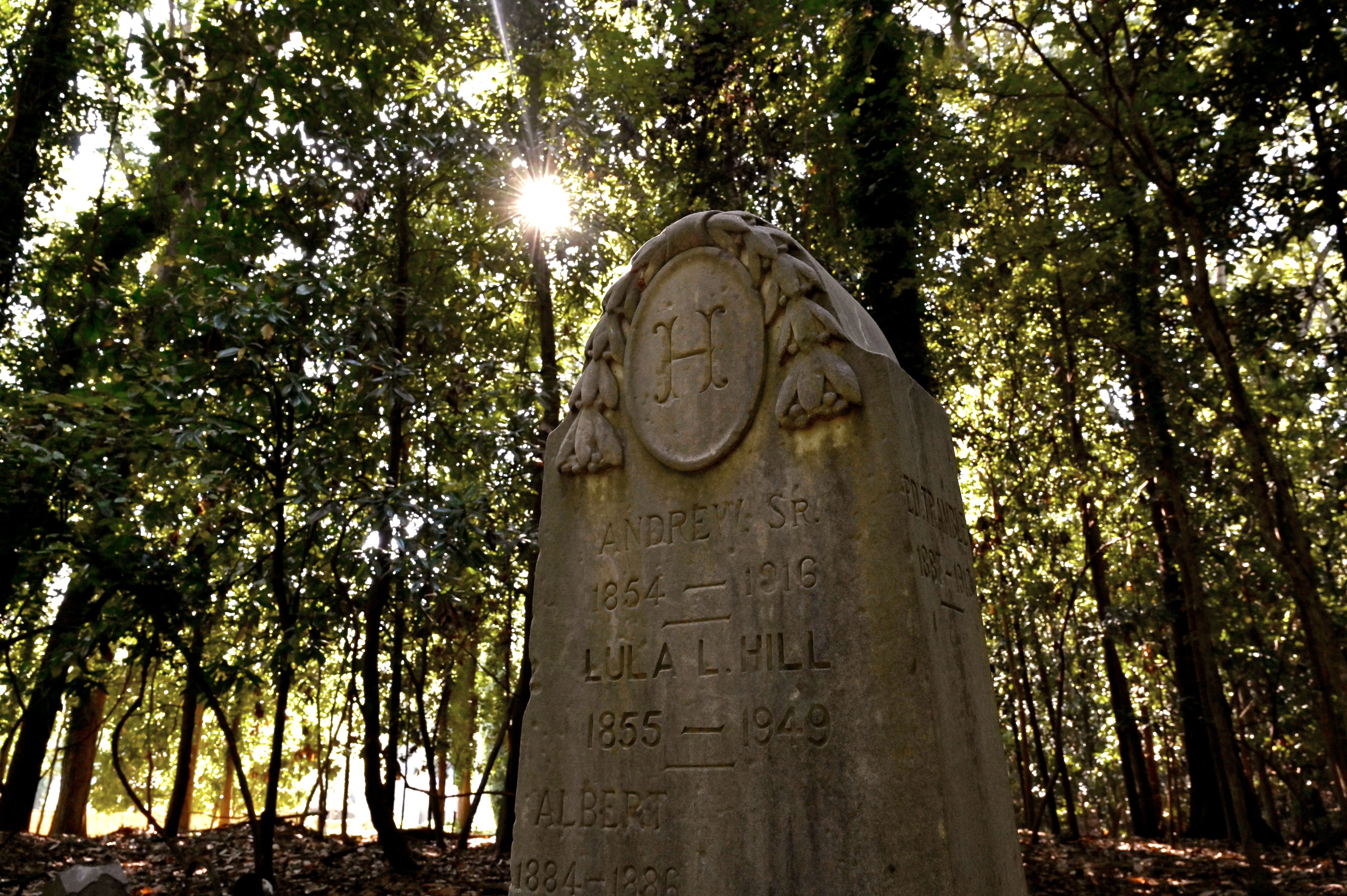
Like most cemeteries in the South, Westview has a sad backstory of segregation. It initially allowed Black people to be buried in a separate, secluded section, but that area lost popularity after Black Atlantans pushed for their own burial ground and succeeded, establishing South-View Cemetery in 1886. There were a few more graves placed in Westview’s segregated section, but it didn’t sanction Black burials in the main cemetery until around 1970.
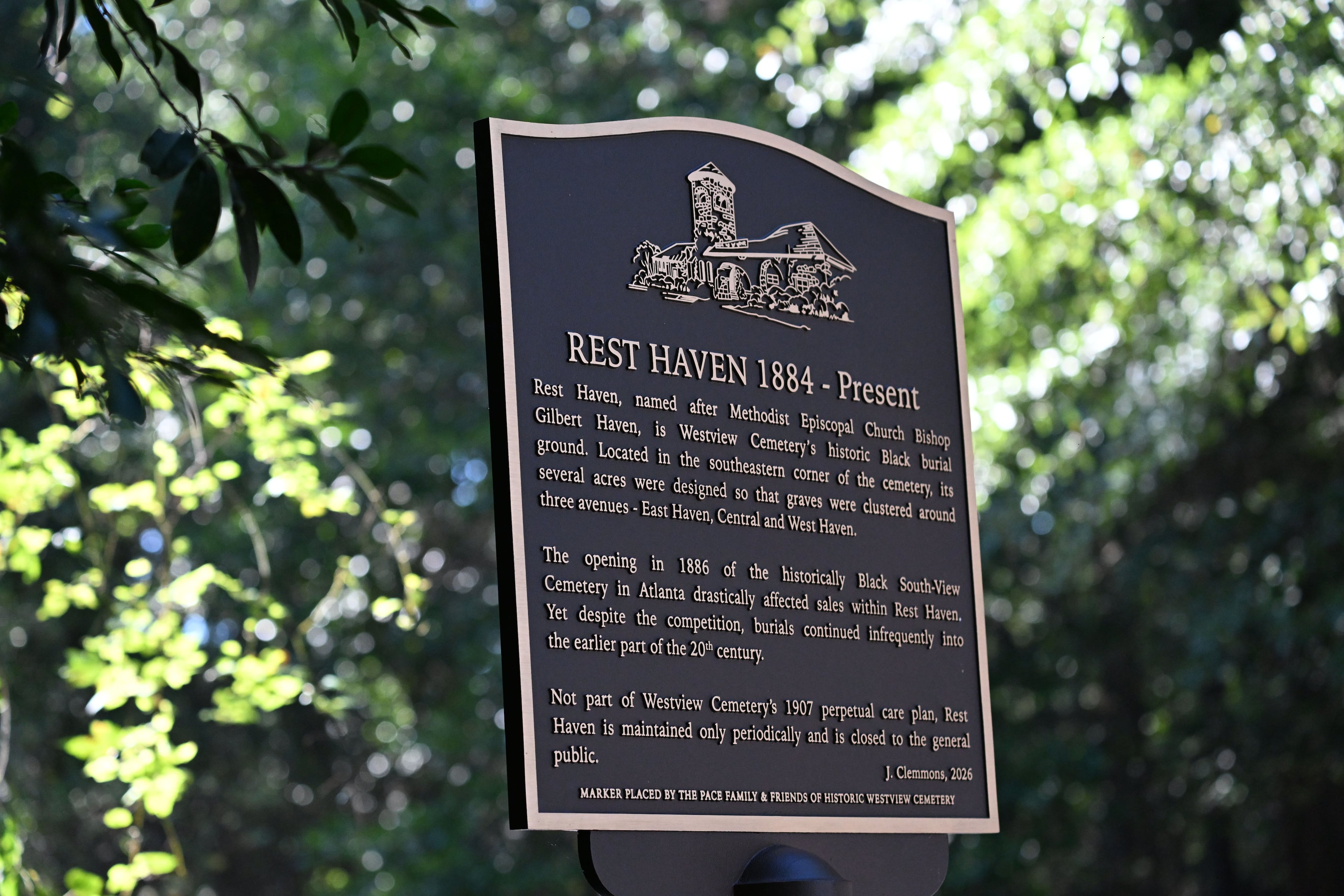
One of Clemmons’ proudest achievements has been to clean up the old Black section, known as Rest Haven, and mark it with a historical sign. “Most of our burials now are African Americans,” he says.
Near Rest Haven lies another forlorn section of the cemetery, a paupers field known as God’s Acre. More than 5,000 of Atlanta’s indigent were buried there from 1892 to 1925, most of them in unmarked graves in an area that’s now mostly overgrown. Clemmons wants to have it cleaned up and commemorated.
Another back section of the cemetery was once used as a landfill for a waste disposal company Westview’s owners ran. Much of the debris from the demolition of Atlanta Fulton County Stadium is buried there. “Eventually we’ll have graves on that land,” Clemmons says, raising the possibility that some Braves fans might be interested in spending their extra innings there.
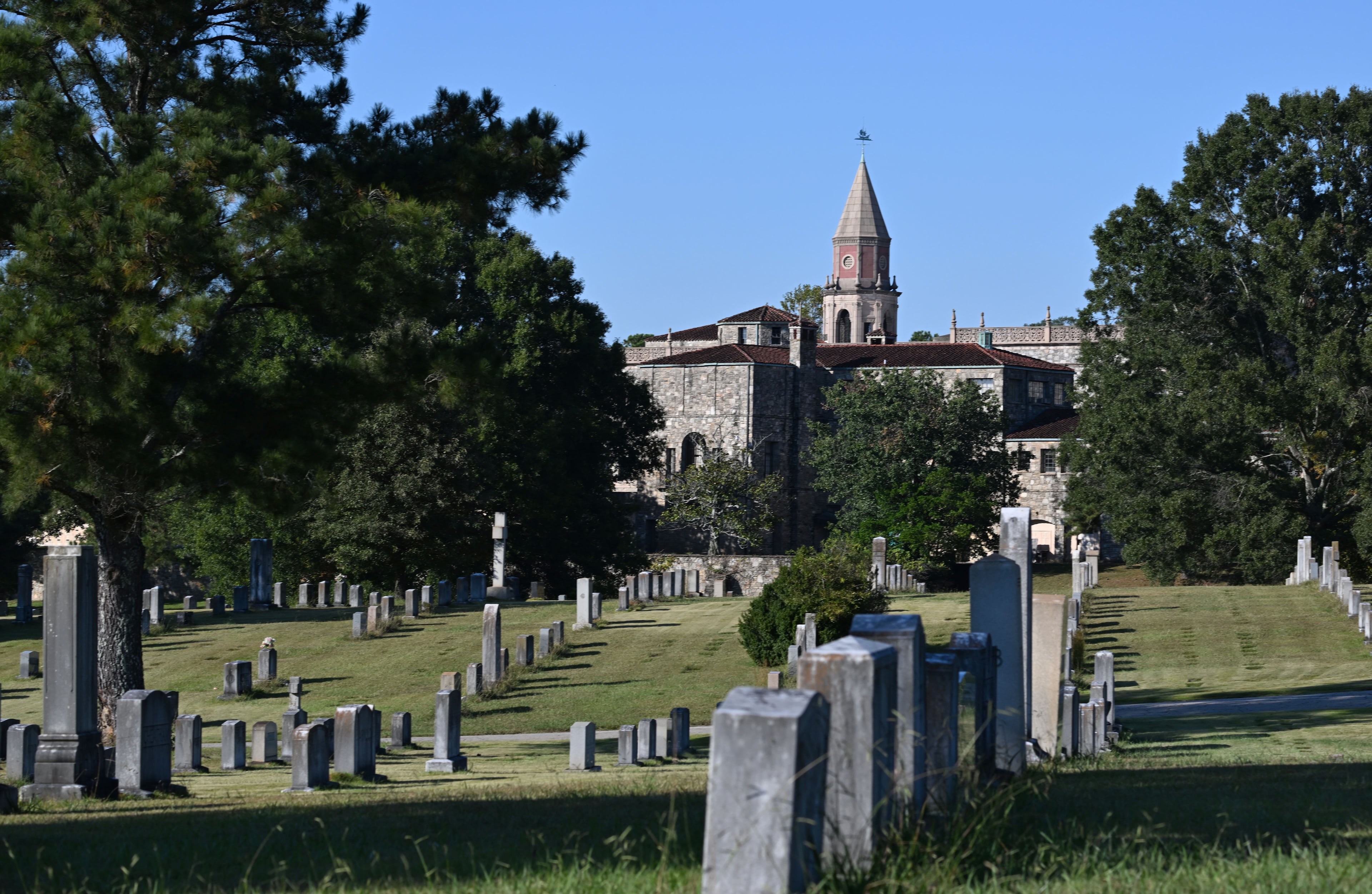
Most Westview tours end at the Abbey. One of the largest mausoleums in North America, the edifice stands as wide as a football field and as long as a field and a half. It was conceived in the early 1940s by Asa Candler Jr., a flamboyant Coca-Cola scion who owned the cemetery for more than 20 years. He was a big game hunter who mounted animal heads in the mausoleum, hosted magic shows there and used to fly around the country in a private Westview Corporation airplane.
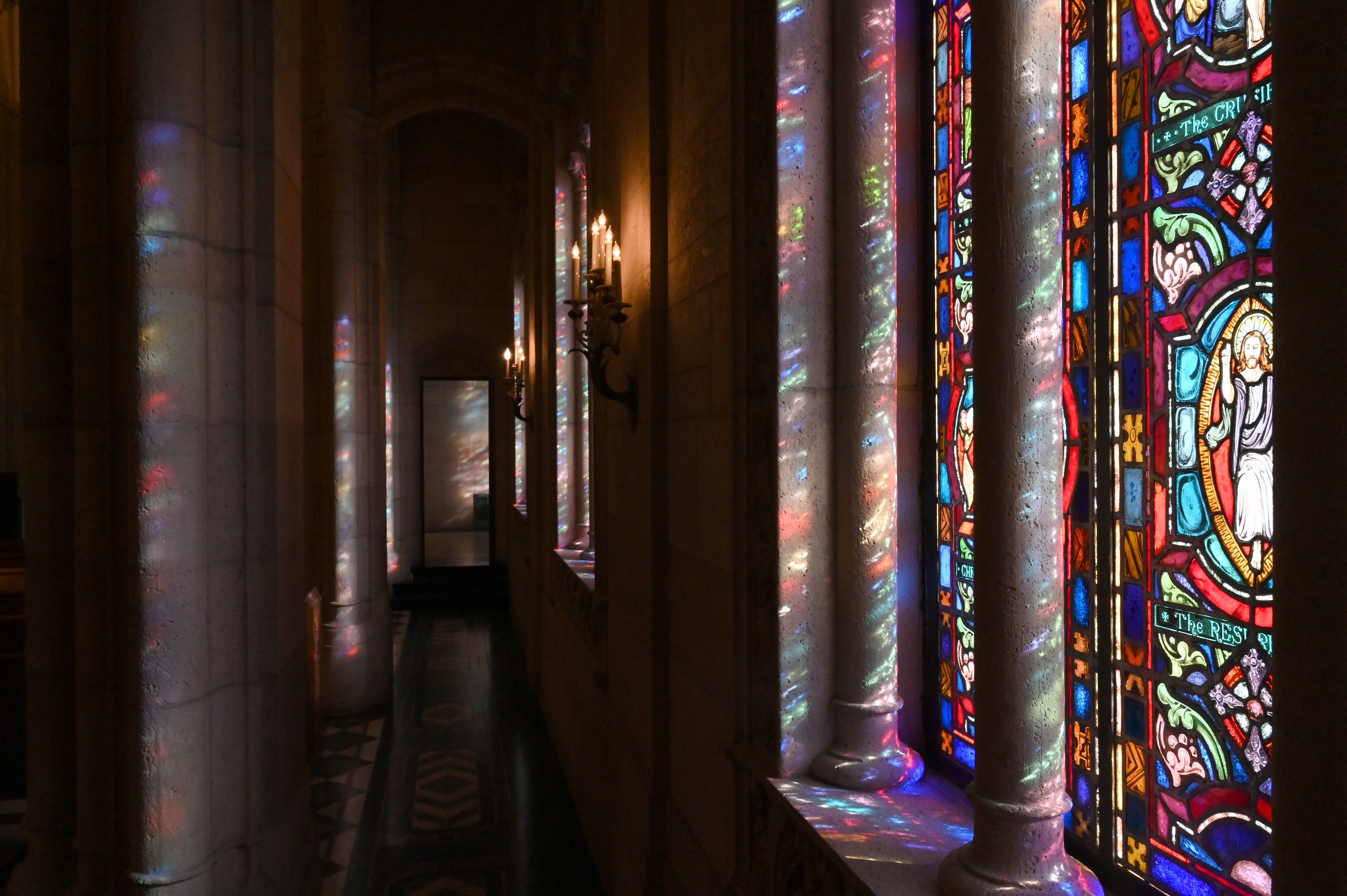
The Abbey was still unfinished when Candler lost control of the cemetery in 1952, and management is only now completing the third floor and opening it for entombments.
Even if you’ve never been to Westview, you may have seen the Abbey. It’s the most popular filming site in the cemetery. The producers of “Ozark” liked the building’s Spanish architecture and made it the estate of a Mexican drug lord. In one memorable sequence that played out on the sidewalk outside the mausoleum, a hit man shot a woman in the side of the head while Jason Bateman and Laura Linney’s characters were splattered with brain matter.
With scenes like that, who needs ghost tours?
IF YOU GO
Where History is Buried: Westview Cemetery Guided Tour
2 p.m. Sunday and Nov. 29. $33.97, $24.67 for students and seniors (ages 65 and up). Presented by the Atlanta Preservation Center, the monthly tour is approximately two hours and consists of a 1.5 mile walk (with one steep hill). 1680 Westview Drive SW, Atlanta. eventbrite.com.
More Atlanta haunts
Here’s a guide to metro Atlanta’s most historic and atmospheric burial grounds:
South-View Cemetery
African Americans founded their own cemetery in southeast Atlanta in 1886. Notable burials include Congressman John Lewis, Civil Rights leader Julian Bond, baseball great Hank Aaron and the parents of the Rev. Martin Luther King Jr. One of the most touching tombstones is the hand-inscribed marker for George “Union” Wilder, a formerly enslaved man who fought with the U.S. Army during the Civil War and was shot dead decades later during the Atlanta Race Massacre of 1906. southviewcemetery.com
Marietta National Cemetery
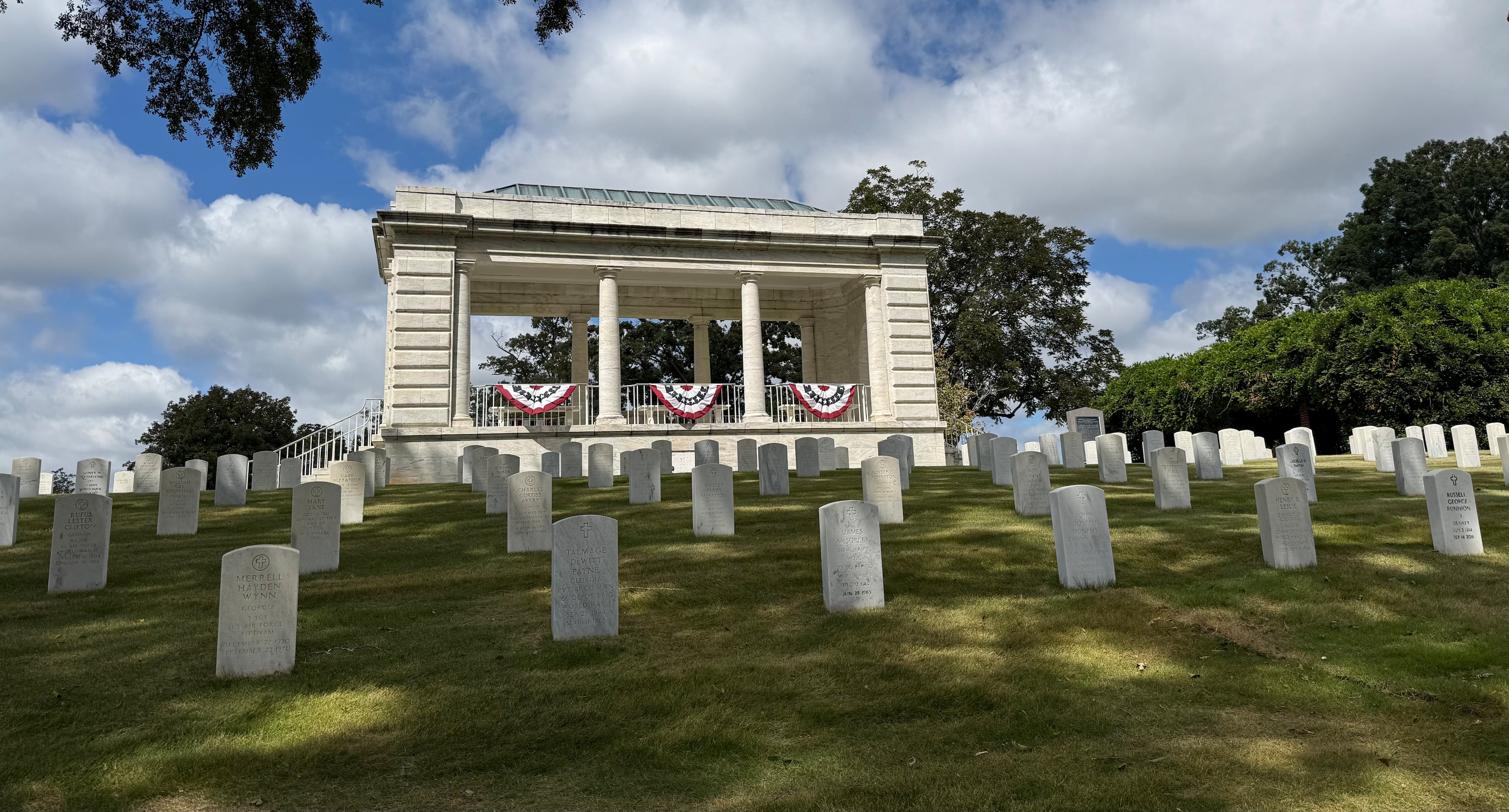
Perhaps the most beautiful cemetery in the area. More than 10,000 Union soldiers who died during the campaign to capture Atlanta rest under white tombstones spreading like an eternal army across green, undulating hills. The cemetery was originally intended for the blue and the gray, but Marietta leaders, still bitter after the Civil War, refused to let Rebel dead be buried with Yankees. They established a separate Confederate cemetery a couple of miles away. cem.va.gov

Oakland Cemetery
Opened in 1850, Atlanta’s first proper municipal burial ground is also its most famous. Among the notable residents: golfer Bobby Jones, novelist Margaret Mitchell, singer Kenny Rogers and Maynard Jackson (one of 27 Atlanta mayors interred at Oakland). Still owned by the city, Oakland has undergone a renaissance in recent years with help from the Historic Oakland Foundation, which unveiled an $8 million visitors center last year. Oakland also functions as a park and hosts numerous tours and colorful events such as the Mexican Day of the Dead. oaklandcemetery.com
Decatur Cemetery
Founded years before Oakland, in 1823. The oldest section contains several prominent graves, including Thomas Holley Chivers, a doctor-turned-poet who befriended Edgar Allan Poe and then accused him of plagiarism after his death. But the cemetery’s best-known story concerns a pair of ironic dirt neighbors. Col. Robert Alston, a legislator who died in a duel at the state Capitol in 1879, is buried a few feet away from Capt. Edward Cox, the man who gunned him down. He had already bought the grave plot and saw no reason to switch his forever real estate. decaturga.com
Greenwood Cemetery
Opened in 1904, this privately owned cemetery occupies a hilly site off Cascade Road in southwest Atlanta. It has a few prominent graves (Chick-fil-A founder S. Truett Cathy and singer Hank Ballard, the creator of “The Twist”), but it’s best known for its large Jewish and Greek Orthodox sections and for being home to the one of the Southeast’s most moving Holocaust memorials, “The Memorial to the Six Million,” listed on the National Register of Historic Places. findagrave.com/cemetery
Lawrenceville Historic Cemetery
One of the oldest cemeteries in metro Atlanta (1819), this small graveyard near the middle of the county seat contains the resting places for several Gwinnett pioneers, Lawrenceville’s first mayor, Revolutionary War veterans, Confederates and enslaved people. Ghost hunters love the place and report unexplained sounds and sights, including that rarest of all paranormal phenomenon: a full-body apparition. lawrencevillega.org