How the people of Atlanta helped build the High Museum of Art over 100 years


Atlanta artist Robell Awake never imagined his work might be in featured in his hometown art museum one day. But now his piece of handicraft, “Chair for Every Person,” sits in the Decorative Arts gallery at the High Museum of Art, for hundreds of thousands of visitors to see every year.
“I kind of see it as like a weird spiritual place for a secular world,” he said of the museum, which is celebrating its 100th anniversary this month.
The mission of giving the city its own art museum, a place to display great works long after the artist who created them is gone, took decades of effort from dedicated art lovers, people who knew that to be a world-class city, Atlanta needed a sanctuary for the arts.
In an October 1926 article in the Atlanta Journal, the week after the High Museum of Art opened in its first building, Southern artist Ellsworth Woodward said, “The south is not fully conscious of its individuality today in any sphere other than politics.”
“The fostering of high art ordeals is the way to stimulate the development of an art which is characteristic of the spirit of the people of the South.”
Thanks to Harriet “Hattie” High, who donated her former home on Peachtree Street to the Atlanta Art Association in honor of her late husband, Joseph Madison High, Atlanta would begin its long journey toward fostering these “high art ordeals.”
In the 1960s and ‘70s, when the High Museum of Art’s staff only had a couple of full-time employees, it was the volunteers and the dogged believers of its mission that slowly worked toward its growth. And in the past decade, it has broadened its reach to include a wider swath of Atlanta.
At every turn over the past 100 years, the Atlanta community built the High Museum of Art into an institution of learning, appreciation and culture.

The women who saw a need
The High Museum of Art had humble beginnings, starting as the Atlanta Art Association, which gained its charter in 1905 when Mrs. Nannie Boyd was elected president of the association.
Boyd and her cadre of association members had a momentous job ahead of them: To establish an organized center for artistic appreciation for a city that at that time had a population of less than 90,000, according to a 1900 Census report.
A July 1905 Atlanta Journal article announcing the foundation of the Atlanta Arts Association proclaimed the groups mission: “Their purpose is to bring within the reach of Atlanta and of southern artists the advantages that they have had to go north for, and to present the best in art to the general public of the city.”
During those early years, those associated with the Atlanta Art Association were often prominent Atlanta women pushing for the establishment of an art museum and school.
Despite their enthusiasm, the Atlanta Art Association remained essentially homeless for two decades following the initial charter.
“They had been really focused in the direction of, ‘The city should help us, the city should give us land, the city should help us build a museum, the city should do it,’” said Julia Forbes, the High Museum of Art’s associate director of institutional research. “It just never happened.”
When the city did not step in, the job fell to individuals.
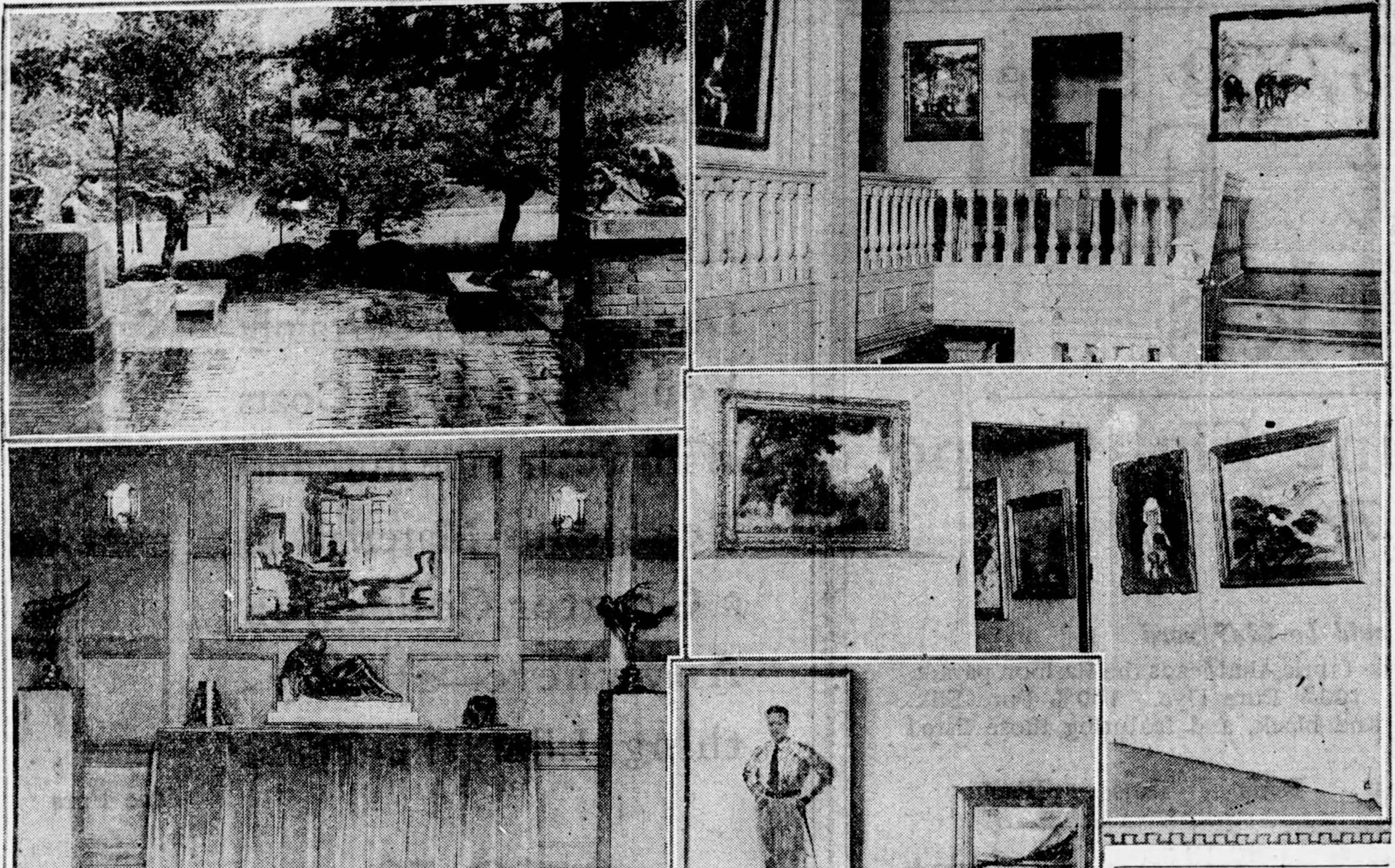
On Oct. 17, 1926, the Atlanta Journal printed the following headline: “Atlantians honor Mrs. High for art museum gift.” Over the months, her home had been renovated to operate as an art gallery and art school.
Upon its debut in October 1926, there was an opening exhibition of American art from the Grand Central Galleries of New York, and the Atlanta Art Association installed about 30 pieces of art it had collected over the years.
The city would finally have its own museum.

Amid growing momentum, tragedy strikes
With a building acquired, the High Museum needed works of art to fill its halls. In 1949, its inventory grew significantly when the family of James Joseph Haverty gifted the museum his art collection.
Before his death in 1939, Haverty was an active member of the Atlanta Art Association, serving at various times as president and chairman of the board. He was recognized as having one of the most important art collections in Atlanta.
According to an Oct. 30, 1949, report in the Atlanta Journal, the Haverty collection included 25 paintings and three bronze sculptures from American and European artists.
Several years later, the High Museum was in line to receive 30 pieces of art from the Samuel H. Kress collection in New York.
There was one stipulation: The High Museum would have to provide a “modernized, fireproofed, air-conditioned structure” to house the paintings, according to a May 17, 1953, Atlanta Journal article.
The Atlanta Art Association began constructing an appropriate space for the collection in early 1954, and it was completed the following year in a building located near the original High house. The Samuel Kress exhibit opened in April 1958 with tours and lectures by dozens of art educators.
But despite a new building and the growing collections it housed, the High Museum of Art experienced a setback it never could have anticipated.
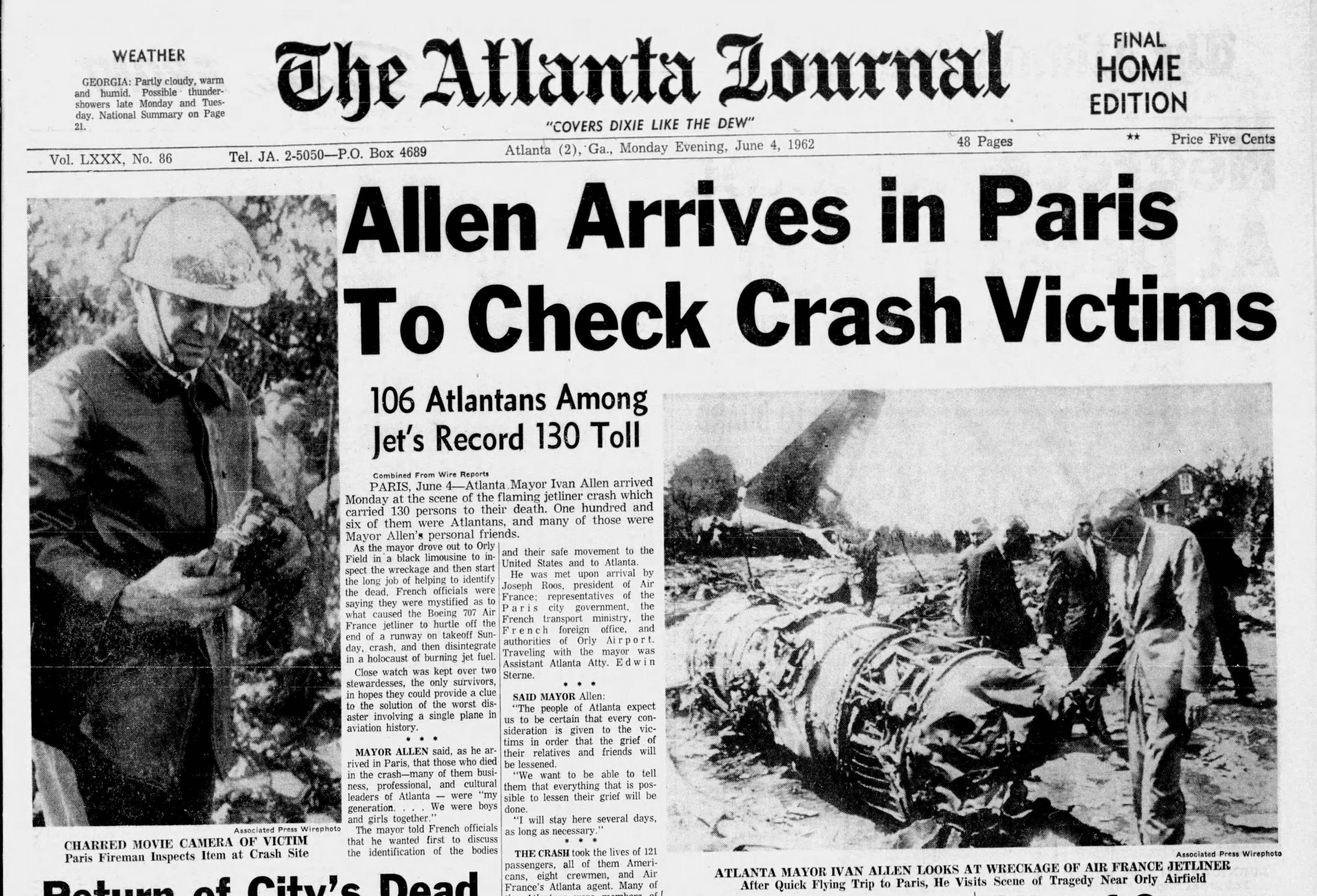
Atlanta was wracked by tragedy on June 3, 1962, when an airplane carrying the Women’s Committee of the Atlanta Art Association crashed during takeoff from Orly Field in Paris while returning from a tour of European art galleries.
The death count included 106 Atlantans, wiping out a swath of people who were pushing Atlanta’s art culture forward.
“This is the most tragic thing that could have happened to the Art Association and the City of Atlanta,” Art Association board chairman James V. Carmichael said in a June 4, 1962, article in the Atlanta Constitution. “The plane crash wiped out many cultural and civic leaders of the city as well as many of my closest friends.”
Throughout June, headlines mourned the unimaginable loss as bodies were identified, funerals announced and the cause of the crash investigated.

In 1968, the French government gifted the High Museum one of two identical bronze statues of Auguste Rodin’s “The Shade” in memory of the Orly plane crash victims. The statue remains standing today outside the High’s Stent Family Wing.
Over the course of Atlanta’s history, the city has burned down twice, once in 1864 during Union General William T. Sherman’s March to the Sea, and again during the Great Fire of 1917.
“The Orly plane crash, which happened in ’62, was another burning down for us,” Forbes said. “We had to start over, and I think the person who really changed that for us was the director who was hired right after that.”

‘I was amazed how much he could squeeze out of a lemon’
Gudmund Vigtel, a former Atlanta art student, was given the newly created post of director of the museum in 1963.
He took up the position at a tumultuous time. After the Orly plane crash, the Memorial Arts Center (now the Woodruff Arts Center) was proposed in the victims’ memory as a cultural center that would house the High Museum, the Atlanta Symphony, the Alliance Theatre and the Atlanta School of Art.
“I just thought he was great to work with,” said Kitty Farnham, 82, on a recent phone call with The Atlanta Journal-Constitution. “I was amazed at how much he could squeeze out of a lemon.”
Farnham, who worked with Vigtel at the High after moving to Georgia in 1967, said the staff at the time was small, but “qualified and talented and working hard with lots of volunteers.”
Vigtel worked to build audiences for the future by prioritizing junior activities and programming that entertained both children and their parents.

“The important thing is that Mr. Vigtel understood that you don’t just jump in and suddenly start hiring curators who buy great works of art,” Farnham said. “You got to have money, and in order to have money, you got to have membership, and you have to have an audience.”
Vigtel promoted Farnham from volunteer to curator in 1972, and she worked part-time in the decorative arts department to expand its audience with the help of passionate volunteers.
In 1979, Vigtel hired a full-time curator for the decorative arts after a major donor, Virginia Carroll Crawford, stepped forward. Over the next several years, the High Museum quietly built up its collection.
In the meantime, the High was preparing for its next standalone building, one Vigtel had been working toward since the Memorial Arts Center opened. Former Coca-Cola president Robert W. Woodruff donated a $7.5 million challenge grant to build a new home for the museum. The High Museum responded by raising an additional $20 million.

The High Museum selected New York architect Richard Meier to design the 135,000-square-foot building on Peachtree and 16th Streets. When it opened in October 1983, it revealed a structure that was lauded as its own artistic accomplishment.
“This building is as much a work of art as the collections in it,” Vigtel said in an Oct. 9, 1983, Atlanta Journal article.
Farnham said the decorative arts team worked up until the last minute to install everything ahead of the new building’s big debut.

“It was exciting to see these wonderful objects and the pieces we had previously collected go into this amazing new space, and to suddenly have the High Museum getting national attention for its building as well as what it could now present as its collections,” Farnham said. “It was an extremely exciting time.”
Years of patient and targeted growth paid off as Vigtel ushered the High Museum into a new era.
Vigtel remained at the museum until retiring in October 1991 at 66. He had spent 28 years as the High’s director.
“ (Vigtel and Hancock) didn’t try to fill the museum with second- and third-rate art just to have something to show,” Farnham said. “They grew slowly, and they focused their attention on building their audience first, and then gradually building their collection from the support of that audience.”

Building an essential museum
As Atlanta has become a cultural capital in its own right, the High Museum of Art grew with it, adding new collections, touring exhibits and larger expansion efforts.
When the Olympics came to Atlanta in 1996, the High installed a major exhibit called “Rings: Five Passions in World Art,” with 125 objects on display from museums around the world.
“I think it demonstrated to our community the fact that, from a hometown pride standpoint, look what this institution can do for us,” said Randall Suffolk, the current director of the High Museum. “We can bring the world here to Atlanta, and that was really important for us as well.”
Several years after the success of the “Rings” exhibit, the High launched a building expansion project. It commissioned Renzo Piano, a lauded Italian architect, to take on what would become three new buildings.
After the project was finished in 2005, the High Museum of Art boasted 312,000 square feet of space.
“The way I’ve kind of described it is over the course of the past decade, what we’ve really been trying to do is say, ‘OK, you guys built it. Now it’s our job to fill it,’” Suffolk said. “It’s our job to take these incredible spaces and fill them with incredible exhibitions, with a growing, vibrant, super important, permanent collection of objects. But ultimately, also fill it with an audience that reflects the city that we serve.”
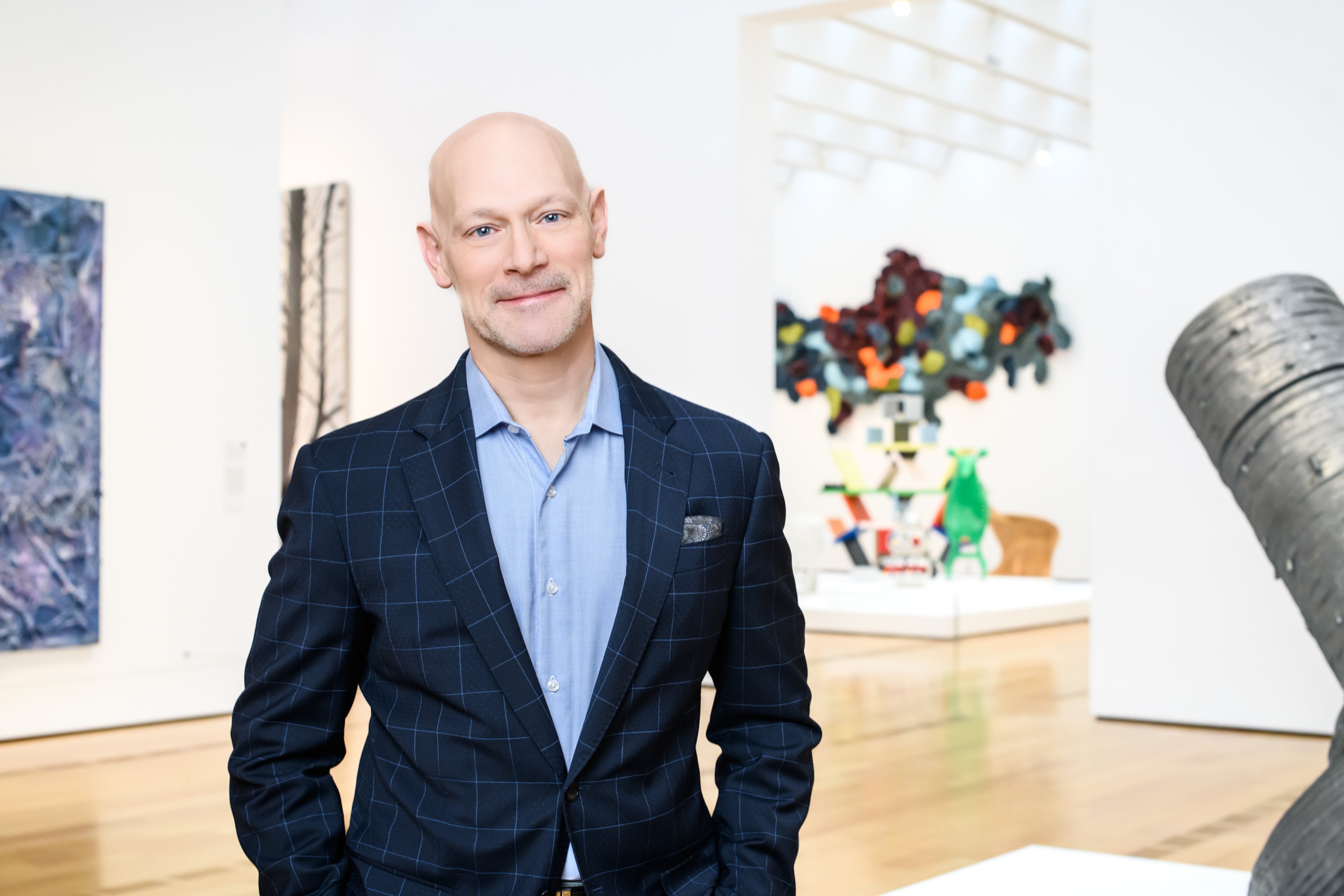
Suffolk took over as the director at the High in 2015. For the first part of the decade, Suffolk and his staff worked to develop new programming, emphasize the exhibitions on display and commit to reaching a younger and more diverse audience.
From 2015 to 2026, the High has increased its Black, Indigenous and people of color visitors from 15% to 55%, according to a 2026 impact report.
Visitors also cover a diversity of age, education level and income.
About eight years ago, Suffolk said, the High was sitting around 26,000 member households. Now, that number is over 47,0000.
When Suffolk started at the High, in many of the conversations he had about the institution, most people knew the museum for what it is, not “what it does.” While residents may have thought it was exceptional, he said, they didn’t consider it essential in the community.
“How do we turn them into sort of an army of advocates that believe in us, that use us all the time, so that they can convince other people to be a part of this?” he said.
He set out to create programs that would resonate with the community and remove perceived barriers of entry.
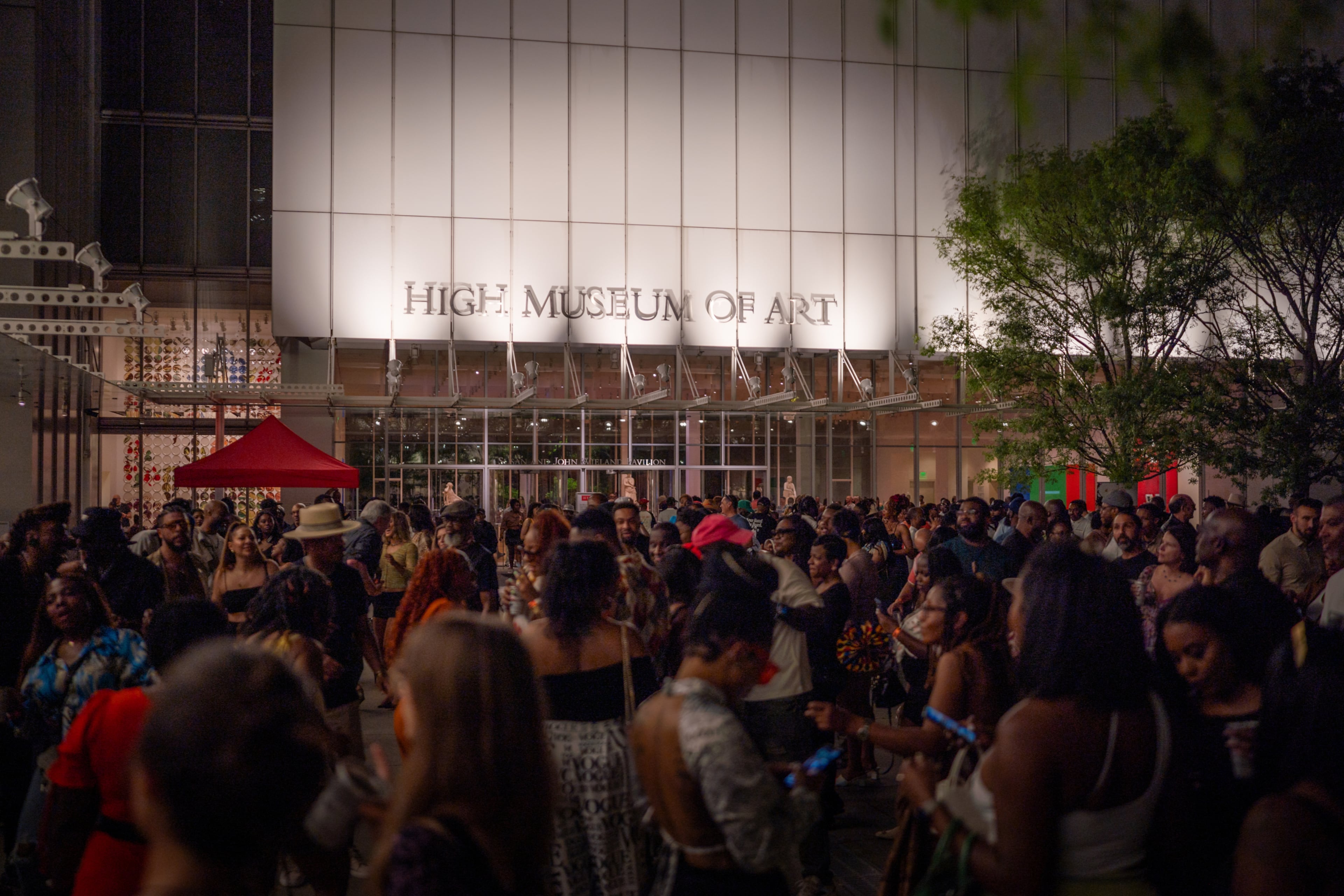
In practice, that means offering a free day every month and implementing High Frequency Friday, where the museum brings in DJs and stays open late. That program has sold out for 44 straight months, he said.
“The big challenge for us is that while our mission hasn’t changed, the context within which we do our mission has been changing rapidly, and it doesn’t seem that that’s going to slow down anytime soon,” Suffolk said. “How do we not only remain engaged with the issues and challenges of our time, but at the same time, how do we provide a place that can be defined as sanctuary?”
The future of the High Museum of Art
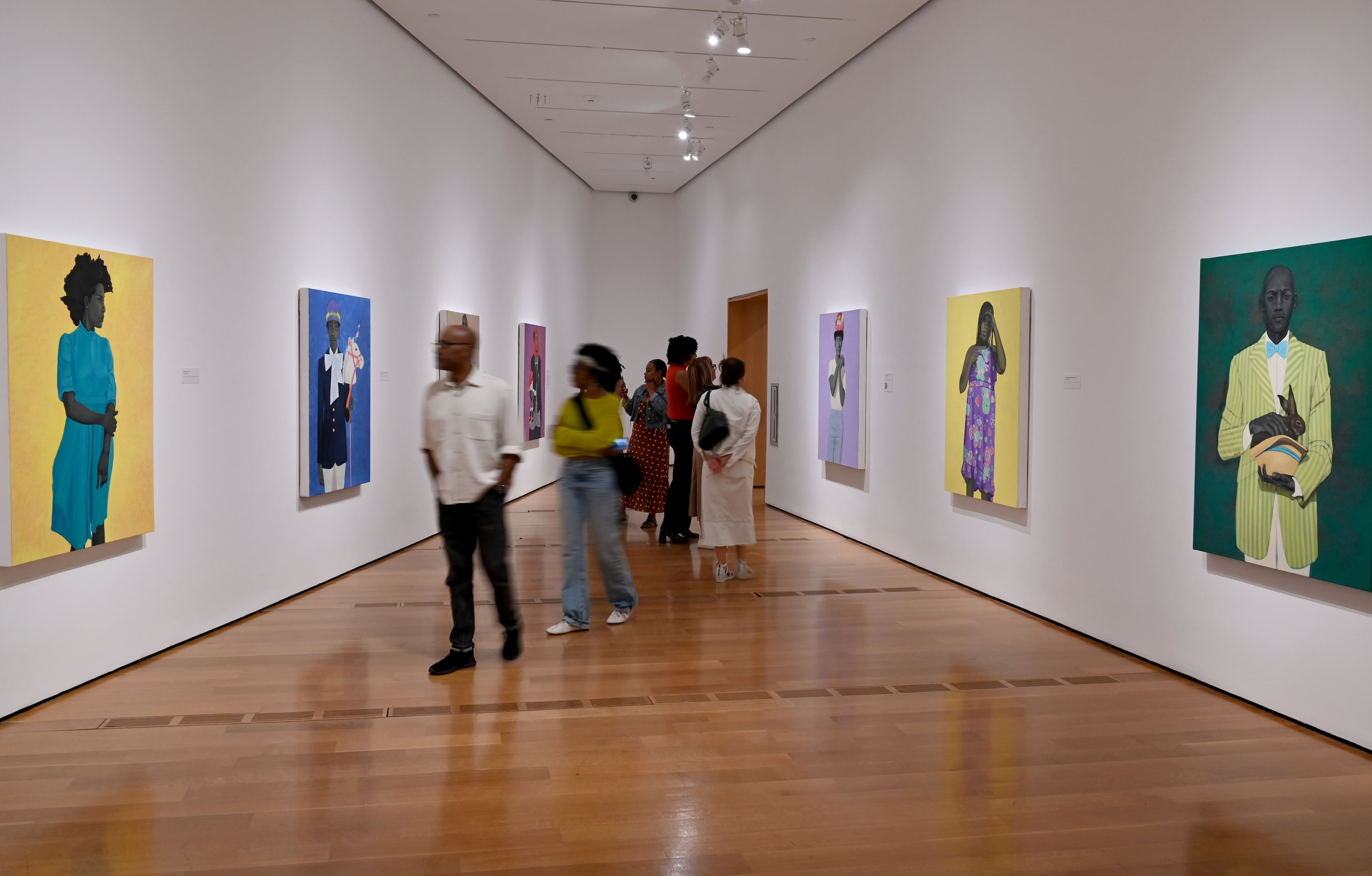
In honor of the High Museum’s 100th anniversary, the staff has made some changes within the galleries.
Curators have led reinstallations of the American and African Art galleries, highlighting “distinctions that make our collection special,” African Art curator Lauren Tate Baeza said at a recent media preview, including its Nigerian art collection.
Atlanta’s relationship with Nigeria is especially interesting since Atlanta has one of only two Nigerian consulates in the U.S., and one of the largest Nigerian-born communities in the country, Baeza said.
An expanded Nigerian art gallery will open in mid-October. Baeza has also worked on highlighting the High’s collection of African ceramics.
“This is sort of our moment to celebrate women’s craft tradition from a broad geography in Africa, and then we’ll be responding with a very very specific region and all of the different kinds of craft tradition that exist in that region, Nigeria,” Baeza said.
The American gallery also underwent a reinstallation, the first since 2018, curator Katherine Jentleson said, with new acquisitions on display. A major part of the reinstallation sees the inclusion of more folk art as part of the American art story as well as contemporary artists, instead of just historic paintings and sculpture, she said.
“What is the story that the High can uniquely tell about American art?” Jentleson said. “We are unlike most American art collections in this country because we have really strong examples of Southern decorative art, because we have really strong examples of folk and self-taught art, because we have a neoclassical sculpture collection, so it was really important to think about all of these areas of strength and how do we kind of bring it all together and create a dynamic installation that feels different.”
In addition to the reinstallations, the High Museum has scheduled ample programming for its 2026-27 season to mark its milestone anniversary, including a major presentation of Jean-Michel Basquiat’s work, a comprehensive Martin Puryear survey and more than 75 photographs by Civil Rights documentarian Doris Derby.
The High has also spent the past several years acquiring almost 200 new artworks that will be on display for the first time this fall, including more than 70 quilts by African American artists and photography from LGBTQ+ artists.
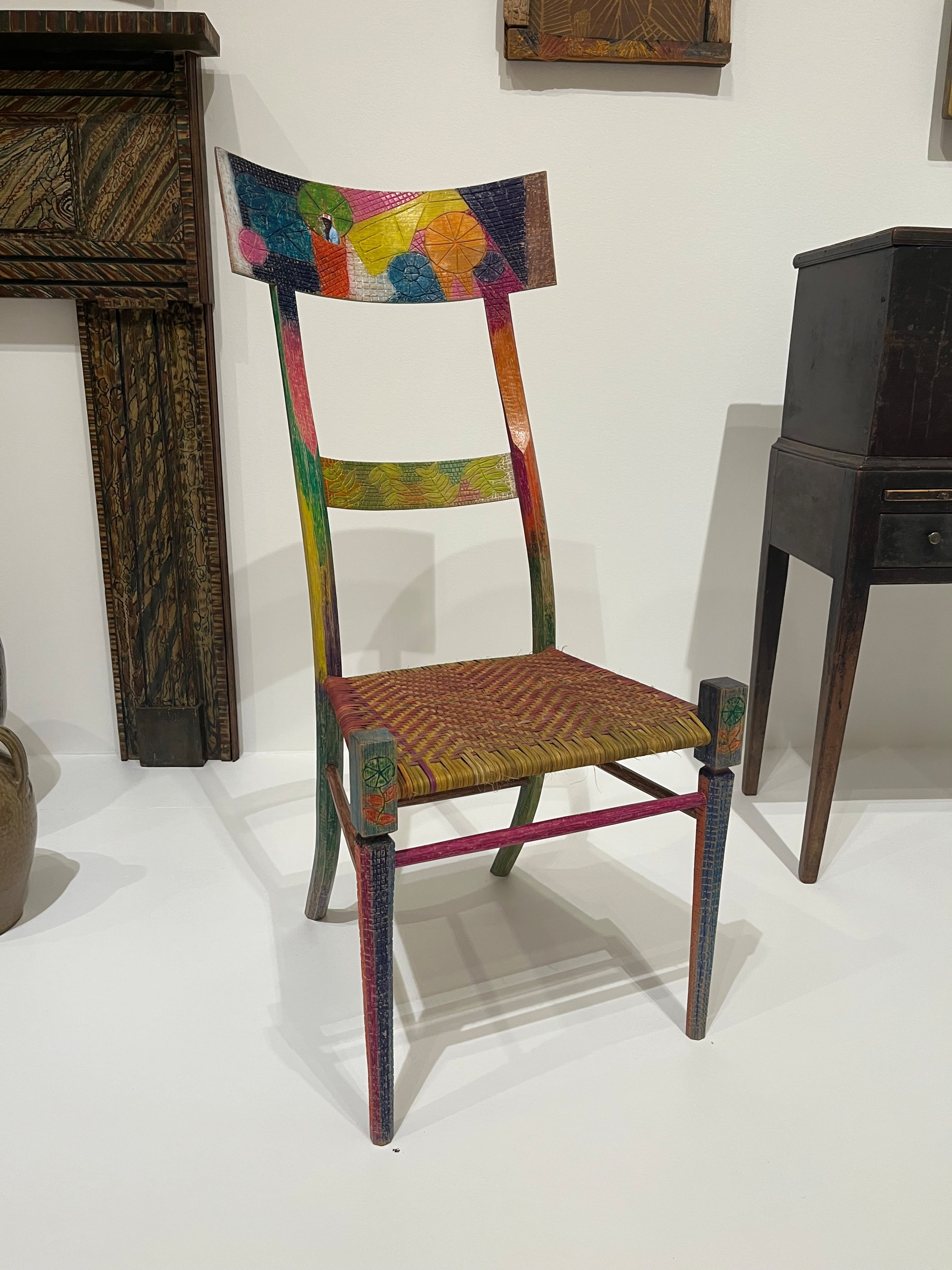
Part of the reinstalled American Art collection includes a chair, “Chair for Every Person,” the museum commissioned from artist Robell Awake.
In the age of the internet, Awake said an artist can really “circumvent the normal avenues of getting your work seen.”
Social media exposure is part of what helped him gain momentum when he started focusing on creating chairs full time in 2021. A New York Times article first put him on the radar, he said, and museum curators came scouting after that. Instead of starting in the gallery art world, Awake was ushered into museums first.
“Museums are kind of a mortuary, especially for furniture or something that is an object meant to be used,” he said. “Now knowing if something is destined to be there, I think I feel freer in terms of … it can be less functional. I can take more liberties.”
As Atlanta celebrates the High’s birthday this year, Suffolk recognizes there is always more work to be done in the hopes of cultivating this jewel of art for the city.
“We can’t afford to just kind of sit on our hands and say, well, you know, people will come and find us when they want us or they need us,” Suffolk said. “We need to be, I think, very proactive in trying to figure out how we can make a difference.”