These Black Georgia women are blues legends you may not know, but should

Although the blues is heavily associated with areas like Chicago or the Mississippi Delta, Georgia’s blues legacy is equally vast. From pioneers such as Ma Rainey and Curley Weaver to icons James Brown, Little Richard, Otis Redding and Ray Charles — who used the blues to fuel their legendary soul careers — Georgia’s scene is stirring.
That’s true even when key elements of that history are relatively unknown, like that of Georgia’s blueswomen. Given the underground and undocumented and overwhelmingly male-dominated nature of the genre, outlining women’s contributions to it can be difficult, said Tim Duffy, co-founder of Music Maker Foundation.
Since 1994, the North Carolina-based nonprofit has helped promote and preserve the music of aging and deceased blues artists, including several Georgia acts.
“I’ve done 250 records of blues artists across the Southeast, and the vast majority of all the blues artists I know had mothers playing instruments and they learned from them, (but) there’s not a huge record of women blues artists. There’s a few that get through,” Duffy said.
From Ida Cox to Beverly “Guitar” Watkins, below are female heroes of Georgia blues who “got through” even if they largely remain unsung.
Ida Cox

Feb. 25, 1894-Nov. 10, 1967
Suggested tracks: “Blue Monday Blues,” “Wild Women Don’t Have the Blues”
Ida Cox was always on the run — always in the pursuit of her dreams.
The blues pioneer, of Toccoa and Cedartown, grew up singing in the church choir. At 14, she left home to tour in minstrel shows as a comedian and singer.
In the early 1920s, she sang with blues greats Jelly Roll Morton and King Oliver, eventually finding her way to Chicago. There, she signed with Paramount Records (the same label home as Ma Rainey), which dubbed her the “Uncrowned Queen of the Blues.” She recorded extensively during that time period. “Wild Women Don’t Have the Blues” was one of her most anthemic songs, underscoring the clarity and conviction in her voice.
At some point, Cox returned to Georgia for theatrical work, even running the Douglass Hotel, an addition to the iconic Douglass Theatre in Macon. Hosting artists such as Bessie Smith and Ma Rainey, the theater became known for booking top Black entertainers.
In 1939, she appeared in John Hammond’s “From Spirituals to Swing” concert at Carnegie Hall, which showcased the evolution of Black music. Shortly after, Cox suffered a stroke while performing in New York, forcing her into retirement. In 1961, she made a bold return, releasing her final album “Blues for Rampart Street” backed by the Coleman Hawkins Quintet.
Cox died of cancer in Knoxville in 1967, but her legacy lives on in Toccoa. For roughly a decade, the city has hosted the Ida Cox Music Series, an annual run of summer concerts highlighting community talent. The city plans to bring it back this year, but this time with Massachusetts-based blues singer Gina Coleman. This spring, Coleman will release an Ida Cox tribute album, “Uncrowned.”
“The thing that really strikes me about Ida is how she was a self-made woman,” Coleman recently told The Atlanta Journal-Constitution. “She was a one-woman show. These other women, the bigger, more recognized songwriters of that time, had huge camps of people, doing stuff for them. But Ida was booking her own shows, she was managing the band, she was picking out costumes. She was doing everything.”
Cora Mae Bryant

May 1, 1926-Oct. 30, 2008
Suggested tracks: “Liquor Still,” “It Was Weaver”
There’s an abundance of strength heard in Cora Mae Bryant’s raspy baritone. Her often-slurred tone sounded effortless, with an abandon that guided just how tender she’d approach even the longer notes.
It’s a subtle mastery heard throughout her music, even with only two albums released.
The daughter of blues legend Curley Weaver, Bryant was born in Oxford. As a child, she attended house parties featuring her father and fellow Georgia blues giant Blind Willie McTell that likely became her makeshift music school. She’d also regularly visit her paternal grandmother, who often played the piano and guitar to Bryant as a young girl.
At 6, she sang at New Bethel Baptist Church in Walnut Grove, where members compared her voice to her dad’s.
Though Bryant didn’t release any music until she was well into her 70s, the mom of 13 built a reputation for being an avid fan of and leader within Georgia’s blues scene throughout her life. She was a frequent caller on blues radio stations. She’s widely credited with making Northside Tavern a blues venue, thanks to her “Giving It Back” concert series that celebrated traditional blues musicians. Further, her Oxford home was known as a blues museum.
Popular Atlanta blues guitarist Danny “Mudcat” Dudeck was a mentee of Bryant who regularly performed with her. He remembers Bryant frequently calling into WRFG-FM’s “Good Morning Blues” show — and her all-business advice to him.
“She said, ‘Mudcat, don’t ever play that riff again.’ … She was straight up,” Dudeck recalled, describing Bryant as a perfectionist. “I really appreciated that, because she was encouraging. She just didn’t want me to do the wrong things.”
Bryant released her debut album “Born With the Blues” in 2001, followed by 2003’s “Born in Newton County.”
She died of natural causes in 2008.
“She definitely didn’t do (music) for the money, but she understood the importance of her history. … She was just a true artist,” Dudeck said.
Beverly “Guitar” Watkins

April 6, 1939-Oct. 1, 2019
Suggested tracks: “Back in Business,” “Get Out on the Floor”
Beverly “Guitar” Watkins’ alto contains a nasally roar that, when hitting the high notes, sounds utterly electric. Spiritual, even.
It’s a real and rowdy performance standard that punctuated her musical bona fides for decades.
Born in Atlanta’s Grady Hospital, Watkins lived with her sharecropping maternal grandparents in Commerce following the death of her mom, who died when her daughter was only 3 months old. Watkins obtained the instrument that would become her namesake when she was 8 or 9. A reverend in the community who played electric guitar also helped form her musical interests.
She later returned to Atlanta, in the Old Fourth Ward. Watkins attended Booker T. Washington High School and Samuel Howard Archer High School, where she studied trumpet and guitar under the tutelage of jazz great Clark Terry. In 1959, she began playing guitar for Piano Red, the Georgia musician who became the first blues artist to hit the pop charts.
Watkins’ career was mainly spent backing up giants, including James Brown, Ray Charles and Otis Redding. Though in the background, she quickly became a crowd-pleaser, known for playing the electric guitar behind her back or atop her head.
“Women would freak out — 23-year-olds would be pulling out their hair,” Tim Duffy recalled. “Guys would be screaming because she rocked.”
Her solo career didn’t crystallize until she neared 60, following a stint of busking around Underground Atlanta.
“She was very dedicated,” Duffy said. “But when I met her, she was just playing on the streets. There are very few opportunities in this field, period. And then there’s even fewer for women.”
With the help of Music Maker Foundation, Watkins released her debut album “Back in Business” in 1999. The 12-track record was nominated for a W.C. Handy Blues Award, even garnering the attention of Taj Mahal, who took her on tour. Her sophomore album, “The Feelings of Beverly Guitar Watkins,” dropped in 2005.
At the end of her career, she returned to her church roots with the release of 2009’s “The Spiritual Expressions of Beverly ‘Guitar’ Watkins.” Watkins died of a heart attack in Atlanta in 2019. She was 80.
“If you met her offstage or at her home, it’s like meeting a sweet little church lady — very meek and talked about the Bible,” Duffy said. “But when she goes backstage, puts on her uniform, walks on the stage, she turned into a rock ‘n’ roll god. It was real transformation I’ve witnessed it hundreds of times.”
Precious Bryant
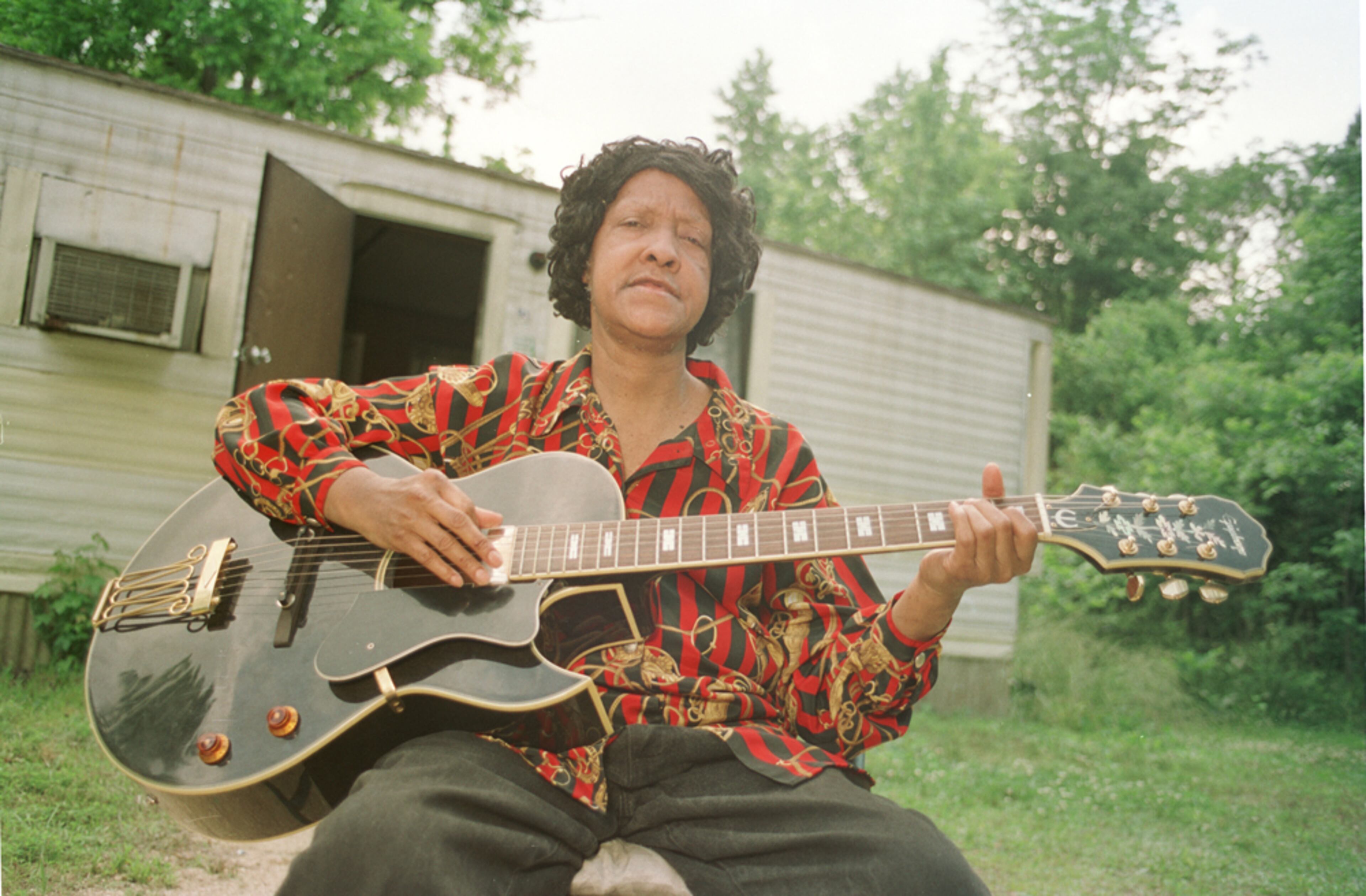
Jan. 4, 1942-Jan. 12, 2013
Suggested tracks: “Fool Me Good,” “Georgia Buck”
The music of Precious Bryant almost sounds too folksy to be considered the blues. But it is. She lived, breathed and gloriously sang the blues.
The lead single of her 2002 debut album is titled “Broke and I Ain’t Got No Dime.” Another, “Wretched My Ankle,” is based on a true story about how she sprained her ankle shortly before hitting the stage but performed anyway because she needed the money.
Bryant’s groove was hearty, though it derived from a life spent in poverty. Or as a 2005 AJC article put it: “Precious is the kind of old-fashioned Southern woman whose hard country life has made her flinty.”
The third of nine children in Talbot County, Bryant grew up in a sharecropping family. When she wasn’t picking cotton, she sang in the Baptist church choir with her sisters or played the guitar. By 9, she was a proficient guitar player, thanks in part to her uncle, fellow blues musician George Henry Bussey.
She later lived in a trailer in Waverly Hall (a small town near Columbus, Georgia), where she resided until her death. Her music career didn’t officially begin until she was in her 40s, with the help of Atlanta folklorist George Mitchell. Although Mitchell had field recordings of Bryant, she didn’t release her first album until 2002’s “Fool Me Good” via Terminus Recordings when she was in her early 60s.
Her second album, “The Truth,” arrived in 2005. “My Name Is Precious,” her final one, this time from Music Maker, was released the same year.
Bryant’s brief career included traveling across the world, performing in Switzerland and France. Her songs were featured in the hit TV series “Friday Night Lights” and the 2007 Samuel L. Jackson thriller “Black Snake Moan.” “Fool Me Good” was named best blues record by the French Academy of Music.
But she never owned a car. In fact, she disliked traveling. Cathy Fussell, a quilter and wife of Columbus, Georgia, folklorist Fred Fussell, frequently accompanied Bryant on the “good bit of selected travel that she wanted to do.
“I never pressured her to do something, and nobody did,” Cathy Fussell told the AJC.
She met Bryant in the 1980s, during her first public performance at the Chattahoochee Folk Festival in Columbus. She described the musician as a “genius” who could write songs in an instant, though she struggled with poverty and alcoholism. Yet, amid those challenges, Fussell said Bryant’s patience and “incredible sense of humor” could soothe any room.
In 2013, Bryant succumbed to her health and financial shortcomings. She died of congestive heart failure and diabetes and was too poor to pay for her own funeral. But her warm spirit and love for the blues remain long after her death.
“Precious had this saying,” Fussell recalled. “When things got a little rough, she’d say, ‘Ain’t nobody sick, ain’t nobody dead.’ It would just kind of calm all of us down. I think about that sometimes, when I’m getting kind of anxious about something.”
About the Author

DeAsia is a music and culture reporter for The Atlanta Journal-Constitution. She focuses on the intersection of arts, culture and diverse communities, as well as how emerging social trends are being expressed through the lens of the Atlanta aesthetic. DeAsia's work can be seen in Pitchfork, Essence, Teen Vogue, Elle and more.


