Faith drives Rick Jackson’s foster care story. How would that inform his policies?
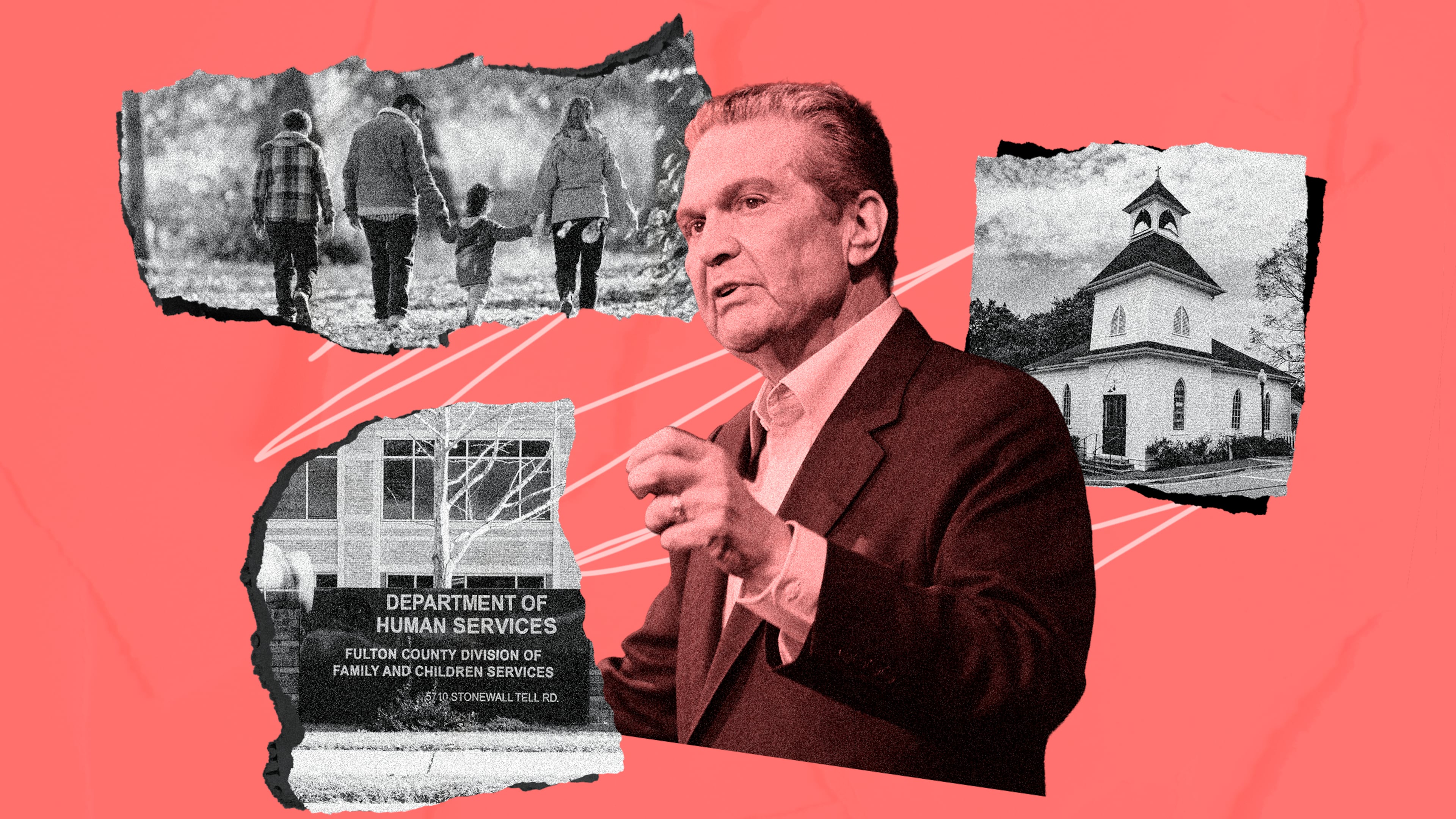

Bill Hancock worried he had botched the meeting.
It was 2015, and Rick Jackson had stopped him halfway through a slide presentation about FaithBridge Foster Care, a nonprofit that worked with churches to recruit and train foster families. But Jackson, a healthcare executive who himself had spent years in foster homes, cut a check on the spot to cover three months of Hancock’s payroll and later asked if he could become a partner.
“I want to see this work,” Jackson told The Atlanta Journal-Constitution in 2015. “Kids deserve better.”
FaithBridge would grow to become one of the largest Christian child-placing agencies in Georgia. It had a more than $5 million contract with the state in the 2026 fiscal year and more than 140 foster children are currently in FaithBridge homes, according to the Georgia Department of Human Services.
Jackson is now the Republican nominee for governor. He has put his personal story shuffling between foster homes in his teens at the heart of his message to voters. And the Republican has vowed to continue his support for foster children should he be elected this fall.
But he has spoken less about his work with FaithBridge, where he chairs the board of directors.
The agency requires prospective families to be active in a local church and adhere to traditional Christian beliefs. They require people they work with to sign and abide by their organization’s statements of morality and faith, which effectively bars placement of children with LGBTQ+ families. Their website states, “We believe God’s plan for human sexuality is to be expressed only within the context of monogamous marriage between one man and one woman.”
How we got the story
The Atlanta Journal-Constitution is committed to educating and empowering voters so they can make informed choices in the November election. As part of that effort, The AJC commissioned background research on the two candidates seeking to become Georgia’s next governor.
This story is part of a series that springs from that research.
The AJC worked with the Sunlight Research Desk, a part of the Muckrock Foundation, a non-profit which collaborates with news organizations on investigative projects.
The AJC reviewed and confirmed the material they provided, which included hundreds of pages of business documents, legal filings and campaign finance reports.
Some advocates worry how that work will inform Jackson’s approach to the state’s foster care system, which serves about 11,000 children and faces a budget crisis and severe shortage of foster families. The country saw a 20% drop in licensed foster homes between 2019 and 2025, but the decline was 40% in Georgia.
“We think we should be increasing the pipeline, not decreasing it,” said Luce Remy, vice president of public policy for Family Equality, a New York-based nonprofit that supports LGBTQ+ families.
Garrison Douglas, Jackson’s campaign spokesperson, said “as governor, his priority will be connecting more children with more families, not less.”
Religious roots of foster care
FaithBridge’s policies requiring prospective parents to sign onto statements of faith are not unique.
The Loganville-based Families 4 Families, another Christian foster care agency that contracts with Georgia, similarly works with Christians and asks families to affirm their statement of faith, which includes clauses in support of marriage between different-sex couples and rejecting “sexual immorality.”
Faith groups are not new players in the child welfare field. Indeed, the country’s foster and adoption system traces its roots in part to religious institutions that set up orphanages in the early 1800s.
States, including Georgia, often partner with private agencies to help with adoptions and foster care, including faith-based groups that require prospective parents to adhere to religious guidelines. Some of those agencies work with LGBTQ+ families, and state law doesn’t exclude people from fostering because of their sexual orientation.
Georgia also has no law banning state-licensed child welfare agencies from refusing to work with LGBTQ+ families if it conflicts with their religious beliefs.
Remy, of Family Equality, noted that foster children don’t get to pick which child placement agency they are assigned to and that it could create problems if they come from families of other faiths, families that are not religious or have same-sex parents.
“When you have an agency that only approves Christian foster families, the question to me is how are those foster families adhering to one of the core requirements of the child welfare system, which is to maintain the child’s connection to their family and history and religious beliefs and culture?” she said.
The race for Georgia Governor
All about Democrat Keisha Lance Bottoms and Republican Rick Jackson and what they would do if elected.
The Issues: Education | Healthcare | Data Centers | Taxes | Abortion | Immigration
Polls and predictions: Track the race for Governor
Their agendas: Keisha Lance Bottoms | Rick Jackson
‘Shadow mayor:’ As Keisha Lance Bottoms rose to power, one adviser was close by
The $3B candidate: Unpacking Rick Jackson’s vast business empire
Bottoms’ record: Crime roiled Atlanta during COVID. Its fallout has shaped governor’s race.
Jackson’s business deal: Why Rick Jackson poured millions into a failing Alabama hospital
Debate: 5 takeaways from the Georgia governor debate
Crossover voters: Prominent Georgia Democrat crosses aisle for Rick Jackson
Complete coverage: 2026 Georgia Voter Guide
Studies and surveys have shown evangelical Christian and LGBTQ+ families are far more likely to be foster parents than others. A 2024 report from the Williams Institute at the UCLA School of Law that found that same-sex couples are 10 times more likely to become foster parents and seven times as likely to adopt than different-sex couples. And a 2025 survey found that Christians were three times more likely to have fostered and twice as likely to have adopted than others.
In a statement to the AJC, a Department of Human Services spokesperson called FaithBridge “one of Georgia’s strongest and most trusted partners in child welfare” and said the organization “consistently earns top marks for safety and care coordination,” and “recently received a perfect safety review.”
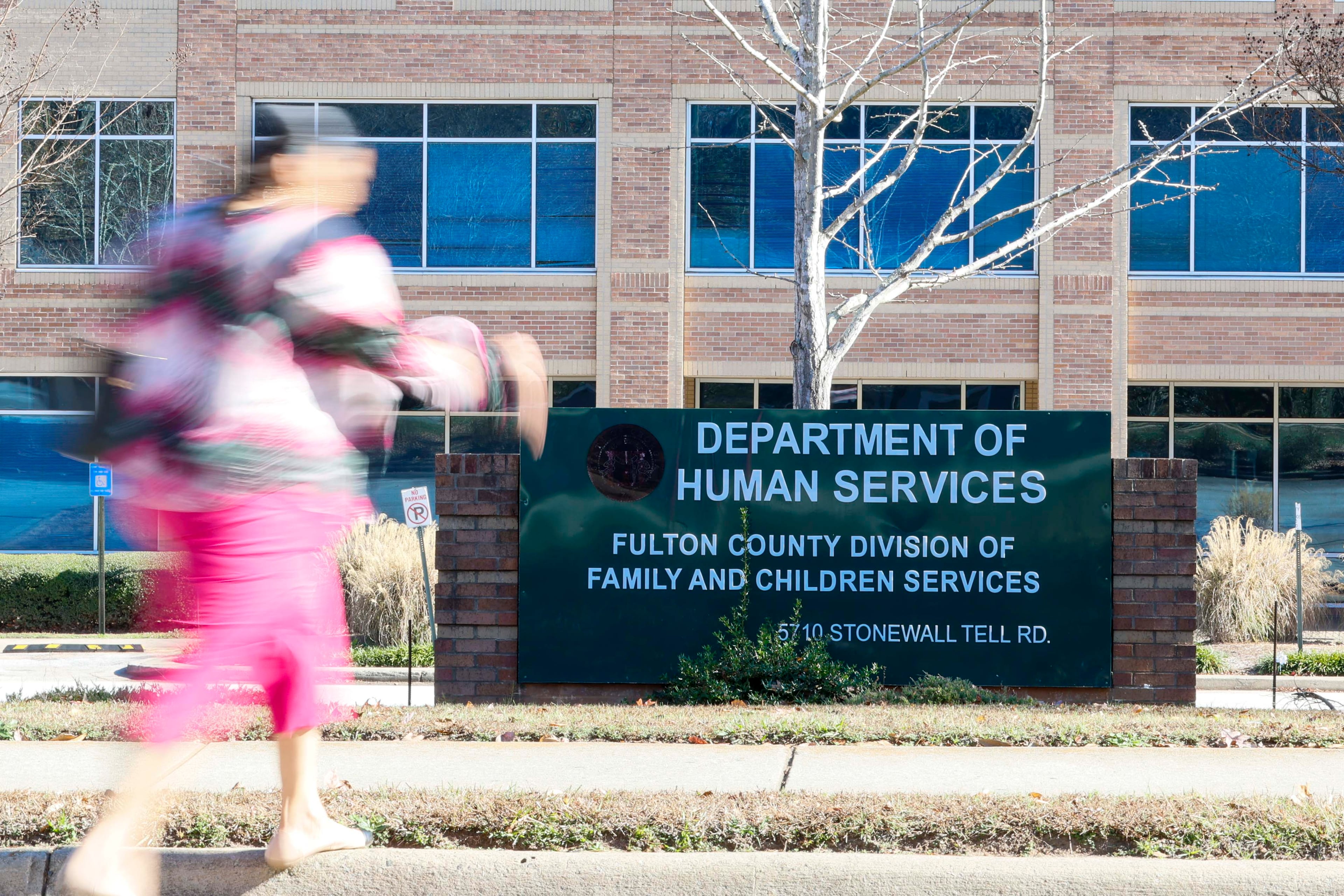
The spokesperson said the organization is also “one of our top recruiters among child-placing agencies for new foster homes,” enrolling 57 new foster homes in the year that ended in March 2026.
For his part, Jackson is pledging not to push any legislation that “would force out faith-based organizations,” according to his campaign spokesman, nor “put up more government barriers that would keep children from finding a home with a loving family.” The latter includes any bills that would allow the state to exclude same-sex couples from fostering kids, his spokesman said.
Among the other proposals Jackson has championed for improving foster care in Georgia: streamlining the process for foster children to achieve a permanent, stable living situation; providing additional educational and life-skills programs for kids before they age out of the system; and boosting access to mental health services.
Expanded footprint
FaithBridge was initially funded through a grant from Mt. Bethel Church in Marietta. Its co-founders sought to develop an evangelical-style ministry that served as a community-level resource for families that chose to foster, offering mentorship, paperwork help, transportation and even clothing and toys.
The organization at first focused on north metro Atlanta, but has since expanded to 18 counties. It also offers programs for young people aging out of the foster care system.
FaithBridge says it has to date served more than 2,000 children, reuniting most with their birth families and facilitating more than 400 adoptions. It now operates in Alpharetta on the corporate campus of Jackson Healthcare, the healthcare staffing company that Jackson owns.
On the campaign trail, Jackson speaks about how the Christian family that took him in after he bounced around several foster homes offered him the stable environment he needed to have a chance to succeed. That experience eventually helped steer him to FaithBridge.
“If you love kids and take care of them and never mention trying to teach them religion, then they are still going to get some,” Jackson told the AJC in a 2014 profile about his child welfare work. “To me I’m not trying to proselytize. It just so happens that faith-based is a target-rich environment for quality people to take care of kids.”
Douglas, the campaign spokesperson, said Jackson would step down from his position as FaithBridge’s board chair if he became governor.
FaithBridge did not respond to requests for comment. The details of Hancock’s initial meeting with Jackson were included in an in-depth story in the AJC published about Jackson a decade ago.
Religious liberty fight
Defenders of the faith-based agencies argue that they are exercising their First Amendment-protected rights.
When the state Legislature debated “religious liberty” legislation specifically related to adoptions and foster care in 2018 and 2020, boosters said they weren’t seeking to bar LGBTQ+ families from adopting or fostering. They framed the bill as a way to expand options for birth parents who cared about keeping their child in a particular faith and said it would encourage more religious organizations to operate in Georgia.
“Faith-based agencies have very strong core doctrinal values and they should not be penalized for it,” Tom Smiley, pastor of Lakewood Baptist Church in Gainesville, told the AJC in 2020. “My role in this is not to be against anybody, it’s to support and encourage faith-based adoption agencies so they can continue to be part of this very important institution.”
In 2021, the U.S. Supreme Court ruled unanimously in favor of a Catholic organization in Philadelphia that had fought the city’s decision to stop working with it because of its policy to not place foster children with same-sex parents. Legal experts said the decision was narrowly-focused on the city’s specific policy, but it opened the door for additional court fights.
Family Equality’s Remy said the decision has also had a “chilling effect” on the way governments have approached policies deemed affirming for LGBTQ+ families and children in the system.
Democrats on Capitol Hill, meanwhile, introduced a bill last year named after the late Georgia congressman and civil rights icon John Lewis that would bar federally funded child welfare agencies from discriminating against couples or individuals because of their sexual orientation, gender identity, religion or marital status. The proposal has yet to advance in the GOP-controlled Congress.
Atlanta Journal-Constitution reporter Riley Bunch, as well as Helen Santoro, Michael Nolan, Seraphina Feron, Anna Massoglia and MuckRock’s Sunlight Research Desk provided research and data analysis for this story.