After costly primary, Burt Jones plans to use Rick Jackson’s wealth against him
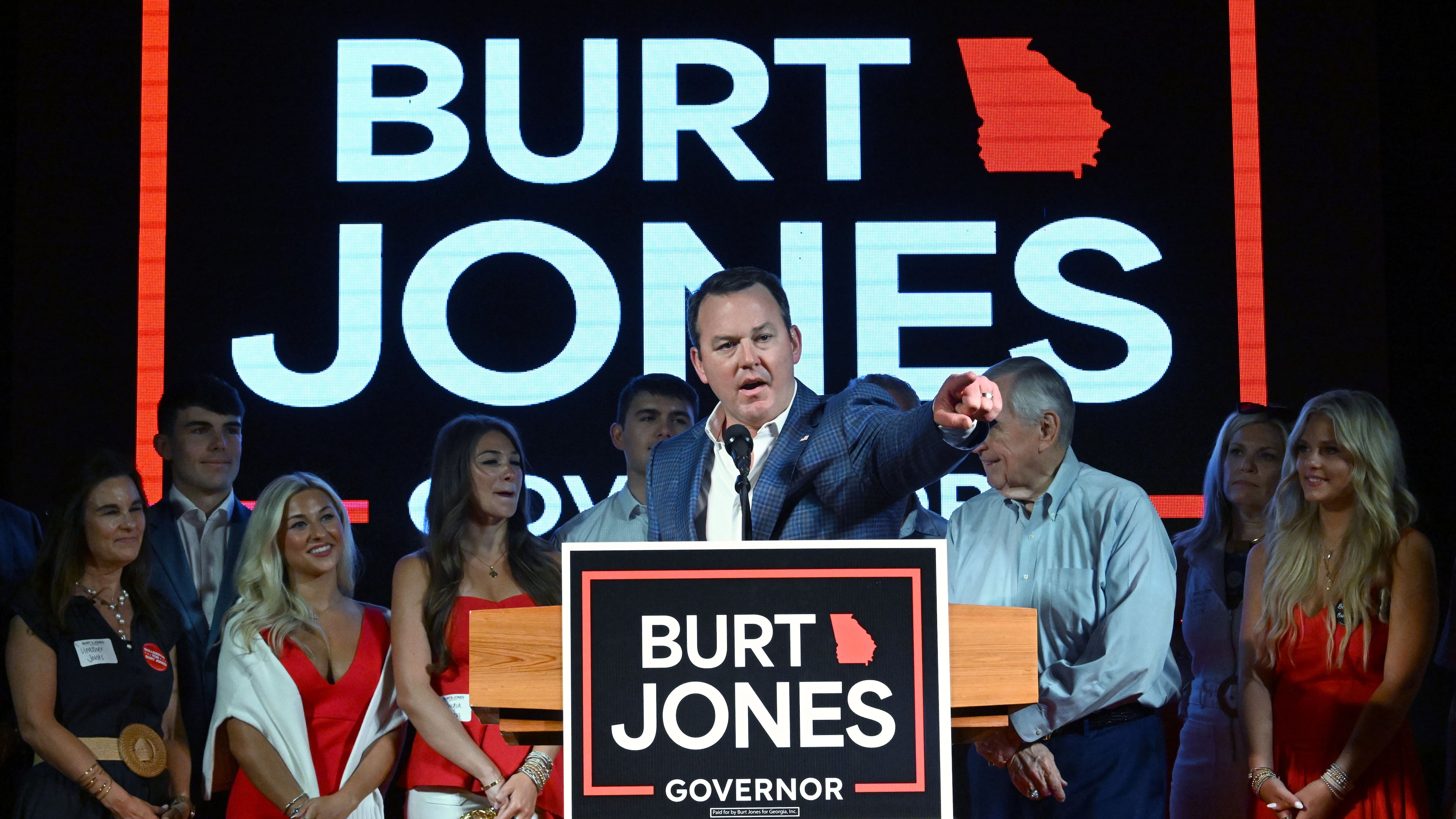
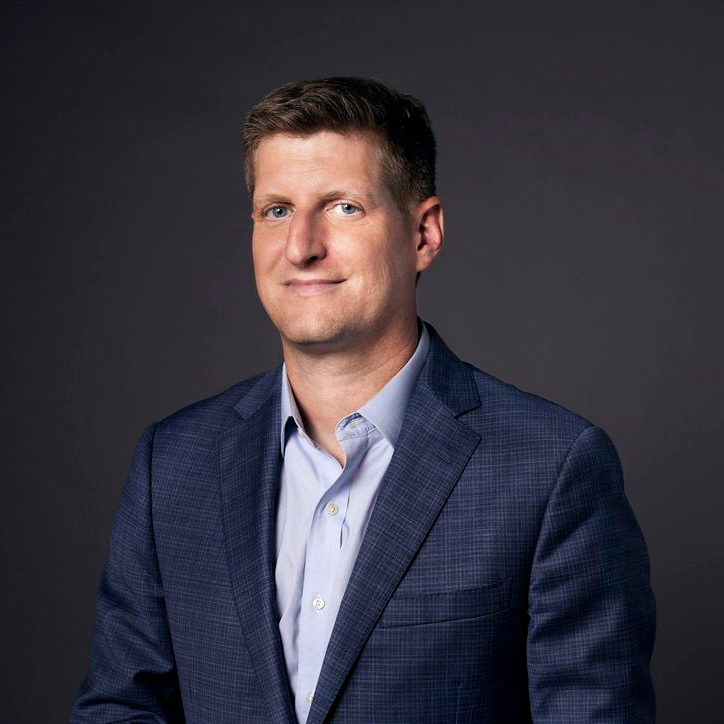
JACKSON — Days after finishing first in one of the most expensive primaries for governor in the nation’s history, Lt. Gov. Burt Jones was shifting into runoff mode from a modest office at his family’s company headquarters.
His advisers were mapping out a packed schedule of campaign stops while lining up fresh endorsements as allies circulated gleeful memes mocking Rick Jackson’s second-place finish: “Billionaire Blows Astronomical Amount of Money.”
Inside Jones’ office, the message was just as blunt. Jackson’s $93 million spending spree, Jones and his aides argue, is no longer a sign of strength. It’s evidence of weakness.
“If he wants to keep spending that money this recklessly,” Jones said in an interview, “I’d hate to see what he’d do with the people’s money if he ever got elected.”
Once the unquestioned front-runner, Jones was forced to play defense after Jackson’s sudden entrance in February upended the race. His poll numbers slipped as Jackson flooded the airwaves with attacks branding him as a corrupt insider.
But Jones’ battered operation regrouped. He lent his campaign $16 million from his family’s fortune and went on a counteroffensive that painted his rival as a phony Republican while reminding voters that it was Jones who scored President Donald Trump’s endorsement.
In Tuesday’s primary, Jones won nearly 130 of Georgia’s 159 counties and tied Jackson in another, netting 38% of the vote as he finished about 6 points ahead of the billionaire. Jackson, meanwhile, fared best in vote-rich metro Atlanta and its northern exurbs.
Now they’re preparing for a June 16 runoff that opens a more volatile phase of an already chaotic election dominated by more than $110 million in spending.
That’s because Jackson can point to a different narrative: a political unknown who entered the race four months ago just forced the Trump-backed candidate into a head-to-head showdown. And Jackson made clear he’s willing to spend even more money to make his case.
“I’ll do whatever it takes. Otherwise, I wouldn’t get into it,” Jackson said in an interview earlier this week. “I don’t go into projects thinking, ‘Let’s try it out for a while and see how it’s going to work.’ I throw it all in.”
‘I’m Coke, of course’
A runoff was never part of the plan. And that’s what makes the next month so uncertain.
Trump’s endorsement last summer was widely viewed as the closest thing to a nomination shortcut in modern Georgia GOP politics. It was Trump’s endorsement, after all, that turbocharged Brian Kemp’s 2018 rout of then-Lt. Gov. Casey Cagle in a runoff for governor.
And through the early stretch of the campaign, Jones acted like a front-runner preparing for November, not a bruising overtime fight against a self-funded billionaire with seemingly bottomless resources.

Then came a shadowy, anonymous group that softened the ground with a nearly $20 million ad blitz that attacked Jones for months. In February, Jackson’s campaign launch transformed him from a little-known healthcare executive into a viable Republican contender in less than four months.
To Jackson’s supporters, the response to his campaign proved Georgia Republicans are hungry for a Trump-style outsider promising to bulldoze the establishment. To critics, it showed the power of unlimited money. For Jones, the last few months were a gut check.
“The message has been the same. But it made us start spending money sooner than we wanted to,” he said, adding: “When somebody comes in and drops $50 million at first on top of your head, it definitely made you realize that we had to step up our game, too.”
The primary also showed how little room remains for a more traditional Republican message in a party shaped by Trump.
Attorney General Chris Carr’s electability argument never caught fire. Secretary of State Brad Raffensperger remained trapped by the politics of 2020. And down-ticket candidates who pitched themselves as conservatives struggled.
Still, supporters of Carr and Raffensperger, who combined for about 27% of the vote, could now become pivotal in the runoff, said Andre Stafford, a longtime GOP activist.
“The big question is where the non-MAGA voters go,” he said.
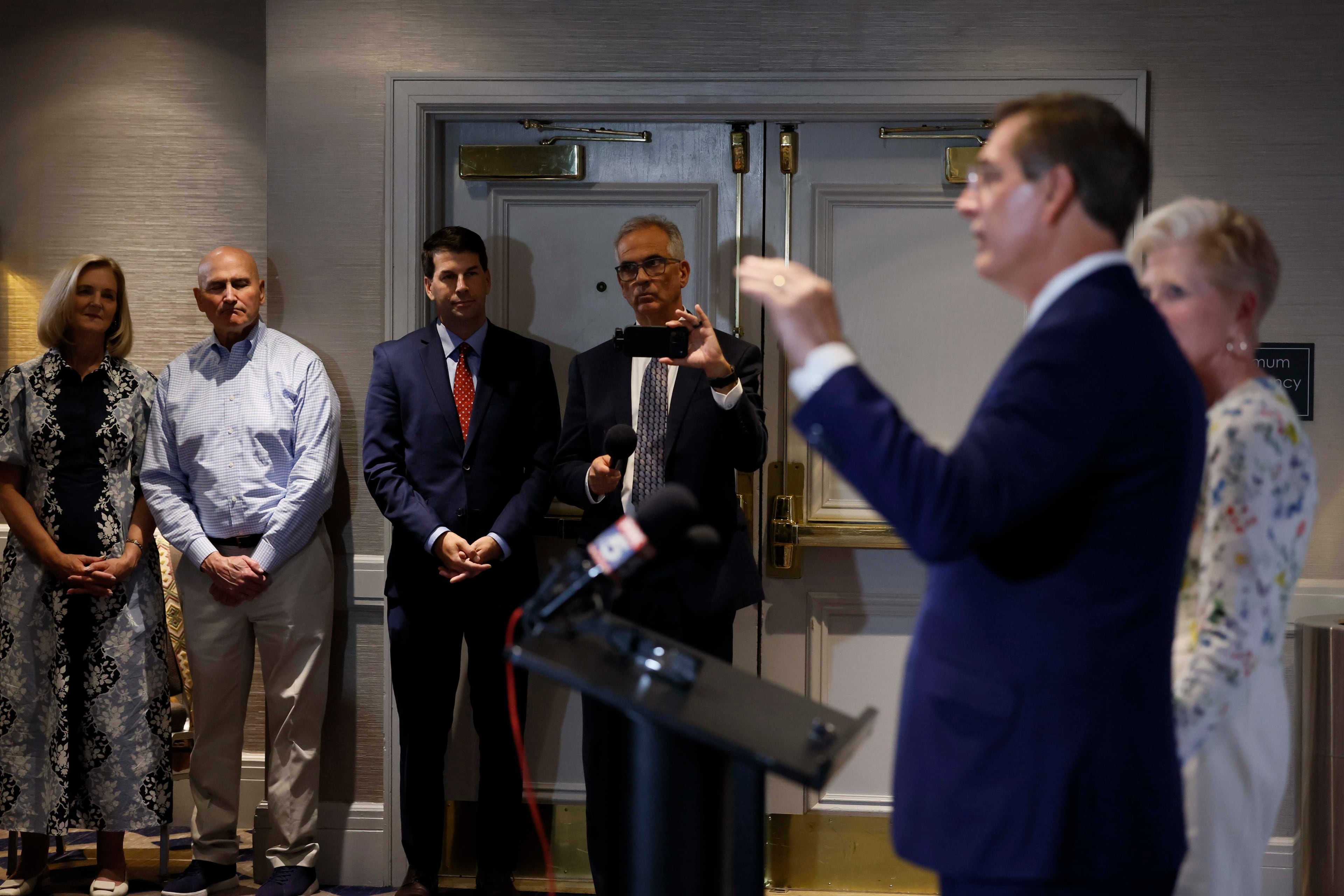
Both campaigns aim to attract those voters without changing their candidates’ core arguments.
“We’re not going to change our messaging. It’s narrowed down to two. You’ve got one or the other,” Jones said. “It’s kind of like it’s down to Coke or Pepsi. And I’m Coke, of course.”
Jackson’s camp was happy to extend the metaphor, casting Jones’ failure to win the nomination outright even with Trump’s blessing and an eight-figure self-funded spree as a sign of vulnerability.
“Rick will be President Trump’s favorite governor — we all know Trump prefers Diet Coke,” Jackson aide Mike Schrimpf said.
‘Political bumper sticker’
For all the venom between them, Jones and Jackson are running on strikingly similar platforms.
Both vow sweeping income tax cuts, property tax reductions and an alliance with Trump. Both frame the race as a test of who can best take on Democratic nominee Keisha Lance Bottoms and, if elected, carry out hard-line immigration measures, dismantle diversity, equity and inclusion policies and tackle other MAGA-friendly fights.
Jones already has a busy slate of events and fundraisers planned over the next few weeks. On Friday, he rolled out a list of endorsements that included most of Georgia’s congressional delegation.
But his most important ally remains Trump, who has repeatedly reaffirmed his endorsement and held a tele-rally for Jones days before the primary. There’s already talk in GOP circles of a Trump appearance in Georgia before the runoff.

“He did a video for me, unbeknownst to me, on the day of the election,” Jones said. “I talk to him pretty often, considering his time schedule, and he wants to be as helpful as he can in the home stretch.”
Jackson is also running as closely to the president as he can, promising he would be like Trump “but with a Southern tone.” When his campaign highlighted Florida U.S. Sen. Rick Scott’s endorsement, it came with a reminder of Scott’s ties to the White House.
“Trump can’t lose. He really can’t. I mean, it’s either going to be me or Burt, and we’re both supportive of him,” Jackson said. “But nobody supports him more than I do. From that standpoint, I think I’m a better candidate because I can get things done like he does.”
The next few weeks may look a lot like the last few months, with both camps using every political weapon at their disposal to hammer the other.
Jones’ campaign recently dug up a 2013 campaign contribution Jackson’s company made to Democrat Stacey Abrams — the two-time nominee for governor who is reviled by Republicans — and deployed it as evidence of Jackson’s squishy MAGA roots.
Jackson has promised a sharp counterattack of his own. His first campaign ad after Tuesday’s primary accuses Jones of using his political power to help his family’s business, a charge Jones denies. He also slammed Jones for failing to deliver more relief for taxpayers.
“That is the difference between us. Burt Jones talks about tax cuts like it’s a political bumper sticker,” Jackson said. “But I know talk never paid a bill. I will cut income and property taxes, or I won’t run again.”
Jones said he’s ready for the fight to get uglier.
“It’s just unfortunate, because I don’t think the average voter wants to hear that. The only thing that did was make a bunch of consultants rich,” he said. “And he’s got some of the slimiest consultants in the business working for him. You can quote me on that.”