Brad Raffensperger can’t outrun 2020. Neither can Georgia politics.
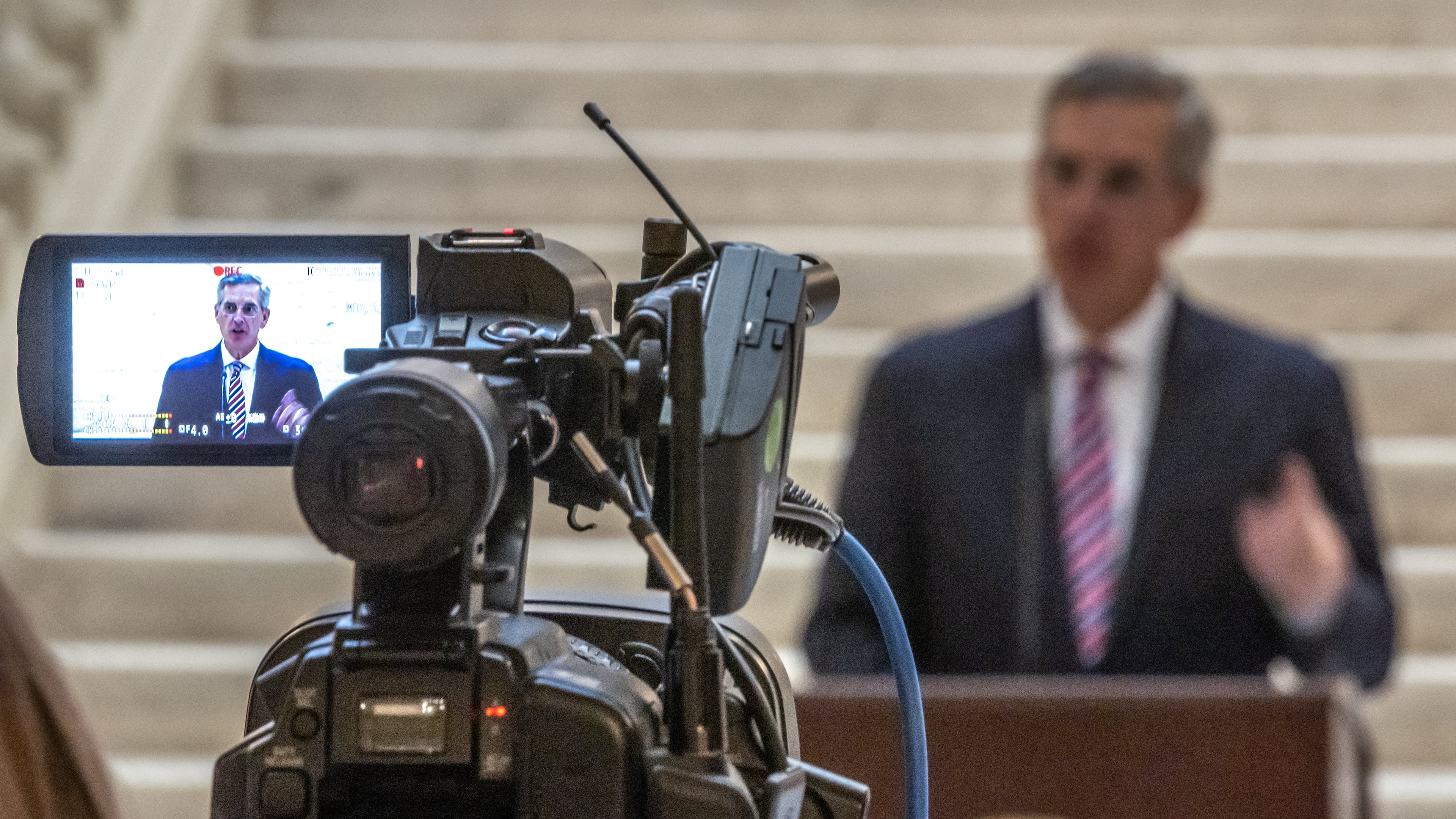
Secretary of State Brad Raffensperger has spent his campaign for governor focusing on the future instead of the moment that defines him for many Georgia voters: his refusal to back President Donald Trump’s failed attempt to overturn Georgia’s 2020 election.
Then came what his campaign described as a four-page handwritten “manifesto” threatening his life, reviving darker memories of the backlash he has endured since 2020 and serving as a jarring reminder that Raffensperger still cannot outrun the election that thrust him into the national conversation.
And neither can Georgia politics.
There is no public evidence that the threat against Raffensperger is related to his stand against Trump’s false claims of election fraud. But the episode is a reminder of just how deeply the 2020 election still shadows the 2026 campaign.
Trump’s 2020 defeat is not a faded memory in Georgia. It is a campaign issue for some and a litmus test for others ahead of the Tuesday primary. In some corners of the GOP electorate, loyalty to Trump’s version of 2020 could become a means of political survival.
Race for Georgia Governor
Brian Kemp is leaving after two terms, and six Democrats and five Republicans are running to replace him.
Election results: See who’s leading
The candidates: Learn about who’s on the ballot
The polls: See who’s leading
Live updates: Georgia primary elections
Democrats: Debate reveals the race beneath the race
Republicans: Attack ads explode into real life
Money matters: The wealth divide defining Georgia’s governor’s race
Democratic front runner: Keisha Lance Bottoms is racing ahead as rivals battle each other
GOP battle: How Jones-Jackson clash has engulfed governor’s race — and Georgia politics
Georgia Voter Guide: The races, candidates and frequestly asked questions
The aftershocks of 2020 are no longer confined to history or court filings. They are woven through Georgia’s 2026 midterms.
Lt. Gov. Burt Jones reminds audiences he acted as a Trump elector and boasts of dealing a blow to Fulton County District Attorney Fani Willis’ case against the president. U.S. Rep. Mike Collins, a leading Senate candidate, said Trump deserves a “massive apology” over the election.
Down-ballot Republicans invoke Fulton County and election distrust as applause lines, even as recent AJC polling since Trump’s 2024 victory shows a sharp increase in confidence among Georgia Republican voters.
Democrats, meanwhile, often frame 2026 as a battle over whether Georgia’s election system can withstand another round of Trump-driven pressure.
And it’s all unfolding as Democrats fight to retain U.S. Sen. Jon Ossoff’s seat and try to flip the Governor’s Mansion and other statewide offices for the first time in decades.

One of the latest flash points came last week when a court filing revealed the Trump administration sought a federal grand jury subpoena for detailed personal information about the Fulton County election workers and volunteers who helped administer the 2020 vote.
But the fight stretches far beyond Fulton County. Trump’s defeat in Georgia turned once-obscure election processes into a permanent battlefield, one that prompted Gov. Brian Kemp to summon legislators back to Atlanta the day after the June runoff to resolve a legislative impasse.
At the same time, Democrats have poured unprecedented energy into two Georgia Supreme Court races they increasingly view as a firewall against future election disputes.
“The 2020 election is the LeBron James of politics,” Republican strategist Spiro Amburn said of the enduring NBA star. “Like a pebble thrown into a pond, its ripples are still spreading and will be felt most in the 2026 and 2028 elections. But it will have ramifications for many years to come.”
‘No one is above the law’
Nowhere is 2020 more front and center than the race for Georgia’s top job.
Former Atlanta Mayor Keisha Lance Bottoms, the Democratic front-runner, outlined a plan to create state standards for redistricting and add protections for election workers Wednesday just as Kemp was finalizing his plans for a map overhaul.
“I’d veto anything that’s diluting fair representation,” she said.
One of her top rivals in next week’s Democratic primary is former Lt. Gov. Geoff Duncan, a onetime GOP rising star whose political transformation is rooted in his refusal to embrace Trump’s false election fraud claims.
On the Republican side, Raffensperger’s stance is unique. Jones launched his campaign with Trump’s endorsement and has surrounded himself with allies once punished by Duncan for backing Trump’s efforts to overturn his defeat.
Billionaire Rick Jackson, deadlocked with Jones in recent polls, has maintained that it’s “totally ridiculous what happened in 2020” and slammed Raffensperger as a traitorous “Judas” when he entered the race in February.
There is no evidence of widespread fraud, and three tallies — an Election Day machine count, a hand-count audit and a machine recount — upheld Joe Biden’s narrow victory in Georgia. Nothing in the public record suggests a crime was committed during the counting of Georgia’s vote.
But supporters of Trump’s claims were among the loudest voices urging Republicans to revamp the entire voting system when the state Legislature convenes for a special session in June.
“We must not let this opportunity go to waste. The time is NOW to scrap the machines and go to paper ballots,” posted the Georgia Republican Assembly, a far-right organization that has amplified Trump’s false claims.
Meanwhile, Democrats down the ballot are jockeying over how vigorously they oppose Trump, even in officially nonpartisan judicial races.
It’s such a central issue to Jen Jordan, a former Democratic lawmaker who is now challenging an incumbent Georgia Supreme Court justice, that she sent a fundraising email this week reminding supporters the judiciary gets the final say on election issues.
“We need justices who will defend the right to vote, not enable its erosion,” she wrote. “Justices who see the law as a shield for the people, not a weapon for politicians.”
The Democratic Party of Georgia recently launched a 30-second spot in another judicial contest that puts Trump’s pressure campaign front and center in a Georgia Court of Appeals race.
The ad backs Will Wooten, the Fulton County prosecutor who helped build the election interference case against Trump and is now challenging Judge E. Trenton Brown III, who wrote the 2-1 majority opinion that disqualified Willis from the Trump case.
It features Trump’s voice from his January 2021 phone call to Raffensperger: “I just want to find 11,780 votes.” Wooten then says: “I prosecuted him, too. As judge, I’ll make sure no one is above the law.”
‘My focus’
The collapsed Trump prosecution left Willis as one of Georgia’s most polarizing political figures — and Republicans are not done making her pay for it.
Although the election interference case against Trump is over, Kemp signed a measure this week making district attorney elections nonpartisan in Fulton and four other heavily Democratic metro Atlanta counties: Clayton, Cobb, DeKalb and Gwinnett.
The shift could make it harder for Democratic prosecutors and other local officials to win in the heart of metro Atlanta, and it has triggered an immediate promise of legal challenges from Willis and other elected officials.
“We view this as a deliberate act of voter disenfranchisement,” said Gwinnett County District Attorney Patsy Austin-Gatson, “and we will fight it with every tool available to us.
A Georgia Senate panel investigating Willis forced her to testify in a tense hearing. And in Washington, Justice Department officials signaled they could also take action.
The constant shadow of the 2020 vote is energizing some Republicans. But to other voters, relitigating the past is a fatal flaw. Michael Miller, an Atlanta developer who backs Raffensperger, laments that so many in his party “just can’t let go.”
“There weren’t 11,780 votes mishandled,” he said. “We’ve got to move on and stop harping on the past.”
Raffensperger has been making the same argument for nearly six years.
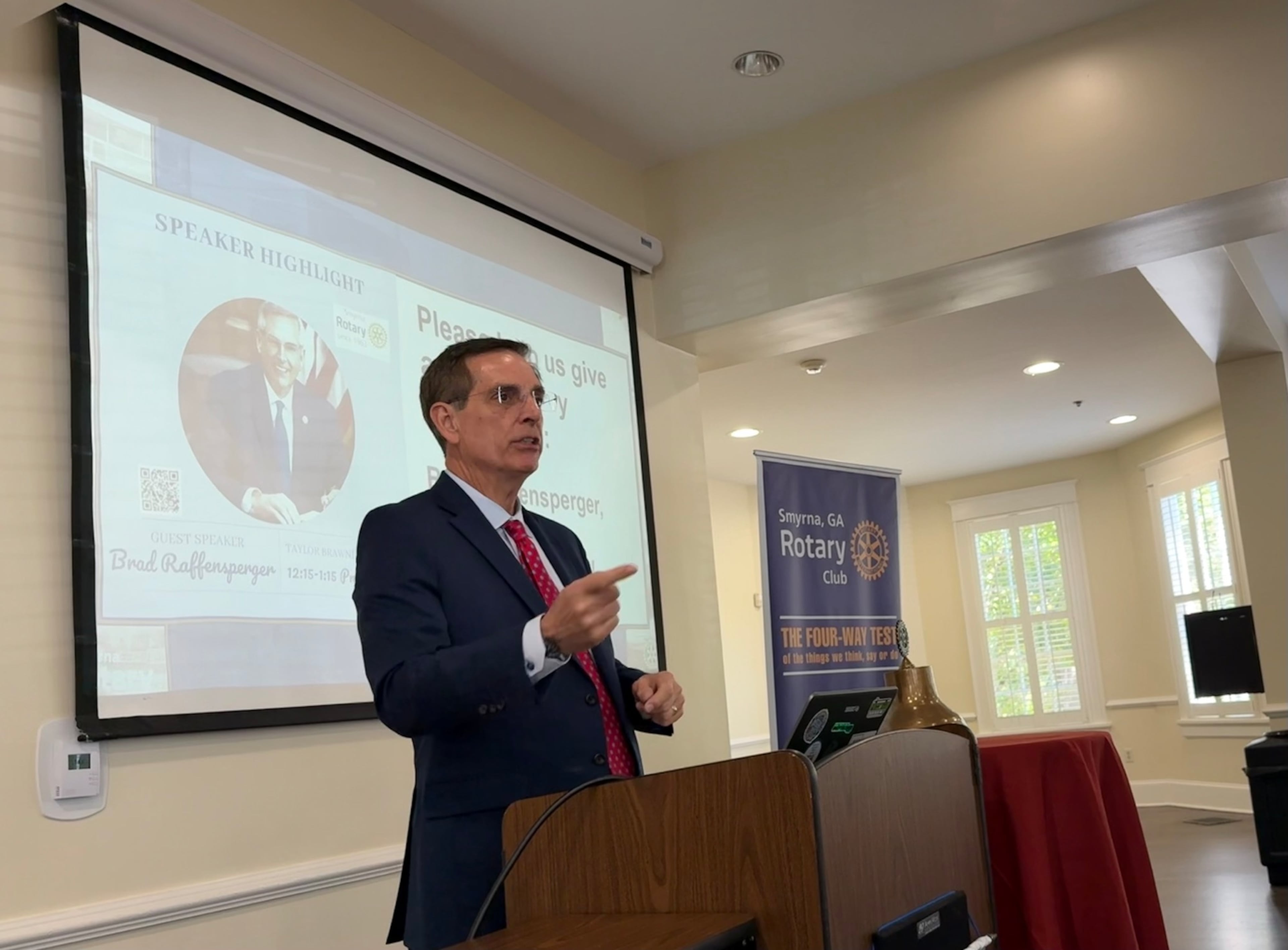
On the trail, he speaks more about affordability and public safety than the 2020 election as he dishes out wonky explanations of tax policies at Rotary Club meetings. And in a plan labeled “Groundhog Day Returns,” he urges lawmakers to adopt election security and transparency measures “instead of falling prey to recycled accusations.”
But the past keeps finding him. He toured the state Tuesday with an expanded security detail, fielding questions that pulled him back to 2020 even as he tried to keep his campaign fixed on the future.
“If you wonder what I’m going to work on Monday — I’m going to work on great-paying jobs. What do I work on Tuesday? Great-paying jobs,” he said. “That is going to be my focus.”