Can Keisha Lance Bottoms avoid overtime in the Georgia race for governor?


Keisha Lance Bottoms insists the Democratic race for governor isn’t the “forgotten contest,” even as the Republican side has been consumed by a nearly nine-figure ad war.
But the more pressing question for the Democratic front-runner may not be who she faces in a runoff. It may be whether she can avoid one at all.
Under Georgia law, a candidate must win a majority of the vote to capture the nomination outright. If no one clears 50% on May 19, the top two finishers advance to a June 16 runoff — a four-week sprint that is expensive, draining and notoriously unpredictable.
That leaves Bottoms with a strategic choice that could be a make-or-break moment. She can either go all-in now or prepare for a second-round showdown against one of three top rivals lagging her in polls: former Lt. Gov. Geoff Duncan, ex-state Sen. Jason Esteves or former DeKalb County Chief Executive Michael Thurmond.
The logic behind a first-round knockout is clear.
Just ask then-Lt. Gov. Casey Cagle, who led the GOP field throughout the 2018 primary for governor but failed to put away Brian Kemp, who would go on to trounce him in a runoff. Or David Shafer, who came within a whisker of winning the GOP nod for lieutenant governor that same year before falling to Duncan, now one of Bottoms’ fiercest rivals.
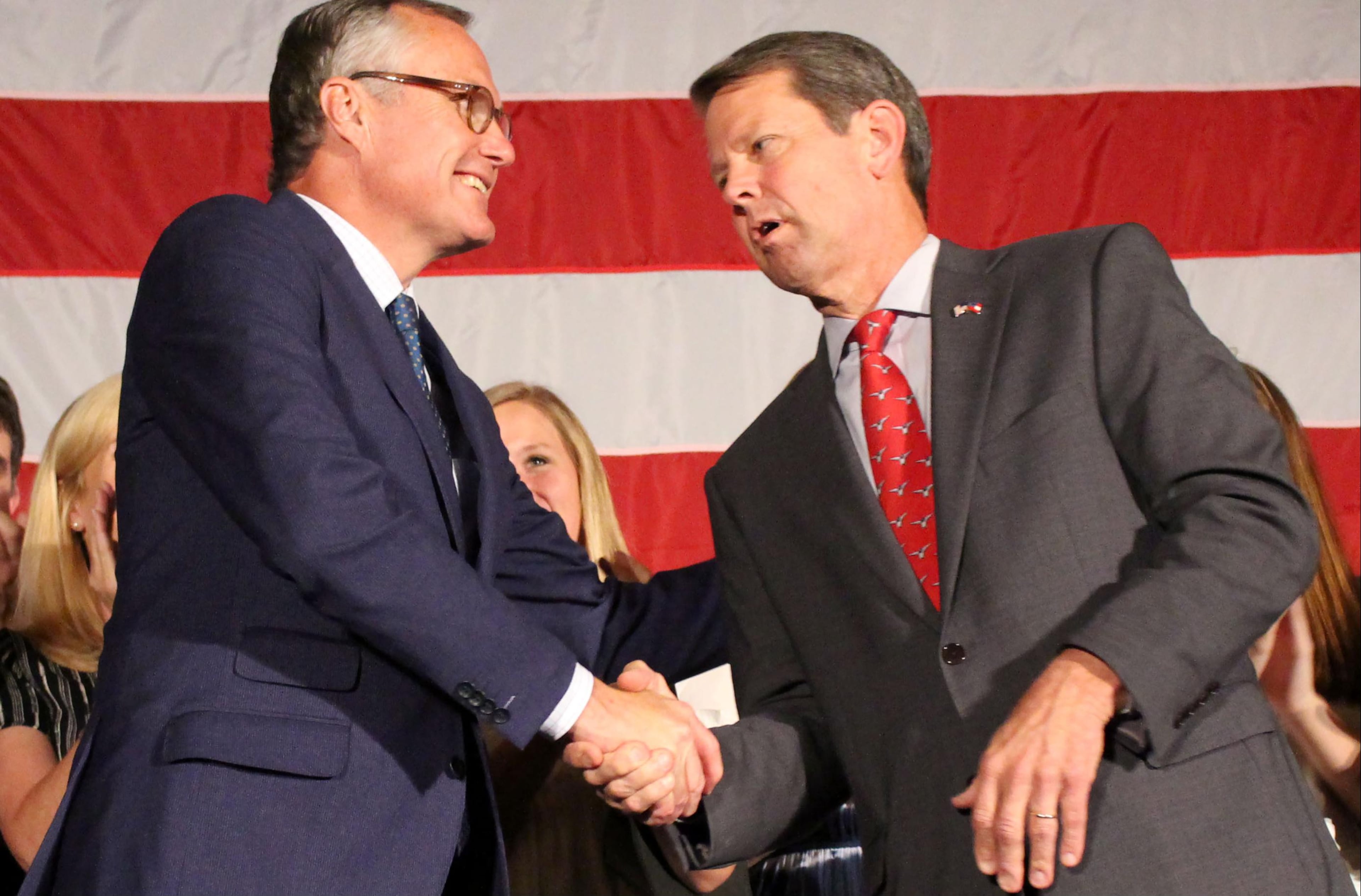
By contrast, Jon Ossoff made avoiding overtime the central mission of his 2020 U.S. Senate primary campaign, eking out a majority to head into the general election with momentum and unity.
“There are plenty of people over the years who wish they had gone all in,” Republican strategist Spiro Amburn said. “Bottoms is the only one who has a chance to win it outright, but it’s a tough road. On one hand, you’ve got to be realistic. On the other, you should always play to win.”
That history looms over Bottoms as she hovers in the 30s in most public polling, with roughly one-third of voters still undecided.
That leaves her advisers wrestling with a thorny question: Is there a credible path to 50%, and if so, what would it cost?
Behind the scenes, that likely means deciding whether to tap resources that haven’t yet surfaced publicly.
Bottoms reported roughly $800,000 cash on hand in her February disclosure, hardly enough for the sort of statewide media blitz that would be required to try to close the deal.
Any true push would almost certainly require one of three things: a major fundraising surge in the final stretch, a significant personal loan from Bottoms, or help from an outside group willing to spend heavily on her behalf.
“Once we get past the primary — and God willing it will be me — I think the resources will begin to come to our side,” Bottoms said in an interview. “I know in talking with national donors, and talking even with statewide donors, a lot of people are just waiting until after the primary before they engage.”
‘I’ll still win’
That waiting game cuts both ways.
Democrats could argue it is strategically wiser not to spend heavily now while Republicans continue to tear each other apart in a bruising and extraordinarily expensive fight. Billionaire Rick Jackson and Lt. Gov. Burt Jones are spending the most money, while Attorney General Chris Carr and Secretary of State Brad Raffensperger are also trying to carve out lanes.
But every dollar held back now increases the odds of a runoff that could force Democrats to spend heavily for another month.
“I don’t know if they have the money to do it, but it would be smart,” said Chris Huttman, a Democratic pollster who isn’t aligned with any candidate. “Her issue is that she has near-universal name recognition and much of it is positive. But she still has struggled of late to get out of the 30s in polls.”
So far, Democratic spending has been limited.
Although roughly $100 million has already been spent promoting or attacking Republican candidates, Democratic spending on the airwaves has barely registered aside from a $1 million ad by Esteves’ campaign.
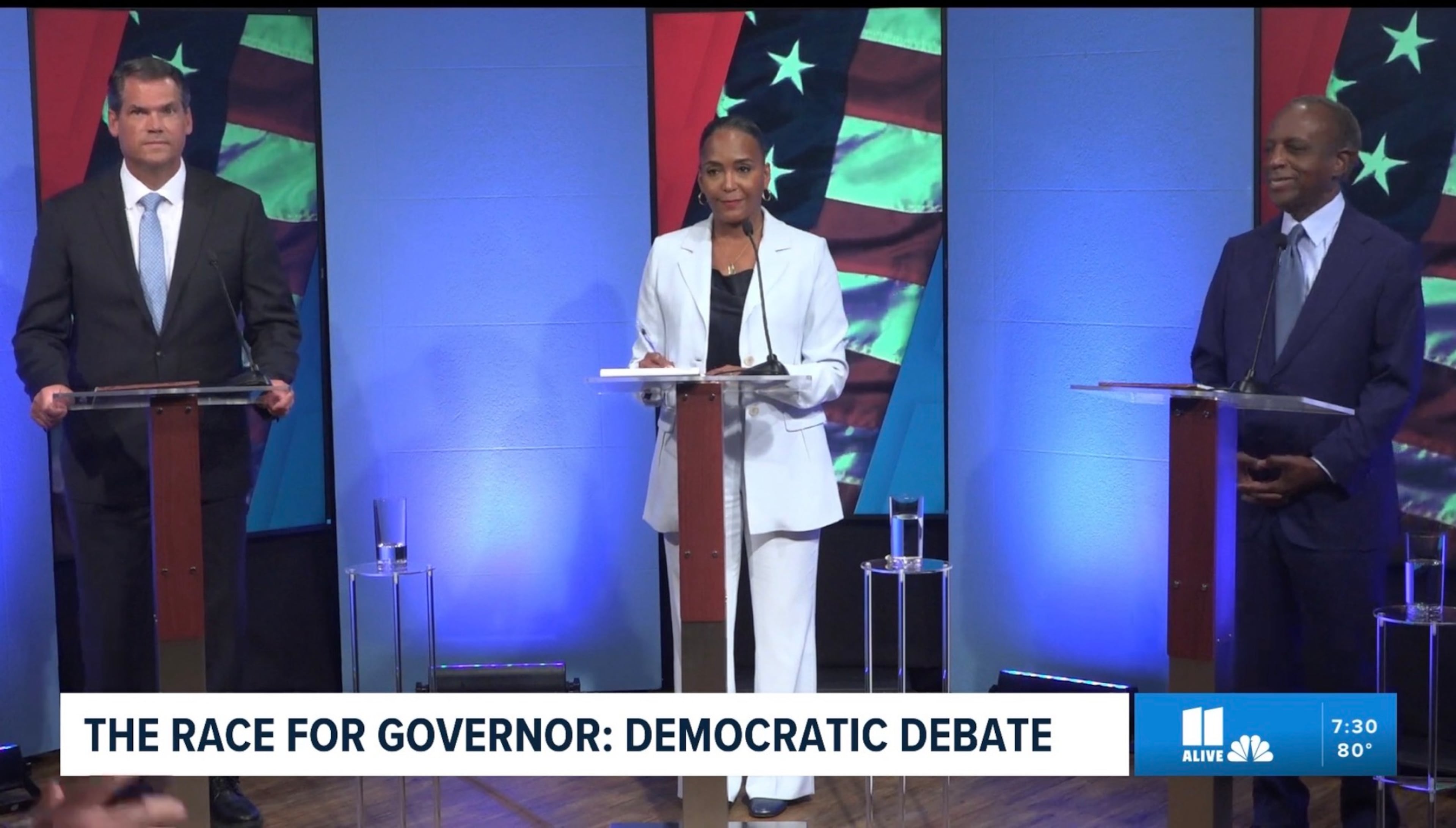
Meanwhile, Bottoms’ rivals are now mostly aiming for the second spot in the runoff, a strategy reinforced this week at a spate of forums and a televised debate.
At the Nexstar showdown, for instance, Duncan took implicit swipes at Bottoms on crime and leadership. But otherwise, the candidates largely stayed in their own lanes.
Their camps argue there is no realistic path for Bottoms to avoid a runoff, each positioning their candidate as the clearest alternative in June.
Bottoms, meanwhile, made it clear to The Atlanta Journal-Constitution she’s also readying herself for the general election, projecting confidence about the prospect of overcoming the GOP candidate — even if it is Jackson and his pledge to dump a truckload of money into the race.
“I’ll still win,” she said flatly. “I’m the best candidate.”
She added that although money gives Republicans a head start, it doesn’t make the race unwinnable: “It just means that they’ve gotten a head start on messaging.”
Former Atlanta City Council member Jennifer Ide, a longtime Bottoms critic and donor to Esteves, said she sees little evidence Bottoms has the momentum — or the resources — to break through.
“I’d be shocked if she can raise the kind of money she needs to win straight up by running on her record as mayor,” Ide said. “I just don’t see the kind of momentum on her campaign to hit the 50% mark.”
Democratic strategist Fred Hicks, meanwhile, said the choice is simple. It would be “campaign malpractice,” he said, not to advise her to go all in.
“You’re not rewarded for playing it safe in sports, life and definitely not in campaigns,” he said. “If you have an opportunity to win, you take it. You don’t play for overtime.”