Should the Atlanta airport privatize security? TSA woes raise the question.

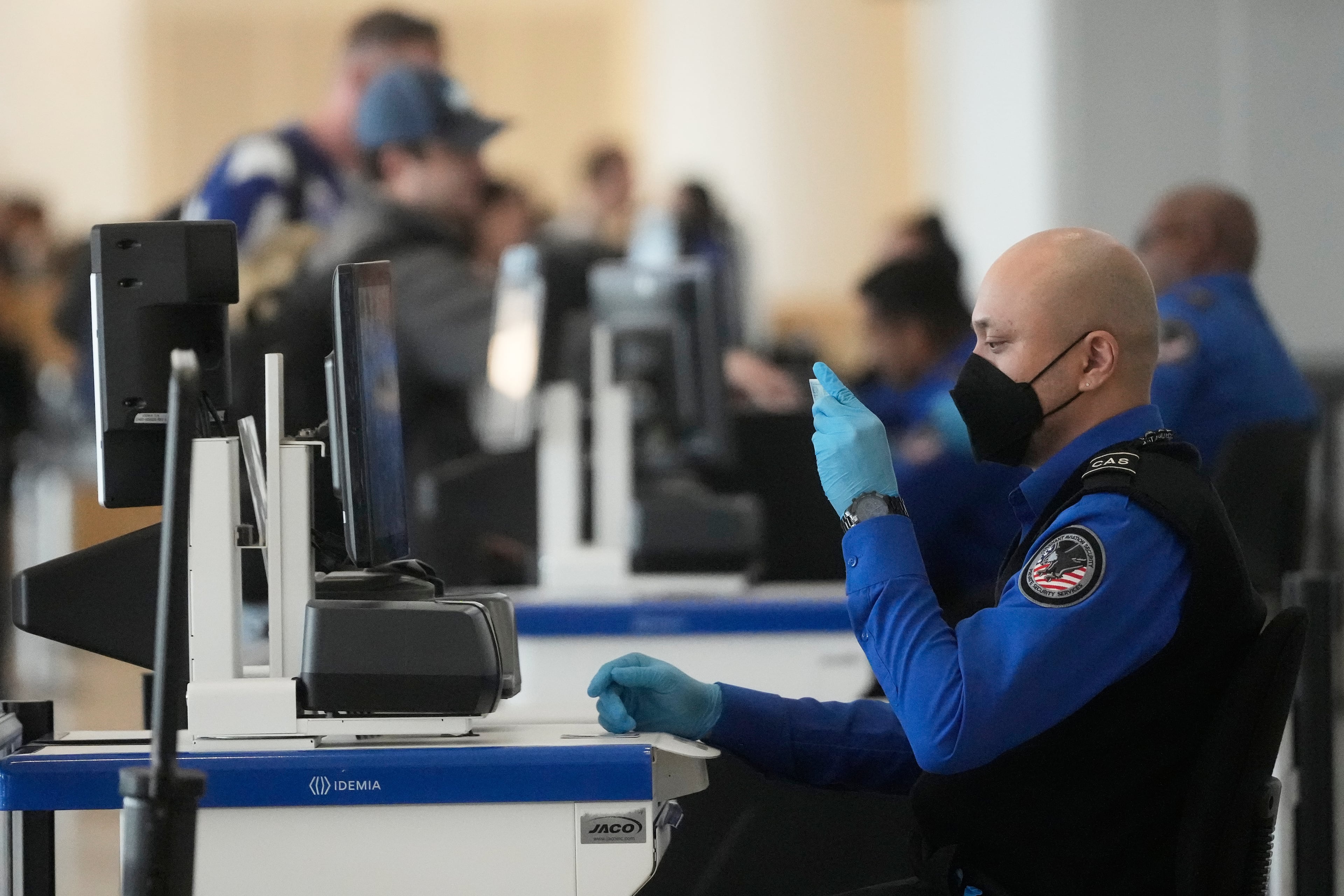
The security screening meltdown triggered by the partial government shutdown has some asking whether screening at the world’s busiest airport should be privatized.
Before 9/11, screening at the Atlanta airport was handled by private contractors and the issue has been debated before, at times when the Transportation Security Administration has been under stress.
A deal to restore funding to much of the federal Department of Homeland Security remained elusive late Tuesday. The weekslong stalemate over DHS funding has left TSA officers working without pay, and the meltdown is driving some renewed privatization calls.
Last week, the conservative think tank Competitive Enterprise Institute posted on its website that the partial government shutdown woes “show why it is time to privatize TSA.”
It’s not a new idea, and was proposed in Project 2025, the ultraconservative blueprint from the Heritage Foundation that proposed to dismantle aspects of the federal government in a second term of President Donald Trump.
Long lines at Atlanta airport
A partial government shutdown has left TSA workers unpaid for weeks, causing many to seek other work or childcare. Meanwhile security lines have ballooned with officials estimating wait times could reach four hours.
Live updates: What we’re seeing from Hartsfield-Jackson Atlanta International Airport
How bad is it: Tell us about your ATL wait time
Security debate: Should the Atlanta airport privatize security? TSA woes raise the question.
‘They can’t do anything’: ICE largely standing around at the Atlanta airport
5 hours or 5 minutes: Travelers whipsawed by crowd chaos, uncertainty
Politics: Trump says he is ready to support deal to pay TSA workers
Horror story: This traveler waited 9 hours in line
AJC Editorial: Congress must act now
Opinion: The airport perks for Congress may be drying up, not a minute too soon
Photos: Scenes from a packed airport
Pay divide: TSA workers are unpaid during shutdown; not so for members of Congress
Shutdown strain: TSA workers weigh showing up or staying afloat
Flight missed: Here’s the best food in every concourse
Complete coverage: Atlanta airport
The CEI post said the fallout from the funding lapse reinforces its position.
“This mayhem is more than a temporary breakdown; it exposes why the TSA should be privatized‚” said the post written by Steve Swedberg, a finance and monetary policy analyst for the CEI’s Center for Economic Freedom.
He also wrote that TSA “has built much of its public profile on security theater,” such as a policy to remove shoes before going through screening after the shoe bomber, Richard Reid, hid plastic explosives in his shoes aboard a plane in 2001.

The privatization push is prompting concerns among some leaders of the American Federation of Government Employees, the union that represents TSA officers.
“I do feel like what’s happening is an attempt to try to privatize TSA,” said Aaron Barker, a longtime TSA worker and president of American Federation of Government Employees Local 554 in Atlanta.

During a press briefing Tuesday, AFGE National President Everett Kelley said for those who want to privatize TSA, “I think that the endgame is if they can show or make people believe that TSA is a mission failure, then it certainly lends to that idea.”
“This is not a mission failure. Not on the part of TSA employees,” he said. “What we need to do is fund TSA, fund DHS, so that they can perform the duties that they need to perform.”
Airports with privatized screening
About 20 airports have private companies handling airport security screening under TSA’s Screening Partnership Program, which launched in 2004.
Most of them are small. San Francisco International is the largest airport in the program.
“While we’ve seen & heard about the long security checkpoint lines over the last few weeks at major airports around the country, SFO is NOT experiencing this issue,” the airport touted in a social media post Friday.
“Since SFO screeners are not TSA, they are being paid w/out interruption,” the airport posted.
Other airports with privatized security screenings including Kansas City International in Missouri and Florida’s Sarasota Bradenton International and Orlando Sanford International, a secondary airport in Orlando.
Security screening companies under the program are on long-term contracts, allowing them to continue paying workers even when TSA employees are not during a federal shutdown. The screening vendor works for TSA, not the airport, and past analysis found that some Screening Partnership Program airports cost more than federal airports, while some federal airports cost more than SPP.
There is already part of some security checkpoints that’s controlled by private companies — in the queues. Airlines have long offered first class or elite lines at security checkpoints, such as Delta’s Sky Priority lines. And biometric ID technology firm Clear has run its owns security line at Hartsfield-Jackson since 2017 for members who pay an annual fee.
TSA has run its own fee-based trusted traveler program, PreCheck, since 2011.
But all of those private and fee-based options are in the queues, not in the actual security screening area handled by TSA employees.
Atlanta airport weighed private screening in past
When TSA’s Screening Partnership Program began more than 20 years ago, the then-manager of Hartsfield-Jackson, Ben DeCosta, was raising concerns with TSA over understaffing and extremely long wait times.
At the time, in mid-2004, concerns grew when a half-mile-long line of passengers spilled out of Hartsfield-Jackson on one busy day. Wait times reached as long as 90 minutes — without a government shutdown.
Officials at the time said the backup of passengers presented a security threat, with so many people crowded into one place for a long period.
Atlanta airport management back then was undecided on whether to privatize security, with DeCosta saying “I would need a great deal more information about what the level of funding would be,” The Atlanta Journal-Constitution reported.

Then in 2016, security wait times ballooned again, hitting hourlong waits during busy periods.
That prompted the then-manager of Hartsfield-Jackson, Miguel Southwell, to say the airport was “giving serious consideration” to privatizing screening unless he saw improvement.
“We have been conducting exhaustive research … weighing the pros and cons” of the idea, Southwell wrote in a letter to TSA at the time.
Yolanda Adrean, the Atlanta City Council’s then-chair of the Transportation Committee overseeing the airport, said at the time she was “open-minded” about privatizing security screening if a “provider can ensure safety and keep our customers’ wait times to a reasonable level.”
Less than a month later, TSA committed to boost staffing, and Southwell backed off his threat.
“If the commitments that are shared with us are met, then we will move forward with the current process, having TSA manage it,” Southwell said.

But later that year, then-Mayor Kasim Reed fired Southwell, saying he was upset about the long waits, along with other factors.
Reed said he discussed privatization with counterparts at San Francisco International.
“We’re going to explore that and see if it’s the best decision,” Reed said at the time.
Security screening, however, remained under TSA.
Hartsfield-Jackson said this week it is not pursuing privatization of security screening and it continues to “work closely with TSA to support safe, secure, and efficient screening operations for our passengers.”
Origins of TSA
Before the Sept. 11, 2001, terrorist attacks, airport security was privatized. It was contracted out by airlines to security contractors including Atlanta-based Argenbright Security, then a juggernaut that provided screening at 182 airports.
But the failure of airport security to prevent the 9/11 attacks drove the federal takeover of passenger screening and the creation of TSA.

In the decades since, TSA has come under fire for security gaps, failures to detect prohibited items in tests and policies that have frustrated travelers, such as shoe removal requirements, liquids restrictions and other issues.
Project 2025 suggests expanding TSA’s Screening Partnership Program to all airports.
“As part of an effort to shrink federal bureaucracies and bring private-sector know-how to government programs, TSA is ripe for reform,” it says.
But the lapse in funding that has left TSA officers working without pay since Feb. 15 is driven not by TSA, but by a stalemate in Congress and disagreement over funding of a different agency, Immigration and Customs Enforcement.
Arguments amid shutdown
Florida Gov. Ron DeSantis, who has echoed Project 2025 proposals, reposted a comment on the social platform X calling for TSA to be privatized last weekend as TSA lines grew.
He added in his post: “Is there evidence that creating TSA has made air travel safer over the past 25 years? If not, then why not let the airlines and airports handle it? Why give politicians the power to play games with the travel of our people?”

U.S. Sen. Mike Lee, R-Utah, introduced the Abolish TSA Act of 2025 a year ago. It calls for “A plan for the rapid transfer of all aviation security activities and equipment to qualified private screening companies.” Its sole co-sponsor was Sen. Tommy Tuberville, R-Ala., and the bill was referred to a committee with no further action.
Others have voiced opposition to privatizing TSA.
Last year, AFGE posted that privatizing airport security “could compromise security” and that for-profit companies “focus on profits, not security or workers’ well-being.”
“We need to invest in TSA, not destroy it,” AFGE said.
About the Author