Georgia ranks in the middle in many education categories. Is that a problem?


By many metrics, Georgia’s K-12 education system ranks somewhere in the middle compared to other U.S. states.
In academic achievement, teacher salaries, graduation rates, spending, Georgia is not the best. But it’s not the worst either.
With the new school year, The Atlanta Journal-Constitution spoke to more than a dozen education experts and policymakers in the state and consulted major data sources to confirm: Georgia’s education system is, well, mid.
Those experts we talked to stressed a long list of caveats. It’s hard to compare states, which often have different standards of measurement for academic achievement and have different demographics of students. Federal data tends to lag behind, making it difficult to capture the effects of any recent improvement efforts.
But in the areas we can compare using federal data and national surveys from trusted sources, Georgia often falls right around the U.S. average. Whether or not that’s a good thing depends on who you ask.
“When you go to Outback, do you order an average steak or a great steak? You want a great steak,” said Sen. Billy Hickman, R-Statesboro, chairman of the Georgia Senate Committee on Education and Youth. “We don’t need to be average. We need to be the best.”

There are a few bright spots in the state. Georgia leads the country in access to pre-K programs and career technical education, and teachers appreciated nearly $10,000 in raises during Gov. Brian Kemp’s tenure.
And in the past five years, the state has locked in on improving the K-12 education system, said Dana Rickman, president of the Georgia Partnership for Excellence in Education. Part of that is thinking of education as an economic issue. If kids aren’t graduating able to read, or with a plan for how to take their next steps, can Georgia continue to be the “top state for talent,” as leaders like to claim?
“Decades ago, you could make a family-supporting career with just a high school diploma, and that’s not true anymore,” Rickman said. “Between the pandemic and the different recessions, I think people realize that we have to do a better job at aligning our educational outcomes, school readiness and readiness for what comes after 12th grade, to really give people the quality of life in Georgia that they want.”
Despite recent investments in early learning, literacy and math education, career pathways and teacher recruitment and retention, Georgia still has a long way to go.
Literacy progress
States each monitor academic achievement in their own ways — but there are a few comparisons we can draw.
The Nation’s Report Card, put out by the National Center for Education Statistics, is an independent exam administered to a sample of students across the U.S. every two years. Georgia fourth graders most recently scored at the national average in reading and math.
That’s a good thing, said Fulton County Superintendent Mike Looney.
“Georgia has moved from being a historically low-performing Southern state to being near the middle nationally on many indicators. That represents real progress,” he said. “Compared with where the state was 20-30 years ago, graduation rates are higher, college readiness has improved and student achievement, while moderate, has increased.”
Georgia’s own assessment system shows there’s still room for growth: Only about one-third of third graders scored proficient or higher on the English language arts exam, and less than half of eighth graders scored proficient or higher on the math exams, according to the most recent state data.
Georgia students have made clear progress over time on the annual assessments, State Superintendent Richard Woods said in a statement.
“(W)e know there’s still work to do,” he said, “and we will not rest until the foundation is laid for every child to improve reading and mathematical skills.”
Literacy has been a particular focus for state leaders hoping to re-create success seen in states like Louisiana and Mississippi. Georgia lawmakers this year approved funding for literacy coaches, training for teachers on how to best teach reading and made kindergarten mandatory. Hickman calls it the “Big Beautiful Literacy Bill.”
“Just putting literacy coaches at every elementary school is going to be life-changing,” he said.

Looney said the one “tragedy” is that it’s taken so long to get here. But now it’s a boon to have everyone in the state moving toward the same goal in the same way, said Atlanta Public Schools Superintendent Bryan Johnson.
“It’s pretty refreshing to have a situation where, frankly, across party lines and ideologies and all the things, there is a pretty strong consensus around this idea that literacy is a civil right — a critical element that frankly is beyond predictive of a student’s ability to thrive,” he said.
Then there are the college readiness exams — the SAT and the ACT — which state leaders point to as an area Georgia shines. Although it did beat the national average in both metrics in 2023, according to federal data, Georgia still ranked in the middle.
Put another way, the Peach State is trailing behind more than 25 other states. It’s still a sign of progress though, leaders say: In some top-performing states, the participation rate was in the single digits, compared with Georgia’s 53%.
Lastly, in graduation rates, Georgia once again falls somewhere in the middle. National data is a few years behind, making comparisons more difficult, but we know Georgia’s rate has improved since 2021. It currently sits at a historically high 87.2%.
Cash flow
Money matters in education. Federal funding, state allocations and local tax dollars all go into making school happen. Then there’s the financial means of individual students: True to theme, Georgia ranks close to the middle at No. 17 when looking at the number of children living in households whose income is below the poverty level.
Lisa Morgan, the immediate past president of the Georgia Association of Educators, taught in high-poverty schools throughout her teaching career.
“We know that when children have the challenge of living in poverty, it impacts their readiness for school, it impacts their success in school,” she said. “The fact that we then compare that school where 99% of the children were receiving free and reduced lunch with a school where 5% were receiving free and reduced lunch and expect the same success is something that can be very disheartening.”
When you compare similarly affluent states, said Georgia House Education Committee Chairman Rep. Chris Erwin, R-Homer, Georgia gets a pretty good bang for its buck.
“Georgia does quite well in education in the Southeast,” he said. Georgia spends more per pupil than nearby states like Florida, Alabama and South Carolina, according to data from the National Education Association. But nationally, the state again hovers in the middle of the pack.
But it’s a point of contention.
Lawmakers have long discussed the need to revamp the state’s funding formula, with many advocating for the state to devise a way to funnel more money to schools with more students living in poverty. Most states provide additional funding for low-income students. Georgia’s formula hasn’t been substantially updated in more than 40 years.
It’s something that’s top of mind for Georgia Federation of Teachers President Verdaillia Turner. She agreed with Erwin that Georgia’s student outcomes are “better than we might expect” given the level of funding. But that’s exactly why it’s time to increase the investment, she said.
“If you take this efficiency argument at face value, this lends even greater support to the case for increasing funding, as doing so could potentially yield particularly stronger return,” she said.
Benefits and burnout
A point of pride for Kemp and Woods has been the nearly $10,000 in raises given to teachers during the governor’s term.
With an average teacher salary of $71,500 in 2024-2025, Georgia ranks in the middle nationally — but is the third-highest of 17 Southern states. Similarly, Georgia has the sixth-highest starting salary among Southern states at $48,700, but falls in the middle nationally.
But salary can’t paint the full picture.
A 2022 report on teacher burnout commissioned by the Georgia Department of Education showed how testing requirements, planning time, unrealistic expectations, not feeling heard and mental health all contributed to teachers feeling exhausted. Georgia’s teacher turnover rate was higher than the national average, according to a 2024 analysis by the Learning Policy Institute, which does research to improve education policy and practice.
More recently came the 2025 Strategic Plan for Educator Recruitment and Retention. It aims to expand educator pathways and improve the public perception of educators by 2030.
It includes specific recommendations like protecting teacher planning time, allowing retired teachers to immediately return to high-need areas and fund a career technical education pathway for high schoolers interested in teaching.
Hickman said he’s eager to get to work on implementing some of the recommendations in the report.
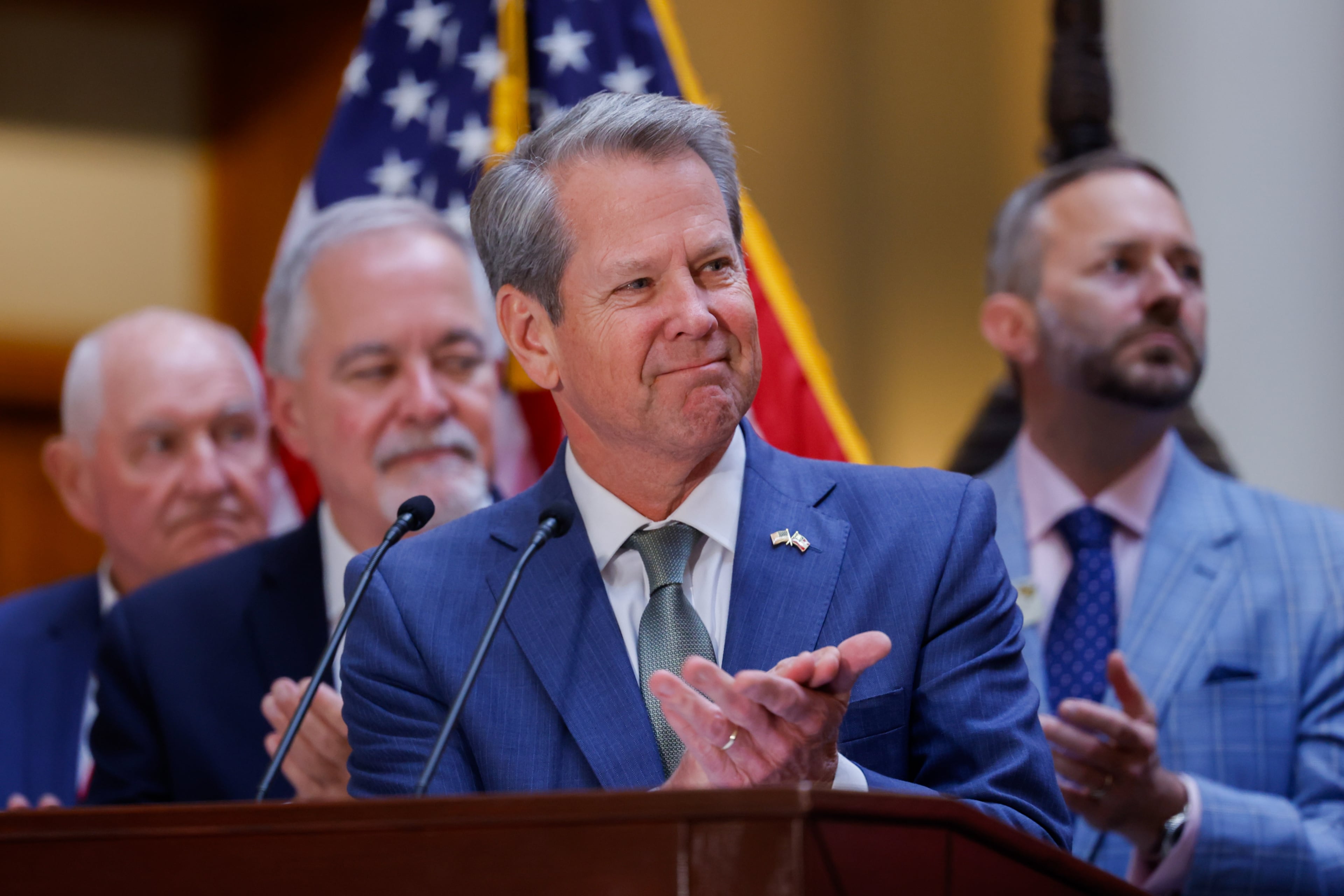
It’s an area of continued focus in Georgia. Both gubernatorial candidates — Democrat Keisha Lance Bottoms and Republican Rick Jackson — have said they’d raise teacher pay and would focus on issues that contribute to teachers feeling burned out.
“There are things that could be addressed that are not being addressed,” Morgan said.
Life after high school
Maybe more than any other category, Georgia leaders are proud of what happens to students after they graduate from high school.
Georgia was the first state to implement a merit-based financial aid program with the Hope Scholarship, first awarded in 1993. It made the state a national model for student aid and changed the way Georgia students access college.
“Before HOPE, about 25 years ago, only a third of our students crossed the graduation finish line,” Sonny Perdue, the chancellor of the University System of Georgia, said at a public meeting this month. “Today, we’re closer to 62%.”
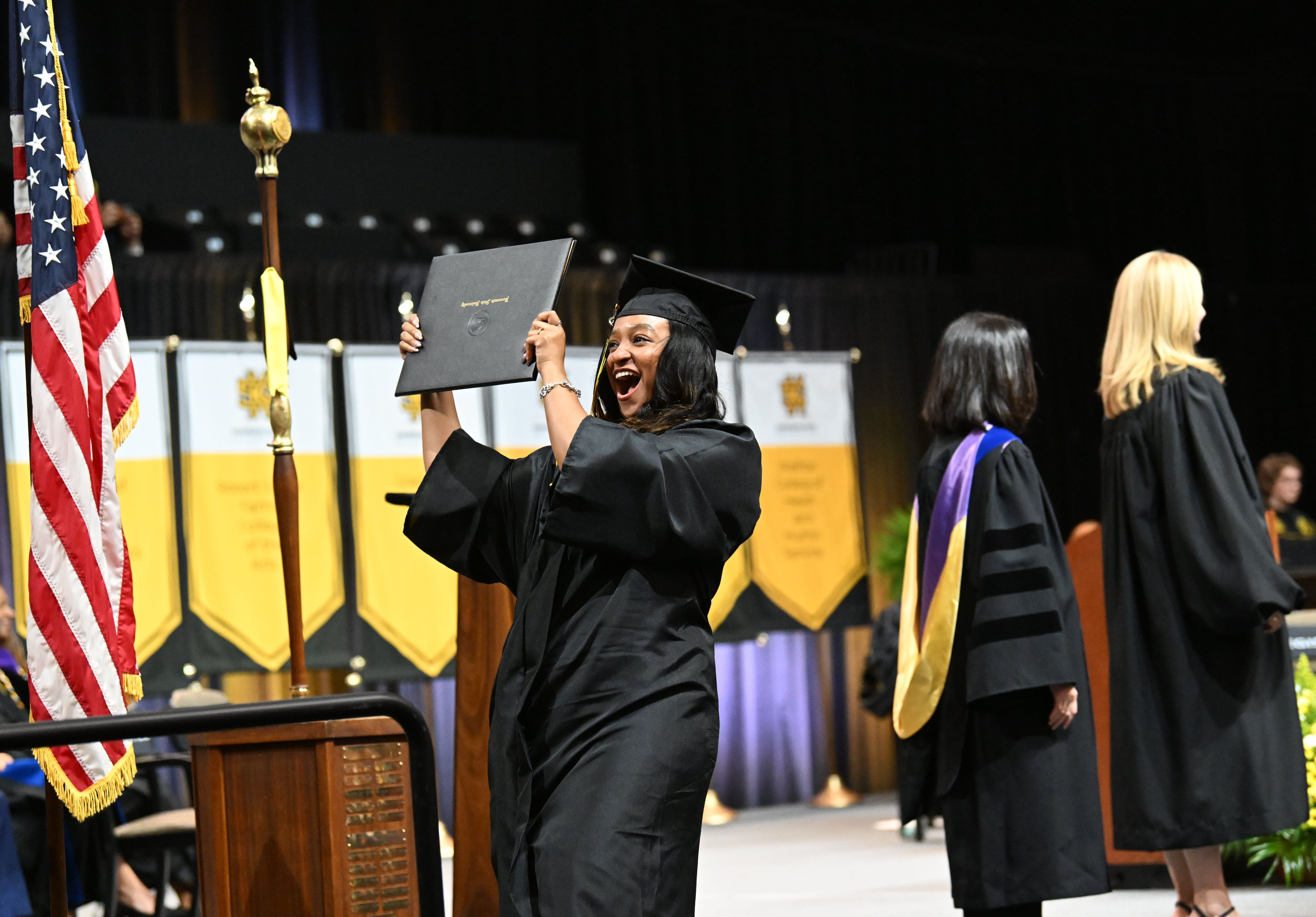
Despite this success, the state was one of the only ones in the country without a need-based aid program — until this year. Lawmakers established the Georgia DREAMS scholarship, which will give up to $3,000 per year to students with significant financial need.
Georgia is also a leader in career technical education: When accounting for population, it ranks in the top 10 in the country for students who are out of high school but enrolled in a career technical education program, according to federal data from the Office of Career, Technical and Adult Education. The story is similar for high schoolers who have taken at least one course.
More than 70% of Georgia high schoolers participate in career, technical and agricultural education coursework, a spokesperson for the Georgia Department of Education said.
It reflects the way state leaders often view education through the lens of economic development. The idea is that educated people are employable people — but what that education looks like has been up for debate.
“What does it take to successfully transition into either post-secondary career, military, whatever comes after 12th grade?” said Rickman at the Georgia Partnership for Excellence in Education. “A general understanding across the state of what it takes to be economically successful has changed. And so we really need to focus on how our K-12 education system can change with that.”
Next year, Georgia will have a new governor and could have a new state superintendent. Each candidate has said they’re committed to continuing efforts to make sure every student can read, that teachers are taken care of and that Georgia continues to rise in the ranks nationally.
“You hear it from politicians … as well as the parents that are out there. They don’t want an average education for their children. They want a superior education,” Erwin said, adding that Georgia needs to lead the Southeast.
But that means Georgia is in a pretty good spot, he said: “Average is the springboard to greatness.”
— Staff writer Jason Armesto and presentation specialist Pete Corson contributed to this report.