What’s new in Georgia schools? Screen time limits, tuition hike and more.

A new school year begins Monday for most metro Atlanta districts, and some college students head back to class about a week later. Here are some of the major changes you’ll notice this fall:
Screen time changes
Atlanta Public Schools and Marietta City Schools are considering restricting how much time students spend on screens in class. The Atlanta school board will consider piloting a policy that limits classroom screen time at its August meeting. The proposal caps screen time for students in grades K-2 at 60 minutes; it limits students in grades 3-5 to 90 minutes. Students in older grades would spend no more than half of their instructional time in class on screens.
The Marietta school board passed a resolution aimed at assessing the use of electronic devices in class. The measure says the district will spend the 2026-27 school year identifying strategies to reduce screen time starting the following year.
“Screens should be closed by default, open with purpose,” Marietta Superintendent Grant Rivera said. “We don’t want kids to be sitting in front of screens. That’s not where we believe the most effective learning occurs.”
Cellphone ban
Students in kindergarten through eighth grade will be subject to a “bell-to-bell” ban on cellphones, smartwatches and other personal electronic devices. Next year, high school students will be subject to the same restrictions.
Though the K-8 ban has a July 1 start date, many Georgia school districts got a head start by implementing creative storage solutions or policies designed to keep devices out of sight.
Georgia’s new medical school
With high demand for more physicians across the state, the University of Georgia is opening its medical school this fall. Of the more than 2,000 applicants, roughly 60 were offered admission to the inaugural class. It will be the second public medical school in a state that ranks 39th nationally in active patient care physicians per capita.

Need-based scholarships
More students will be able to afford college thanks to a new needs-based scholarship program. After legislation passed earlier this year, students eligible for the federal Pell Grant and attending a public Georgia university can receive the DREAMS scholarship, worth up to $3,000 per year.
With the first wave of awards expected this fall semester, it’s Georgia’s first time offering comprehensive needs-based aid.
Tuition bump
Students and parents may notice a higher price tag this academic year. In April, the University System of Georgia’s Board of Regents voted to increase tuition at all public universities by 1%.
It’s the fourth time in 10 years the USG has approved a tuition increase. Even so, the USG says that when adjusting for inflation, students on average pay less in tuition today than they did in 2017.
School closure talks
The DeKalb County School District paused talks about its sweeping school plans at the end of last year, after months of negative feedback from the community. Those talks will start again in August.
The focus will be on overcrowded schools in the northern part of the county. That’s schools in the Lakeside, Cross Keys, Chamblee, Tucker, Dunwoody and Druid Hills clusters. By December, the school board is expected to hear a recommendation on attendance boundary changes. The process will begin again for underused schools in the spring.

Literacy
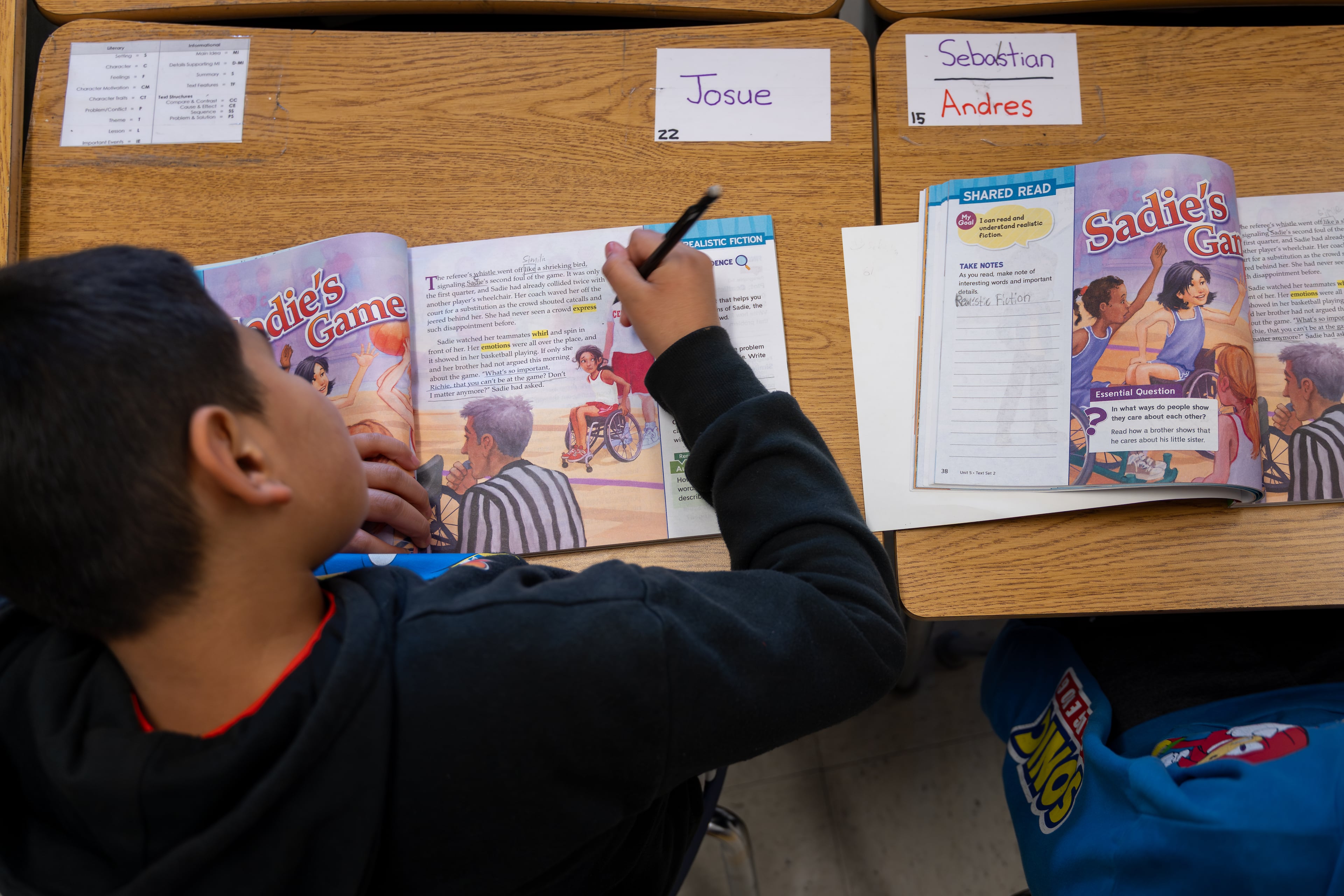
The Georgia Early Literacy Act was one of the session’s biggest bipartisan initiatives and aimed at boosting literacy performance in Georgia’s public schools.
The measure focuses on ensuring students can read proficiently by the third grade, a benchmark experts say is critical for academic success.
The sweeping bill provides training and support for educators, requires screening for dyslexia and other learning disabilities and mandates kindergarten attendance. Current state law requires children to start school by first grade.
It also places a literacy coach in every elementary school in the state.
New charter schools
Several charter schools are opening their doors this fall for the first time, all of which plan to serve sixth- through 12-graders.
- The Meliora School is the first charter school in Gwinnett County to serve sixth- through 12th- graders. This year it will welcome 125 sixth- and seventh-graders.
- Tapestry Charter is opening another location in Clayton County. Every class at the school is led by a general education teacher and a special education teacher.
- The Academy for Innovation in Medicine opened to sixth- and ninth-graders in July. The school near Buckhead aims to give graduates a high school diploma, an associate degree and a paid healthcare job by the time they graduate.
New leaders
Gwinnett County, the state’s largest school district, has a new superintendent. The county school board hired Alexandra Estrella for the job in March. Estrella’s most recent job was leading a smaller school district in Connecticut. She started work July 1. Rockdale County also has a new superintendent, Stephanie Johnson. She was Chief Turnaround Officer for the Georgia Department of Education.
Two of Georgia’s most prominent private colleges and universities named new leaders this summer. Emory University promoted Christopher L. Augostini, who had been its executive vice president and chief operating officer, to the role of president. Spelman College’s trustees named Ayanna Howard as its new president. Howard was previously the dean of Ohio State University’s school of engineering.
The University System of Georgia is expected to name a new chancellor in the coming months. Chancellor Sonny Perdue is set to retire in January, and the USG is accepting applications for his replacement. The deadline for priority consideration is Aug. 10.
College savings updates
Georgia has made some key changes to its Path2College 529 Plan. SB 556, signed by Gov. Brian Kemp in May, raises the maximum account balance for Path2College 529 Plan accounts from $235,000 to $550,000. In addition, the Georgia Higher Education Savings Plan Board has approved a waiver of the state administrative fee, further reducing costs for account holders.
Construction complete
Morehouse College is scheduled to open a five-story residence hall with over 300 beds. The 88,000-square-foot residence hall is part of a broader effort to modernize the historically Black college’s campus. It was the first construction project at the private school since 2010.
Georgia Tech is also opening a residence hall. Located on the west side of campus, it’s the first new dorm at Tech since 2005. Named the Bud and Val Peterson Residence Hall, the 191,000-square-foot building contains 860 beds.
Four years after Kennesaw State University opened the Summit residence hall, it’s opening Summit II steps away. Designed for first-year students and opening this fall, the 97,000-square-foot, five-story building will house 462 beds and share a courtyard with its neighbor.
Security upgrades
Atlanta Public Schools will start the year with two additional teams on its police force: a drone team and a tactical team. The drone team will scan the exterior areas of APS properties, such as sports stadiums. The tactical team will address threats inside buildings.
The teams held training drills recently at an APS facility in south Atlanta to practice procedures they would need to enact if an active shooter were on a school campus.
“As much as we like to not have to deal with this, it’s something we have to prepare for,” said APS Police Chief Ronald Applin.

APS marked 10 years of having its own police force in June.
The district has also equipped all of its school buses with new cameras this year that will film live video and audio. Officials say the technology will allow them to see and hear what’s happening on buses in real time.
Correction
This story was updated to correct the spelling of the name of Oak Grove Principal Valerie Kennedy.