Kemp signs Georgia high school cellphone ban and literacy expansion bills
Cellphones are out and reading is in.
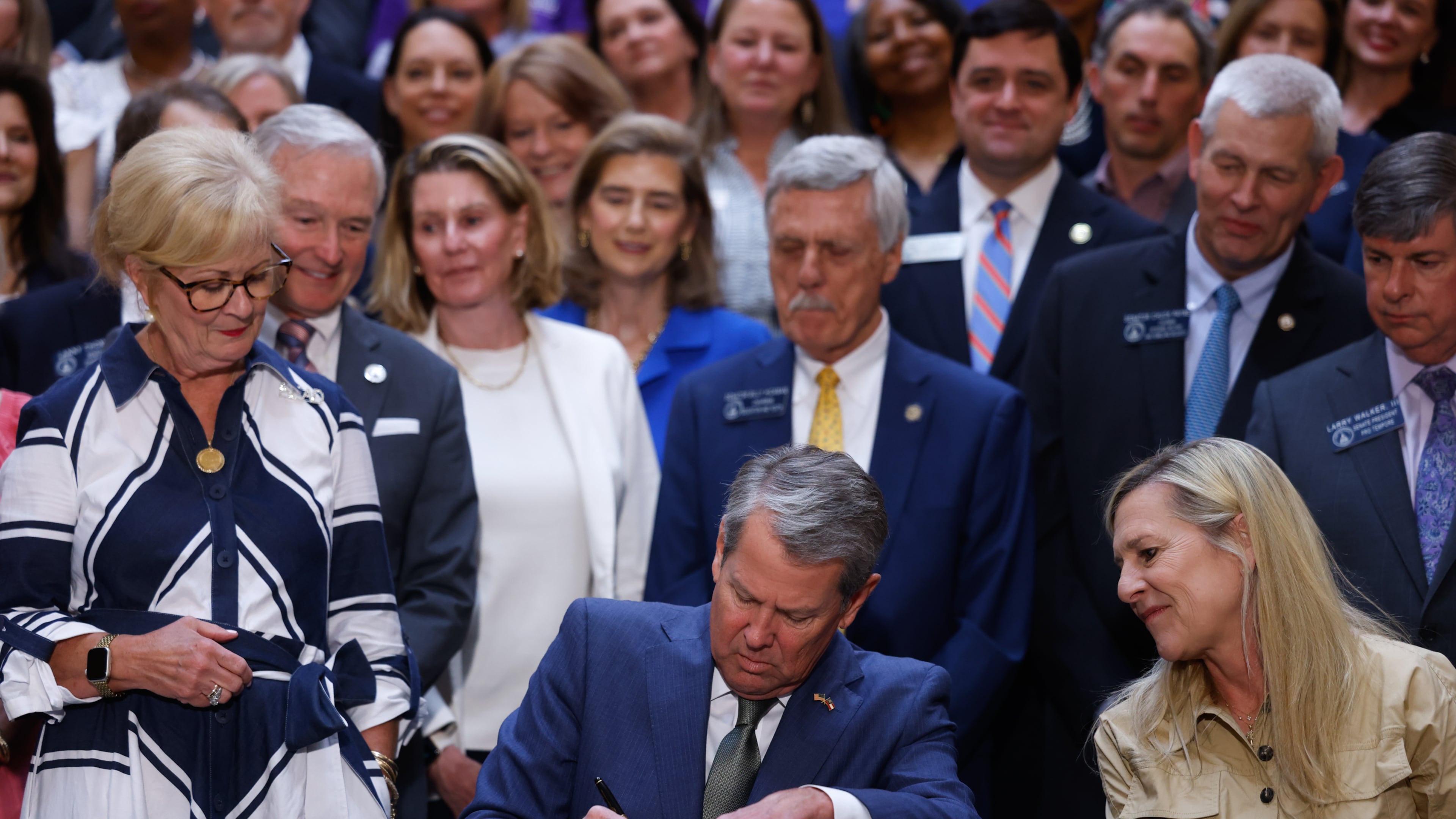
Gov. Brian Kemp signed a series of bills at the Gold Dome on Tuesday, including one prohibiting high school students from using cellphones and another investing millions of dollars in literacy coaches for Georgia’s schoolchildren.
Together, state leaders hope the new laws will improve academic performance. Cellphone ban proponents say the devices are a distraction in classrooms, while lawmakers hope the literacy changes will help address low scores in statewide exams.
“If young learners fail to learn how to read at the start of their educational careers, they’ll struggle to read and learn during the rest of their academic journeys,” Kemp said. “This bill is a monumental step in our yearslong work to ensure students have the literacy skills they need.”
Bell-to-bell ban
The Georgia Senate unanimously passed House Bill 1009 in March, expanding legislation from last year prohibiting the use of personal electronic devices in grades K-8. The newly passed high school mandate won’t kick in until the 2027-28 school year. The bill makes exceptions for students with special needs.
More than 30 states have passed similar legislation as teachers and parents have argued cellphone access during the school day keeps students from focusing in class and can damage their mental health.
In Georgia, the ban will be from “bell-to-bell,” meaning students will not be able to access their phones, smartwatches or other electronics at all during the school day.
The legislation is unlikely to be popular with Georgia students. Pew Research Center published a survey in January showing that while 41% of U.S. teens aged 13 to 17 supported an in-class cellphone ban, less than 20% support a ban for the entire school day. Adults were much more receptive, polling 74% and 44% for each ban, respectively.
Parents who oppose such bans often cite school safety as a primary concern. They say that in the event of a school shooting, cellphones are the best way for students and parents to stay connected. A group of parents and students from Apalachee High School — where four people were killed during a mass shooting two years ago — urged Kemp to veto the K-8 cellphone ban last year.
House Speaker Jon Burns said the bill would “prioritize face time over screentime,” improving academic and social outcomes for students.
Research on the long-term impacts of cellphone bans is limited. A working paper released this week examined schools that require students place their phones in magnetically sealed pouches until the end of the school day. In comparing them to schools that don’t use the pouches, the study found positive impacts on student well-being over time, but almost no effect on standardized test scores, attendance, classroom attention and perceived online bullying.

It did note, however, that the observations were based on no more than three years of data. Additionally, the study only looked at the pouch method and not other types of bans schools may be implementing.
“Evaluating the longer-run impacts of phone restrictions and comparing alternative policy designs are important priorities as schools continue to experiment with approaches to managing digital access,” concludes the paper from the National Bureau of Economic Research, a nonprofit.
Several metro Atlanta school districts implemented their own bans before the state law. Kemp said the outcomes since the K-8 ban “have been incredible, and this common sense step will help both students and faculty learn in safer, distraction-free environments.”
A literacy crisis
Kemp said the Georgia Early Literacy Act was this session’s top priority for the House and Burns.
Many of Georgia’s young people are struggling to read. Only about 1 in 3 Georgia students read on grade level by the end of third grade, and the number rises by the time they reach eighth grade.
The low metrics are “unacceptable,” Burns said. But with Kemp’s signature of the bill, the speaker said he’s confident that “we are well on our way to rewriting that narrative.”
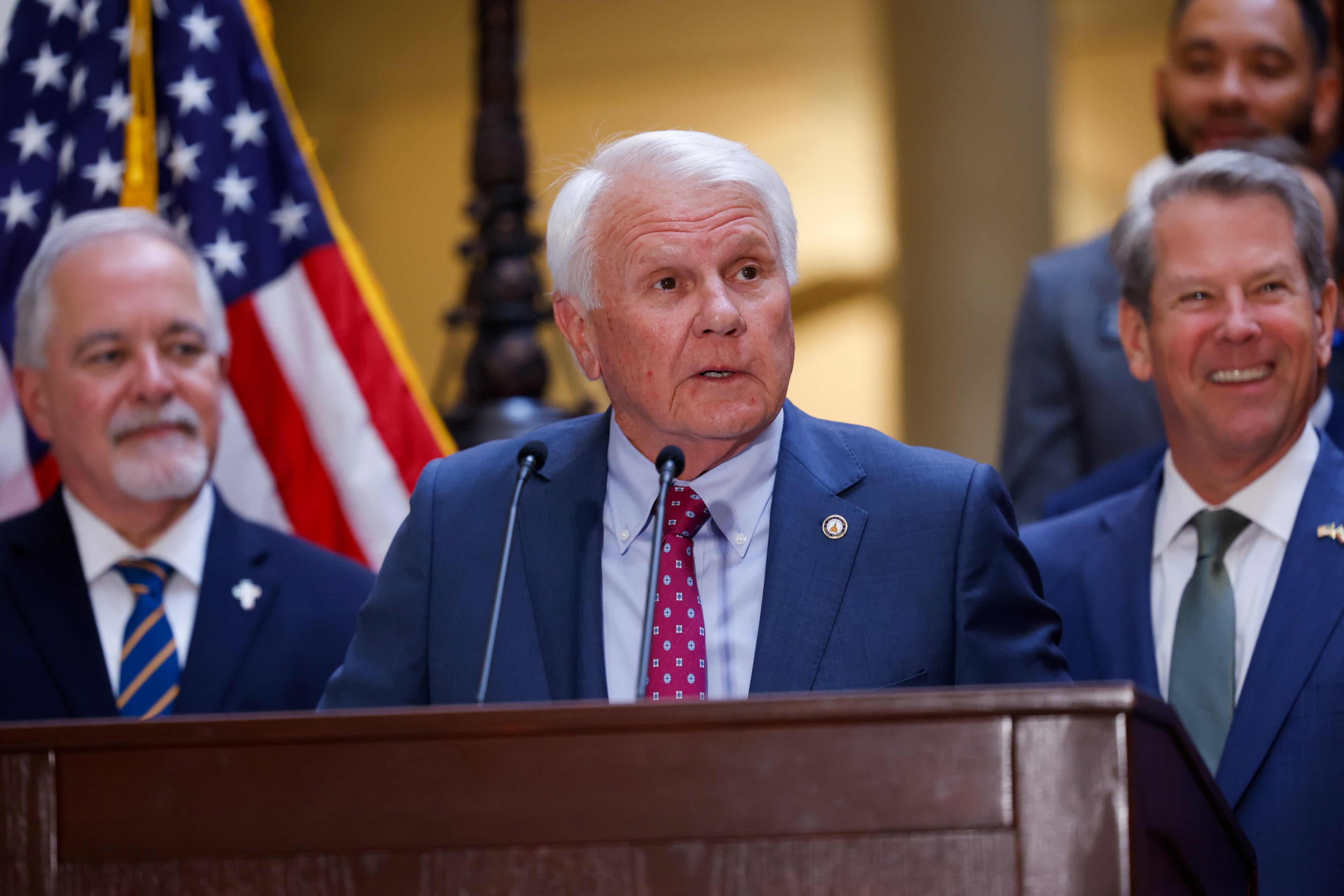
The sweeping literacy bill provides training and support for educators, requires screening for dyslexia and other learning disabilities and mandates kindergarten attendance. Current state law requires children to start school by first grade. It would also place a literacy coach in every elementary school in the state.

It also requires assessing students to make sure they are ready for first grade. If not, schools must develop a plan to support students who aren’t prepared, which could include retention.
The law builds on earlier literacy laws that require schools to adopt instructional practices aligned to “the science of reading,” which prioritizes methods like phonics, word recognition and spelling.
Some educators have described the literacy legislation as well-intentioned but say more is needed, such as more parent notification for struggling readers and statewide instructional coaching.
Burns pointed to neighboring states like Mississippi, Alabama and Florida as evidence that these policies signed into law Tuesday will succeed.
“We created something new, the Georgia model, which is going to get our children reading and make a difference in lives across this state for generations to come.”