Big Tech had a rough midterm. What does it mean for Georgia data centers?


It’s been a tough few weeks for artificial intelligence and data centers.
A blue wave swept Democrats into power in Congress and many fast-growing data center states, including Georgia, which will soon have a governor who campaigned on pausing development. Investors, meanwhile, seem anxious about companies tied to AI and the debt-fueled data center build-out.
Metro Atlanta has emerged as the nation’s leader in construction of new server farms, but the frenzy has come at the cost of souring public opinion toward these facilities and the companies that build them. Could the election of more data center skeptics and Wall Street’s suddenly cooler reception chill development?

It’s a multibillion-dollar question, one that motivated many voters. The hulking facilities that store cloud computing servers and power AI performed poorly on ballot measures nationally.
There were no data center referendums on the ballot in Georgia, either statewide or locally. But polling has shown a deep distrust in AI and data centers. Brionté McCorkle, executive director of advocacy group Georgia Conservation Voters, said the dour opinion of data centers is really a proxy for the top issue of the election: affordability.
“What (voters) see is all these billionaires and trillionaires making all this money,” she said. “There’s all this activity, and the stock market’s doing super well, but somehow they’re still struggling to make ends meet and pay their bills.”

From urban Atlanta to rural communities, residents and activists have raised concerns about the strain data centers could place on the state’s power grid, electricity prices, local water sources and air quality. Data centers also receive lucrative tax breaks in Georgia, and attempts to pause those incentives were blocked by Republicans the past two years.
Data Surge: An AJC series
Data center development is surging in Georgia with metro Atlanta becoming the fastest growing market for server farms in the U.S. and one of the top locations in the world. But the data center boom has raised many questions about land use, the resources the complexes consume and the risk of costs being spread to other Georgia residents and businesses. The Atlanta Journal-Constitution “Data Surge” takes an in-depth look into the power and water demands of data centers and the deliberations of policymakers about this rising industry.
Part 1: Why mall-sized data centers are popping up across Georgia
Part 2: Data centers become new flashpoint for local controversy in Georgia
Part 3: Data Center Alley has lessons to teach. Is metro Atlanta listening?
Gov.-elect Keisha Lance Bottoms pledged on the campaign trail to issue a statewide moratorium on data center construction, aiming to provide time to assess economic and environmental impacts. It’s unclear whether such a policy would withstand legal challenges.
“I will sign an executive order for that pause and then we will determine what else we need to do administratively to take that pause into effect,” Bottoms told CBS Mornings earlier this month. “A lot of data centers are being built in Georgia because of the incentives attached to data centers.”

The data center industry, its lobbyists and pro-business groups in Georgia argue these facilities are often mischaracterized and misunderstood. The negatives are overblown or apply to outdated facilities, they argue, and the high-paying jobs they create, the investment they represent and the tax revenue they generate shouldn’t be overlooked.
“There’s a lot of misinformation out there about this sector,” Chris Womack, CEO of Georgia Power’s parent firm Southern Co., said at the Metro Atlanta Chamber’s annual meeting Thursday. Southern touted revenue from data center customers in reporting a $2 billion profit in the third quarter.
“But yes, they have to do a better job of telling the story about what they’re doing and how they’re doing it,” he continued. “Whether it’s around water, whether it’s around noise, whether it’s around the role they play and the community benefits that they offer.”

These projects can be part of the solution to the affordability and economic concerns that are top-of-mind for voters, said Dan Diorio, executive vice president of state policy and government affairs for the Data Center Coalition, a trade association that represents the industry.
“Data centers can play a key role in addressing those concerns,” he said. “But clearly, the data center industry needs to do more to develop that trust with local communities.”
That public relations crisis is rippling through the tech sector, which has pumped trillions of dollars into data centers and AI initiatives. Big Tech stocks have been volatile since the election, likely a combination of the political sea change and mounting worries over AI-related debt. The Thursday resignation of Jensen Huang, the CEO of AI chip-maker Nvidia, amid infidelity and potential Chinese espionage scandals further roiled markets.
Subodha Kumar, founder of the Center for Business Analytics and Disruptive Technologies at Temple University, said the political backlash is partially self-inflicted by data center companies, which have prioritized rapid expansion and profit margins over community relations. He said voters made clear they won’t accept that approach going forward.
“What these companies need to do is be that little bit more responsible and show that responsibility through their actions,” Kumar said.
“If they don’t do that and they keep being greedy,” he continued, “it’ll hurt everybody.”
How did this issue emerge?
Data centers have been around for decades, storing and protecting servers that run the digital world. They effectively form a collective brain and nervous system for the internet and online records.
But those aren’t the kind of data centers galvanizing voters.

Growing demands for online storage space and the AI boom have supercharged the size and scope of these facilities, leading to campuses of warehouses the size of regional malls. Project proposals are often valued at billions of dollars and require as much electricity as small cities.
Metro Atlanta was on the forefront of this evolution. The Atlanta area went from the sixth-largest data center market in 2022 to the second-largest in the world by 2025, according to data from real estate services firm CBRE.
Access to power was the primary limiting factor for data center development in states like Georgia, where there’s plenty of land and an incentive structure designed to recruit the industry. But a new obstacle has emerged: public opposition.
“The political risk now is a very important variable,” Kumar said.
During the first half of this year, at least 120 data center proposals across the country had been disrupted by local opposition, according to Data Center Watch, a research effort backed by AI security company 10a Labs. Combined, those projects were estimated to be worth nearly $200 billion.

Data centers and midterm elections
That growing angst carried over to the ballot box.
Voters across 10 states on Nov. 4 considered 47 local ballot initiatives focused on limiting data centers. Only one restriction failed to pass.
While the blue wave has largely been viewed as a referendum on President Donald Trump’s policies, namely affordability issues spurred by tariffs and the war in Iran, anti-data center sentiment may have also played a role. Trump dismissed concerns around data centers, adding that communities that oppose them must “want to end up being backwards and poor.”
Conservative AI advocacy group Humans First released a report last week that found midterm voters in counties with large data center projects shifted further to the left than those without proposals. In the 28 Georgia counties that fit that criteria, the leftward shift was 3.3 points greater than the median, according to the report first published by Fox News.
Democrats also won a majority on the Georgia Public Service Commission, the regulatory body that oversees Georgia Power, amid voter anger over rising utility bills.
The shift tees up likely battles over future power bills, the energy mix the state’s largest utility can use for future generation projects and scrutiny over energy contracts with data center developers.
The PSC under Republican control in 2025 approved the largest expansion in Georgia Power’s history, some 10,000 megawatts of new capacity, much of it powered by planet-warming fossil fuels and going toward data centers.
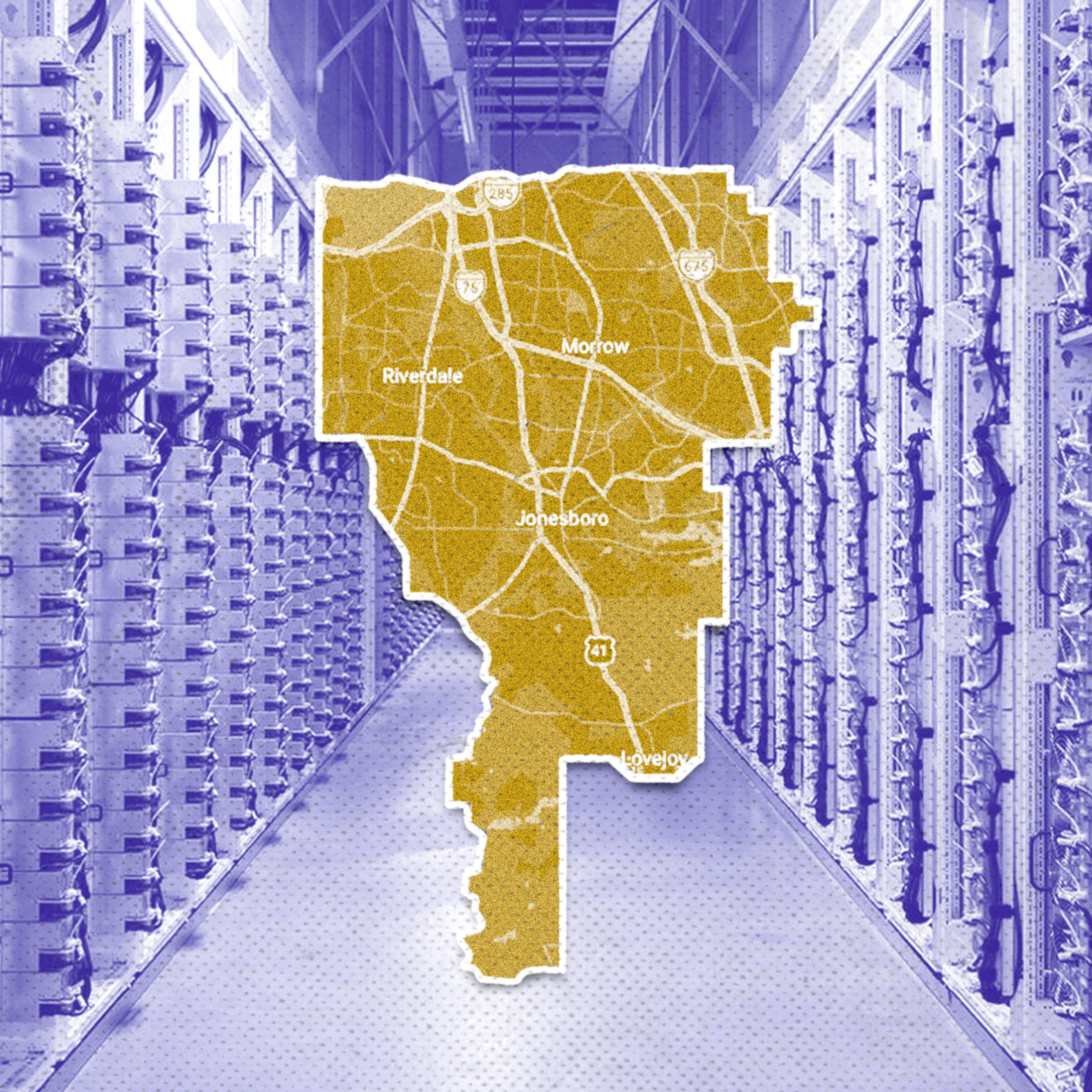
The election results were clear for many tech executives, including the world’s richest man Elon Musk. Despite spending nearly $500 million in vain to support Republicans, his first social media post after the election focused on the AI backlash.
“Data centers in space looking pretty appealing right now,” Musk wrote on X, the social media platform he owns. His artificial intelligence company xAI has ongoing data center projects that has garnered controversy in Tennessee and Mississippi.
McCorkle said it was only a matter of time before voters took out their data center-related ire on those in charge.
“If you force development on your constituents without allowing for an opportunity to weigh in, then yeah, you’re going to get some accountability on the back-end,” she said.

What happens next?
For ongoing projects that are under construction or have their zoning in order, not much is likely to change.
Chris Clark, CEO of the Georgia Chamber of Commerce, said unplugging projects that are already underway would send an anti-business message that’s antithetical to the way the Peach State has operated for decades under both parties’ rule.
“Particularly in some of our rural communities right now, these things are lifelines,” he said, citing the promise of jobs and investment. “You don’t want to send a mixed-message, and you definitely don’t want to stop a project that might pick up and go somewhere else.”
A Democratic-controlled Congress will have the ability to apply additional scrutiny to Big Tech firms and implement new regulations, which some AI executives said they would welcome. Nearly 70% of Georgia voters said they also think AI needs more government regulation, according to an Atlanta Journal-Constitution poll from October.
The data center industry said it will not support a statewide moratorium, setting the stage for legal battles. Newly elected Democrats in other states with lots of data center activity, such as Texas, will have similar debates.
Diorio of the Data Center Coalition said “policies that are made with a short-term view, like a moratorium, can have significant long-term impacts.”
The Democratic-controlled Georgia House will have the option to revive several data center-related bills that stalled under Republican leadership. Two prior efforts gained traction, one of which was vetoed by Gob. Brian Kemp.
Multiple bills focused on banning utilities from passing down the costs associated with data center-related electricity and infrastructure to residential ratepayers. In 2025, Republicans on the PSC and Georgia Power said a rule the commission passed at the time would protect ratepayers from data center costs.

But it isn’t codified in state law and doesn’t apply to electric membership cooperatives, which aren’t regulated by the commission.
The bill Kemp vetoed focused on pausing sales tax exemptions for large-scale data centers and bulk computer equipment purchases. The incentives have cost the state more than $2.5 billion in 2026 alone, according to a state estimate. That tab is expected to rise to nearly $3 billion in 2027.
Some local development authorities have layered additional property tax breaks atop those incentives for select projects, often worth tens of millions of dollars.
Kumar of Temple University said the election fallout could spook investors for the next few months until regulation comes into focus. Data centers, however, are critical infrastructure for the digital economy, and “none of these election results are stopping the demand for AI,” he said.

The pipeline of new projects coming to Georgia remains robust. In October, five data center projects began the rezoning or permitting process, according to state infrastructure review filings. One of those was by Microsoft for a $340 million data center in Floyd County, about 80 miles northwest of downtown Atlanta.

Kumar added that developers may be willing to pay more for industrial properties or those away from residential areas to mitigate backlash rather than trying to find cheaper agricultural land. Clark said it’s a challenging landscape out there for local officials who have to consider rezoning votes.
“I do think we’re in this NIMBYism realm right now, where you do have to sometimes make the right decisions for the long term,” he said, using a common antidevelopment acronym for “not in my backyard.”

“And I know that’s hard politically to do,” Clark said. “Some of the best projects in the state had opposition holding signs up from people whose kids probably work at those facilities.”
Theo Yedinsky, chief external affairs officer of data center developer QTS, acknowledged in a statement “data centers were an issue in some communities, but voters were more focused on affordability, the cost of living, the economy and war.”
“At the same time, our industry has work to do,” he continued. “The path forward for data centers is to be good neighbors, responsible developers. That means paying for the energy costs of our projects, conserving water and investing in the communities where we live and work.”
Diorio echoed that point, adding, “I’m hopeful that the Legislature and other leaders will continue to work with the industry to do that.”
McCorkle of Georgia Conservation Voters said residents have spoken loudly when given the chance to vote on data center-related measures.
“What they’re looking for are elected officials that they trust and are going to be looking out for them and their pocketbooks as these vital infrastructure decisions are being made,” she said.