Atlanta business leaders focus on affordability and talent after blue wave



The Metro Atlanta Chamber on Thursday challenged the business community to help chart the region’s economic path for the decades to come, focusing on housing access, job creation, infrastructure improvements — including transit — and economic opportunity.
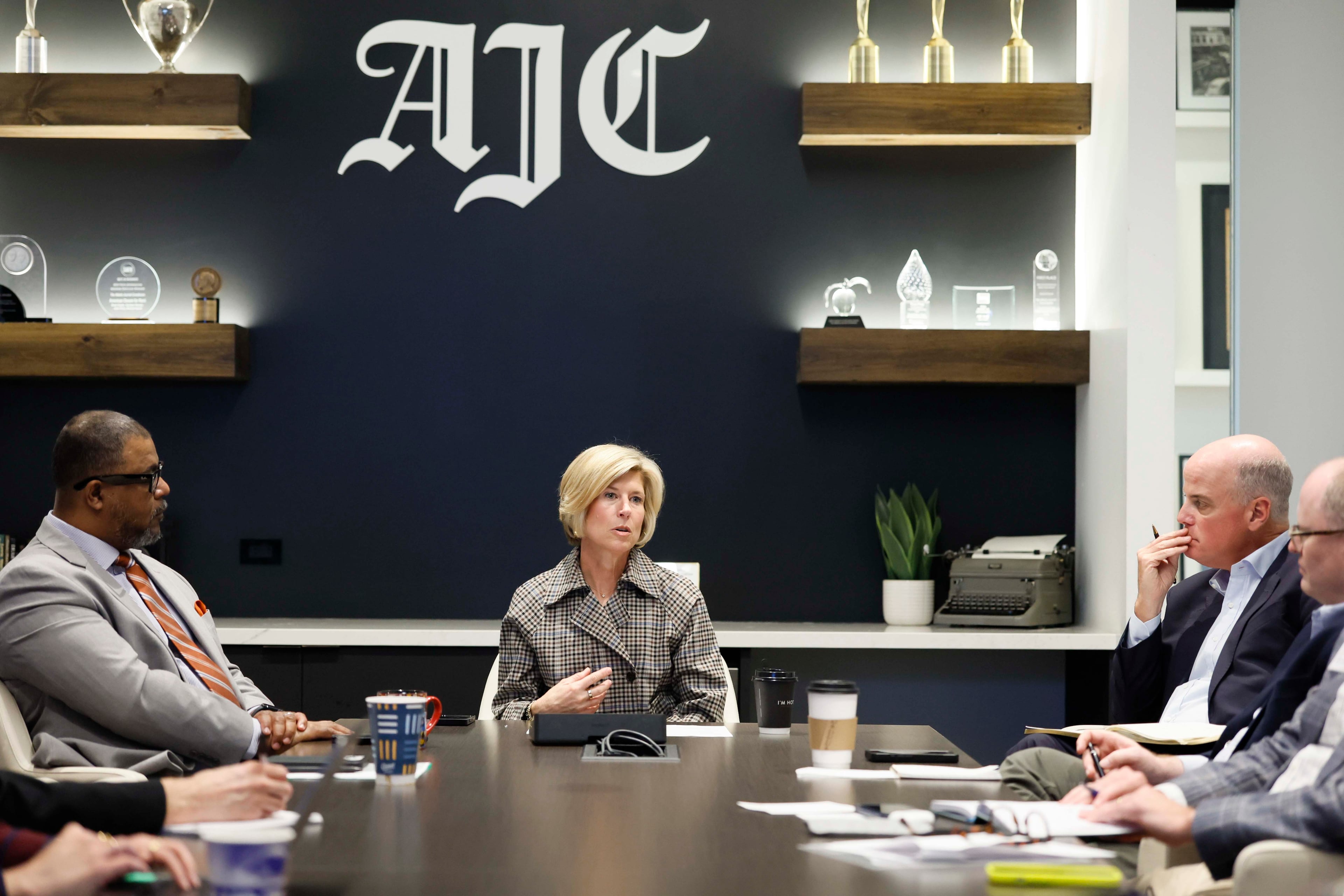
In remarks during its 167th annual meeting and in an editorial board meeting with The Atlanta Journal-Constitution earlier this week, Chamber President and CEO Katie Kirkpatrick emphasized the importance of maintaining the region’s competitive edge, especially after the exposure Atlanta received as a World Cup host city.
Change is coming, especially after the midterm election’s blue wave, but she said there’s economic development momentum worth preserving while pursuing new economic priorities.
“At the end of the day, we’re looking through the lens of how does this keep Georgia and metro Atlanta a competitive location for growth and investment,” she told the AJC editorial board Tuesday.
Growth challenges
Kirkpatrick said the shift in the state’s political leadership “gives us opportunities to work on things that maybe were not top priorities for the existing (Republican) leadership” — such as state investment in MARTA and other Georgia transit agencies and increased support for affordable and workforce housing.

Voters in Georgia and much of the country swept Democrats into power in part because of cost-of-living issues, which were exacerbated by President Donald Trump’s tariffs and the war in Iran. Atlanta Mayor Andre Dickens echoed concerns over affordability need targeted solutions, even as the region continues to increase in population and attract corporate investment.
“Metro Atlanta does not have a growth challenge. We have a balanced growth challenge,” Dickens told the crowd of roughly 1,000 at the chamber’s annual meeting at the Atlanta Marriott Marquis. “The growth is not going to all of the communities and all of the people at the same level, at the rate that they need it.”
For the second year in a row, housing affordability was the top concern for residents in the Atlanta Regional’s Commission’s annual survey of its 11-county area, topping traffic, the broader economy and crime.
Richard McPhail, chief financial officer at Home Depot and the chamber’s 2027 board chair, said housing is a paramount issue for the Atlanta area to address. Not only is it a quality-of-life discussion, he said, it’s an economic hindrance.
“When a company decides to move to Atlanta or to expand, one of the first questions is whether their workforce can afford to live there,” he said at the annual meeting. “If we don’t have a compelling answer, those jobs and that investment becomes difficult to attract and retain.”
Affordable housing was a focus of Gov.-elect Keisha Lance Bottoms’ term as Atlanta mayor, an effort Dickens as her successor has continued. At the beginning of his first term, he set a goal of building or preserving 20,000 housing units by 2030, saying Thursday more than 14,000 units are under construction or have been delivered so far.
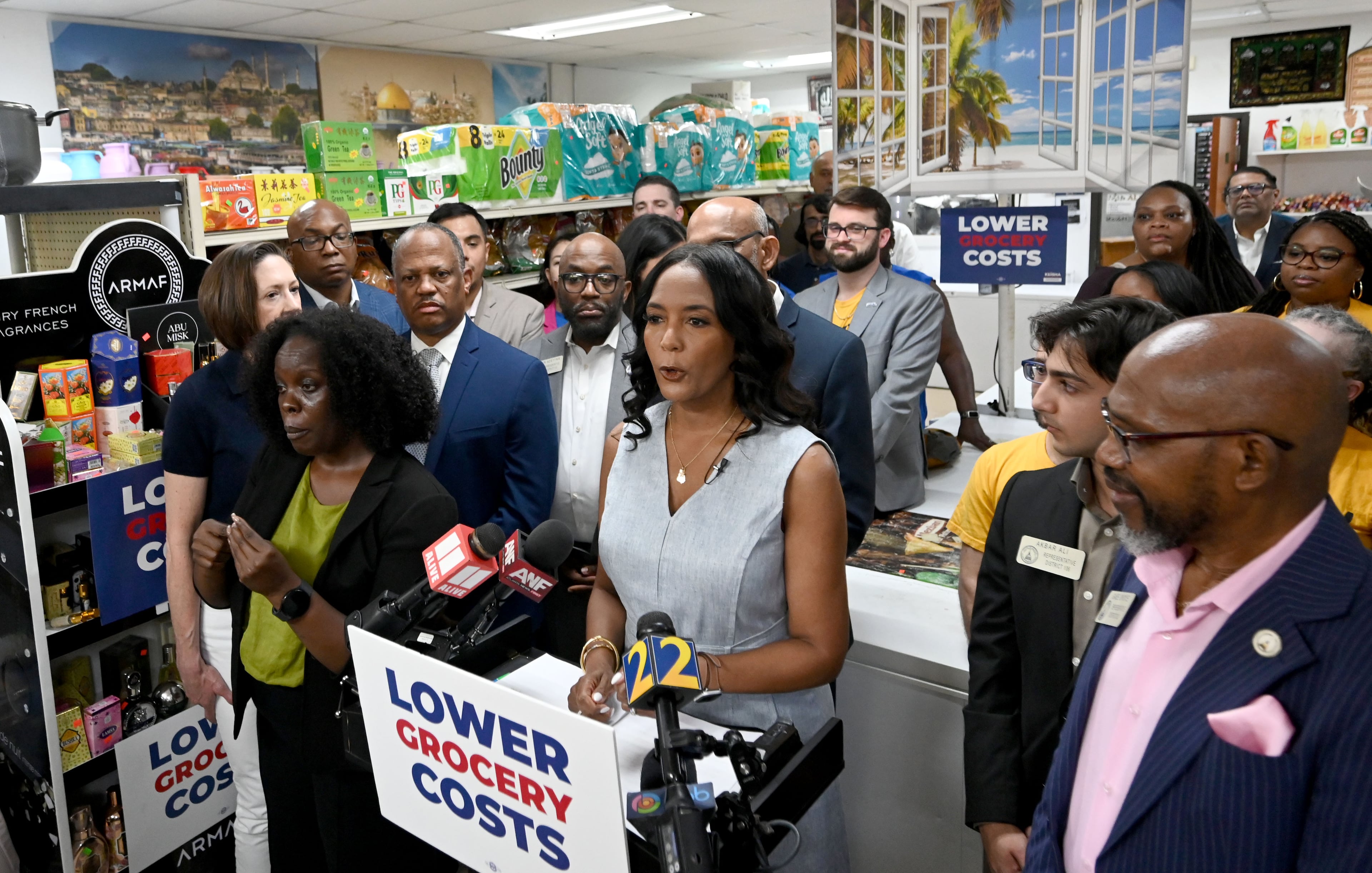
Bottoms campaigned for governor on improving housing costs, and Kirkpatrick said there will likely be policy and business community overlap on that issue.
“Certainly local governments have a huge role in zoning and permitting and those type of things,” she told the AJC. “So what is our role (as a business community)? And what can we be doing at both the state and local level?”
McPhail added, “We can’t expand housing supply without a critical component: the skilled trade professionals who build them.” Workforce development has been a bipartisan focus in Georgia for years and is poised to continue in the Bottoms administration.

State investment in transit?
Public transit is another area of opportunity that aligns with the Democratic platform.
MARTA is the largest transit system in the U.S. that does not receive state funding. Kirkpatrick said she asked Bottoms before the election if she believes the state should be investing in MARTA or in transit, “and she said, ‘Absolutely.’”

MARTA has its own financial problems it needs to solve, Kirkpatrick added, especially in light of last month’s revelation that the transit agency’s expenses for last fiscal year went over budget by nearly 17%.
“The other thing I would like to see maybe by the end of Governor-elect Bottoms’ tenure is maybe another opportunity for expansion” of MARTA, Kirkpatrick said. “We hear that from young people, and we hear it from those from other countries that are very used to a very well-connected transit system — so that always has to be in the forefront.”
Rich McKay, the CEO of AMB Sports and Entertainment and the chamber’s 2026 board chair, told the AJC editorial board that public transit investment is needed as the metro grows.
“I don’t think our congestion and traffic issues are going to resolve themselves,” he said. “They typically don’t, especially if we continue to add businesses and add people.”

The opportunity doesn’t stop outside Atlanta. Many of Georgia’s other cities have bus networks that could benefit from additional state support, she added.
Carol Tomé, CEO of UPS, said at the chamber’s meeting that road and bridge infrastructure should also be a priority, particularly in Washington, D.C. She urged attendees to contact the new elected leadership in Congress, advocating that, “We need a transportation bill passed in this country.”
Business recruitment
Georgia’s economic development machine is already well-regarded, and it’ll likely undergo shifts as Bottoms puts her stamp on the state’s business strategy. She campaigned on restructuring the state Department of Economic Development to focus more on small businesses rather than large corporate recruitment.
On the stage Thursday, Kirkpatrick said the Metro Atlanta Chamber and its partners helped recruit 99 projects, which include 8,733 jobs, to the region so far this year. Shortly after the meeting ended, Gov. Brian Kemp announced a 100th recruitment — a $19 million logistics facility with 330 jobs by equipment supplier SupplyHouse in Henry County.
Kirkpatrick stressed the importance of foreign investment like the recently announced Audi auto factory planned for Middle Georgia. Records obtained by the AJC show Georgia officials offered Audi a likely $1 billion-plus incentive package.
Kirkpatrick said foreign investment drives 30%-40% of job creation in metro Atlanta, and it “needs to remain a high priority.” She noted Georgia competes with other states, and pushed for “maintaining many of the credits and incentives” that are currently in place.
“We’re OK with review and even removing some that aren’t working well,” Kirkpatrick said, but advocated against “wholesale wiping out” of credits and incentives, which she called “tools that are fundamental for job growth.”

Kirkpatrick said Georgia’s economic development competitors such as Texas, North Carolina and South Carolina also saw “massive political change” by electing Democrats, so it will be interesting to see how they “change their game.”
Health and other priorities
Healthcare is also poised for change, especially if Georgia Democrats are successful in their campaign pledge to fully expand Medicaid.
Dickens said one of his top priorities for next year is ensuring progress is made on a hospital south of I-20 in Atlanta, referencing a planned campus proposed by Atrium Health and the Morehouse School of Medicine. Tome added that UPS sees tens of billions of dollars in opportunity in the fast-growing healthcare logistics and biopharmaceutics market.
“Do you know where the epicenter of radiopharmaceuticals will be? In Indianapolis, Indiana,” she said. “Why shouldn’t it be in Atlanta, Georgia?”
Kirkpatrick told the AJC that casinos are “something I think we may see back on the table in the next four years.” Kirkpatrick noted that Bottoms has spoken about casinos, voicing interest in legalizing casino gambling to generate revenue for things like education.
Past efforts to legalize casinos have failed.
“They’re going to have to do the math and figure out if the juice is worth the squeeze,” Kirkpatrick said.
All of the economic focus next year will happen after Atlanta was thrust back into the international spotlight as a 2026 World Cup host city. Hundreds of thousands of people flocked downtown, which the chamber estimates had a $615.4 million economic impact.
“Billions of people saw us at our very best,” Kirkpatrick said. “And that work will work to our advantage for the next years and maybe decades to come.”