Georgia has no peers for data center construction. It now leads the US.
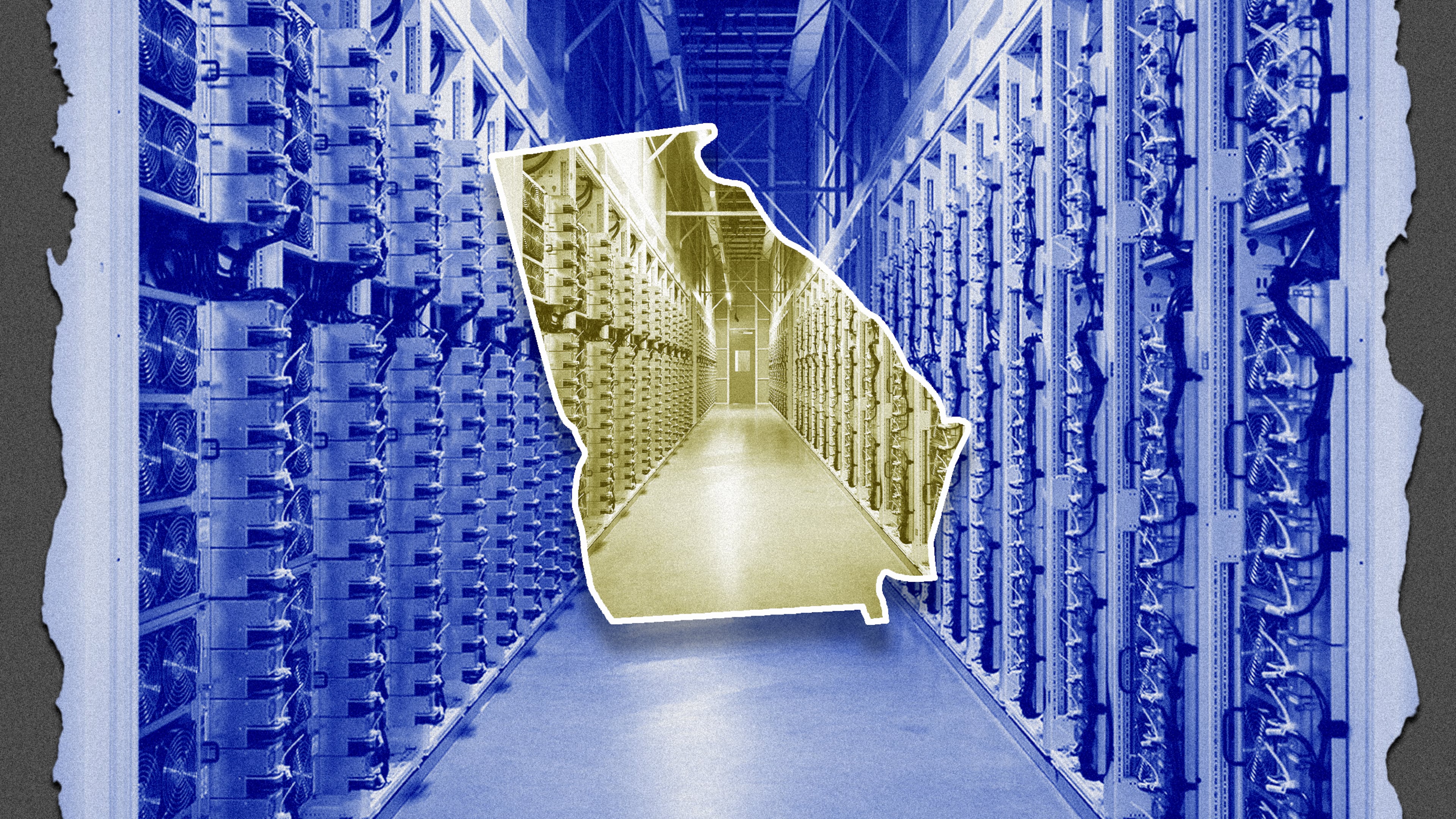

Much of the United States is experiencing a data center boom amid the surge in artificial intelligence, but new data show Georgia is on another level.
No other place in the country has as much data center space under construction as the Atlanta area did in the first half of 2026, at least as measured by the amount of electricity they’re projected to consume, according to new data from real estate services firm CBRE. It’s the first time Northern Virginia, the world’s largest cluster of computer storage that’s often called “Data Center Alley,” has been surpassed.

The shift highlights how the AI frenzy has found fertile ground in Georgia, reshaping the region’s construction industry and sparking political controversy that is rippling across the state.
“Atlanta’s growth reflects the tremendous demand we are seeing for data center capacity,” said Mike Lash, an executive vice president with CBRE Data Center Solutions. “With nearly 2.9 gigawatts under construction, the focus is now on delivering the power and infrastructure needed to keep pace with that demand.”
The cavalcade of construction has become a large aspect of Georgia’s economy. The data center sector is helping to lease empty warehouses, spurring office building relocations and influencing workforce training programs.
On Tuesday, Buckhead-based T5 Data Centers announced it is spinning off its construction operations into a new entity called EverOn that will lease a new office at the Star Metals building in West Midtown.
T5’s construction operation brought in $87 million in revenue in 2021, almost all of which was for T5’s in-house projects, EverOn CEO Tom Mertz said. But that figure ballooned to nearly $1.7 billion last year, composed mostly of outside clients and highlighting how much new activity is taking place in Georgia and across the country.
“There’s a lot of developers who wouldn’t talk to us because we were part of T5, and they viewed it as competition,” Mertz said. “So now, as we separate out, we feel like we’re free to talk to all customers in the marketplace.”
Wisconsin-based Salute also announced Tuesday it plans to acquire T5’s data center operations division at an undisclosed price, a pending deal that involves a portfolio of about 100 advanced computing facilities. The deal, which is pending regulatory approvals, adds to the wave of investor interest in the data center sector, a fast-growing multitrillion-dollar industry.
Mertz said that economic activity is evident on the ground in Georgia, using T5’s new Lithia Springs data center as an example.
“We had somewhere in the neighborhood of 1,200 tradespeople a day on that jobsite, and they’re all Georgia companies,” he said. “And then you’ve got to manage and maintain that facility going forward, so it’s not just the build.”
CBRE tracks data centers like the ones built by T5, which leases computer server storage space to other companies. Projects built by owner-occupiers are typically not included in its data, but Lash said tracking leasing “is really just a microcosm of what’s happening on a larger scale.”
“I don’t know if they’re necessarily one for one, but it is a good way to track how healthy your market is.”
By that measure, Atlanta’s market remains starved for more data center space. It ended June with a vacancy rate of 1.6%, which is incredibly tight among traditional commercial real estate sectors. By comparison, the region’s industrial market hovers around 9% vacant, while the beleaguered office market’s vacancy rate is around 25%.
About 80% of the data center space is preleased, meaning companies have committed to use the new capacity. That only further juices demand, which is why Lash said he doesn’t expect construction to slow anytime soon.
“Our only limitation is the power that now needs to be generated and built out,” he said. “Certainly it’s not because of demand. If demand was the only limiting factor, you would see that (construction amount) continue to exponentially grow.”
But public pushback to data centers has stymied some activity. As of the end of this year’s first quarter, about $130 billion of projects in the U.S. had been disrupted by local opposition, according to Data Center Watch, a research effort backed by AI security company 10a Labs.
An Atlanta Journal-Constitution poll in April found nearly 53% of likely Republican primary voters disapprove of a data center in their community. Among their Democratic counterparts, opposition topped 75%.
*Featured on the “Flagship” podcast*
Site selection and community engagement are now considered development headwinds comparable to power procurement, according to CBRE.
Controversies over power, water, noise and the sheer size of these facilities have led to data centers becoming broadly unpopular among voters. It’s dividing politicians — and not just along party lines.

The negative spotlight on data centers has also sparked a large charm campaign by the industry and its economic development supporters, ranging from the Georgia Chamber of Commerce to President Donald Trump.
Data center-related companies, such as EverOn, say the mounting importance of AI and the omnipresence of digital technology means more of these facilities are needed.
“This is not an industry that’s going to go away. There’s too much investment being put in place,” Mertz said. “It’s an industry that has to do a better job of working with our communities and making sure that everyone’s well-educated and that we’re being good stewards of the community across the board.”