Democrats win PSC majority, which could affect Georgia Power bills


Last year, consumer anger over rising energy bills helped a pair of Democrats win seats on the powerful five-member board that regulates Georgia Power.
On Tuesday night, amid a national blue wave, Democrats claimed the majority on the Georgia Public Service Commission for the first time in more than 20 years.
The victories tee up likely battles over future power bills, whether Georgia Power will adopt cleaner energy sources and whether more nuclear power could one day come into play.
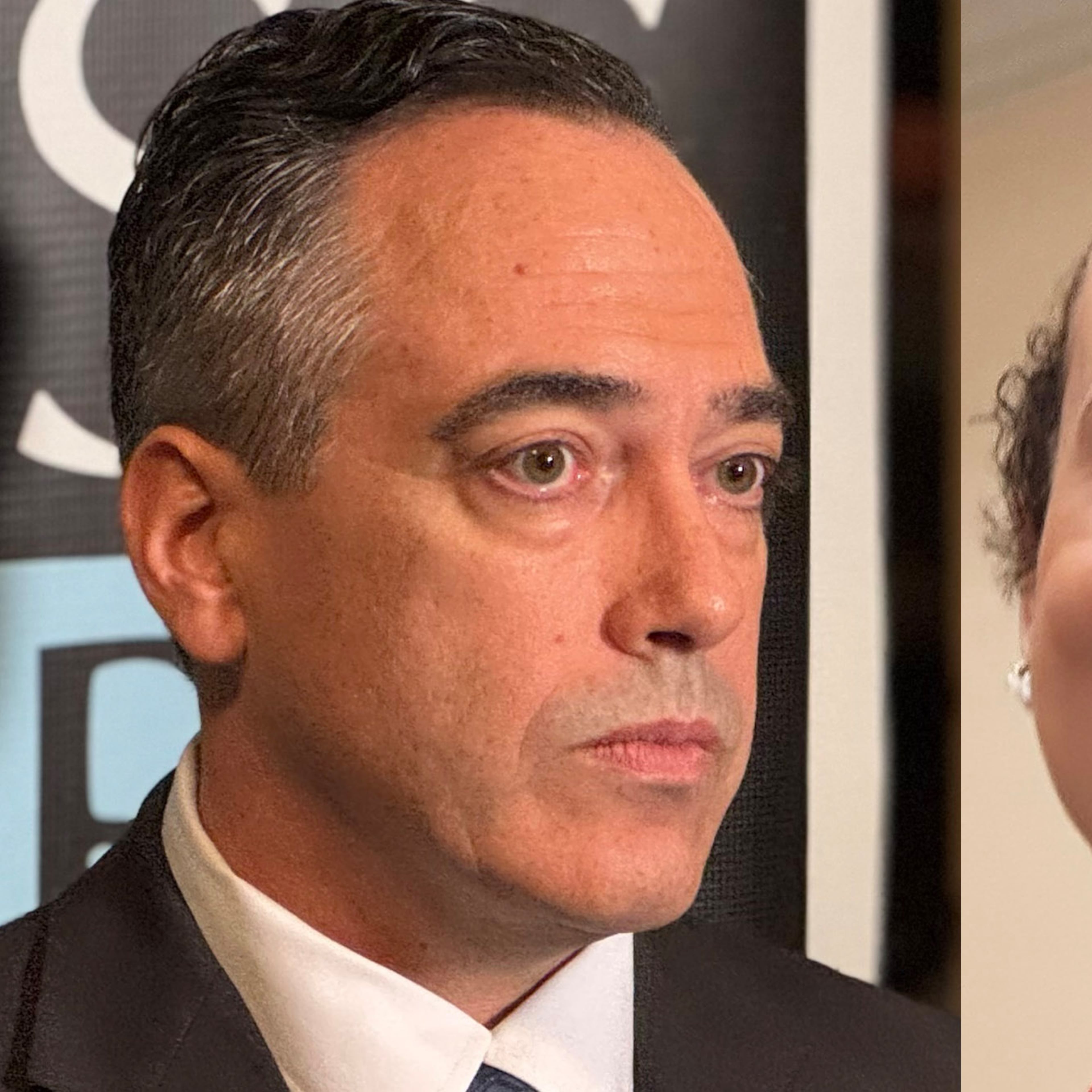
Voters reelected Democratic incumbent Peter Hubbard to a six-year term. Hubbard won an unusual one-year term last November after beating Republican incumbent Fitz Johnson, who tried unsuccessfully Tuesday to regain his seat.
Voters on Tuesday also elected Democrat Shelia Edwards to the panel, which regulates the rates and profits of Georgia Power and Atlanta Gas Light. Edwards bested Republican Josh Tolbert, whose candidacy was supported by more than $3 million from proindustry groups in efforts to keep GOP control of the commission.
“The voters have spoken, and I am ready to go to work on their behalf,” Edwards said.
Along with Commissioner Alicia Johnson, those wins give Democrats three seats on the panel.
“We appreciate the work of the members of the Georgia PSC, including past and current commissioners, in building the electric grid we all depend on and we congratulate Commissioner Hubbard on his reelection and Commissioner Edwards on her election to the PSC. We look forward to working with them both,” Georgia Power spokesperson Meredith Stone said.
‘Didn’t flip … by accident’
The PSC is a wonky, quasi-judicial agency that has operated largely out of the public eye until last year when Georgians, frustrated over their rising power bills, voted out two Republican incumbents.

National attention on rising utility bills and data centers have thrust this year’s races into the spotlight. Outside groups have poured an unprecedented amount of money into both races, with the total amount exceeding $5 million.
Observers said the 2025 races were referendums on power bills after the then-GOP controlled commission had approved six rate increases in three years, raising rates on the average household by a combined $43 a month. Supporters have said that momentum has continued into this year’s race even after Georgia Power took steps to freeze basic rates and then lower bills over the summer.
Power bills and the influx of data centers coming to Georgia have continued to draw the ire of voters. What’s more, climate groups, which raised more than $2 million for Hubbard, Edwards and other Democratic candidates, pushed the message that planet-warming fossil fuels from power plants and gas pipelines are driving up utility bills.
“Georgians didn’t flip this Commission by accident. This has been years in the making. In communities across Georgia, people have organized around high power bills and demanded more accountability from the people and corporations making decisions about their energy future,” said Brionté McCorkle, executive director of Georgia Conservation Voters Action Fund. “Tonight, voters changed who has the power to make those decisions. Now the test is what happens next.”
Georgians have taken the frustration — and sometimes anger — over rising power bills into the commission hearing room. During public comment periods, some of the speakers have condemned PSC members, with some removed from meetings.
Advocates, activists and others have accused the commission of not being transparent in their decision making. That criticism has largely centered on Georgia Power’s contracts with data centers, the PSC’s approval of Georgia Power’s natural gas-heavy expansion and contentions from critics the panel has not done enough to protect customers against rising power bills.
“This (election) shows just how much people care about data centers and rising power bills,” said Codi Norred, executive director of Georgia Interfaith Power & Light.
A shake-up to a comfortable relationship
A change of party control at the PSC is going to shake up what has been a longstanding comfortable relationship between the commission, Georgia Power and Atlanta Gas Light, and the companies’ lobbyists.
The PSC is not scheduled to review Georgia Power’s rates and profits again until 2028, and even then, the utility has committed to slicing $15 off what monthly bills would otherwise be without that agreement.
But regulators still face several issues in the coming years that could influence how much Georgia Power customers pay each month.
The electric company is in the middle of an unprecedented expansion of its power grid, mostly to serve data centers and is scheduled to file its next long-term energy plans in 2028.
During the primary races, PSC candidates on both sides of the aisle questioned the validity of Georgia Power’s projections on how much it needed to build out its power grid for data centers, arguing that much of the company’s plans were based on speculation.
Although a previous commission signed off on Georgia Power’s expansion last year, it is likely that the new regulators will revisit the utility’s plans.
Georgia Power’s corporate parent, Southern Co., released a plan in 2020 to have net-zero carbon emissions across its entire footprint by 2050. The electric company continues to lean heavily on planet-warming fossil fuels, however, reversing course on plans to shutter nearly all of its coal-fired power plants by the end of the decade and building more gas plants as part of its expansion.
The utility has leaned on building traditional power plants, arguing they are the most secure for keeping the power grid up and running. Solar energy, particularly combined with battery storage, has become a more affordable alternative in recent years without producing planet-warming emissions.
Meanwhile, the United Nations recently issued stark warnings that the world is set to cross a dangerous planet-warming threshold of 1.5 degrees Celsius unless countries take immediate steps to curb emissions from power plants, the transportation sector and other sources.
The PSC does not regulate Southern, but Hubbard said he plans to hold the company to its word through its Georgia utility.
“I look forward to helping fulfill Southern Company’s goal of net zero emissions by 2050,” said Hubbard.
Public documents show that Georgia Power may be positioning itself to build more nuclear power in the future. The electric company became the first — and only — utility in the nation to build two new reactors from scratch in roughly 30 years.

The reactors, which generate emission-free electricity, were roughly seven years behind schedule, and their original forecast budget of $14 billion grew to more than $30 billion by the time they were finished.
The utility has been spending more money to explore potential sites for nuclear plants, documents show, setting up the company for extreme scrutiny from regulators because of their cost.
Company officials have stressed that it does not want to build another reactor for now, but observers have said they wouldn’t be surprised if the utility entertains that option in its next Integrated Resource Plan.
A note of disclosure
This coverage is supported by a partnership with Green South Foundation and Journalism Funding Partners. You can learn more and support our climate reporting by donating at AJC.com/donate/climate.