How one Georgia city went from considering a data center to banning them
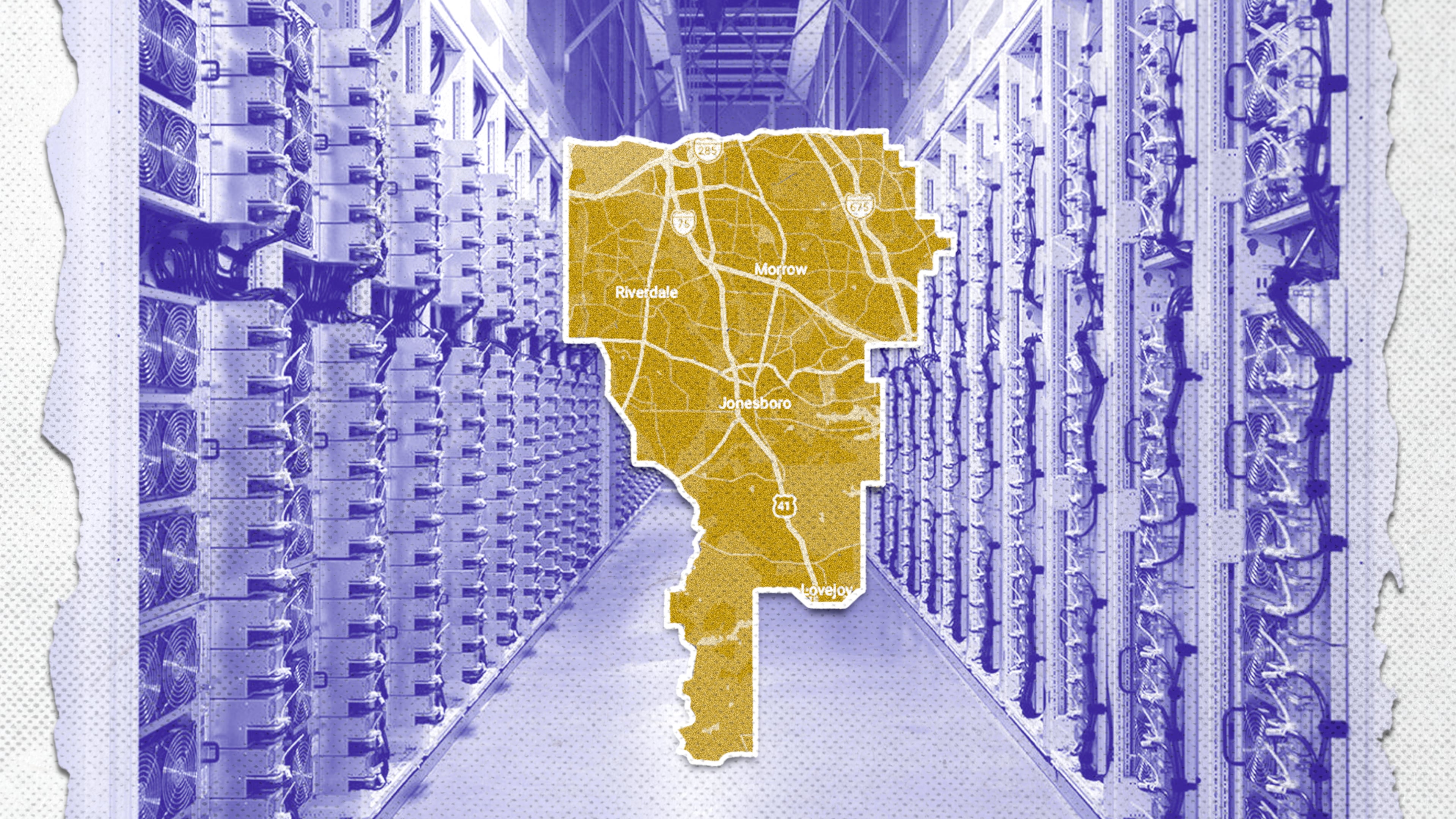

It appeared Lovejoy, a small bedroom community south of Atlanta, would get its first data center after a $1 billion project was proposed late last year.
Fast-forward 10 months and that project is no longer happening. And thanks to the backlash it caused, no other data centers will be allowed to come to the city.
Lovejoy leaders last week updated the zoning code for the city of roughly 13,000 people, explicitly prohibiting data centers. The move was an about-face from December when city leaders approved a rezoning to allow a computing campus that developers later proposed would be more than twice the floor space of Buckhead’s Lenox Square mall.
The Clayton County community has joined a small, albeit growing, list of Georgia cities that have vastly restricted or outright banned the power-hungry facilities that support artificial intelligence and online services.
“Data centers are coming around everywhere,” Lovejoy Mayor Marci Fluellyn told The Atlanta Journal-Constitution on Wednesday. “At one point or another, every jurisdiction is going to have to decide which side of the road you are on when it comes to data centers.”
It also comes as these projects continue to garner controversy nationally and spark broad opposition across the political spectrum, emerging as a potential political liability for elected officials who welcome them. The backlash has prompted a charm campaign from Big Tech and business recruiters, including in Georgia, who are touting the positives of their projects, such as high property tax revenue.
But voter sentiment has yet to significantly budge, according to recent polls.
An Atlanta Journal-Constitution poll in April found nearly 53% of likely Republican primary voters disapprove of a data center in their community. Among their Democratic counterparts, opposition topped 75%. Pew Research Center data from September found more than half of Americans said data centers are mostly bad for the environment, up from 39% in January.
Those stakes were highlighted in Lovejoy, where the mayor and multiple council positions are up for reelection next year. Residents said they believe the pressure they applied to city leaders is the only reason they won’t have any data centers as neighbors.
“Maybe they saw the writing on the wall with the situation,” said Attania Jean-Funny, a resident who lives near the former data center site in Lovejoy. “It’s just not an appropriate place for a data center.”
What sparked the controversy?
Located about 25 miles south of downtown Atlanta, Lovejoy doesn’t have a lot of land to call its own.
The city spans about 3.5 square miles, meaning it’s only about 12 times the size of Piedmont Park. Throughout its history, city leaders have tried to annex property for development and to grow its tax base, sometimes prompting pushback from nearby Henry County.
The city’s data center controversy started the same way.
The owner of a roughly 400-acre property off Panhandle Road, which is across the street from Michelle Obama STEM Elementary Academy and Eddie White Middle Academy, asked to be annexed into Lovejoy in late 2024. The plan was to sell the land to Stillwater Development for a mixed-use residential project.
It was approved, triggering a one-year waiting period before the site could be rezoned and formally integrated into the city, Fluellyn said.
What came next, to some Lovejoy residents, appeared like a Trojan horse.
“By the time the year came up,” Fluellyn said, “the owners of the property had changed their mind and decided that they wanted to go down the road looking at the possibility of doing a data center.”
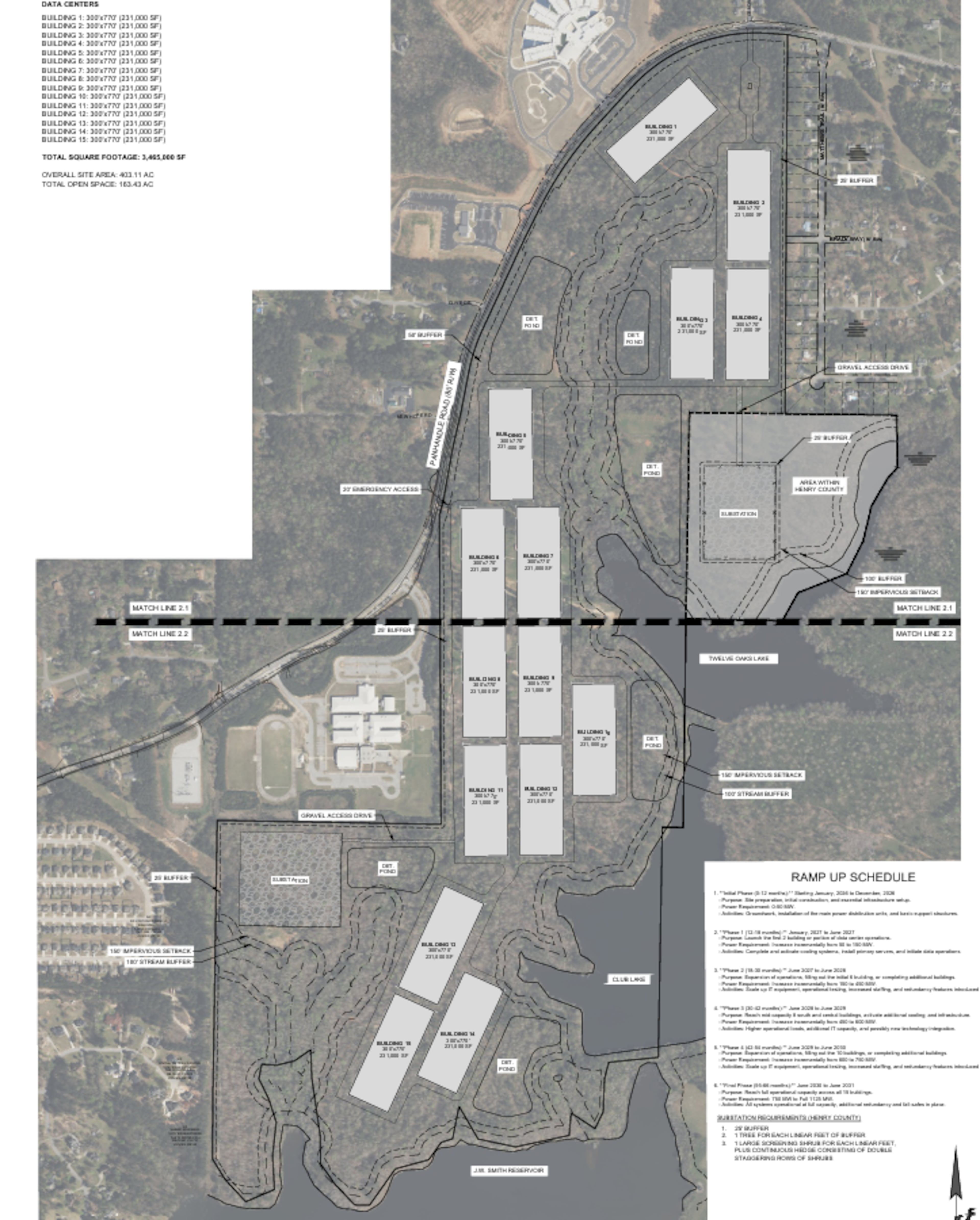
In December, Fluellyn and the Lovejoy City Council unanimously approved a rezoning to allow for a potential data center. In June, the developer filed for a special administrative permit to pursue its plans, triggering a state infrastructure review required for large projects.
In that filing, Stillwater disclosed it was evaluating building up to 15 data centers on the project site, totaling about 3.5 million square feet of development. Stillwater, a subsidiary of South Carolina-based developer The Stillwater Cos., did not respond to multiple requests for comment from the AJC.
Fluellyn said she and her council colleagues were not aware of the potential scope until that time. As soon as the proposal was revealed to the public, Fluellyn said she realized what would happen next.
“I knew what the public response was going to be,” she said. “Way too much in a residential area close to two major schools that service our children. That was the overwhelming response that they received.”
What happened to the project?
The project caught the attention of local activist groups in Clayton and Henry counties, an area that’s awash with data center proposals.
Within weeks, a petition opposing the Lovejoy project amassed more than 500 signatures. Fluellyn added that the data center proposal didn’t have an attached client, so its construction was speculative and didn’t have corporate tenants advocating for it to be built.

Public meetings were flooded with opponents. In early August, Stillwater informed the city it was withdrawing its permit application and pivoting back to its mixed-use plans.
“We had stressed to them that the only thing that really works is coming together as a community in the masses and showing up and being as loud and as angry as you possibly can be,” said Connie Snow, founder of local activist group Conserve Henry.
“To me, that’s the main reason they got it defeated,” she added.
Like many Georgia cities, Lovejoy didn’t have a legal definition for data centers until recently. While data centers and their progenitors have been around for decades, the gigantic and multibuilding campuses sprouting across Georgia are a new phenomenon that popped up after 2022 when the AI race began to gain momentum.
Georgia is now the second-largest data center market and ended June as the busiest state for data center construction, according to real estate services firm CBRE. It was the first time Northern Virginia, the historic home of data centers, was dethroned as the region with the most computer server space being built.
What led to the ban?
On Sept. 21, Lovejoy City Council added “data center” to its zoning code so it could be defined — and then immediately banned them.
Several Georgia cities and counties have issued moratoriums to temporarily ban data centers or have amended their zoning codes to restrict where they can be built. This includes Atlanta prohibiting new ones near the Beltline, MARTA stations and entirely in some neighborhoods.
Lovejoy joins the handful of cities to go further, restricting them entirely within the city limits, although the others to do so already have data center projects.

Fayetteville, which has a massive campus by QTS under development, amended its code in March to prohibit new data centers across all its zoning districts. Palmetto, which similarly has a Microsoft data center, did the same a month prior.
“What does not work in Lovejoy may work somewhere else,” Fluellyn said. “They need to determine whether a data center will work in their jurisdiction or not.”
Jean-Funny said other communities trying to fight data centers may have a harder time than her neighbors in Lovejoy. Some of Georgia’s largest data center projects involved nondisclosure agreements between their developers, Big Tech users and local officials, leaving them to only become public after being effectively approved.
If there’s any political official that agrees with that (nondisclosure agreements) … don’t support it,” Jean-Funny said. “Don’t support those people that support things like this being done under the table.”