Legendary Atlanta electronic band is set to make a grand return home

Naming all the musical influences of Sound Tribe Sector 9, better known as STS9, would likely take an hour.
The popular jam band, formed in metro Atlanta in the late 1990s, is a fresh amalgamation of many sounds, as its name implies: rap, jazz, EDM and funk, to name a few. Their influences range from Herbie Hancock to Outkast to Guillermo Scott Herren.
“We never said we’re this type of band,” guitarist and producer Hunter Brown said. “We’re going to make this type of music. We really just got together and as best we could just play the music that we were inspired by.”
Along with Brown, the quintet, now based in Santa Cruz, California, includes Jeffree Lerner (percussion), David Phipps (keyboards), Zach Velmer (drums) and Alana Rocklin (bass). The formation of STS9 began in Stone Mountain in 1997. Brown, who’d already been playing music, graduated from Snellville’s Shiloh High School and met Velmer and the band’s original bassist, David Murphy (he left in 2014; Rocklin joined that same year). Brown decided they all should play for fun and “see where it goes.”
They eventually met Phipps and Lerner and relocated to Atlanta, right off Howell Mill Road.
“(We were) right down the street from Stankonia (Studios) that was kind of hallowed ground for us, just like, you know, growing up on all that kind of music,” Brown said. “I wanted to kind of be in the thick of it.”

Over 20 years later, STS9 has released more than 10 albums and become a top-grossing tour act, cementing themselves as leaders in the jam band scene. The group is currently touring behind their latest album, “Human Dream,” with a stop in Atlanta for two shows at the Eastern on Friday and Saturday.
Released last fall, “Human Dream” was the first STS9 project recorded, mixed and produced in the band’s home studio, which Brown described as an “incredible milestone.”
The Atlanta Journal-Constitution caught up with Brown to talk about the band’s two-decade run and hometown shows. The group previously performed in Atlanta last February, at SweetWater Brewing’s 28th anniversary party.
“It’s kind of crazy we’ve been around this long. It’s gone by incredibly fast. We still feel like we’re 18 out here, just trying to prove ourselves and do our thing,” Brown said.
This interview has been edited and condensed for clarity
Q: What was the EDM scene in Atlanta like during the late 1990s?
A: No one was even using that term yet. People were just saying electronic music as a kind of a catch-all for a lot of different genres. But back then, we were more interested in drum and bass or house music. Then EDM came down maybe 10 years into our career, and we saw that as something kind of different.
Q: What made you all want to pursue making music together, given the band didn’t have peers?
A: It was just completely out of love for the music we all played. That’s just what we did on our free time. That was the era of mixtapes, and I was making tons of mixtapes all the time that just really were a better reflection of who we really were. It wasn’t just one genre. It would span all these different genres, from hip-hop to dub to down-tempo, or what they called trip-hop at the time, to drum and bass. I think that really influenced how we approached the band.
Q: How would you describe the band’s sound?
A: We never tried to describe it, and I think we always got frustrated with people trying to describe it for us. But when they would kind of press us to try to describe it ourselves, we never really could do it properly. In a lot of ways, we’re a band who’s influenced by a bunch of kinds of music, but we feel mostly it’s dance music, funk, soul, jazz-influenced dance music. It’s got an electronic side.

Q: It’s impressive that you all have been able to build a dedicated fan base over the years, given all the musical influences. How have you all sustained a loyal following?
A: Touring was a huge part of it, especially early on. We played over 150 shows a year, for years at a time. We were always on the road. One of the first shows that we played, maybe the second year that we were together, we met a trumpet player named Gary “El Búho” Gazaway. He took us on tour with him as his ‘Acid Jazz Experience.’ It was the El Búho and the Acid Jazz Experience. He took us all around the South and the East Coast, and we were his band. We learned a lot of music through him. When he quit doing that, we went on tour and just kind of followed up in the places that he had taken us.
Q: How often are you all on tour now?
A: The two or three years before COVID-19, we had gone down to about 40 or 50 shows a year. Now, we’re trying to get back to that. Since COVID-19, the most we’ve done is about somewhere between 25 and 30 shows. We’re going to play more this year than we did last year. Touring has changed quite a bit over the last decade, and that’s affected our business in a big way, so we’ve had to adjust. (For example), the world is kind of built for these EDM artists, these DJs, and so the band thing is a little bit more difficult — to go into these clubs that were set up for a DJ to perform and not five people.
Q: What does the title “Human Dream” mean to you all? The album was conceived during the height of COVID-19 and the massive CZU Lightning Complex fires that affected Santa Cruz.
A: For us, it came from art history. (It’s) something that really inspires us as well and the album. We came across this drawing. It’s called “The Dream of Human Life (Il Sogno)” by Michelangelo. We turned that dream of human life into the human dream. I think partly it was COVID-19, partly was the fire, partly it was just the state of the world, and just feeling this connection to the word “human,” and really wanting to express the most human thing that we could.
Q: What are you most looking forward to at your Atlanta shows?
A: Being home in Atlanta. We love Atlanta to death. I miss Atlanta like crazy. There’s no place like Atlanta. Atlanta influences everything. It’s incredible the reputation Atlanta’s kind of built for itself since we’ve been gone, and we’re proud to call Atlanta home. We just really love to go back there as much as we possibly can and just be there for as long as we can.
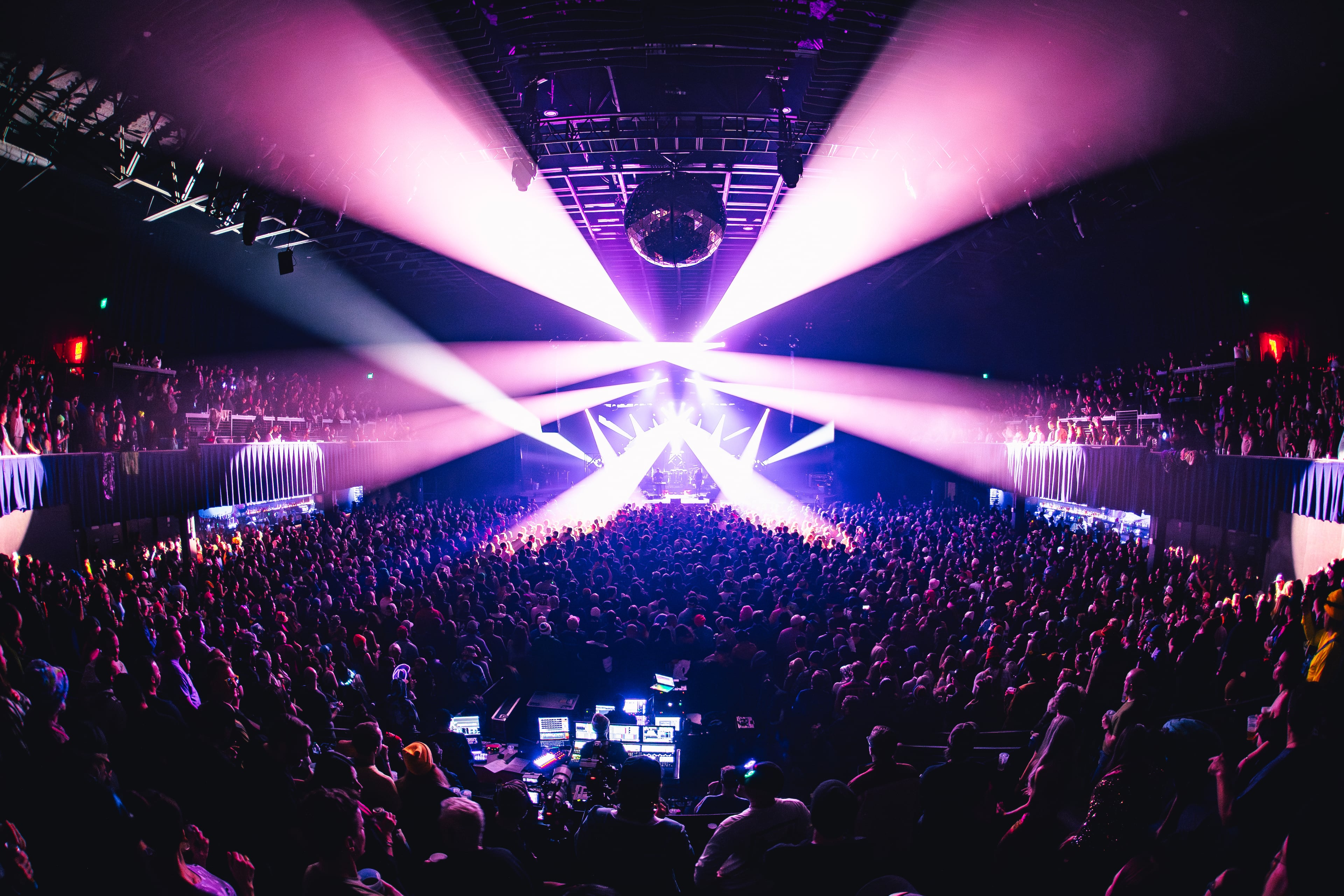
Q: How would you describe an STS9 show for those seeing you for the first time?
A: Every show that we play is different from the last. We’ve never repeated a show or a set list, and so the set list is different every single night. That’s a big challenge for us, and I think it’s something that the fans love, because no matter when you come to see us, you’re going to hear something you’ve heard before, but you’ve never seen it quite like that. What we’re trying to do every night is to create something new and authentic. … The community that’s kind of organized itself around our music has just been incredible, and it’s something that really inspires us.
IF YOU GO
STS9 with special guest Lotus
7:30 p.m. Friday and Saturday. $57-123. The Eastern. 777 Memorial Drive SE, Atlanta. easternatl.com.
About the Author

DeAsia is a music and culture reporter for The Atlanta Journal-Constitution. She focuses on the intersection of arts, culture and diverse communities, as well as how emerging social trends are being expressed through the lens of the Atlanta aesthetic. DeAsia's work can be seen in Pitchfork, Essence, Teen Vogue, Elle and more.


