A life-saving skill everyone can use when it matters most
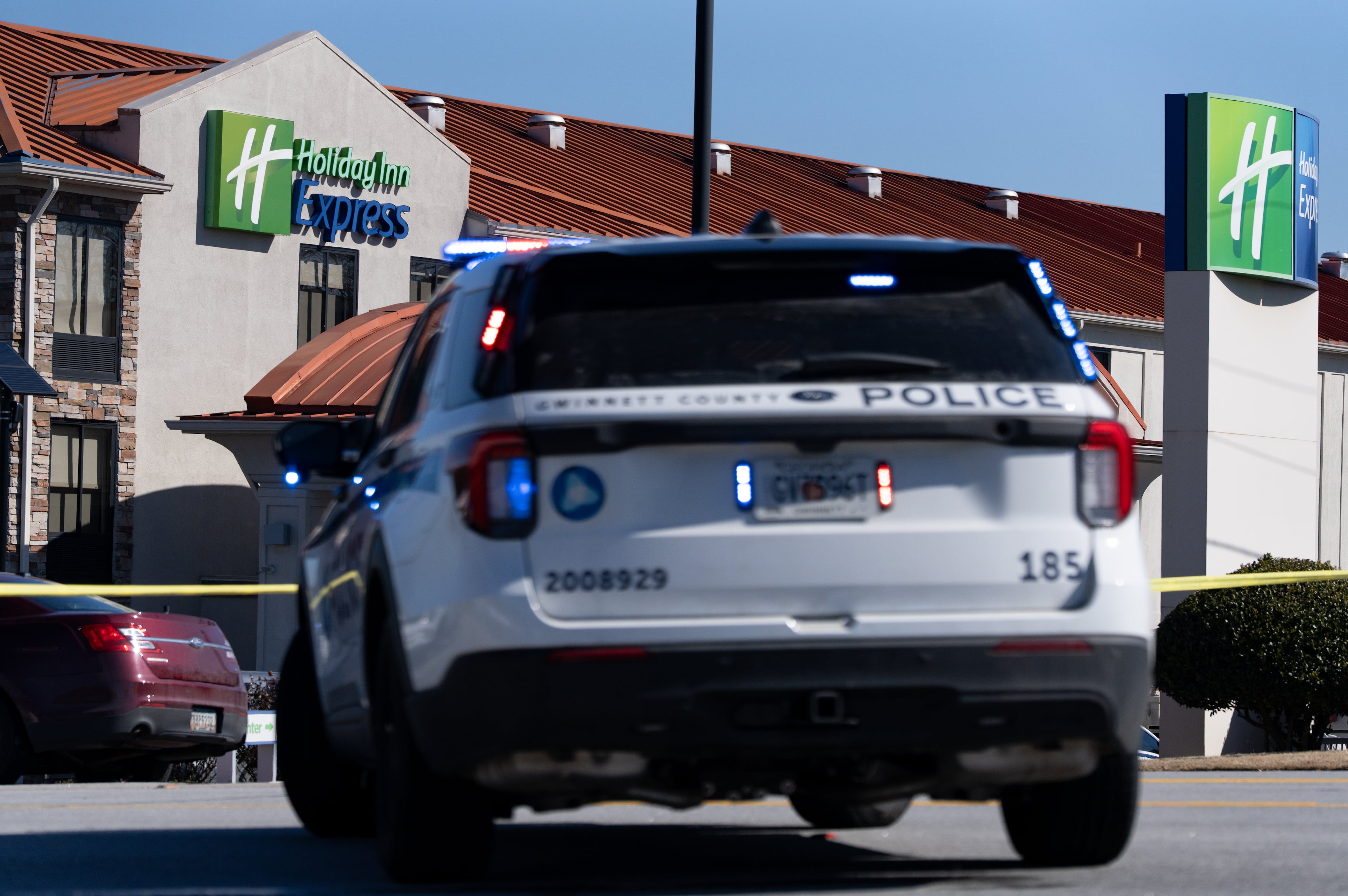
By the time Chamblee Police Department officers reached the Jiffy Lube on Peachtree Boulevard in December, where a father had collapsed, Pablo Santiago was already turning blue. Time was running out.
He wasn’t breathing and had no pulse, so the officers leaped into action with chest compressions.
“It’s tough,” Officer Dustin Bulcher told CBS Atlanta, speaking about what it was like performing CPR in that moment. “You know, it looks easy when you’re training a training class, but when it’s real life. It’s…it’s real life.”
After performing chest compressions for nearly 15 minutes, Bulcher and his fellow officers finally felt a pulse. Color was beginning to return to Santiago’s face — who had suffered cardiac arrest. His life was saved.
“The doctor told me that only people who are in the right place at the right time are able to survive something like this,” Santiago later told Bulcher over FaceTime, as reported by CBS Atlanta. “The possibilities of surviving are minimal. If you don’t have the right people.”
In truth, a vast majority of people that experience out-of-hospital cardiac arrest don’t survive. According to the American Red Cross, approximately 90% of them die. Immediate cardiopulmonary resuscitation (CPR) can triple a person’s odds of survival.
In honor of American Heart Month, here is some information and useful tips on CPR.
A bystander can mean better odds
According to the American Red Cross, approximately 37.5% of out-of-hospital cardiac arrests were witnessed by a bystander in 2024. Bystanders can dramatically increase a person’s odds of survival by immediately performing CPR, but those odds decrease by around 10% for every minute the individual doesn’t receive that care.
The American Heart Association’s online CPR resources explain that CPR is important because it keeps blood flow active in the patient, increasing their odds of being successfully resuscitated once trained medical help arrives. It’s one of many steps in the association’s Chain of Survival for cardiac arrest patients:
- Recognition of cardiac arrest and activation of the emergency response system (calling 9-1-1 in the U.S.)
- Early CPR with an emphasis on chest compressions
- Rapid defibrillation
- Advanced resuscitation by Emergency Medical Services and other health care providers
- Post-cardiac arrest care
- Recovery (including additional treatment, observation, rehabilitation, and psychological support)
How to perform CPR
Immediately call 911 and begin CPR on someone if they are unresponsive, not breathing and their heart has stopped. The American Heart Association suggests hands-only CPR for the general public.
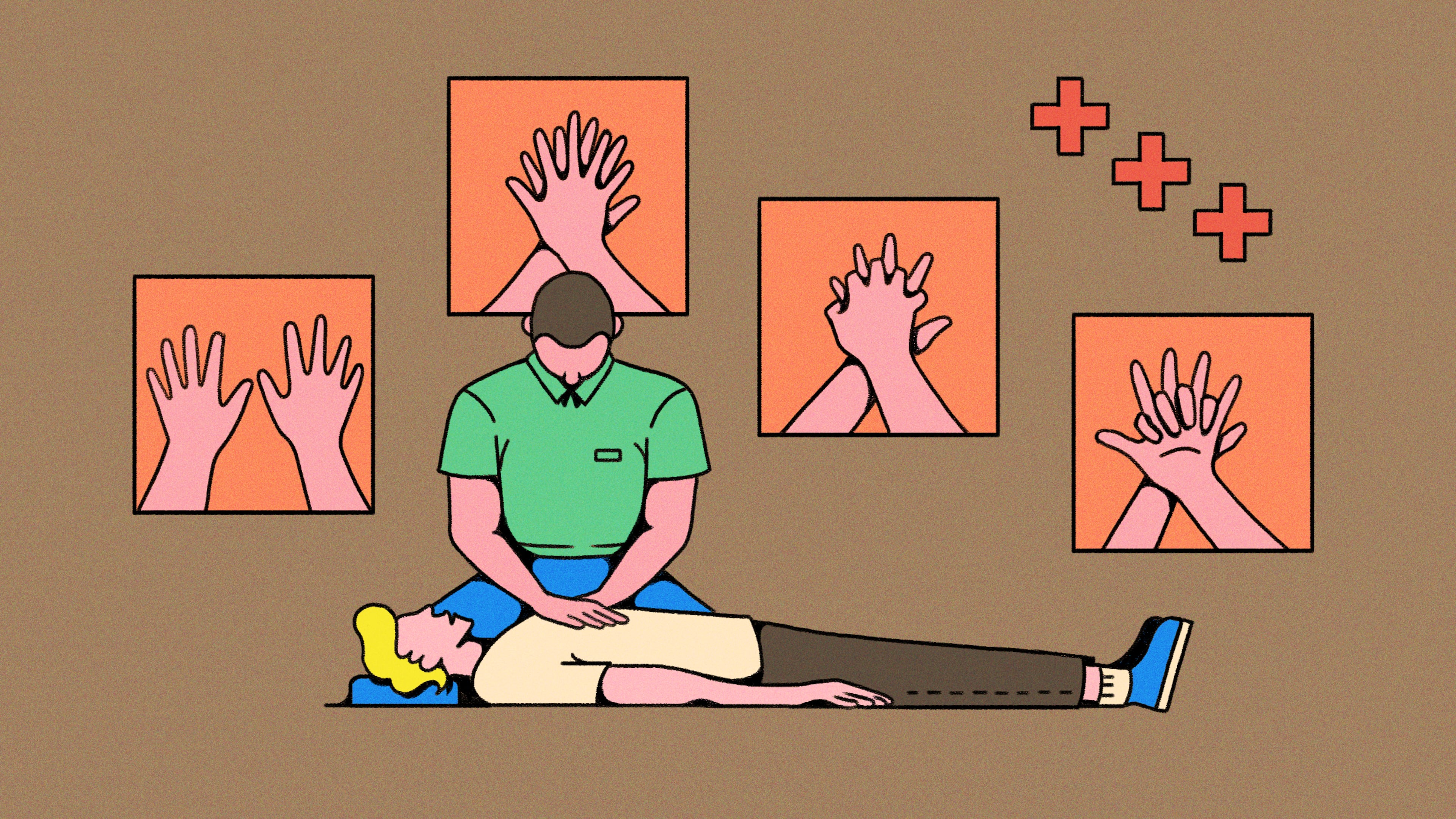
The American Red Cross breaks down hands-only CPR through a short series of simple steps.
- Place the person on their back across a firm, flat surface.
- Kneel beside the person with your knees around a shoulder width apart.
- Place the heel of your hand in the center of their chest
- Place your other hand on top of your first hand for support and interlace your fingers. Do not lean on the body in between compressions.
- Position your body so that your shoulders are directly over your hands.
- Lock your elbows, keeping your arms straight.
- Push hard and fast. You should be applying at least two inches of compression at a rate of 100 to 120 compressions per minute.
- Ensure the chest is returning to its normal position in between each compression.
An easy way to imagine 100 to 120 compressions per minute is through music. The tempo of “Stayin’ Alive” by the Bee Gees is a classic example, but the American Heart Association often features more contemporary song suggestions over social media — including Bad Bunny’s “EL CLúB.”
Hands-only CPR is a helpful introduction to cardiac arrest aid, but it’s just the first step. Atlanta is home to a bevy of opportunities for advanced CPR and first aid training.
To find a CPR class near you, visit redcross.org/take-a-class/cpr or heart.org/en/nation-of-lifesavers.
About the Author
Hunter Boyce is a writer, digital producer and journalist home grown from a Burke County farm. Throughout his career, Hunter has gone on to write sports, entertainment, political and local breaking news for a variety of outlets.