RECIPES: Atlantan’s cookbook is ‘A Love Letter to the Southern Biscuit’
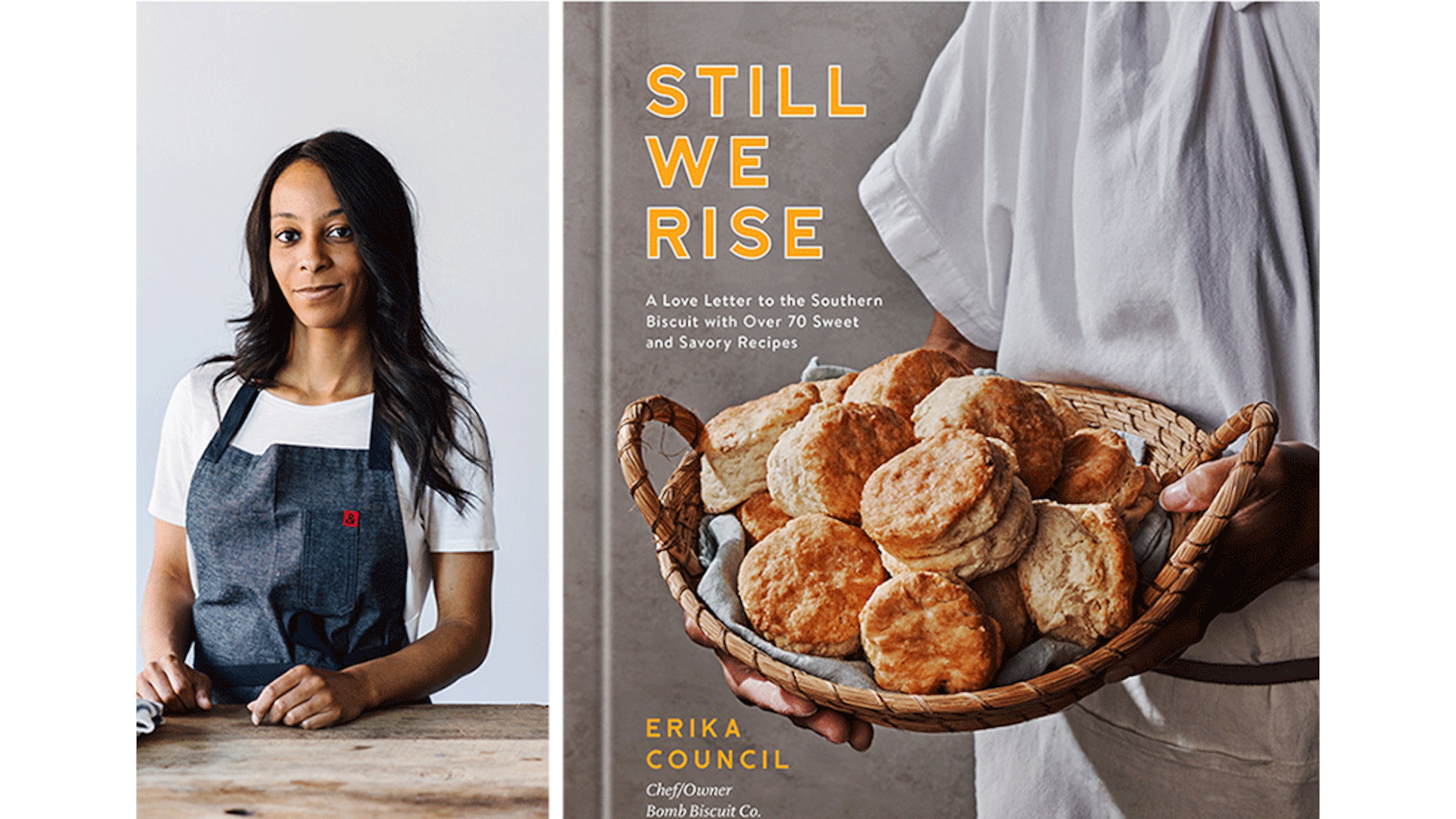
Perfectly flaky, light and tender biscuits might be the holy grail of Southern baking. Heritage recipes abound and there’s no lack of opinions on the best method and the right ingredients.
Now Erika Council, chef and owner of Bomb Biscuit Co., has written what might be the quintessential guide to biscuit making, “Still We Rise: A Love Letter to the Southern Biscuit With Over 70 Sweet and Savory Recipes” (Clarkson Potter, $26), which releases Aug. 8.
“Although much has been written about biscuits, I felt something was always missing from these stories, something that seemed representative of me,” she writes in the introduction to the cookbook. “In my research into biscuit books, none highlighted the contributions of Black bakers and chefs, yet my entire education on the subject has been guided by Black hands,” she writes in her introduction.

In an interview, Council said biscuits are something she’s always been good at making. “I learned to make them working at my grandmother’s restaurant in Chapel Hill, North Carolina. She served biscuits at every meal. I learned them from my other grandma who was a baker for the church. I thought about being a chef, but I saw the reality of the restaurant business, and decided to go into computer software.”
Then she found herself baking to relieve the stress of her corporate job in information technology. “Baking calmed me. First I was just cooking for friends, but they would recommend my baking to other friends. Then I started doing pop-up dinners.”
In 2016, she opened a biscuit delivery service that drew national attention. Today she’s operating a brick-and-mortar location in Atlanta’s Old Fourth Ward neighborhood.
There’s often a line out the door at Bomb Biscuit Co. Biscuits are available a la carte, but also serve as the platform for sandwiches like her classic breakfast and brunch biscuit with bacon, egg and cheese, as well as the “glori-fried” (fried) and lemon pepper chicken biscuits. Recipes for these favorites plus jams, spreads and butters are all included in the book’s more than 70 recipes.
There are more than 20 variations on basic biscuits, almost a dozen savory variations, as well as almost a dozen sweet variations. Council also provides a thorough discussion of biscuit fundamentals including ingredients, tools and techniques.
Council writes that the cookbook is a love letter to the African American women and men who have both inspired and taught her along the way. “As my mother would say, ‘They’re still here, because I’m still here.’ By the end of this cookbook, you’ll know them all a little bit, and a little more about me.”
RECIPES
Erika Council’s cookbook is a love letter to biscuits and the generations of biscuit makers that came before her. It offers more than 70 recipes, including these sky-high classic buttermilk biscuits, buttery bliss biscuits and throw-back biscuits made moist with evaporated milk.
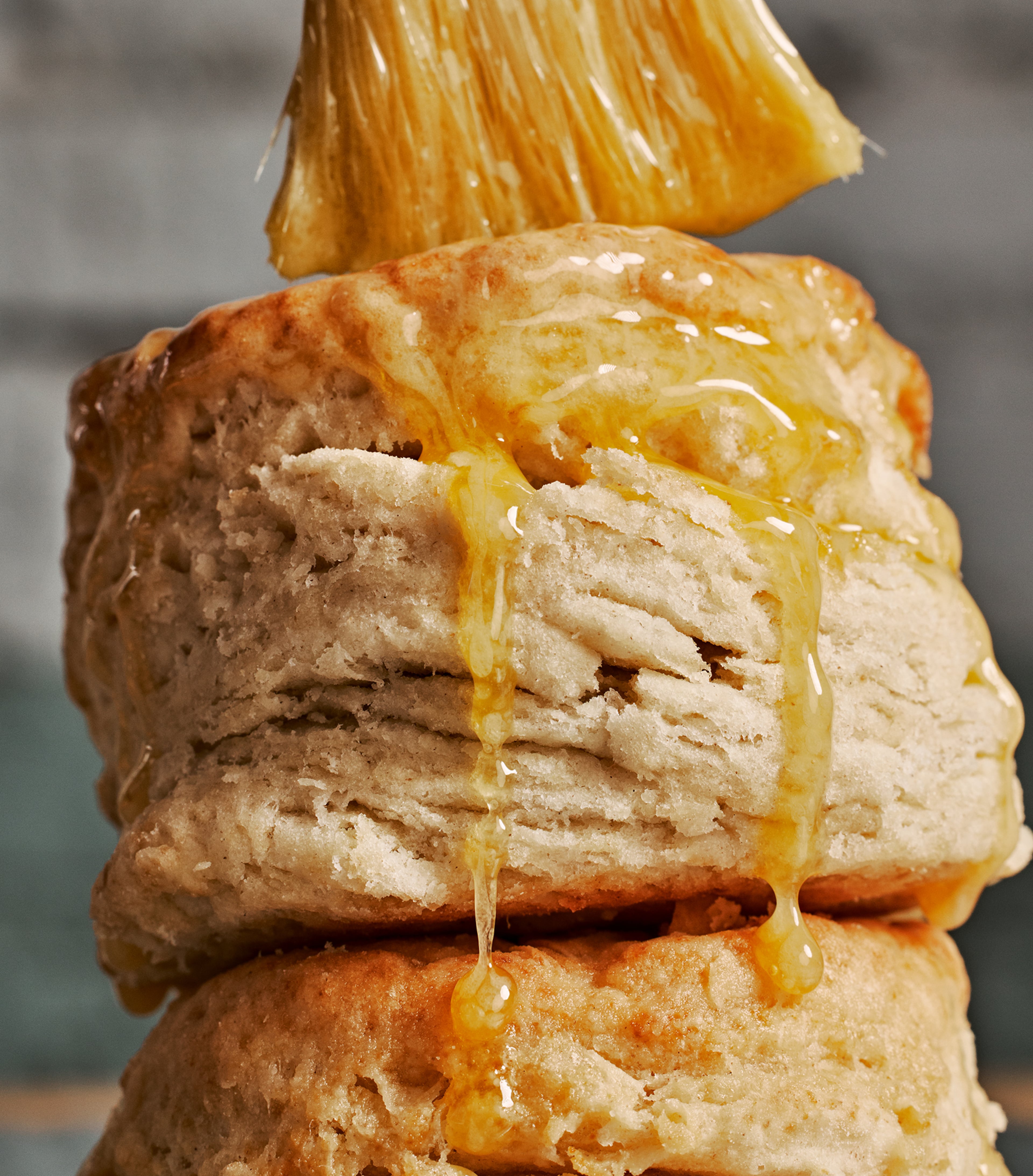
The Bomb Buttermilk Biscuit
This recipe is the classic buttermilk biscuit perfected and the foundation of Erika Council’s success as a biscuit entrepreneur. Council includes detailed explanations and tips to help you duplicate her high-rising tender flaky biscuits.
We found we did not need the full 1 1/2 cups buttermilk when making these biscuits, so follow Council’s direction to add part of the buttermilk and adjust the total amount as needed.
- 1 tablespoon baking powder
- 1 tablespoon baking powder
- 1 1/2 teaspoons kosher salt
- 1/2 teaspoon baking soda
- 2 tablespoons vegetable shortening, cold, cut into 1/2-inch chunks
- 1 stick (8 tablespoons) unsalted butter, cold
- 1 1/2 cups full-fat buttermilk, cold
- Adjust oven rack to middle position and heat the oven to 450 degrees. This rack position is ideal for baking since it situates the biscuits in the middle of the oven, allowing the hot air to circulate around the pan, resulting in even baking.
- Place the flour, baking powder, salt and baking soda in a large bowl and whisk to combine. Whisking the dry ingredients ensures they’re evenly distributed. No one wants to bite into a warm biscuit only to find a bitter pocket of baking soda. Whisking also helps to bring air into the flour, making it fluffier and easier to mix with the wet ingredients.
- Using your fingers, a pastry cutter or a fork, work the shortening into the flour mixture until only pea-sized pieces remain. Using the slicing side of a box grater, slice the butter into the flour mixture. Toss the sheets of butter in the flour and then lightly work the butter pieces between your fingers or use a pastry cutter to break them up and coat them with flour. Stop when the dough resembles coarse sand and there are still some small visible pieces of butter. Once these pieces of butter melt in the oven, steam will be released and will lift the biscuit, forming tender, flaky layers.
- Place the biscuit mixture into the freezer for 15 minutes. This helps ensure the butter doesn’t soften too much and that it melts only in the oven to create the layer effect.
- Add half the buttermilk to the chilled flour mixture and stir with a spatula until the dough forms into a ball and no dry bits of flour are visible. The dough will be shaggy and sticky. To avoid adding too much liquid to your biscuit mix, start with half of what the recipe calls for and gradually add in the remaining amount until the dough is almost the consistency of Silly Putty. If you do add too much liquid to the dry ingredients, don’t just “add more flour” as some recipes call for because your biscuits will not rise as they should, since you’ve added more flour but not additional leavening ingredients (baking powder and baking soda). Instead of trying to roll them out the traditional way, grab an ice cream scoop or spoon and make them into drop biscuits.
- Before turning your biscuit dough out onto your work surface, sprinkle the surface with 2 to 3 tablespoons of bench flour. “Bench flour” is a baker’s term for the flour you sprinkle to keep your dough from sticking to the surface as you work with it. Then lightly dust the top of the dough with flour. Flouring your hands before working the dough also helps to keep it from sticking to you. I like to keep an additional 1/2 cup of flour off to the side in case I’m in need of some more bench flour. This also keeps the bag or container you store your flour in free from the debris that comes from double-dipping your dough-covered hands into your flour.
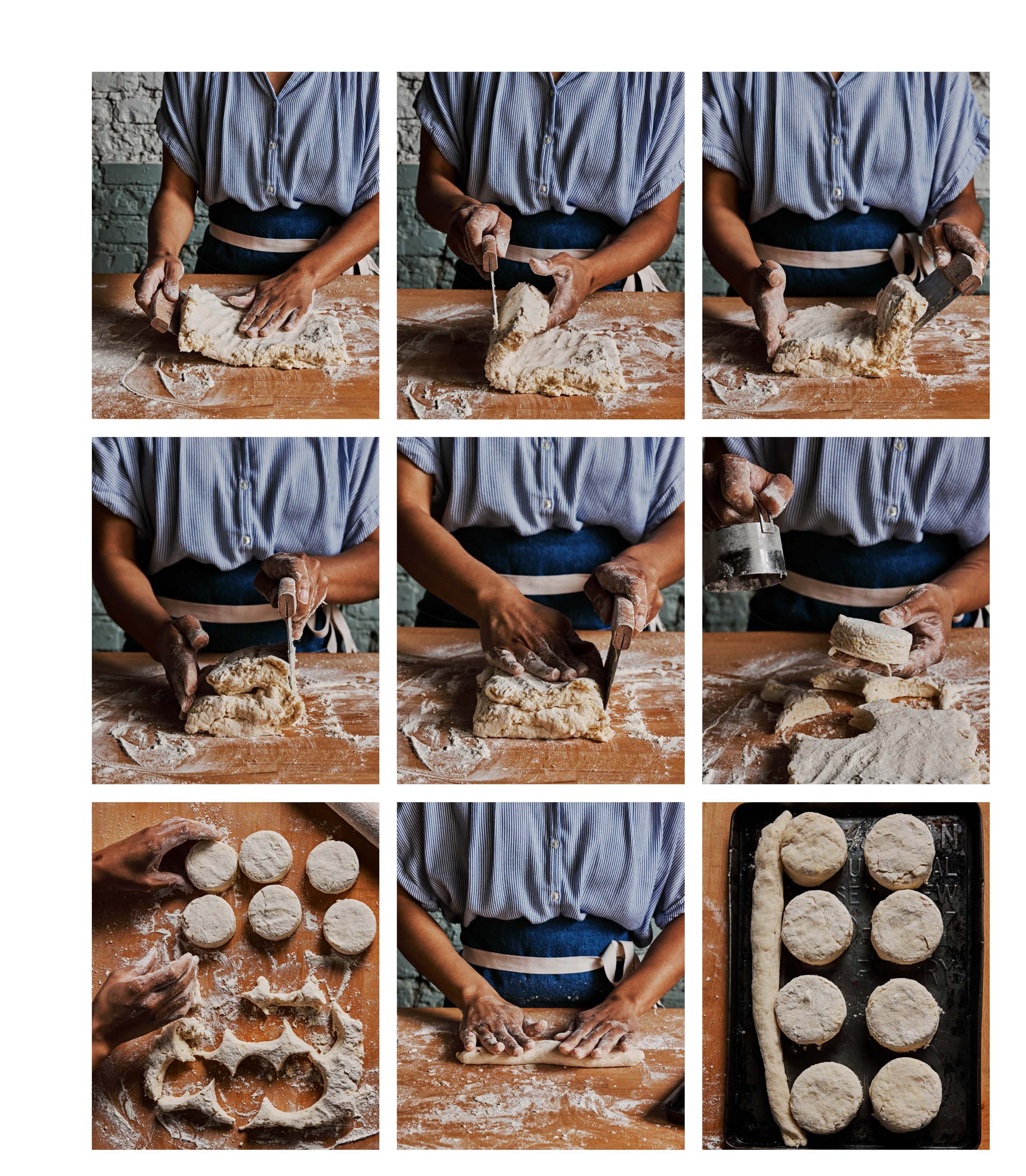
- With floured hands, pat the dough to a 1/4-inch-thick rectangle. Fold the ends of the rectangle toward the center, one end on top of the other, to create a trifold. Lightly dust the top of the dough with flour and repeat the process of patting the dough to an 11-by-6-inch 1/4-inch-thick rectangle and fold in thirds again. Repeat this step for a third time. Then, pat the dough to a 1/2-inch thickness. You can also use a rolling pin for this process.
- Cut out the biscuits using a 3 1/2-inch biscuit cutter dipped in flour. It’s helpful to dip the cutter in flour before pressing it into the dough to keep the cutter from sticking. Flouring the cutter also helps prevent you from sealing the edges of the cut, which will hinder the biscuits’ rise. Be careful to press straight down and do not twist the cutter.
- Place the biscuit rounds 1 inch apart on a parchment-lined baking sheet. Gather the scraps, reshape them, and pat out the dough to a 1/2-inch thickness. Cut out as above. Discard any remaining scrap or roll them into a “snake” to bake alongside the cut biscuits.
- Bake 15 to 17 minutes, rotating the pan once halfway through, until the tops are golden brown. Serve immediately.
Nutritional information
Per serving: Per biscuit made with 1 1/4 cups buttermilk: 305 calories (percent of calories from fat, 50), 6 grams protein, 32 grams carbohydrates, 2 grams total sugars, 1 gram fiber, 17 grams total fat (9 grams saturated), 35 milligrams cholesterol, 476 milligrams sodium.Published with permission from “Still We Rise: A Love Letter to the Southern Biscuit With Over 70 Sweet and Savory Recipes” by Erika Council (Clarkson Potter, $26).
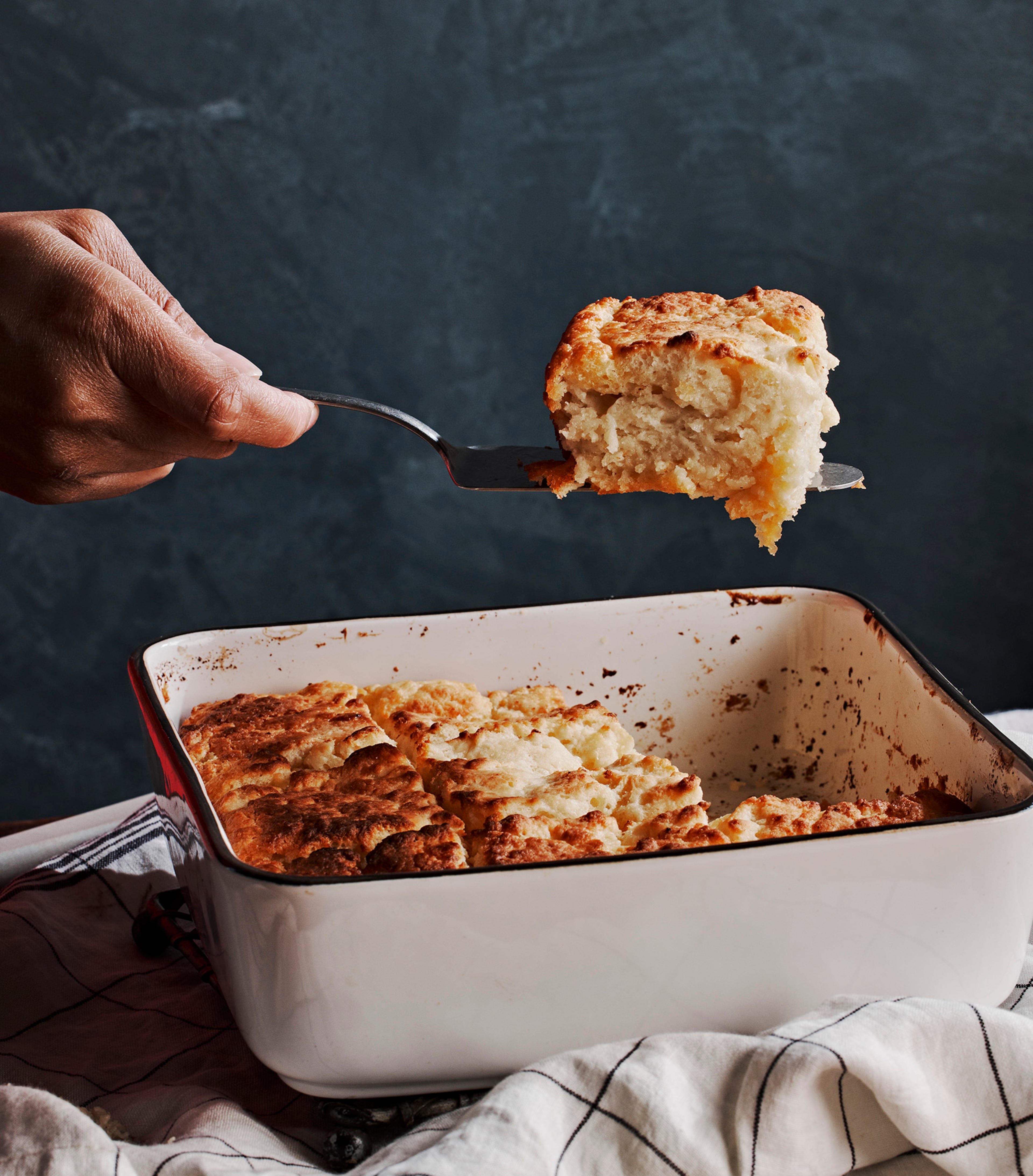
Butter Swim Biscuits
“Butter swim biscuits are made by letting buttermilk biscuit dough literally swim in a pool of melted butter,” Council writes in her introduction to this recipe.
“Butter swims are close to my favorite way to bake biscuits, mainly because they defy all the cardinal ‘rules’ that one MUST supposedly follow to master the perfect biscuit. You don’t need very cold or frozen butter; you can even use room-temperature buttermilk.” The dough is mixed in one bowl as your butter melts in a baking dish, and then you pour the biscuit batter over the melted butter. “The biscuit dough will look like over-oiled focaccia, but don’t worry, the butter will bake right into that batter, giving you crispy-crust biscuits with soft and fluffy interiors. Call it buttery bliss in a baking dish. Now say that five times fast.”
- 1 stick (8 tablespoons) unsalted butter
- 2 1/2 cups all-purpose flour
- 2 tablespoons kosher salt
- 4 teaspoons baking powder
- 1 tablespoon sugar
- 2 cups full-fat buttermilk, room temperature
- Adjust oven rack to middle position and heat the oven to 450 degrees. Place butter in a 9-inch-square baking dish and set inside the oven while it is heating.
- Place the flour, salt, baking powder and sugar in a large bowl and whisk to combine. Add the buttermilk and stir gently with a spatula just until combined. Do not overmix.
- Remove the baking dish from the oven and gently pour the batter over the melted butter. Use a knife or spatula to spread the dough evenly in the skillet. Run a knife through the dough, “cutting” it into 3-inch squares right in the skillet. Bake for 20 to 25 minutes, rotating the baking dish once halfway through, until the tops are golden brown. Serve immediately.
Nutritional information
Per serving: Per biscuit: 256 calories (percent of calories from fat, 43), 5 grams protein, 31 grams carbohydrates, 4 grams total sugars, 1 gram fiber, 12 grams total fat (7 grams saturated), 33 milligrams cholesterol, 967 milligrams sodium.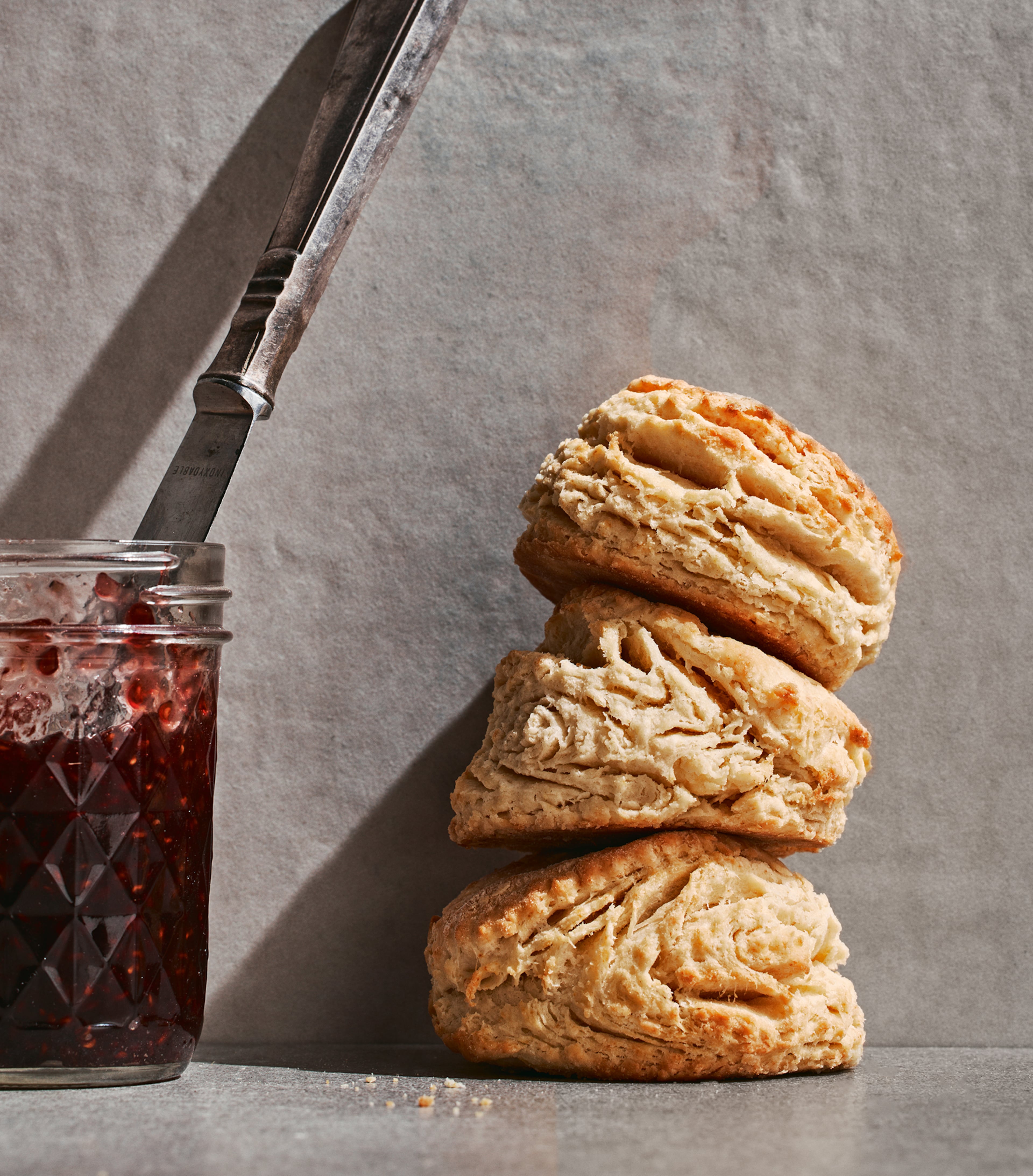
Fellowship Hall Biscuits
“In the past, the cost of butter and buttermilk made these ingredients more of a luxury than a necessity in biscuits and other baked goods. Most of the older cookbooks and cooks I referenced didn’t automatically suggest these items were needed to make great biscuits,” Council writes in her introduction to this recipe.
“Common ingredients were instead likely to be lard and whole or canned milk, or maybe even water. Evaporated milk has always intrigued me. From its use as a brine for fried chicken to its role as an ingredient for biscuits, evaporated milk is an economical liquid substitute that plays a recurring role in a lot of my family’s recipes from the late ‘50s and ‘60s. In these biscuits, evaporated milk acts as an enriching agent by adding both moisture and an intense milky flavor.”
We found we did not need the full 1 1/2 cups of evaporated milk when making these biscuits, so start with about half and then add as much as needed to make a shaggy, sticky dough.
- 2 1/2 cups all-purpose flour, plus extra for folding and cutting
- 1 tablespoon baking powder
- 1 1/2 teaspoons kosher salt
- 1 stick (8 tablespoons) unsalted butter, cold
- 1 1/2 cups evaporated milk, or as needed
- Adjust oven rack to middle position and heat the oven to 450 degrees.
- Place the flour, baking powder and salt into a large bowl and whisk to combine.
- Using the slicing side of a box grater, slice the butter into the flour mixture and stir until the butter is well coated with the flour. Add half the evaporated milk and stir gently with a spatula until the dough forms into a ball and no dry bits of flour are visible. Add more evaporated milk as needed to make a shaggy and sticky dough.
- Turn the dough onto a lightly floured surface and lightly dust with flour. With floured hands, pat the dough into a 1/2-inch-thick 11-by-6-inch rectangle. Fold the ends of the rectangle toward the center, one end on top of the other, to create a trifold. Dust the top lightly with flour, press out to the same size rectangle again, and repeat the folding. Repeat this process a third time. After the third folding, pat the dough to a 1/2-inch thickness and cut out the biscuits using a floured 2 1/2-inch biscuit cutter. Be careful to press straight down and do not twist the cutter.
- Place the biscuit rounds 1 inch apart on a parchment-lined rimmed baking sheet. Gather the scraps, reshape them, and pat the dough out again to a 1/2-inch thickness. Cut out as above. Discard any remaining scraps. Bake 15 to 17 minutes, rotating the pan once halfway through, until the tops are golden brown. Serve immediately.
Nutritional information
Per serving: Per biscuit using 1 1/4 cups evaporated milk: 303 calories (percent of calories from fat, 45), 7 grams protein, 35 grams carbohydrates, 4 grams total sugars, 1 gram fiber, 15 grams total fat (9 grams saturated), 43 milligrams cholesterol, 394 milligrams sodium.Sign up for the AJC Food and Dining Newsletter
Read more stories like this by liking Atlanta Restaurant Scene on Facebook, following @ATLDiningNews on Twitter and @ajcdining on Instagram.