Before and after trade deadline, Hawks look like fringe playoff team
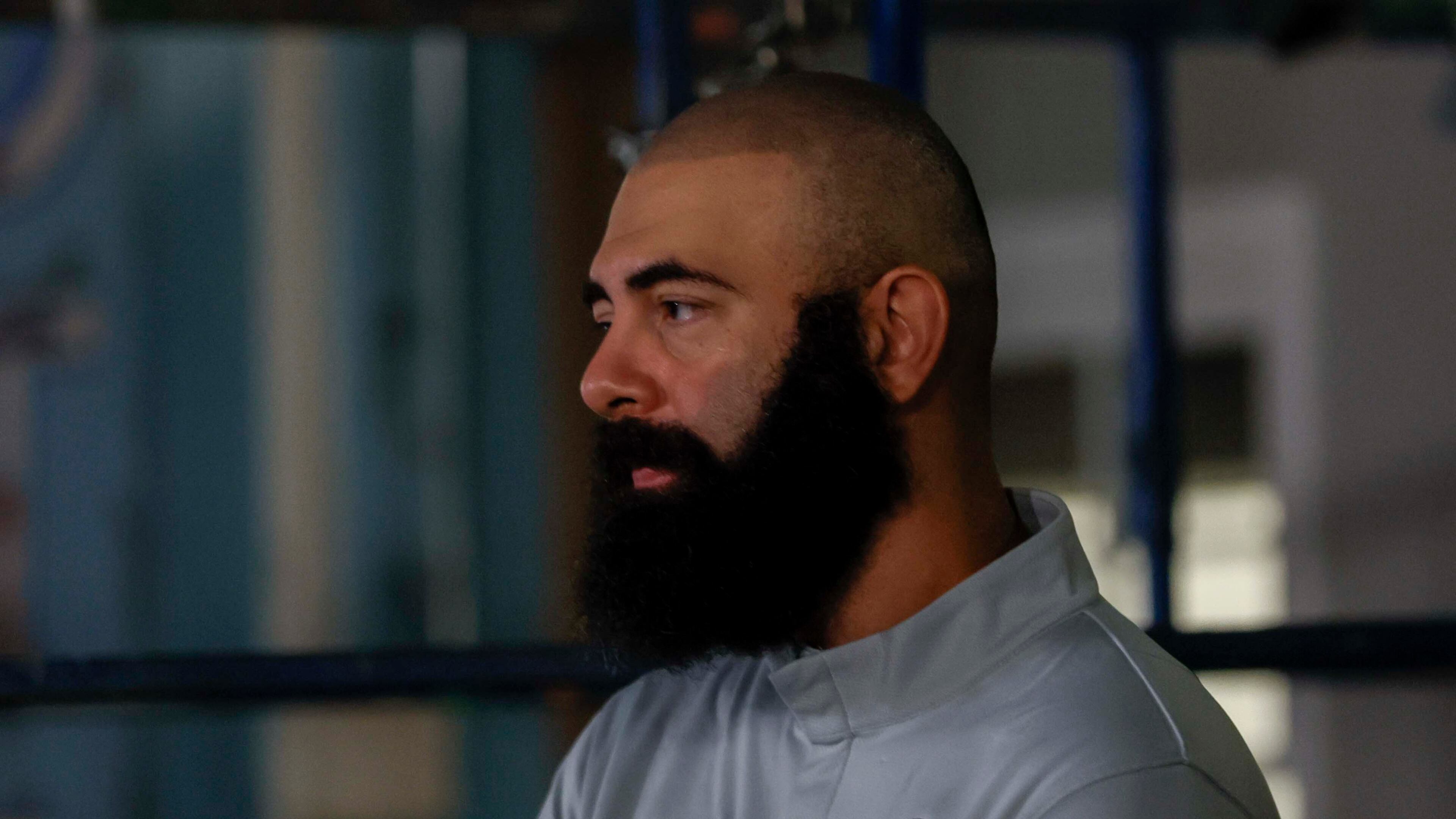
At some point, Hawks general manager Onsi Saleh will have to let go of his beloved “optionality” and commit to some hard choices. If patience doesn’t bring a payoff, then Saleh will keep planning for a future that never arrives.
Saleh has decided that time isn’t now. After a flurry of moves by Thursday’s NBA trade deadline, the Hawks are in much the same position as they were before it.
They still have a fringe playoff roster in the Eastern Conference. If the Hawks make it to the postseason, they won’t be a threat to make a run.
The Hawks still have a salary sheet free of bloated contracts for next season and beyond. Saleh has the flexibility to make major moves this summer, or he can hold on to the “optionality” for some later time.
Saleh agreed to acquire four players via trades over the past couple of days: forward Jonathan Kuminga, center Jock Landale and guards Buddy Hield and Gabe Vincent. Last month, the Hawks made trades to acquire guard CJ McCollum and forward Corey Kispert.
Kispert is the only one of those players that has a fully guaranteed contract beyond this season. Saleh can clear significant salary this summer to pursue free agents or make trades. He can retain some of the recently acquired players or use them as part of sign-and-trade deals.
The Hawks also own the rights to a draft pick that, for now, has the best odds of landing at No. 1 overall in what projects to be a very good draft. They have an additional first-round pick in this year’s draft and a bushel of second-round picks that they acquired in recent trades that can be used as part of future deals.
So, Saleh still has plenty of “optionality” for the team’s future. There is wisdom in waiting.
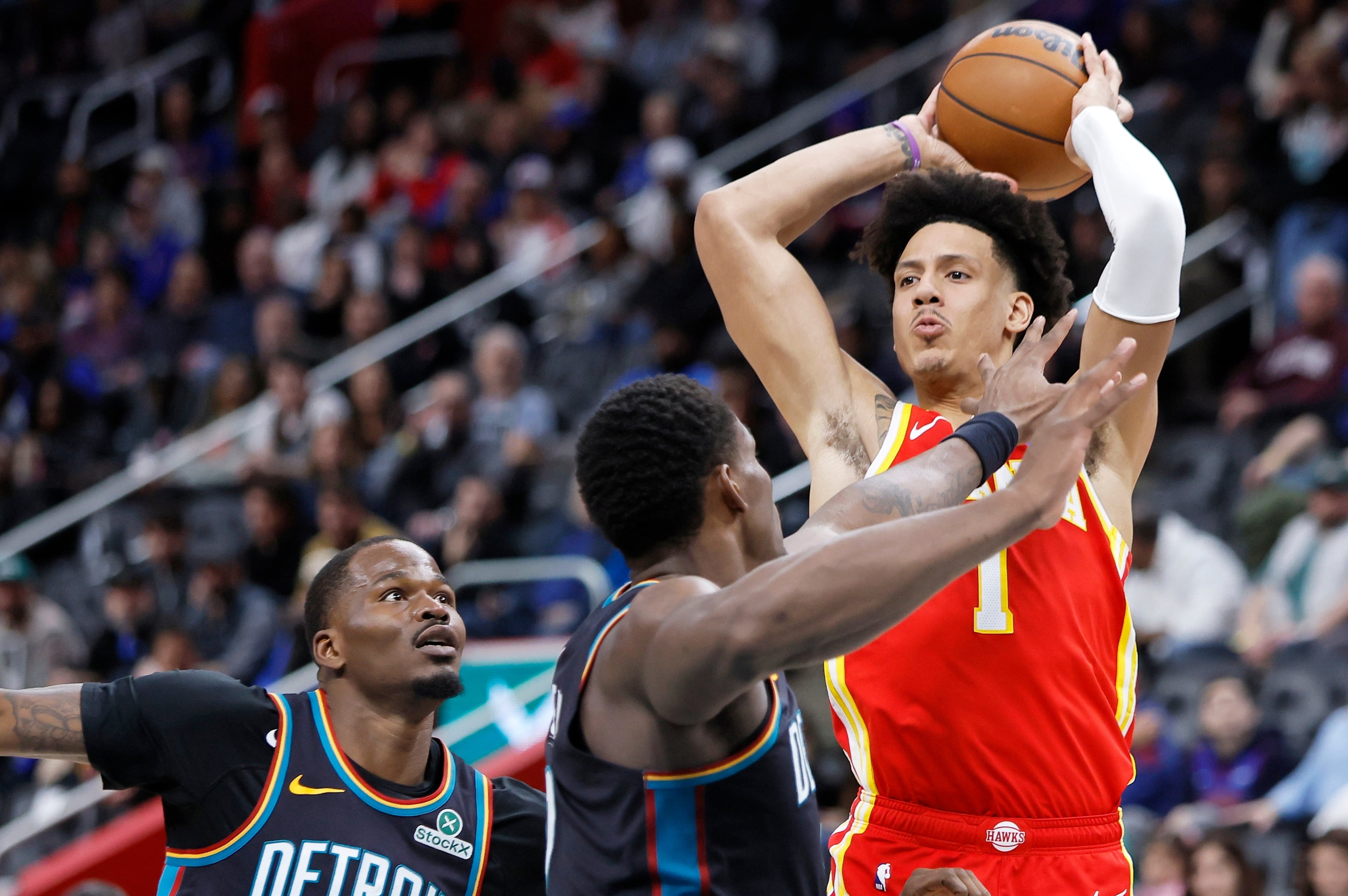
The team’s core players, including All-Star forward Jalen Johnson, are all 27 years old or younger. Johnson and others are just now emerging as good, consistent players. Saleh can add a top prospect from this year’s draft to that group and then see how they mesh before committing to high-priced stars.
In the meantime, the Hawks (25-27) will remain a middling team in the East for the rest of the season. They were relegated to the NBA’s play-in tournament for the past two seasons. They are in position to end up there again because the new players don’t move the needle.
Kuminga is the most intriguing of the bunch. The Warriors selected him No. 7 overall in the 2021 draft. Kuminga was unhappy after he and the Warriors failed to agree on a long-term contract last summer. Kuminga settled for a two-year, $48.5 million contract with a team option for next season, then saw his role reduced.
Kuminga isn’t an efficient scorer, but he’ll provide muscle for a Hawks team that needs it. He’s a big-bodied forward who gets to the rim and draws fouls at high rates while fitting into coach Quin Snyder’s ball-moving philosophy. The Hawks have a glut of wing players, but Kuminga figures to get significant playing time as the team decides whether to keep him around.
To acquire Kuminga and Hield, the Hawks sent center Kristaps Porzingis to the Warriors. Porzingis had played in just 17 of 52 games this season because of illness and injury. But acquiring Porzingis last year cost the Hawks a first-round pick. That was a high price to get 17 games from Porzingis and to get Terrence Mann’s contract off the books.
Clearing future salary has been a priority for Saleh since the Hawks promoted him from assistant GM last spring.
Saleh made the NBA’s first in-season trade of 2025-26 when he sent Trae Young to the Wizards for McCollum and Kispert. That was a cultural reset, but also a salary dump. The Hawks avoided the possibility of Young executing his $49 million player option for next season while still on their ledger.
The Hawks now have roughly $99 million in 2026-27 salaries committed to their top five players. All-Star Johnson is set to make $30 million. Daniels, the runner-up for league defensive player of the year in 2025, will make $25 million. None of the other three will make more than $16.1 million.
That’s a manageable balance sheet for a promising group of young players. Nickeil Alexander-Walker is 27 years old. The other four players are 24 or younger. Kuminga, 23, fits the team’s timeline, should the Hawks choose to keep him.
The Hawks were supposed to make a move up in the East this season. That plan was derailed early in the season by Porzingis’ illness and Young’s injury. They ended up sharing the floor for just 121 meaningful possessions.
Now, the Hawks will finish the season with a team that has many of the same weaknesses as before the trades. Most glaringly, the Hawks still don’t have a beefy big man who can provide consistent rim protection and rebounding.
Per Cleaning the Glass, the Hawks rank 28th in frequency of shots allowed at the rim and 22nd in putback points allowed per miss. Landale is listed at 6-foot-11, 255 pounds but he’s never had much impact in the paint. The Hawks will have a hard time improving their defensive efficiency ranking of 16th so long as opponents get so many easy looks close to the basket.
Saleh can address size, rim protection and other roster holes this summer. The draft, free agency and trades are all options.
The Hawks are owed the more favorable of the first-round draft picks for the Pelicans (13-40) and Bucks (20-29), and the first-round pick for the Cavs (31-21). The expiring and non-guaranteed contracts add up to about $80.5 million, so Salah can carve out room under the salary cap and luxury tax line to add pricey veterans.
That wouldn’t have been the case if the Hawks retained Young, or if Saleh traded for players with big-money contracts beyond this season. The GM has remained patient, so he still has “optionality.” At some point, Saleh will have to sacrifice flexibility to lock into a roster he believes is good enough to make deep playoff runs.
That time isn’t now.
About the Author