Can Collins change the race? 5 things to watch in Georgia’s Senate debate

Most debates start with a familiar calculation: The candidate ahead has more to lose, while the challenger needs something to shake up the race.
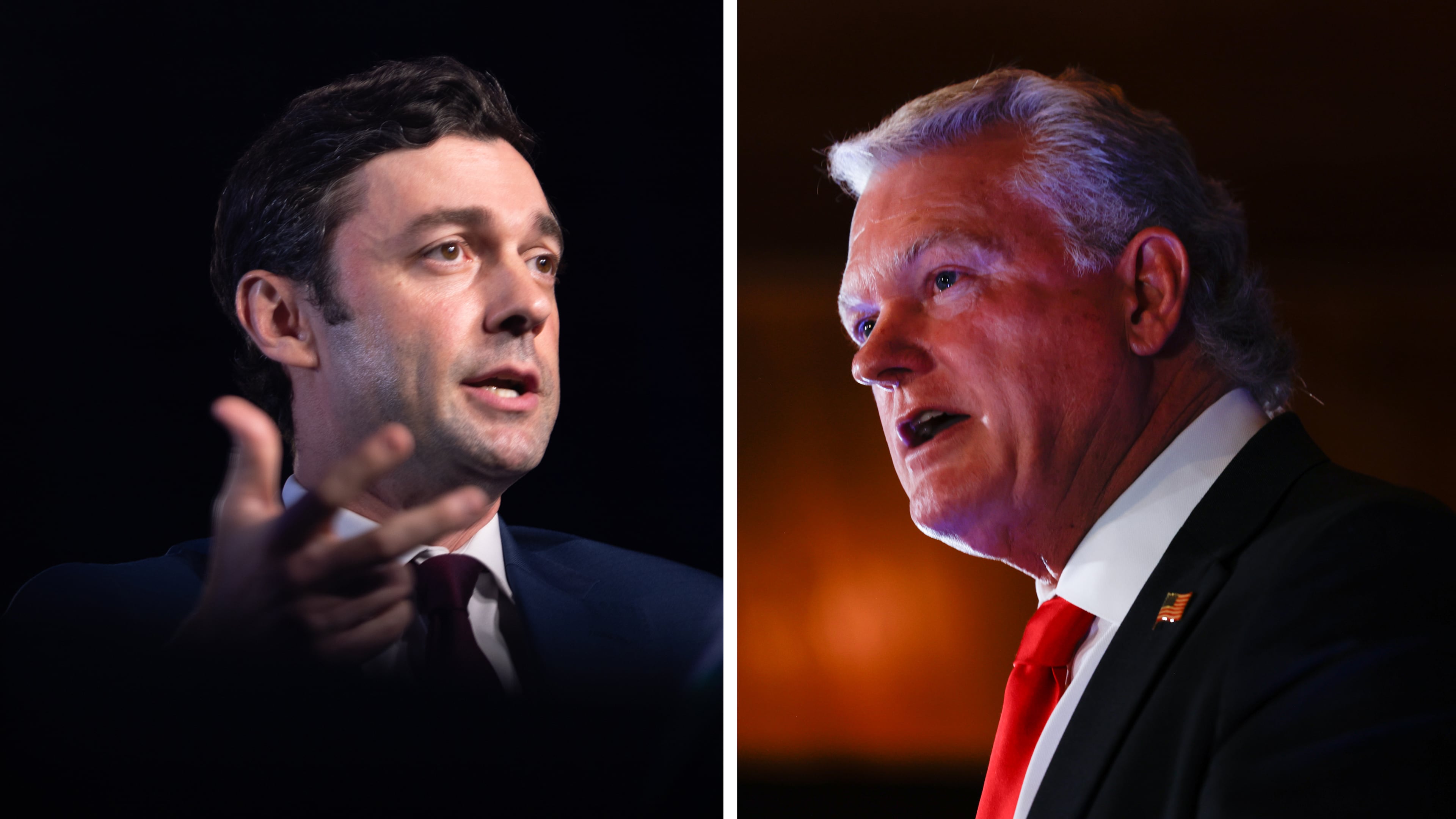
That dynamic will be hard to miss Thursday when Democratic U.S. Sen. Jon Ossoff and Republican U.S. Rep. Mike Collins meet on Atlanta News First for their first head-to-head debate.
Ossoff has led Collins in every major public poll and holds a commanding fundraising advantage. Yet unlike many incumbents in his position, Ossoff hasn’t shied away from debates. He challenged Collins to three showdowns this summer, and Thursday’s matchup is the first of two in less than a week.
Collins has a very different imperative. With some polls showing him trailing by double digits, he can’t afford to simply tread water. The debates offer him perhaps his best remaining chance to make a splash.
Here’s what we’re watching:
How hard will Ossoff go?
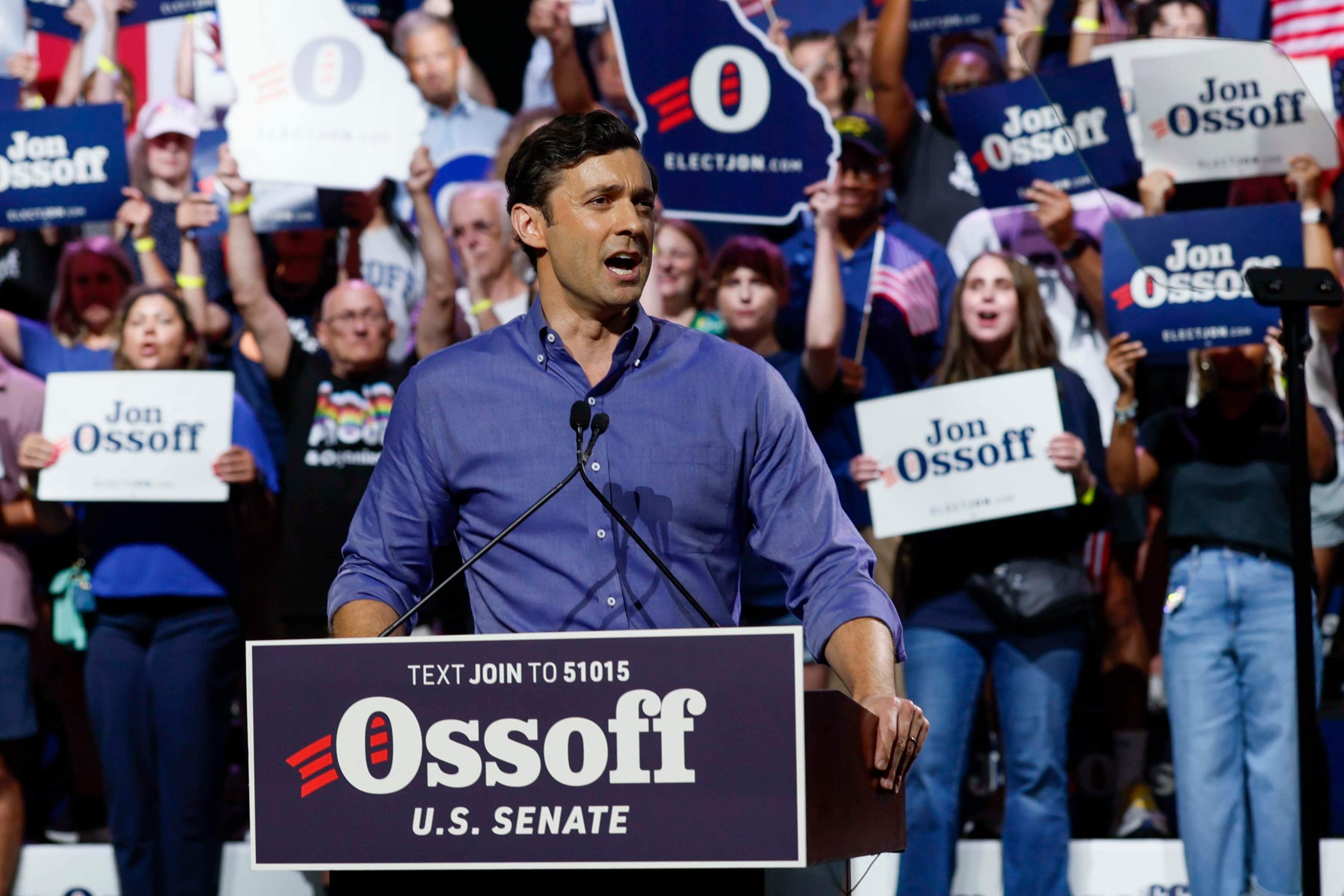
From the moment Collins defeated former football coach Derek Dooley to become the Republican nominee, Ossoff went full throttle at him.
He branded Collins a “notorious bigot, antisemite, and extremist currently under federal investigation for the illegal misuse of tax dollars,” setting the tone for a deeply personal November campaign.
Now there’s a new complication.
Authorities charged a New York man with threatening to kill Collins and his son-in-law, David Alan Scheer II, whose antisemitic and white nationalist social media posts have become a recurring issue in the campaign.
Collins blamed Ossoff’s campaign rhetoric for inciting violence against him and his family. Ossoff said through an aide he “condemns all threats of violence.”
That sets up an early test: Does Ossoff temper the language he has used for months, or confront Collins just as aggressively face to face?

How can Collins tilt the playing field?
Collins enters the debate in need of a breakthrough.
His sizable polling deficit and enormous fundraising disadvantage have fueled growing doubts within his own party about whether he can close the gap. National GOP groups have shifted some resources toward more competitive races.
These two debates might offer Collins his best, and perhaps last, opportunity to change the conversation before Election Day.
So far, he has relied on a familiar argument that Ossoff is too liberal for Georgia, too aligned with the national Democratic Party and more interested in a potential White House campaign than another Senate term.
Does Collins stick with that playbook? Or does he arrive with a new line of attack to knock Ossoff off balance?
Does Ossoff have anything new up his sleeve?
Ossoff’s campaign has seized on a steady stream of controversies involving Collins and people in his orbit.
Collins’ son-in-law promoted antisemitic and white nationalist propaganda. Former chief of staff Brandon Phillips was at the center of a House Ethics Committee inquiry. Another former aide drew scrutiny after he tried to leverage his position to help a Holocaust denier in prison.
Other former aides and advisers have faced questions about their own extremist rhetoric and associations.
Collins has rejected accusations of wrongdoing in the ethics inquiry as a “nothing burger” and argued that he should be judged by his own record rather than the conduct of people around him.
But Ossoff has repeatedly suggested his campaign has more to come. At one rally, he warned supporters: “If you think what’s come out so far about Mike is bad, there’s more and worse on the way.”
A debate stage would offer Ossoff a big audience for another revelation. Does he use it?
We already have a hint. He highlighted a Daily Beast report that showed two activists who are part of Collins’ grassroots operation have ties to a far-right group with ties to a former Ku Klux Klan leader.
The Atlanta Journal-Constitution has interviewed both, who said they had limited involvement in the Collins campaign and expressed remorse for their past associations.
“Tomorrow night on the debate stage the bigot congressman will finally have to answer for his extensive and disqualifying ties to white nationalism,” Ossoff said.
How tightly does Collins embrace Trump?
While some other Georgia Republicans are suddenly keeping President Donald Trump at arm’s length, Collins has largely gone the other direction.
He has embraced the “MAGA Mike” label and staked his campaign on energizing the loyal Trump voters who helped him win the GOP nomination.
It’s a strategy rooted in political necessity and authenticity: Collins was elected as a conservative in a deep-red district in Middle Georgia and has never tried to reinvent himself as anything but a pro-Trump Republican.
His campaign is betting there are enough Trump-aligned voters to narrow Ossoff’s advantage.
But the contrast on the GOP ticket is growing as polls have shown Trump’s popularity plummeting. Rick Jackson, the party’s nominee for governor, invoked Gov. Brian Kemp as his model during Tuesday’s gubernatorial debate — and pointedly avoided mentioning Trump’s name.
Collins has shown no sign of making the same pivot. Does that change when he is standing next to Ossoff?
Can Ossoff put the 2028 speculation to rest?
Ossoff has been about as emphatic as anyone can be about the next presidential race.
“I have zero interest in running for president in 2028,” he told the AJC this summer. He’s repeated that too many times to count in the months that followed.
That hasn’t stopped Republicans from trying to make the speculation an issue.
Senate Majority Leader John Thune accused Ossoff of using Georgia as a springboard to higher office, and Collins portrays Ossoff as more interested in his next political job than his current one.
The question for Ossoff is whether he can keep the speculation from becoming a distraction.