Beyond U.S. Senate and Georgia governor, who is on your midterm ballot?
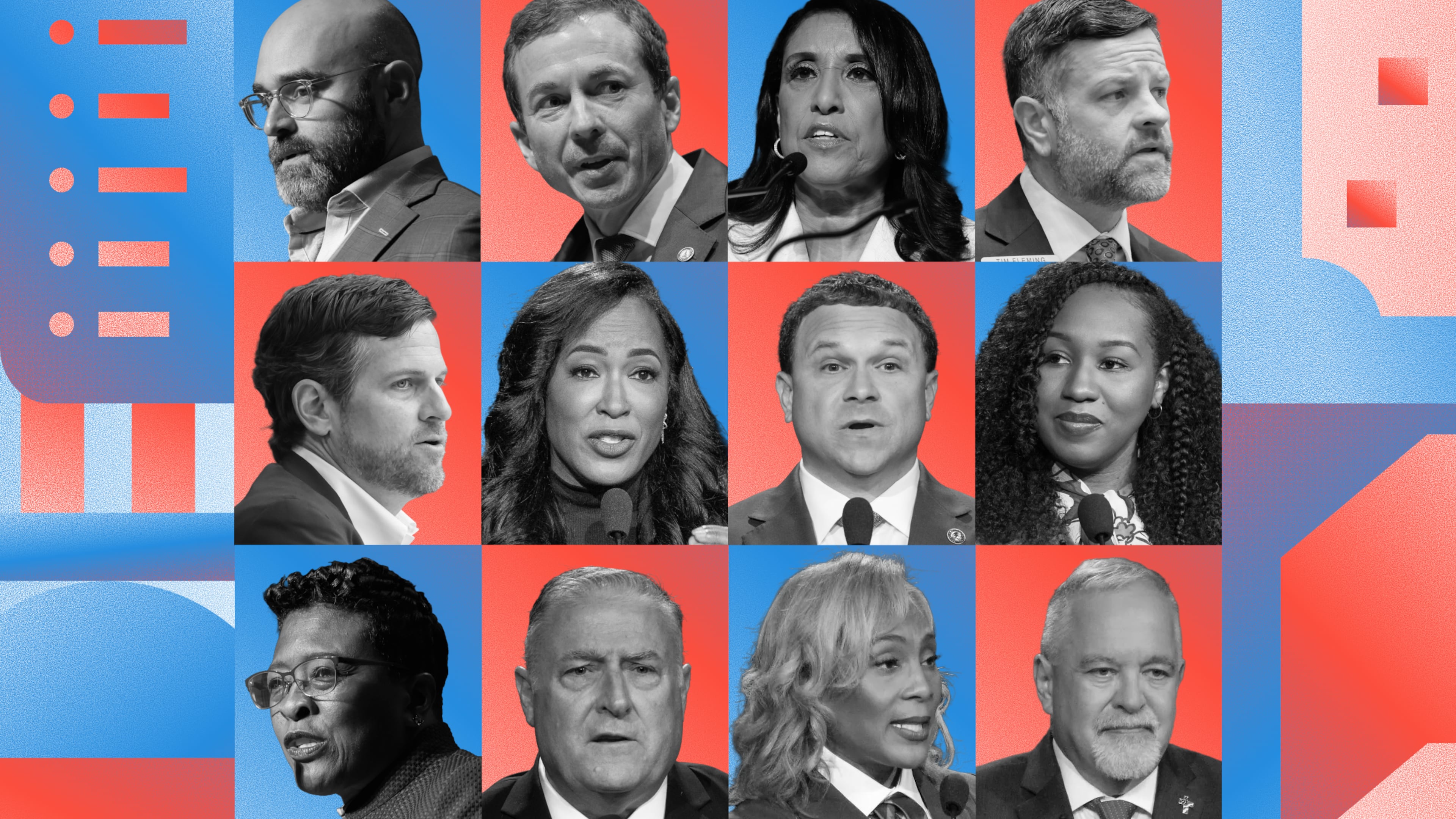

Early voting is underway in Georgia, with campaign ads for the U.S. Senate and governor’s races flooding television airwaves. But those are just two of the many races on Georgians’ ballots.
In addition to nine other statewide races, voters will decide contests for U.S. House, the state Legislature and local offices.
Here are the downballot races to know:
Lieutenant governor
The lieutenant governor is the second-highest executive office in the state.
In many states, lieutenant governors have only ceremonial duties and to be ready to take over if the governor can’t complete the term. But in Georgia, Lt. Gov. Burt Jones presides over floor debates in the state Senate and makes committee assignments that give him control over what bills reach the floor for a vote.
That power comes from the Senate rules, which can easily be changed. And in Georgia, governor and lieutenant governor do not run on a joint ticket — meaning they can be held by different parties.
Republican Greg Dolezal and Democrat Josh McLaurin are battling to replace Jones, who ran unsuccessfully for governor in the Republican primary. For the winner, the scope of their power will rest in the hands of a likely Republican state Senate majority. Atlanta Journal-Constitution politics reporter Riley Bunch reports that there are already movements to strip McLaurin of that power if he wins.
Secretary of state
Georgia’s secretary of state oversees elections, registers and regulates businesses and corporations, issues professional licenses, and maintains official state records. In Georgia, the position is most associated with election access and security, especially following the 2020 election and false claims of election fraud in the state.
That cast a national spotlight on current Secretary of State Brad Raffensperger, who refused to overturn 2020 election results at the request of President Donald Trump.
The secretary of state manages voter registration, oversees elections across all 159 counties in Georgia and certifies election results.
Democrat Penny Brown Reynolds and Republican Tim Fleming are vying to succeed Raffensperger in November.
Attorney general
The Georgia attorney general serves as the state’s chief legal officer, deciding what litigation to bring on behalf of the state.
The attorney general gives legal advice to state agencies, defends Georgia in court and prosecutes public corruption cases and certain other crimes. The office can influence how state laws are interpreted and enforced, how the government handles lawsuits, and how public officials and businesses are held accountable for illegal activity involving the state.
Some key issues handled by the office are fighting human trafficking, gang activity, organized retail crime, cybercrime, elder abuse and opioid abuse.
A central question in recent debates has been the legality and privacy rights of citizens regarding Flock cameras — the automated surveillance and license plate reader systems made by Flock Safety.
Democrat Tanya Miller and Republican Brian Strickland seek to replace outgoing Attorney General Chris Carr in November.
Commissioner of agriculture
The commissioner of agriculture serves as the state’s top official for farming, food safety and consumer protection.
Agriculture is Georgia’s largest industry, and this role has a host of responsibilities, including enforcing food safety regulations, marketing Georgia crops, and verifying the quality and quantity of motor fuel. In a time characterized by rising diesel prices, tariffs and high beef prices, this office could directly affect how much voters pay at the grocery store and gas pump.
The rapid proliferation of data centers across Georgia poses another challenge for the agriculture commissioner. The facilities encroach on farmland and strain water supplies in a state grappling with recurring droughts, raising concerns about farmers’ access to land and clean water.
Democrat Katherine Juhan-Arnold is challenging Republican incumbent Tyler Harper for the seat.
Commissioner of insurance
The insurance commissioner regulates the state’s insurance industry and enforces safety codes. Some key responsibilities include reviewing insurance rates, investigating fraud, and overseeing the State Fire Marshal’s Office and fire safety inspections.
Insurance premiums and rates have been rising in Georgia and across the country. But the state Legislature stripped the commissioner’s authority to intervene in the rate-setting process, making the position considerably less powerful in that area.
The recent death of an Atlanta teacher at Six Flags Over Georgia this month highlights the commissioner’s responsibility to regulate amusement parks throughout the state.
Democrat Keisha Sean Waites faces Republican incumbent John King in the race.
State school superintendent
Georgia’s school superintendent serves as the CEO of the Georgia Department of Education and oversees the state’s K-12 public school system.
Some key responsibilities include implementing statewide education policies, overseeing funding distribution to public schools, and teacher recruitment and training.
Georgia’s academic struggles have fueled frustration among parents and teachers, along with concerns about public money going toward private school vouchers. The state’s school funding formula has remained largely unchanged since 1985, raising questions about whether public schools are getting the funding they need.
Three-term Republican incumbent Richard Woods is being challenged by Democrat Lydia Powell for the seat in November.
Commissioner of labor
Georgia’s labor commissioner leads the Georgia Department of Labor, which helps connect workers with employers and administers key employment programs.
The commissioner oversees the state’s employment programs — reporting the unemployment rate each month, managing insurance benefits for the unemployed, helping employers recruit and fill open jobs, and operating workforce training programs.
The office got increased attention during COVID-19, when the office was inundated by new unemployment claims.
Georgians are feeling the squeeze of high prices, stagnant wages and a lack of job security. The impact of federal immigration policies on the state’s workforce, concerns about AI replacing jobs and employment opportunities in rural areas are top concerns.
Democrat Nikki Porcher will face Republican incumbent Bárbara Rivera Holmes in the race.
Public Service Commission
The Georgia Public Service Commission regulates utilities across the state, including your Georgia Power bill. Their decisions directly impact residents, including setting electricity rates.
The commission has five members who are elected statewide. Republicans currently cling to a 3-2 majority. Democrats made national news last year when the party got their first two PSC election wins since 2000. This came after a series of rate changes approved by the all-Republican commission dramatically raised Georgia Power customers’ bills.
This election, two critical contests will decide the balance of power on the state’s top utility regulator. In District 5, Republican Joshua Tolbert will face Democrat Shelia Edwards. In District 3, Republican Fitz Johnson faces incumbent Democrat Peter Hubbard.
U.S. House districts
Georgia’s 14 congressional districts are up for reelection this November. Nationally, control of the U.S. House is up for grabs, with Republicans holding a narrow majority. In Georgia, races to watch include open seats in the 1st, 10th, 11th, 13th and 14th districts, as well as the 7th district, where Republican Rep. Rich McCormick faces Democratic challenger Tony Kozycki.
The U.S. House helps shape federal laws and the national budget, voting on issues such as taxes, healthcare, immigration and education. Their decisions can affect everything from household costs to jobs and healthcare access.
State House and Senate
Georgia’s 180-member House of Representatives is a major battleground this year. Democrats need a net gain of 10 seats to flip the chamber, with roughly a dozen competitive races drawing attention. Even small gains could give Democrats more leverage and make it harder for Republicans to advance legislation without compromise. The state Senate has fewer competitive races, but its makeup will also help determine which proposals move forward.
Those serving in these chambers have a direct impact on Georgian’s lives. Little can get done in Georgia without House and Senate action.
Republican House Speaker Jon Burns has significant influence over which bills reach the floor for a vote, how committees are organized and which proposals advance. A change in the balance of power could drastically shift the legislative agenda.
Local contests
These vary by county, so the races and candidates on your ballot will depend on where you live.
County commissioners have a direct influence on things like zoning, infrastructure, local budgets and property taxes. They also weigh in on contentious local issues, including proposals to build data centers and the use of Flock cameras.
School board members crucially decide how education dollars are spent. They approve district budgets, determine funding priorities and help decide how to allocate resources for teacher pay, classroom materials and student services. Those decisions can directly affect the quality of education students receive.
To find which local races are on your ballot, go to the secretary of state’s My Voter Page.